
 Preview
 Send
Send Share
Share
 Details
 Guide
Guide

 Download
 Similars
 X-Ray
X-Ray Diaporama
 Q&A
Q&A Stats
StatsSelf-Portrait

- 27.0 x 35.0 cm


 Read More
Giclée / Art Print
Museum-quality giclée or canvas print with fast production and flexible finish options. ( Buy Hand Made Painting Switch to Digital Image)




P118B $10

P118H $10

P118W $10

P438Z $10

P508JH $12

P508YH $12

P805H $10

P805Z $10

P919BZ $10

P919G $10

P919XJ $10

P959ZH $10

P968JZ $12

W106C $8

W218G $10

W218JH $8

W218Y $10

W307PJ $10

W316G $10

W316PJ $8

W316Y $10

W398PJ $8

W4111J $10

W500HY $15

W500JH $15

W692G $12

W849H $8

W940BG $15

W953PJ $8




Pick from our preset sizes that match the artwork's original proportions.

Type the width and the height you need, to fit your frame or your wall. A print can only be cut, never made bigger than the picture, so a size with a different shape loses a part of the image. We send you a digital mockup to approve before we print anything. The picture shown on this page does not show the real cut — only the mockup does.
Worldwide Delivery () in 2 weeks instead of standard 4/5 weeks. (2 November)

Free Worldwide Express Shipping

High-Quality Linen Canvas

Full Shipping Insurance

Customs Tax Refund Guarantee

True Color Matching Guarantee

100-Day Return Policy (Defects Only)

100% Money-Back Guarantee

Bulk Discount Offer
 Glass option is only available in size under 110 CM

Self-Portrait
Giclée / Art Print
Reproduction Size
-


Total Price
$ 81
A Gaze Through Time: The Introspective Soul of Schoenberg
In the quiet, monochromatic depths of Arnold Schoenberg’s 1918 Self-Portrait, we encounter more than just a likeness; we meet a mind in the midst of a revolution. This striking black and white drawing captures the composer at a pivotal moment in his life and career. The subject, presented with a serious and contemplative expression, looks directly at the viewer, establishing an immediate, almost unsettling intimacy. His short hair, neatly groomed mustache, and formal attire—a suit and tie—suggest a man of discipline and intellect, yet there is an undeniable vulnerability beneath the surface. The composition focuses intensely on the face, stripping away all environmental distractions to force a confrontation between the observer and the observed.
The technique employed in this work speaks to the raw, unadorned honesty that characterized much of the era's avant-garde spirit. Through delicate linework and masterful use of tonal contrast, the artist breathes life into the shadows that contour his features. The absence of color serves a profound purpose, directing our attention toward the texture of the skin, the light reflecting in the eyes, and the somber weight of the subject's gaze. It is a study in restraint, where every stroke contributes to an atmosphere of psychological depth, mirroring the complex, often dissonant layers found within his groundbreaking musical compositions.
The Intersection of Music and Image
To understand this portrait, one must consider the historical landscape of 1918. As a central figure of the Second Viennese School, Schoenberg was actively dismantling the traditional structures of tonality, much like how this drawing dismantles the need for decorative flourish to convey meaning. There is a profound symmetry between his musical innovations—such as the development of atonality—and the stark, structural clarity of this self-portrait. Just as his music sought truth through the rejection of conventional harmony, this drawing seeks truth through the rejection of artifice.
For the collector or the interior designer, this piece offers a sophisticated anchor for a curated space. It possesses a timeless elegance that transcends the era in which it was created. The portrait does not merely decorate a wall; it commands attention and invites deep thought. Its monochromatic palette makes it an incredibly versatile choice for modern, minimalist, or classical interiors, providing a focal point of intellectual gravity. Whether placed in a quiet study, a contemporary gallery setting, or a grand salon, this reproduction serves as a window into the psyche of one of history's most influential creators, offering an enduring sense of prestige and profound emotional resonance.
Questions & Answers
What is the perceived brightness of "Self-Portrait" by Arnold Schoenberg?
Overall, "Self-Portrait" is recorded as brilliant. Perceived brightness describes how light or dark the work appears.
What space matches the colors of "Self-Portrait" by Arnold Schoenberg?
With its neutrals palette, "Self-Portrait" by Arnold Schoenberg is recommended for an office. The colors are part of the reason for this suggestion.
Can I preview "Self-Portrait" by Arnold Schoenberg before ordering?
The Preview page of "Self-Portrait" lets you preview the artwork before ordering.
Artist Biography
early life and musical beginnings
arnold schoenberg, an austrian-american composer, was born on september 13, 1874, in vienna, austria. his early life was marked by a humble beginning, with his father being a shoe-shopkeeper. despite this, schoenberg's innate passion for music led him to largely self-educate himself in the field.- schoenberg explored film music and wrote more tonal music, completing his chamber symphony no. 2 in 1939.
- he satirized fascist tyrants in ode to napoleon (1942), after byron.
- post-war vienna offered him honorary citizenship, but he was ill, as depicted in his string trio (1946).

Arnold Schoenberg
1874 - 1951 , Austria
Quick Facts
- Full Name: Arnold Schoenberg
- Nationality: Austrian-American
- Date Of Birth: 1874
- Date Of Death: 1951
- Place Of Birth: Vienna, Austria
- Notable Artworks:
- Suite, op. 29
- Music Typewriter
- Staffliner
- Artistic Movement Or Style: Twelve-tone technique; Expressionism
- Artists Who Influenced This Artist:
- Johannes Brahms
- Richard Wagner
- Artists Or Movements Influenced By This Artist:
- Anton Webern
- Alban Berg
Related Articles

Monochrome Visions: Exploring the Aesthetic & Historical Significance of Black & White Photography
Explore the rich history & artistic power of black and white photography. From early techniques to iconic masters like Ansel Adams, discover why monochrome continues to captivate art lovers today. Expert insights for collectors.

Dark Masterpieces: 10 Iconic Paintings Dominated by Black Tones |
Explore 10 iconic paintings dominated by black tones, from Rembrandt’s chiaroscuro to Goya's dark expressions. Discover the stories behind these masterpieces & find museum-quality art reproductions for your home at .

White on Canvas: 10 Masterpieces & Timeless Elegance for Your Home Decor
Explore 10 iconic white paintings by Monet, Whistler & Rothko! Discover the stories behind these serene masterpieces and their impact on art history. Find museum-quality reproductions for your home decor at .
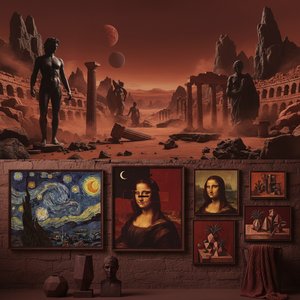
Mars Black Masterpieces: 10 Iconic Paintings & Timeless Art Decor Ideas
Delve into the power of 'Mars Black' with 10 iconic paintings by masters like Rembrandt & Caravaggio. Explore dramatic chiaroscuro, gothic art, and timeless beauty. Find museum-quality reproductions & elevate your home decor on .

Shadow & Soul: Why Black & White Photography Remains the Ultimate Power Move in Modern Art
Discover why black & white photography remains a powerful force in contemporary art. Explore the impact of light, shadow, and texture through a visual journey of monochrome mastery and learn how to elevate your space with timeless grayscale aesthetics.


