

 Preview
 Send
Send Share
Share
 Details
 Guide
Guide

 Download
 Similars
 X-Ray
X-Ray Diaporama
 Stats
StatsLandscape
 Oil On Canvas
- WallArt
- Expressionist Landscape
 1910
1910- 19th Century
 50.0 x 37.0 cm
 Arnold Schönberg Center
 Read More
Hand Made Oil Reproduction
Hand-painted oil on canvas in your size and frame, made to order by our artists. ( Switch to Print Switch to Digital Image)




P118B $10

P118H $10

P118W $10

P438Z $10

P508JH $12

P508YH $12

P805H $10

P805Z $10

P919BZ $10

P919G $10

P919XJ $10

P959ZH $10

P968JZ $12

W106C $8

W218G $10

W218JH $8

W218Y $10

W307PJ $10

W316G $10

W316PJ $8

W316Y $10

W398PJ $8

W4111J $10

W500HY $15

W500JH $15

W692G $12

W849H $8

W940BG $15

W953PJ $8




Pick from our preset sizes that match the artwork's original proportions.

Type the width and the height you need, to fit your frame or your wall. This is hand-painted, so for a size with a different shape the artist can paint a bit more around the picture, or cut a bit — you choose. We send you a digital mockup to approve before the painting starts. The picture shown on this page does not show the real result — only the mockup does.
After order, OriginalUniqueArt.com team will email client for instructions and provide a mockup preview
Worldwide Delivery () in 3/4 weeks instead of standard 5 weeks. (22 October). No compromise on quality.

Free Worldwide Express Shipping

High-Quality Linen Canvas

Full Shipping Insurance

Customs Tax Refund Guarantee

True Color Matching Guarantee

100-Day Return Policy (Defects Only)

100% Money-Back Guarantee

Bulk Discount Offer
 Glass option is only available in size under 110 CM

Landscape
Reproduction Medium
Reproduction Size
-


Total Price
$ 300
A Moment of Serene Reflection: Arnold Schönberg’s “Landscape” (1910)
Arnold Schönberg's "Landscape," painted in 1910, is more than just a depiction of a tranquil scene; it’s a profound meditation on the relationship between nature and artistic expression. Executed in oil on canvas with a characteristic Impressionistic touch, this work embodies Schönberg’s exploration of two distinct modes of creation – those meticulously rendered to mirror reality and those born from intuitive “Visions.” The painting invites us into a world where the boundaries between observation and feeling blur, revealing a deeply personal response to the natural world.
- Style & Technique: The artwork’s style is best described as a synthesis of Impressionism and nascent Expressionism. Schönberg employs loose, gestural brushstrokes – particularly evident in the textured expanse of the grassy foreground – to capture not just the visual appearance but also the atmosphere and emotional resonance of the landscape. This technique creates a palpable sense of movement and depth, drawing the viewer into the scene.
- Color Palette & Composition: The subdued color palette—greens, browns, grays, and muted blues—contributes significantly to the painting’s tranquil mood. Horizontal lines dominate the composition, mirroring the water and horizon, while vertical elements introduced by the trees provide a subtle counterpoint. This balanced arrangement fosters a sense of stability and serenity.
Decoding the Vision: Symbolism and Interpretation
"Landscape" is not simply a picturesque view; it’s a carefully constructed representation reflecting Schönberg's artistic philosophy. The emphasis on natural forms, particularly the water, grassy hills, and trees, aligns with his belief in paintings drawn “perfectly to nature.” However, the loose brushwork and atmospheric effects suggest an underlying current of intuition – the "Visions" that he considered equally valid sources of inspiration. The muted color palette evokes a sense of timelessness and spiritual contemplation, inviting viewers to connect with the inherent beauty and restorative power of the natural world.
- Symbolic Elements: The landscape itself can be interpreted as a symbol of inner peace and tranquility. The flowing water represents fluidity and transformation, while the trees embody strength and resilience. These elements combine to create a harmonious whole that speaks to the soul.
- Historical Context: Created in 1910, this work reflects Schönberg’s engagement with the burgeoning artistic movements of his time – Impressionism's focus on capturing fleeting moments and Expressionism’s exploration of subjective emotion. It represents a pivotal moment in his artistic development, foreshadowing his later innovations in atonality.
Craftsmanship & Reproduction
This meticulously crafted reproduction captures the essence of Schönberg’s original vision with exceptional fidelity. Executed on high-quality canvas using archival pigments, this hand-painted reproduction offers a stunning representation of “Landscape.” The textured brushstrokes and nuanced color palette are faithfully reproduced, ensuring that you experience the artwork's full emotional impact. The dimensions of 50 x 37 cm make it suitable for a wide range of interior spaces, from formal living rooms to contemplative study areas.
- Size: 50 x 37 cm
- Date: 1910
- Artist: arnold schoenberg
A Timeless Masterpiece for Your Collection
"Landscape" by Arnold Schönberg is a testament to the power of art to capture not just what we see, but also what we feel. This exceptional reproduction offers an opportunity to bring this iconic work into your home or office, adding a touch of timeless beauty and intellectual depth to your surroundings. It’s more than just a painting; it's an invitation to contemplate the profound connection between nature, art, and the human spirit.
Questions & Answers
What is the format of "Landscape"?
"Landscape" by Arnold Schoenberg is a landscape composition. The proportions are worth checking before choosing a print size.
How much light do the colors of "Landscape" appear to reflect?
The luminance recorded for "Landscape" by Arnold Schoenberg is soft shadow.
What national origin stands behind the Expressionist Landscape of "Landscape"?
The Expressionist Landscape work "Landscape" was made by an artist born in Austria.
Artist Biography
early life and musical beginnings
arnold schoenberg, an austrian-american composer, was born on september 13, 1874, in vienna, austria. his early life was marked by a humble beginning, with his father being a shoe-shopkeeper. despite this, schoenberg's innate passion for music led him to largely self-educate himself in the field.- schoenberg explored film music and wrote more tonal music, completing his chamber symphony no. 2 in 1939.
- he satirized fascist tyrants in ode to napoleon (1942), after byron.
- post-war vienna offered him honorary citizenship, but he was ill, as depicted in his string trio (1946).

Arnold Schoenberg
1874 - 1951 , Austria
Quick Facts
- Full Name: Arnold Schoenberg
- Nationality: Austrian-American
- Date Of Birth: 1874
- Date Of Death: 1951
- Place Of Birth: Vienna, Austria
- Notable Artworks:
- Suite, op. 29
- Music Typewriter
- Staffliner
- Artistic Movement Or Style: Twelve-tone technique; Expressionism
- Artists Who Influenced This Artist:
- Johannes Brahms
- Richard Wagner
- Artists Or Movements Influenced By This Artist:
- Anton Webern
- Alban Berg
Related Articles

Impressionistic Landscapes: 10 Masterpieces That Changed Art & Decor
Journey into the heart of Impressionism! Explore 10 masterpieces by Monet, Renoir & Degas that revolutionized landscape art. Discover their stories, techniques & find museum-quality reproductions to elevate your home decor on OriginalUniqueArt.com.

Romantic Landscapes: 10 Masterpieces for Your Home | OriginalUniqueArt
Journey through 10 Romantic landscape masterpieces by Friedrich, Turner & Cole. Explore emotional art, sublime nature scenes & iconic 19th-century paintings. Find museum-quality reproductions for your home at OriginalUniqueArt.com – discover the full collection online!

Hokusai's Masterpieces: 25 Iconic Prints & Paintings for Art Lovers | OriginalUniqueArt
Journey through Katsushika Hokusai’s 25 most iconic artworks, including *The Great Wave*. Explore the ukiyo-e master's history, style & timeless Japanese woodblock prints. Find museum-quality reproductions for your home at OriginalUniqueArt.com.
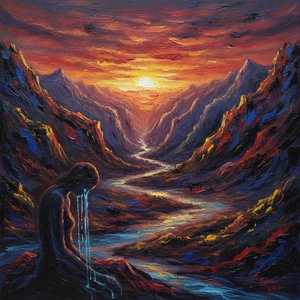
Capturing Emotion: A Journey Through the Soul of Expressionist Landscapes
Explore the profound emotional depth of Expressionist landscapes. Discover how Post-Impressionist masters moved beyond light to capture the soul through vibrant color and form. A curated journey for true art lovers seeking the beauty of expressive mastery.

Impressionist Landscapes: 10 Masterpieces for Your Home | OriginalUniqueArt
Journey through 10 iconic Impressionist landscapes by Monet, Renoir & Degas. Explore the history, techniques & emotions behind these masterpieces. Find museum-quality reproductions for your home at OriginalUniqueArt.com – where art comes to life! Discover all masterpieces on OriginalUniqueArt.com


