Preview
 Send
Send Share
Share
 Details
 Guide
Guide

 Download
 Similars
 X-Ray
X-Ray Diaporama
 Stats
StatsIrony Point No. 57
 Collage
- WallArt
- Contemporary Art
 2015
2015- Contemporary
 59.0 x 43.0 cm
 Postman Cheval's Ideal Palace
 Read More
The artwork displayed on this page is protected by copyright law, which means we cannot legally create or sell an identical reproduction. This protection is enforced under international agreements such as the Berne Convention and by national laws, including those outlined by the U.S. Copyright Law - Title 17.
As a respectful and legal alternative, we offer custom, hand-painted artworks inspired by the original. Our skilled and professional artists carefully study the original's style, mood, and artistic essence to create a new, unique piece that evokes the same feeling - while remaining an original creation in its own right.
This method fully complies with copyright regulations because it does not involve copying or duplicating the protected artwork. Instead, it is a creative reinterpretation - a new painting that is influenced by the original but not identical to it.
Hand Made Oil Reproduction
Hand-painted oil on canvas in your size and frame, made to order by our artists. ( Switch to Print Switch to Digital Image)




P118B $10

P118H $10

P118W $10

P438Z $10

P508JH $12

P508YH $12

P805H $10

P805Z $10

P919BZ $10

P919G $10

P919XJ $10

P959ZH $10

P968JZ $12

W106C $8

W218G $10

W218JH $8

W218Y $10

W307PJ $10

W316G $10

W316PJ $8

W316Y $10

W398PJ $8

W4111J $10

W500HY $15

W500JH $15

W692G $12

W849H $8

W940BG $15

W953PJ $8




Pick from our preset sizes that match the artwork's original proportions.

Type the width and the height you need, to fit your frame or your wall. This is hand-painted, so for a size with a different shape the artist can paint a bit more around the picture, or cut a bit — you choose. We send you a digital mockup to approve before the painting starts. The picture shown on this page does not show the real result — only the mockup does.
After order, OriginalUniqueArt.com team will email client for instructions and provide a mockup preview
Worldwide Delivery () in 3/4 weeks instead of standard 5 weeks. (26 October). No compromise on quality.

Free Worldwide Express Shipping

High-Quality Linen Canvas

Full Shipping Insurance

Customs Tax Refund Guarantee

True Color Matching Guarantee

100-Day Return Policy (Defects Only)

100% Money-Back Guarantee

Bulk Discount Offer
 Glass option is only available in size under 110 CM

Irony Point No. 57
Reproduction Medium
Reproduction Size
-


Total Price
$ 300
A Tapestry of Memory and Presence
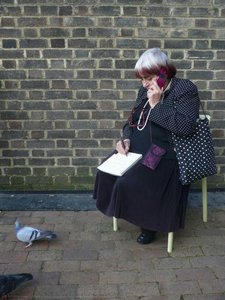
In the evocative piece Irony Point No. 57, we are invited into a complex visual dialogue that blurs the lines between photography, collage, and personal narrative. Created in 2015 by the legendary Arlette Varda—the visionary soul behind the French New Wave—this work serves as a profound meditation on identity and the layers of human experience. At first glance, the viewer is met with a vibrant collage that captures a singular moment of artistic celebration. A central figure, clad in a blue jacket and topped with a hat, holds a painting before him, acting as both subject and presenter. This act of holding art within art creates a recursive loop, drawing the eye into a deeper exploration of how we perceive reality through the lens of creativity.
The composition is teeming with life, populated by a diverse cast of characters that suggest an exhibition or a communal artistic event. The presence of others in the background, some near and some distant, lends a sense of depth and social texture to the piece. Even a dog, positioned near the heart of the collage, adds an element of spontaneous, everyday reality that is so characteristic of Varda’s documentary-style sensibility. This interplay between the structured event and the unscripted presence of life creates a rhythmic tension, making the artwork feel less like a static image and more like a living, breathing fragment of history.
Technique and the Art of the Collage
The technique employed in Irony Point No. 57 is a masterful display of Varda’s ability to manipulate multiple visual planes. By utilizing a collage format, the artist breaks away from the singular perspective of traditional painting or photography, instead offering a fragmented, multi-layered view of the world. The way the various photographic elements are stitched together suggests a deliberate deconstruction of memory. Each layer acts as a different temporal window, where the textures of the blue jacket, the skin tones of the onlookers, and the earthy nuances of the central painting coalesce into a unified aesthetic experience.
For the collector or interior designer, this piece offers an extraordinary versatility. The complexity of its construction provides a rich focal point that rewards prolonged observation. The use of color—ranging from the cool, commanding blues to the warmer, more organic tones of the crowd—allows it to integrate seamlessly into sophisticated modern interiors. It is a work that does not merely decorate a wall; it commands the space, inviting conversation and providing a window into the intersection of documentary realism and avant-garde experimentation.
Symbolism and Emotional Resonance
Beyond its visual complexity, Irony Point No. 57 carries a heavy weight of symbolism regarding the nature of the "gaze." The man holding the painting represents the artist’s role as a mediator between the world and the canvas. He is both a participant in the scene and a barrier through which we view it, mirroring Varda’s own career where she often stood behind the camera to document the truth of her subjects while simultaneously shaping their narrative. The title itself, hinting at "irony," suggests a playful yet critical awareness of the gap between what is captured and what is felt.
To possess a reproduction of this work is to hold a piece of cinematic and photographic history. It evokes an emotional response rooted in nostalgia and curiosity, prompting the viewer to wonder about the stories of the people within the frame. For those seeking to infuse their surroundings with intellectual depth and artistic prestige, this piece stands as a testament to the enduring power of the human connection to art. It is a celebration of the ephemeral moment, frozen in a beautiful, ironic, and permanent state of grace.
Questions & Answers
What use is suggested for "Irony Point No. 57" by Arlette Varda?
The recommended use of a print of "Irony Point No. 57" is conversation.
How can I get a print of "Irony Point No. 57" by Arlette Varda?
"Irony Point No. 57" is available as a fine art print on cotton canvas or archival canvas paper. Orders are placed on its Fine Art Print page, in the size of your choice.
What placement suits the format of "Irony Point No. 57" by Arlette Varda?
Format (landscape) and recommended space (coffee shop) are the two placement facts recorded for "Irony Point No. 57" by Arlette Varda.
Artist Biography
Agnès Varda: A Pioneer of the French New Wave
Arlette Varda, later known and celebrated as Agnès Varda, was a singular figure in 20th-century cinema – a Belgian-born French filmmaker, screenwriter, and photographer whose work fundamentally reshaped how movies were made and viewed. Born on May 30, 1928, in Ixelles, Brussels, to Christiane Pasquet and Eugène Jean Varda (a Greek refugee), her early life was steeped in the cultural crossroads of Europe. This heritage – a French mother with roots in Sète and a father tracing his lineage back through Ottoman Asia Minor – profoundly influenced her artistic sensibility, informing a deep appreciation for both urban and rural landscapes, and a keen awareness of social realities. Varda’s journey into art began not with film but with photography; she honed her skills as a still photographer, capturing the everyday lives of families and documenting events before dedicating herself to the moving image. This initial experience proved invaluable, instilling in her an observational eye and a respect for authentic representation – qualities that would become hallmarks of her distinctive cinematic style.Early Years & Photographic Beginnings
Varda’s formal artistic training laid the groundwork for her future success. She studied art history at the École du Louvre and photography at the École des Beaux-Arts, developing a sophisticated understanding of composition, form, and visual storytelling. Crucially, she also attended the Lycée et Collège Victor-Duruy, earning a bachelor’s degree in literature and psychology – disciplines that would later inform her nuanced portrayals of human relationships and psychological states. Her early career as a stage photographer for the Théâtre National Populaire provided an essential apprenticeship, exposing her to theatrical performance and demanding a collaborative approach to visual creation. It was during this period that she began to develop her own unique style, moving beyond mere documentation to explore questions of meaning and form through carefully constructed images. She described her initial foray into photography as “asking questions with composition, form, and meaning,” a philosophy that would permeate her entire cinematic oeuvre.The Birth of the New Wave & Unconventional Techniques
Varda’s emergence coincided with the burgeoning French New Wave movement in the 1950s, and she quickly became one of its most vital voices. Rejecting the polished aesthetics and studio-bound productions of traditional cinema, Varda embraced a radically different approach. She championed location shooting – often in unglamorous urban environments or remote rural areas – and utilized non-professional actors, bringing a sense of realism and immediacy to her films that was unprecedented at the time. This deliberate choice challenged established conventions and reflected a desire to capture authentic experiences rather than staged performances. Her early work, such as *La Pointe Courte* (1955), demonstrated this innovative spirit, employing a documentary-like style with handheld cameras and natural lighting, creating a sense of intimacy and immediacy rarely seen in French cinema. Her films frequently explored themes of female experience, social injustice, and the complexities of human relationships, often through a feminist lens.Notable Works & Lasting Influence
Varda’s filmography is remarkably diverse, encompassing both narrative features and experimental documentaries. *Cléo from 5 to 7* (1962), a poignant portrait of a pop singer grappling with mortality, remains one of her most celebrated works, lauded for its innovative use of time and space. *Vagabond* (1985) is a powerful meditation on homelessness and the search for identity, while *Kung Fu Hooligans* (1976) offered a playful critique of consumer culture. However, it’s her later films that perhaps best exemplify her evolving artistic vision. *Les Cent et une nuits de Simon Cinéma* (1995), a loving tribute to the art of cinema, and *Visages Villages* (2017), a visually stunning exploration of rural France, cemented her legacy as a filmmaker deeply committed to capturing the beauty and complexity of everyday life. Her work was consistently praised for its honesty, empathy, and refusal to adhere to conventional cinematic norms.A Legacy of Innovation & Social Commentary
Arlette Varda’s influence extends far beyond her individual films. She helped to establish a new aesthetic vocabulary for cinema, prioritizing observation, spontaneity, and the voices of ordinary people. Her commitment to social justice is evident in many of her works, particularly those that address issues of gender inequality, poverty, and displacement. Varda's later years saw her continue to push boundaries, experimenting with new technologies and approaches while retaining a deep respect for her artistic roots. She was awarded the Academy Award for Best Documentary Feature for *Visages Villages* in 2018, a testament to her enduring impact on cinema and art. Agnès Varda died on March 29, 2019, leaving behind a rich and influential body of work that continues to inspire filmmakers and audiences alike. Her legacy is not simply one of groundbreaking technique but also of a profound commitment to seeing the world with fresh eyes and telling stories that matter.
Arlette Varda
1928 - 2019 , Belgium
Quick Facts
- Full Name: Arlette Varda (Agnès Varda)
- Nationality: Belgian-French
- Date Of Birth: 1928
- Date Of Death: 2019
- Place Of Birth: Ixelles, Belgium
- Notable Artworks:
- La Pointe Courte
- Cléo from 5 to 7
- Vagabond
- Artistic Movement Or Style: New Wave Cinema
- Artists Who Influenced This Artist:
- René Clair
- Jean Renoir
- Artists Or Movements Influenced By This Artist:
- François Truffaut
- Jean-Luc Godard
Related Articles
The Allure of Azure: Exploring the Symbolic & Aesthetic Depths of Blue in Art History
Explore the rich history of blue in art! Discover its symbolism, from ancient pigments to modern masterpieces by Kandinsky & Seurat. Uncover the psychological impact and cultural meanings behind this captivating hue.
Documentary Photography's Defining Moments: 10 Masterpieces for Your Home |
Explore 10 defining documentary photography masterpieces – from Dorothea Lange to Robert Capa. Discover powerful stories, iconic images & timeless art for your home. Museum-quality prints at .

Slate Blue Masterpieces: 10 Iconic Paintings & Timeless Home Decor Ideas
Immerse yourself in the captivating world of slate blue! Explore 10 iconic paintings by Monet, Van Gogh & Renoir. Discover their stories, techniques & find museum-quality art reproductions for your home at .
Azure Visions: Exploring Representations of the Blue Dress in Western Art History
Explore the rich history of the blue dress in Western art! Discover its symbolism, from Renaissance masterpieces to modern interpretations by artists like Martin & Schiele. Uncover cultural meanings and artistic techniques.
Monet's Masterpieces: 25 Iconic Artworks to Transform Your Home
Journey through 25 iconic Claude Monet masterpieces! Explore Impressionism’s beauty, from Water Lilies to Rouen Cathedral. Discover stunning art reproductions & curated decor ideas – explore the full collection online at OriginalUniqueArt.com.