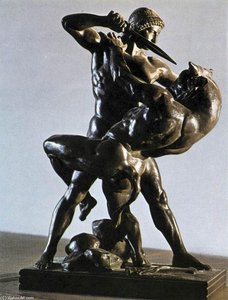
Send
Send Share
Share
 Details
 Guide
Guide

 Download
 Similars
 Diaporama
 Stats
StatsGreyhound Retrieving a Hare


 Read More
Giclée / Art Print
Museum-quality giclée or canvas print with fast production and flexible finish options. ( Buy Hand Made Painting Switch to Digital Image)




































Pick from our preset sizes that match the artwork's original proportions.

Type the width and the height you need, to fit your frame or your wall. A print can only be cut, never made bigger than the picture, so a size with a different shape loses a part of the image. We send you a digital mockup to approve before we print anything. The picture shown on this page does not show the real cut — only the mockup does.
Worldwide Delivery () in 2 weeks instead of standard 4/5 weeks. (26 October)

Free Worldwide Express Shipping

High-Quality Linen Canvas

Full Shipping Insurance

Customs Tax Refund Guarantee

True Color Matching Guarantee

100-Day Return Policy (Defects Only)

100% Money-Back Guarantee

Bulk Discount Offer
 Glass option is only available in size under 110 CM

Greyhound Retrieving a Hare
Giclée / Art Print
Reproduction Size
-


Total Price
$ 81
A Moment Frozen in Bronze – Antoine Barye’s ‘Greyhound Retrieving a Hare’
Antoine-Louis Barye's “Greyhound Retrieving a Hare” isn’t merely a sculpture; it’s a captured heartbeat. Completed around 1870, this bronze exemplifies the apex of the *animalier* movement – a revolutionary approach to sculpture that sought to transcend mere representation and instead imbue animals with their raw power, instinct, and inherent drama. Barye, often dubbed the “Michelangelo of the Menagerie,” achieved this remarkable feat through an unparalleled understanding of anatomy, coupled with a deeply Romantic sensibility that prioritized emotion over rigid academic constraints.
The scene unfolds with breathtaking immediacy: a greyhound, muscles taut and fur rippling, is in full pursuit. Its body arcs dramatically downwards, its powerful legs propelling it forward with explosive energy. Beneath the dog, a hare – smaller, more compact, and seemingly caught off guard – provides a vital counterpoint to the dynamic action. The composition isn’t static; it's a carefully orchestrated dance of movement, capturing the precise instant before the chase concludes. Barye masterfully uses negative space—the open areas around the figures—to further emphasize their dynamism and create a sense of depth within the sculpture.
The Lost-Wax Technique: A Masterclass in Detail
Barye’s technical prowess is immediately evident in the exquisite detail of this piece. He was a pioneer of the lost-wax casting process (cire perdue), a method that allowed him to achieve an astonishing level of realism and intricacy. The bronze itself, meticulously crafted, showcases subtle variations in tone – from the deep, lustrous blacks of the dog’s coat to the warmer browns and golds highlighting its musculature. The texture of the fur is remarkably convincing, achieved through careful manipulation of the wax model before casting. Notice, too, the delicate rendering of the hare's paws and ears—a testament to Barye’s painstaking attention to detail.
The sculpture’s surface isn’t smooth; it bears the marks of the casting process – subtle ridges and imperfections that add to its tactile quality. These irregularities are not flaws, but rather evidence of the artist's skill and the inherent beauty of the technique itself. Barye didn’t shy away from showcasing the tools of his trade, believing that the process was as important as the final product.
Symbolism and Romantic Intensity
“Greyhound Retrieving a Hare” is more than just a depiction of a hunt; it's a potent exploration of primal instincts and the eternal struggle between predator and prey. The greyhound, traditionally associated with speed, nobility, and loyalty, embodies the relentless pursuit of instinct. The hare, representing agility, cunning, and vulnerability, becomes a symbol of resistance against overwhelming force. The sculpture taps into deeply rooted human fascination with these themes – the thrill of the chase, the tension between life and death, and the inherent drama of the natural world.
Barye’s work resonates powerfully within the context of Romanticism, a movement that celebrated emotion, individualism, and the sublime. He sought to capture not just the outward appearance of animals but also their inner lives—their passions, fears, and desires. “Greyhound Retrieving a Hare” is a visceral expression of this Romantic ideal, inviting viewers to contemplate the raw beauty and untamed spirit of the animal kingdom.
A Legacy in Bronze – Reproductions and Beyond
Originally created as a bronze sculpture, "Greyhound Retrieving a Hare" has been reproduced extensively through hand-painted reproductions. These modern interpretations retain the essence of Barye’s original vision—the dynamic composition, the exquisite detail, and the profound emotional impact. Whether displayed in a private collection or adorning a grand interior space, this artwork continues to captivate audiences with its timeless appeal.
Questions & Answers
Which palette and lead color define "Greyhound Retrieving a Hare"?
"Greyhound Retrieving a Hare" is defined by a neutrals palette led by phthalo green (#1b1e19).
Is "Greyhound Retrieving a Hare" by Antoine-Louis Barye in the public domain, and why?
The copyright status of "Greyhound Retrieving a Hare" - in the public domain - its copyright has expired - follows from the artist's death in 1875.
Do the colors of "Greyhound Retrieving a Hare" appear strong or soft?
The color intensity of "Greyhound Retrieving a Hare" is monochromatic. Intensity describes how strong the colors appear.
Artist Biography
A Pioneer of Animal Sculpture: The Life and Legacy of Antoine-Louis Barye
Antoine-Louis Barye, born in Paris on September 24, 1795, emerged as a pivotal figure in the world of 19th-century sculpture. He wasn’t merely depicting animals; he was imbuing them with a dramatic intensity and anatomical accuracy previously unseen, effectively launching the *animalier* genre – a dedicated focus on animal forms – into the realm of fine art. Barye's journey began not in the studio of a sculptor, but as an apprentice goldsmith following in his father’s footsteps. This early training instilled within him a meticulous attention to detail and a mastery of technique that would prove invaluable throughout his career. He honed these skills further under sculptors like François-Joseph Bosio and Baron Antoine-Jean Gros, absorbing classical principles while simultaneously developing a uniquely Romantic sensibility. His formal education at the École des Beaux-Arts provided a solid foundation, but it was an encounter with the living world – specifically, the animals housed within the Jardin des Plantes in Paris around 1823 – that truly ignited his artistic vision.From Goldsmith to Animalier: The Development of a Unique Style
Barye’s dedication to observing animals was obsessive. He didn't simply glance; he studied, sketched, and meticulously analyzed their anatomy, movements, and behaviors. This commitment to realism wasn’t cold or clinical, however. It was infused with the emotional fervor characteristic of the Romantic movement. Early works like “Milo of Crotana Devoured by a Lion” (1819) and “Hercules with the Erymanthean Boar” (c. 1820), created while still a student, hinted at his emerging talent for dynamic composition and dramatic narrative. But it was with sculptures such as "Tiger Devouring a Gavial Crocodile" (1831) – a monumental plaster that caused a sensation at the Salon – and “Lion Crushing a Serpent” (1832), cast in bronze, that Barye truly established his signature style. These weren’t static representations; they were moments of raw power frozen in time, capturing the brutal beauty of nature's struggle for survival. He moved beyond mere imitation to convey the very essence of animal life – their strength, agility, and untamed spirit. His work resonated with a growing public fascination with the exotic and the wild, reflecting a Romantic yearning for experiences beyond the confines of civilized society.Major Works and Monumental Commissions
Throughout his career, Barye produced an astonishing array of sculptures, each demonstrating his unparalleled skill in capturing animal form and movement. Beyond the iconic “Tiger Devouring a Gavial Crocodile” and “Lion Crushing a Serpent,” masterpieces like "Theseus and the Minotaur" (1843), “Roger and Angelica on the Hippogriff” (1846), “Lapitha and Centaur” (1848) and “Jaguar Devouring a Hare” (1850) showcased his versatility and imaginative power. He wasn’t limited to depictions of predatory encounters; he also explored mythological scenes, imbuing them with the same dynamic energy and anatomical precision that defined his animal studies. His talent extended beyond smaller-scale bronzes as well. Barye received prestigious commissions for monumental works, including the “Lion of the Column of July,” a powerful symbol of French resilience, and sculptures adorning the Tuileries Garden in Paris. These large-scale projects demonstrated his ability to translate his artistic vision into public art, solidifying his reputation as one of France’s leading sculptors.Influences, Struggles, and Lasting Significance
Barye's work was a synthesis of diverse influences. The Romantic emphasis on emotion and individualism is palpable in the dramatic tension of his sculptures. Simultaneously, he drew inspiration from classical art, evident in his attention to anatomical accuracy and idealized forms. However, what truly set him apart was his scientific approach to observation – a direct result of his countless hours spent studying animals at the Jardin des Plantes. Despite achieving critical acclaim, Barye’s life wasn't without hardship. He struggled with financial difficulties throughout much of his career, largely due to poor business acumen. A bankruptcy in 1848 forced him to sell his models and molds, leading to a period where inferior copies flooded the market, damaging his reputation. He found some stability as Professor of Drawings at the Museum of Natural History in 1854, but it was only posthumously that his genius received its full due. Today, Antoine-Louis Barye is recognized as the father of modern animal sculpture. His influence on subsequent generations of artists is undeniable, and his works are celebrated for their power, realism, and enduring beauty. He elevated the *animalier* genre from a niche pursuit to a respected form of artistic expression, leaving an indelible mark on the history of sculpture. His legacy continues to inspire awe and admiration in collectors and museums worldwide.
Antoine-Louis Barye
1796 - 1875 , France
Quick Facts
- Full Name: Antoine-Louis Barye
- Nationality: French
- Date Of Birth: 1796
- Date Of Death: 1875
- Place Of Birth: Paris, France
- Notable Artworks:
- Tiger Devouring a Gavial
- Lion Crushing a Serpent
- Theseus and the Minotaur
- Roger & Angelica
- Lapitha and Centaur
- Jaguar Devouring Hare
- Artistic Movement Or Style: Romanticism
- Artists Who Influenced This Artist:
- Francois-Joseph Bosio
- Baron Antoine-Jean Gros
- Artists Or Movements Influenced By This Artist: ['Animal sculptors']
Related Articles

Bronze Sculptures That Defined Art History | OriginalUniqueArt
Journey through art history with our Top 10 bronze sculptures! Explore masterpieces by Rodin, Michelangelo & more. Discover stories behind iconic statues and find museum-quality reproductions for your home decor at OriginalUniqueArt.com.
The Enduring Legacy of Bronze: History, Technique & Artistic Expression for the Collector
Explore the rich history & enduring appeal of bronze sculpture with expert insights for collectors at OriginalUniqueArt. Learn about casting techniques, iconic artists, and collecting tips.
The Enduring Legacy of Bronze Sculpture: A Collector's Guide to Form & Cultural Significance
Explore the rich history & enduring appeal of bronze sculpture with expert insights for collectors at OriginalUniqueArt. Learn about casting techniques, iconic artists, and collecting tips to build a discerning art collection.

The Enduring Legacy of Bronze: A Historical & Artistic Exploration for the Collector
Explore the rich history & enduring appeal of bronze sculpture with expert insights for collectors at OriginalUniqueArt. Learn about casting techniques, iconic artists, collecting tips & contemporary interpretations.

Bronze Age to Modern Masters: 10 Sculptures That Redefined Art | OriginalUniqueArt
Journey through art history with 10 legendary bronze sculptures – from Michelangelo's David to Rodin’s Thinker. Explore the stories, techniques & timeless beauty of these masterpieces. Find museum-quality reproductions & elevate your home decor on OriginalUniqueArt.com.