Baroque Art · 1604
Triptych (Annibale Carracci, 1604)
Annibale Carracci (1560–1609) made Triptych. It dates from 1604. It belongs to the Baroque Art movement. It is kept at Galleria Nazional d Art Antica in Rome, Italy. It measures 37 × 24 cm.
- 1604
- 37 × 24 cm
- Galleria Nazional d Art Antica, Rome

 Preview

 Hand Made Oil Painting
 Send
 Share
 Fact sheet


 Download
 Similars
 X-Ray
 Diaporama
 Q&A

 Stats
Triptych, in brief
- Title
- Triptych
- Artist
- Annibale Carracci (1560–1609)
- Artist born in
- Bologna, Italy
- Date
- 1604
- Dimensions
- 37 × 24 cm
- Where to see it
- Galleria Nazional d Art Antica, Rome, Italy
- Movement
- Baroque Art
- Subject
- triptych, annibale carracci, baroque, angels, allegory, copper
What does Triptych depict?
Annibale Carracci’s Triptych: A Baroque Masterpiece of Light, Faith, and Divine Order
Annibale Carracci's 1604 Triptych, currently housed within the Galleria Nazionale d'Arte Antica in Rome, stands as a pivotal example of the burgeoning Baroque style. More than simply a religious depiction, it’s a carefully orchestrated symphony of light, color, and symbolism—a testament to the artist’s mastery of composition and his deep understanding of both classical ideals and emerging emotional expression. This oil-on-copper painting, measuring 37 x 24 cm, invites viewers into a world where earthly beauty intertwines with divine grace, offering a profound meditation on faith, knowledge, and the very nature of existence.
Composition and Symbolism: A Dance of Allegory and Divine Presence
The triptych format itself is deeply rooted in religious tradition, allowing for a layered narrative to unfold. The central panel immediately draws the eye to an angelic figure, radiating serenity and holding aloft a book—a potent symbol of both Holy Scripture and the pursuit of divine knowledge. Surrounding this central emblem are cherubs, their youthful innocence adding a touch of ethereal joy to the scene. The left and right panels introduce allegorical figures engaged in distinct activities: one grasping a scroll or document, representing wisdom and law, while the other holds an object suggestive of power and authority. These flanking scenes aren’t merely decorative; they serve as crucial contextual elements, enriching the central theme with layers of meaning and inviting contemplation on the foundations of faith and governance.
Technique and Artistic Innovation: A Synthesis of Renaissance and Baroque
Carracci's skill is evident in every meticulously rendered detail. The use of light and shadow—a hallmark of Baroque art—is particularly striking, creating a dynamic sense of movement and emotion within the painted space. Notice how the light seems to emanate from an unseen source, illuminating the figures with a radiant glow while simultaneously casting deep shadows that heighten their three-dimensionality. The artist’s mastery extends beyond mere technique; he seamlessly blends elements of Florentine linear draftsmanship—inherited from his artistic lineage—with Venetian color and atmospheric effects, creating a unique style that revitalized Italian painting. The copper panel itself contributes to the work's luminosity, reflecting light in subtle ways that enhance its visual impact. The intricate details – the folds of the garments, the texture of hair, the play of light on skin – demonstrate an extraordinary level of observation and artistic control.
Historical Context and Artistic Legacy: A Bridge Between Eras
Annibale Carracci emerged from a vibrant artistic community in Bologna during the late 16th century, a period marked by a desire to move beyond the constraints of Mannerism. Alongside his brother Agostino and cousin Ludovico, he spearheaded the Accademia degli Incamminati, an institution dedicated to reviving High Renaissance ideals while embracing a more naturalistic approach. This ambitious project aimed to re-establish Italy as a leading force in European art. Carracci’s Triptych exemplifies this spirit of innovation, bridging the gap between the classical past and the emerging Baroque style. His work profoundly influenced subsequent generations of artists, shaping the course of Italian painting for decades to come, and continues to inspire awe and admiration today. As a masterpiece of Italian art, it stands as a powerful reminder of the enduring beauty and spiritual depth that can be achieved through masterful artistic skill.
Further Information: Explore more works by Annibale Carracci on OriginalUniqueArt.com, delve into the history of the Galleria Nazionale d'Arte Antica at OriginalUniqueArt.com, and discover other Baroque masterpieces such as Caravaggio’s *Crucifixion of Saint Peter* on WGA.hu.
Which museum holds Triptych?
Galleria Nazional d Art Antica
Rome, Italy
The History of Galleria Nazional d Art Antica The Galleria Nazional d Art Antica was established in 1893 in Rome, Italy. The institution operates through two distinct venues: Palazzo Barberini and Palazzo Corsini. These sites house a collection that spans the period from the Italian Renaissance through the Baroque era.


High-resolution images of Triptych

Annibale Carracci, Triptych (1604), Galleria Nazional d Art Antica. Public domain.
Questions on Triptych, answered
Where can I see the original "Triptych" by Annibale Carracci?
You can see the original "Triptych" at the Galleria Nazional d Art Antica, Rome, Italy.
In what year was "Triptych" by Annibale Carracci created?
"Triptych" dates from 1604. The date places the work within Annibale Carracci's career and its era.
What size is "Triptych" by Annibale Carracci in real life?
The recorded dimensions of "Triptych" by Annibale Carracci are 37 x 24 cm. Reproductions can be ordered in other sizes while keeping the same proportions.
What is "Triptych" about?
"Triptych" by Annibale Carracci depicts: triptych, annibale carracci, baroque, angels, allegory, copper, renaissance, rome.
Is "Triptych" by Annibale Carracci in the public domain?
"Triptych" by Annibale Carracci is in the public domain - its copyright has expired. This status governs how the image of the work may be reproduced.
Which artist is "Triptych" attributed to?
The artist behind "Triptych" is Annibale Carracci. The work is catalogued under Annibale Carracci's name.
What style does "Triptych" belong to?
"Triptych" by Annibale Carracci belongs to the Baroque Art movement. This movement provides the stylistic context of the work.
Which period of Annibale Carracci's career does "Triptych" belong to?
"Triptych" belongs to the Baroque Maturity of Annibale Carracci's career. This classification relates the work to the artist's development.
At what age did Annibale Carracci make "Triptych"?
When "Triptych" was created in 1604, Annibale Carracci - born in 1560 - was 44 years old.
About the artist, Annibale Carracci
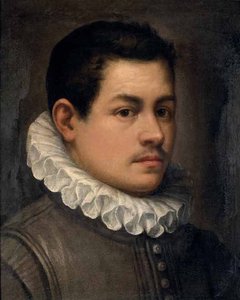
1560–1609, Italy
Annibale Carracci
Early Life and the Bolognese Roots Annibale Carracci, born in Bologna on November 3, 1560, emerged from a family deeply entrenched in artistic tradition. His initial training likely unfolded within the nurturing environment of his familial workshop, laying the foundation for a career that would profoundly reshape the landscape of Italian painting. Bologna at this time was a vibrant hub of intellectual and artistic ferment, yet it felt somewhat distant from the dominant currents emanating from Rome and Venice. This sense of provincialism fueled a desire among a group of young artists—Annibale, his brother Agostino, and cousin Ludovico—to forge a new path, one that would revitalize Italian art by looking to the masters of the High Renaissance while simultaneously embracing a more naturalistic approach.
Also by Annibale Carracci
 The beaneater Sun
 The Choice of Heracles
 River Landscape1589
 Mocking of Christ1596
Essays around Triptych
 The Architecture of Divinity: Tracing the Evolution of Angelic Iconography in Renaissance ArtExplore the evolution of angelic iconography from early Christian art to the Baroque. Trace the divine history with our expert analysis.
 25 Masterpieces by Sir Anthony van Dyck: The King of Baroque PortraitureStep into the elegance of the Baroque era with our curated guide to Sir Anthony van Dyck's top 25 masterpieces. Explore royal portraits and…
 Caravaggism and Bolognese Classicism: Two Paths of the BaroqueMaster the differences between Caravaggism and Bolognese Classicism. Explore the dramatic tension of the Baroque era now.