

 Preview
 Send
Send Share
Share
 Details
 Guide
Guide

 Download
 Similars
 X-Ray
X-Ray Diaporama
 Stats
StatsConfervae
 Watercolor
- WallArt
- Victorian Botanical Illustration
 1845
1845- 19th Century
 24.0 x 19.0 cm
 J. Paul Getty Museum
 Read More
Hand Made Oil Reproduction
Hand-painted oil on canvas in your size and frame, made to order by our artists. ( Switch to Print Switch to Digital Image)




P118B $10

P118H $10

P118W $10

P438Z $10

P508JH $12

P508YH $12

P805H $10

P805Z $10

P919BZ $10

P919G $10

P919XJ $10

P959ZH $10

P968JZ $12

W106C $8

W218G $10

W218JH $8

W218Y $10

W307PJ $10

W316G $10

W316PJ $8

W316Y $10

W398PJ $8

W4111J $10

W500HY $15

W500JH $15

W692G $12

W849H $8

W940BG $15

W953PJ $8




Pick from our preset sizes that match the artwork's original proportions.

Type the width and the height you need, to fit your frame or your wall. This is hand-painted, so for a size with a different shape the artist can paint a bit more around the picture, or cut a bit — you choose. We send you a digital mockup to approve before the painting starts. The picture shown on this page does not show the real result — only the mockup does.
After order, OriginalUniqueArt.com team will email client for instructions and provide a mockup preview
Worldwide Delivery () in 3/4 weeks instead of standard 5 weeks. (25 October). No compromise on quality.

Free Worldwide Express Shipping

High-Quality Linen Canvas

Full Shipping Insurance

Customs Tax Refund Guarantee

True Color Matching Guarantee

100-Day Return Policy (Defects Only)

100% Money-Back Guarantee

Bulk Discount Offer
 Glass option is only available in size under 110 CM

Confervae
Reproduction Medium
Reproduction Size
-


Total Price
$ 300
Whispers of Botanical Science: Exploring "Confervae"
To gaze upon Anna Atkins' "Confervae" is to encounter a moment suspended between meticulous scientific observation and ethereal artistic poetry. This delicate watercolor, dating from 1845, does not merely depict a flower; it captures the very breath of botanical study at a pivotal juncture in human history. The subject itself—a bloom rendered with long, almost smoky petals—suggests a creature caught mid-drift, its form dissolving into shades of pale blue. It possesses an otherworldly quality, as if the pigment itself has been infused with the mist of dawn.
A Pioneer's Touch: Technique and Context
The technique employed here speaks volumes about Atkins’ genius. While appearing to be a watercolor, its slightly blurry, almost photographic quality hints at the revolutionary nature of her work. Anna Atkins is celebrated as a pioneer not only in botany but also in the nascent field of photography, making this piece a fascinating intersection of art and emerging science. In an era when scientific illustration was becoming increasingly precise, "Confervae" retains a delicate, watercolor softness that elevates it beyond mere documentation. The visible signature anchors us to her hand, reminding us that every stroke here is imbued with the dedication of a true scholar-artist.
Symbolism and the Ephemeral Beauty
The blue hue dominating the composition often carries connotations of melancholy, depth, and intellectual pursuit—qualities perfectly suited to Atkins’ groundbreaking career. The flower's structure, resembling smoke or fine hair, invites contemplation on transience. It speaks to the fleeting nature of beauty, a theme that resonates deeply with collectors who appreciate art for its ability to capture moments just before they vanish. Owning a reproduction of "Confervae" is acquiring not just an image, but a meditation on impermanence viewed through the lens of Victorian scientific curiosity.
Bringing Scientific Romance Home
For the discerning collector or designer whose aesthetic leans toward natural history, romanticism, or delicate academic pursuits, this piece offers unparalleled depth. Its subtle palette and intricate detail allow it to harmonize beautifully in spaces that value intellectual conversation—a library corner, a study, or an elegantly appointed drawing-room. Reproducing this work allows one to bring the quiet dignity of 19th-century scientific exploration into contemporary life, transforming a mere wall hanging into a treasured narrative piece.
Questions & Answers
What are the date and style of "Confervae" by Anna Atkins, Anne Dixon?
"Confervae" was made in 1845, within the Victorian Botanical Illustration movement.
Is there a guide for "Confervae" by Anna Atkins, Anne Dixon?
A Guide page is available for "Confervae" by Anna Atkins, Anne Dixon: a printable factsheet about the artwork, designed for students and classroom use.
How do I preview a reproduction of "Confervae" by Anna Atkins, Anne Dixon?
The Preview page of "Confervae" lets you preview the artwork before ordering.
Artist Biography
A Pioneer of Photographic Botany: The Life and Legacy of Anna Atkins
Anna Atkins, born Anna Children in 1799 in Tonbridge, Kent, was a figure whose contributions to both botany and photography were remarkably ahead of her time. Her life unfolded against the backdrop of burgeoning scientific inquiry and artistic innovation, yet she navigated a world where opportunities for women were severely limited. The early loss of her mother fostered a particularly close relationship with her father, John George Children, a respected chemist, mineralogist, and zoologist—a connection that proved pivotal in shaping her intellectual trajectory. He provided an unusually comprehensive scientific education for a woman of the era, nurturing a curiosity that would blossom into groundbreaking work. This foundation wasn’t merely academic; it was deeply practical, involving her directly in his research, most notably through detailed engravings of shells used to illustrate his translation of Lamarck's *Genera of Shells*. These early artistic endeavors weren’t simply illustrative; they honed a meticulous observational skill that would become central to her later photographic explorations.Cyanotype Impressions: A Revolution in Scientific Documentation
The year 1839 marked a turning point, not only for Atkins but for the nascent field of photography itself. She was elected a member of the London Botanical Society, an unusual honor that underscored her growing reputation within the scientific community. Simultaneously, she became captivated by the revolutionary photographic process of cyanotyping, invented by Sir John Herschel. Unlike earlier methods, cyanotype offered a relatively simple and accessible means of creating photographic images—a blueprint-like process using light-sensitive iron salts to produce striking blue prints. Atkins didn’t merely adopt this technique; she transformed it into an instrument for scientific documentation unlike any seen before. She embarked on the ambitious project of cataloging British algae, recognizing that traditional hand-drawn illustrations often failed to capture the intricate details of these delicate specimens. Her resulting work, *Photographs of British Algae: Cyanotype Impressions* (1842-1853), wasn’t just a collection of beautiful images; it was a landmark achievement—the first book ever illustrated with photographs.Artistic Vision and Scientific Rigor
The significance of Atkins's work extends far beyond its historical "first." She didn’t simply *reproduce* botanical specimens; she presented them as objects of aesthetic beauty, carefully arranging the algae on the cyanotype paper to create compositions that were both scientifically accurate and visually compelling. The ethereal blue tones and delicate forms evoke a sense of wonder, transforming scientific documentation into an art form. This blending of artistic vision and scientific rigor was particularly remarkable for its time, challenging conventional notions about the relationship between art and science. Her later work extended beyond algae to include ferns and other plant life, as evidenced by *Cyanotypes of British and Foreign Plants and Ferns* (1854), further demonstrating her mastery of the cyanotype process and her dedication to botanical documentation. Collaborations with figures like Anne Dixon expanded her artistic explorations, incorporating elements such as flowers, feathers, and lace into increasingly complex compositions.A Legacy Rediscovered
Despite her pioneering contributions, Anna Atkins’s work largely faded from view in the late 19th century. Her albums were rediscovered in the British Museum by historian William Lang Jr. in 1889, but even then, her role as the creator remained somewhat obscured. It wasn't until more recent scholarship that her significance began to be fully appreciated. Today, Atkins is celebrated as a visionary artist and scientist—a true innovator who anticipated many of the developments in both photography and botanical illustration that would follow. Her work continues to inspire artists and scientists alike, reminding us of the power of observation, experimentation, and the enduring beauty of the natural world. Institutions like the J. Paul Getty Museum hold examples of her cyanotypes – *Cyanotypes of British and Foreign Ferns*, *Convalaria multiflora*, and *Adiantum tenerum, Jamaica* – testaments to her skill and dedication. Her legacy is a powerful reminder that innovation often arises from unexpected intersections—in this case, the convergence of art, science, and a woman’s unwavering curiosity.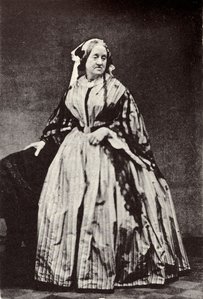
Anna Atkins, Anne Dixon
1799 - 1871 , United Kingdom
Quick Facts
- Full Name: Anna Atkins (Anne Dixon)
- Nationality: British
- Date Of Birth: 1799
- Date Of Death: 1871
- Place Of Birth: Tonbridge, United Kingdom
- Notable Artworks:
- Cyanotypes of British Ferns
- Convalaria multiflora
- Adiantum tenerum, Jamaica
- Artistic Movement Or Style: Botanical art, Photography
- Artists Who Influenced This Artist:
- John Herschel
- Jean-Baptiste Lamarck
- Artists Or Movements Influenced By This Artist:
- Early photography
- Botanical illustration
Related Articles

Echoes of Time: Exploring the Enduring Appeal & Historical Context of Vintage Art Prints
Explore the captivating world of vintage art prints! Discover their history, collecting tips & enduring appeal. Expert insights on chromolithography and building a legacy collection with OriginalUniqueArt.

Giclée Prints: Archival Quality & Aesthetic Nuances for the Discerning Collector
Explore the world of giclée prints with OriginalUniqueArt. Learn about archival quality, aesthetic nuances & investment potential. Expert guidance for discerning art collectors seeking museum-quality reproductions and lasting value.

Angelo Chiacchio: A Mid-Century American Illustration Master & the Rise of Commercial Art
Explore the captivating world of Angelo Chiacchio, a master of mid-century American illustration. Discover his evolution, signature style, and lasting impact on commercial art & design. Learn about his legacy at the Museum of American Illustration.

The Enduring Legacy of Fine Art Prints: Technique, History & Aesthetic Impact
Explore the rich history & techniques of fine art prints. Discover investment potential, assess authenticity, and learn how to preserve your collection with expert guidance. Trusted insights for discerning collectors.
Kay Rasmus Nielsen: A Golden Age Illustrator's Enchanting Legacy of Symbolism & Narrative
Explore the captivating world of Kay Rasmus Nielsen, a celebrated Golden Age illustrator renowned for his Art Nouveau fairy tale art & Disney contributions. Discover his unique style, enduring legacy, and how to collect his enchanting works.


