

 Preview
 Send
Send Share
Share
 Details
 Guide
Guide

 Download
 Similars
 X-Ray
X-Ray Diaporama
 Q&A
Q&A Stats
StatsMrs. Potter Palmer


 Read More
Giclée / Art Print
Museum-quality giclée or canvas print with fast production and flexible finish options. ( Buy Hand Made Painting Switch to Digital Image)




P118B $10

P118H $10

P118W $10

P438Z $10

P508JH $12

P508YH $12

P805H $10

P805Z $10

P919BZ $10

P919G $10

P919XJ $10

P959ZH $10

P968JZ $12

W106C $8

W218G $10

W218JH $8

W218Y $10

W307PJ $10

W316G $10

W316PJ $8

W316Y $10

W398PJ $8

W4111J $10

W500HY $15

W500JH $15

W692G $12

W849H $8

W940BG $15

W953PJ $8




Pick from our preset sizes that match the artwork's original proportions.

Type the width and the height you need, to fit your frame or your wall. A print can only be cut, never made bigger than the picture, so a size with a different shape loses a part of the image. We send you a digital mockup to approve before we print anything. The picture shown on this page does not show the real cut — only the mockup does.
Worldwide Delivery () in 2 weeks instead of standard 4/5 weeks. (30 October)

Free Worldwide Express Shipping

High-Quality Linen Canvas

Full Shipping Insurance

Customs Tax Refund Guarantee

True Color Matching Guarantee

100-Day Return Policy (Defects Only)

100% Money-Back Guarantee

Bulk Discount Offer
 Glass option is only available in size under 110 CM

Mrs. Potter Palmer
Giclée / Art Print
Reproduction Size
-


Total Price
$ 81
A Portrait of Grace and Power: Anders Zorn’s “Mrs. Potter Palmer”
Anders Leonard Zorn's 1893 oil painting, "Mrs. Potter Palmer," is more than just a portrait; it’s a carefully constructed tableau of wealth, social standing, and quiet dignity. The canvas captures Bertha Matilde Palmer, the formidable wife of Chicago industrial magnate Potter Palmer, in an arresting moment of poised elegance. Zorn, a master of capturing fleeting expressions and subtle nuances, doesn't simply depict her appearance; he reveals a complex personality layered beneath a carefully cultivated facade.
The painting immediately draws the eye to Mrs. Palmer’s striking presence. She stands tall, framed by a dark background that emphasizes her luminous white gown—a deliberate choice of color that evokes purity and sophistication. Her posture is impeccable, one hand gracefully holding a fan, the other subtly raised as if offering a gesture of welcome or command. The composition is vertically oriented, lending an air of formality and reinforcing her status. Zorn’s brushwork is remarkably loose and impressionistic, particularly noticeable in the fabric of her dress—a swirling dance of color and texture that suggests both luxury and movement. This technique isn't about photographic realism; it’s about conveying a sense of atmosphere and capturing the light itself.
The Context of Power and Patronage
To fully appreciate “Mrs. Potter Palmer,” one must understand the historical context in which it was created. The late 19th century was an era of rapid industrial growth in Chicago, fueled by railroad expansion and burgeoning wealth. Potter Palmer became a pivotal figure in this transformation, amassing a vast fortune through his involvement in railroads and real estate development. Bertha Palmer, a woman of considerable intelligence and social acumen, played a crucial role in shaping the city’s cultural landscape. She was president of the Board of Lady Managers for the 1893 World's Columbian Exposition—a monumental undertaking that showcased American ingenuity and ambition—and spearheaded numerous philanthropic initiatives.
The painting itself is inextricably linked to this era of civic engagement and social influence. It’s a testament to Bertha Palmer’s position as a leading figure in Chicago society, reflecting her role as a patron of the arts and a champion of charitable causes. The inclusion of the gavel—a symbol of authority and leadership—hints at her active participation in shaping the city's future.
Symbolism and Artistic Technique
Zorn’s masterful use of light and shadow is central to the painting’s impact. The subdued lighting creates a sense of intimacy, drawing the viewer into Mrs. Palmer’s world. Notice how the light catches her face, highlighting her features while leaving much of the background in darkness—a technique that emphasizes her importance and draws attention to her presence. The subtle melancholy in her expression is particularly noteworthy; it suggests a quiet awareness of the burdens and responsibilities associated with her position.
Zorn’s brushwork, as mentioned earlier, is characterized by its fluidity and spontaneity. He employs broken color and visible strokes to create a sense of movement and vibrancy. The layering of oil paints builds up rich textures and subtle gradations of tone, adding depth and dimension to the portrait. The choice of a dark background isn’t merely aesthetic; it serves to elevate Mrs. Palmer's figure, making her appear even more radiant against the somber backdrop.
A Legacy of Art and Influence
"Mrs. Potter Palmer" is not simply a likeness of a wealthy woman; it’s a carefully crafted portrait that encapsulates the spirit of an era. It stands as a testament to Zorn's artistic skill, his ability to capture both the outward appearance and inner character of his subjects. The painting offers a glimpse into the world of Chicago’s elite in the late 19th century—a world defined by ambition, philanthropy, and social influence. Reproductions of this iconic work continue to resonate with art lovers today, offering a captivating window into a bygone era and a profound exploration of human character.
Questions & Answers
What technique was used for "Mrs. Potter Palmer" by Anders Leonard Zorn?
The medium of "Mrs. Potter Palmer" by Anders Leonard Zorn is oil on canvas. Reproductions aim to render the appearance of this technique.
Where can I buy a print of "Mrs. Potter Palmer" by Anders Leonard Zorn?
"Mrs. Potter Palmer" is available as a fine art print on cotton canvas or archival canvas paper. Orders are placed on its Fine Art Print page, in the size of your choice.
Did "Mrs. Potter Palmer" stay in its artist's homeland?
No - the artwork is kept abroad. "Mrs. Potter Palmer" is held in United States of America, while Anders Leonard Zorn was born in Sweden.
Artist Biography
A Swedish Master of Light and Life: The World of Anders Zorn
Anders Leonard Zorn, a name synonymous with vibrant Impressionism and masterful portraiture, stands as Sweden’s most celebrated artist. Born in 1860 amidst the rustic beauty of Dalarna, his journey from humble beginnings to international acclaim is a testament to raw talent nurtured by relentless dedication. Unlike many artists who sought formal training within established circles, Zorn's early education was rooted in the practicalities of rural life and an innate artistic sensibility that blossomed even before entering the Royal Swedish Academy of Arts at the remarkably young age of twelve. His childhood on his grandparents’ farm instilled a deep connection to the land and its people—a theme that would resonate throughout his oeuvre, particularly in his evocative depictions of Swedish peasant life. This early exposure wasn't merely about subject matter; it was about capturing a way of being, an authenticity that infused his work with a unique emotional depth.From Watercolors to International Recognition
Zorn’s initial artistic explorations centered on watercolors, a medium he mastered with astonishing speed and skill. He quickly gained recognition for his ability to capture fleeting moments of light and atmosphere, particularly in scenes depicting everyday life. A pivotal moment arrived with “In Mourning” (1880), a watercolor portrait that showcased his remarkable sensitivity and technical prowess. This work propelled him onto the art scene, attracting commissions from Stockholm’s elite and setting the stage for an international career. He embarked on extensive travels throughout Europe—London, Paris, Spain—and eventually to the United States, where he found immense success as a portraitist. His ability to distill the essence of his sitters, whether royalty like King Oscar II or American presidents Grover Cleveland, William H. Taft, and Theodore Roosevelt, earned him widespread admiration. Zorn didn’t simply paint likenesses; he captured character, intellect, and even a hint of the soul. This talent wasn't accidental—it stemmed from an acute observational skill honed through years of studying human form and expression.A Synthesis of Influences and Artistic Development
While Zorn’s style is often categorized as Impressionistic, it was far from a simple imitation of French trends. He absorbed influences from various sources, blending them into a uniquely personal vision. The luminosity of Spanish masters like Velázquez resonated in his handling of light and shadow, while the directness and realism of Scandinavian naturalism informed his approach to subject matter. His time spent with artists like Albert Edelfelt in Paris exposed him to new ideas and techniques, but he always remained true to his own artistic instincts. A crucial turning point came when Zorn began experimenting with oil painting in the late 1880s. This allowed him to achieve a greater richness of color and texture, further enhancing the vibrancy and immediacy of his work. He embraced a limited palette, focusing on achieving maximum impact through subtle variations in tone and hue—a technique that became a hallmark of his style. His paintings from this period, such as “A Fisherman in St Ives,” demonstrate a newfound confidence and mastery of the medium.Legacy and Enduring Impact
Anders Zorn’s influence extends far beyond his stunning body of work. He was not only a gifted artist but also a dedicated patron of the arts, establishing the Bellman Prize in 1920—a prestigious literary award for Swedish poets that continues to be awarded today. This act underscores his commitment to fostering creativity and supporting cultural expression within his homeland. His paintings are now held in prominent museums worldwide, including the Nationalmuseum in Stockholm, the Musée d'Orsay in Paris, and the Metropolitan Museum of Art in New York. The Zorn Collections in Mora, Sweden—comprising Zorngården, Zorn Museum, Gammelgård, and Gopsmor—serve as a lasting tribute to his life and legacy, offering visitors an intimate glimpse into his world. Zorn’s ability to capture the beauty of everyday life, combined with his technical brilliance and unwavering artistic vision, cemented his place as one of the most important artists of his generation. He remains a source of inspiration for artists today, a testament to the enduring power of light, color, and human connection in art. His work continues to resonate with audiences worldwide, reminding us of the beauty that can be found in both the grand and the mundane.
Anders Leonard Zorn
1860 - 1920 , Sweden
Quick Facts
- Full Name: Anders Leonard Zorn
- Nationality: Swedish
- Date Of Birth: 1860
- Date Of Death: 1920
- Place Of Birth: Mora, Sweden
- Notable Artworks:
- Midsummer Dance
- Model Study
- Karleksnymf
- Self-Portrait
- Artistic Movement Or Style: Impressionism
- Artists Who Influenced This Artist:
- Egron Lundgren
- Georg von Rosen
Related Articles

The Timeless Beauty of Oil on Panel: Capturing Light and Texture through the Impressionist Lens
Discover the exquisite depth of oil on panel. Explore how Impressionist masters captured light and texture through tactile brushwork, and learn how to bring these museum-quality, hand-painted masterpieces into your home with expert curation.
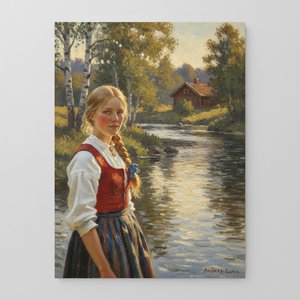
Anders Zorn: A Master of Swedish Impressionism & Ephemeral Light
Explore the life & art of Anders Zorn, a celebrated Swedish Impressionist painter renowned for his masterful portraits, vibrant watercolors, and captivating etchings. Discover his legacy at OriginalUniqueArt.

The Enduring Legacy of Oil on Canvas: Technique, History & Aesthetic Impact
Explore the rich history & techniques of oil painting – from Renaissance masters to Impressionism. Discover pigments, layering methods, and why this timeless medium endures. Expert insights for artists & art enthusiasts.

The Soul of Impressionism: Why Oil on Canvas Captures Eternal Light and Timeless Emotion
Discover the enchanting alchemy of Impressionism. Explore how the mastery of oil on canvas, through glazing and impasto, captures eternal light and emotion. Perfect for lovers of Monet and Van Gogh seeking the profound depth of hand-painted fine art.
The Timeless Charm of Oil on Board: Reimagining Texture and Light through the Impressionist Lens
Discover the profound intimacy of oil on panel. Explore how Impressionist masters used rigid supports to capture light, texture, and impasto depth through exquisite, handmade oil reproductions for discerning collectors.


