

 Send
Send Share
Share
 Details
 Guide
Guide

 Download
 Similars
 Diaporama
 Stats
StatsThe Steerage
 Black and White Photography
- Photo
- Pictorialism
 1907
1907- 19th Century
 32.0 x 26.0 cm
 Metropolitan Museum of Art
 Read More
Hand Made Oil Reproduction
Hand-painted oil on canvas in your size and frame, made to order by our artists. ( Switch to Print Switch to Digital Image)




































Pick from our preset sizes that match the artwork's original proportions.

You may enter your own dimensions to fit a specific frame or space. If your selected size does not match the original image's proportions, we will either crop the artwork or extend the painting with additional hand-painted elements. A digital mockup will be sent for your approval before production begins.
Please note that the on-screen preview does not reflect the actual cropping or extension. Only the mockup will accurately show the final composition.
While custom sizes are available, we recommend selecting a dimension from the predefined list to preserve the original proportions.
After order, OriginalUniqueArt.com team will email client for instructions and provide a mockup preview
Worldwide Delivery () in 3/4 weeks instead of standard 5 weeks. (12 October). No compromise on quality.

Free Worldwide Express Shipping

High-Quality Linen Canvas

Full Shipping Insurance

Customs Tax Refund Guarantee

True Color Matching Guarantee

100-Day Return Policy (Defects Only)

100% Money-Back Guarantee

Bulk Discount Offer
 Glass option is only available in size under 110 CM

The Steerage
Reproduction Medium
Reproduction Size
-


Total Price
$ 300
A Glimpse into Transient Community: The Steerage
To gaze upon this evocative photograph, "The Steerage," is to be instantly transported across the vast expanse of time and ocean. Captured in 1907, this black and white image by Alfred Stieglitz transcends its documentary origins; it becomes a profound meditation on humanity itself. The scene unfolds on the deck of a ship, teeming with life—a vibrant, almost palpable collection of souls gathered together. One can almost hear the murmur of conversations, the creak of the wood beneath their feet, and the distant cry of gulls overhead. It is a tableau vivant of passage, capturing not just bodies in repose or conversation, but spirits caught in the liminal space between one life chapter closing and another beginning.
The Artistry of Stieglitz's Vision
Alfred Stieglitz, the pioneer who single-handedly elevated photography to the realm of fine art, approached this subject with a masterful eye. While the medium is inherently photographic—a record of light and shadow—his touch imbues it with painterly depth. The composition itself is a study in contrasts: the density of the crowd against the open expanse of the deck; the varied postures of the passengers suggesting both exhaustion and buoyant camaraderie. Notice the details, such as the few figures sporting ties, hinting at lives lived before this moment of shared transit—a juxtaposition of formal attire against the raw reality of steerage life. Stieglitz does not merely record; he interprets, framing these individuals within a narrative tapestry woven from chance encounters.
Historical Resonance and Human Connection
The year 1907 places us at a moment of immense global movement, an era defined by grand voyages and the promise—or peril—of crossing continents. The steerage, historically associated with the most humble passage, becomes the stage for unexpected moments of shared humanity. This photograph speaks volumes about the universal need for community when stripped down to its essentials. It is a powerful reminder that regardless of social standing or destination, the fundamental human experience involves gathering, sharing space, and finding solace in the company of others. For the collector, this piece offers more than mere decoration; it offers a window into collective memory.
Bringing the Voyage Home: Decorating with Atmosphere
Reproducing "The Steerage" allows one to infuse any interior space—be it a formal drawing-room or a cozy study—with an air of sophisticated, storied depth. The monochromatic nature of the original lends itself beautifully to various decorative schemes, allowing it to harmonize with both richly colored textiles and minimalist modern palettes. Imagine this print mounted above a console table, catching the light just as Stieglitz captured it across the deck. It serves not only as a striking piece of art but as an emotional anchor, inviting contemplation on journeys taken and those yet to come. It whispers tales of departure and arrival, making any room feel imbued with history and enduring human spirit.
Questions & Answers
How many people view "The Steerage"?
A Stats page exists for "The Steerage". It charts the monthly visits of the artwork and of the artist's other works, with country and language breakdowns.
What color saturation does "The Steerage" by Alfred Stieglitz have?
The colors of "The Steerage" by Alfred Stieglitz have a muted saturation. Saturation describes how vivid or muted the colors are.
What does "The Steerage" share with the rest of Alfred Stieglitz's output?
"The Steerage" shares with Alfred Stieglitz's other works its Pictorialism style and the recorded themes: formal composition, pictorialism style, modernist vision, ship life document, artist legacy.
What atmosphere does "The Steerage" have?
The overall mood of "The Steerage" by Alfred Stieglitz is elegant. The mood describes the general atmosphere of the work.
What is the dominant hue of "The Steerage" by Alfred Stieglitz?
"The Steerage" leans toward a golden yellow range tone.
What emotional tone accompanies the Pictorialism style of "The Steerage"?
The reflective emotion of "The Steerage" accompanies its Pictorialism style.
What size and orientation are recommended for a print of "The Steerage" by Alfred Stieglitz?
medium size, portrait orientation: that is the print setup suggested for "The Steerage" by Alfred Stieglitz.
What placement suits the format of "The Steerage" by Alfred Stieglitz?
Format (portrait) and recommended space (living room) are the two placement facts recorded for "The Steerage" by Alfred Stieglitz.
Artist Biography
A Pioneer of Vision: The Life and Legacy of Alfred Stieglitz
Alfred Stieglitz, born in Hoboken, New Jersey, on January 1, 1864, was more than just a photographer; he was a revolutionary force who single-handedly elevated photography from a skilled craft to a recognized fine art. His journey began not with a camera in hand, but with an intellectual upbringing fostered by his German-Jewish immigrant family. Early education at the Charlier Institute and City College of New York provided a foundation, yet it was his studies in Berlin that ignited his artistic passion. There, under the tutelage of Hermann Wilhelm Vogel, Stieglitz discovered the captivating potential hidden within photographic processes – a revelation that would define his life’s work. He purchased his first camera and began to document the European countryside, quickly developing an aesthetic sensibility rooted in what became known as Pictorialism. This movement sought to mimic the expressive qualities of painting and drawing through manipulated printing techniques, soft focus, and evocative compositions. However, Stieglitz would eventually transcend these limitations, forging a path toward a uniquely photographic vision.Championing Modern Art and the American Voice
Upon his return to New York in 1890, Stieglitz embarked on a mission to legitimize photography as an art form. He became a prolific writer, publishing articles that passionately argued for its artistic merit, and founded the Camera Club of New York’s journal, *Camera Notes*. Dissatisfaction with the club's conservative outlook led him to establish the Photo-Secession in 1902, a group dedicated to promoting photographic artistry. This culminated in the opening of “291” – a gallery at 291 Fifth Avenue that became a crucible for modern art in America. It wasn’t merely a showcase for photography; Stieglitz boldly exhibited groundbreaking works by European avant-garde artists like Pablo Picasso, Henri Matisse, and Francis Picabia, introducing American audiences to the radical innovations of Cubism, Fauvism, and other emerging movements. “291” became a salon where ideas clashed, boundaries were pushed, and a distinctly American modern aesthetic began to take shape. Stieglitz’s influence extended beyond exhibition; he fostered dialogue, challenged conventions, and nurtured the careers of countless artists, including Georgia O'Keeffe, whom he would later marry.Evolving Styles: From Pictorialism to Straight Photography
Stieglitz’s own photographic style underwent a significant evolution throughout his career. Initially embracing the soft-focus aesthetic and painterly qualities of Pictorialism – exemplified in works like *Study of Georgia Engelhard with Dolls* (1910) – he gradually moved towards a more direct, unmanipulated approach known as “straight photography.” This shift was influenced by his growing appreciation for modern art’s emphasis on form, clarity, and the inherent qualities of materials. The Steerage (1907), arguably his most iconic image, marks this turning point. Captured during a transatlantic voyage, it depicts passengers traveling in steerage class with a stark realism and compositional boldness that foreshadowed modernist principles. The photograph isn’t sentimental or picturesque; instead, it presents a raw, unvarnished view of social reality, emphasizing geometric shapes and tonal contrasts. Later works, such as his series of cloud studies (*Equivalents*), further demonstrate his commitment to exploring the expressive potential of photography through pure form and light. These images were not intended to represent specific objects but rather to evoke emotional states – a concept that aligned with abstract expressionism.A Lasting Impact on American Art
Alfred Stieglitz’s legacy extends far beyond his photographic achievements. He was an educator, a promoter, and a tireless advocate for the recognition of photography as a legitimate art form. His galleries provided a platform for both established and emerging artists, shaping the landscape of American modernism. He championed the idea that art should reflect the realities of contemporary life, breaking away from traditional academic conventions. Through his writings, exhibitions, and personal relationships, he fostered a vibrant artistic community and inspired generations of photographers to explore the medium’s unique possibilities. His influence can be seen in the work of countless artists who followed, including Paul Strand, Edward Weston, and Ansel Adams.- He established photography as a respected art form.
- He introduced European modernism to American audiences.
- He fostered a vibrant artistic community through his galleries and mentorship.
- His own photographic work evolved from Pictorialism to Straight Photography, influencing subsequent generations.
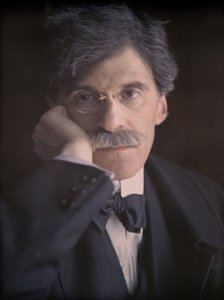
Alfred Stieglitz
1864 - 1946 , United States of America
Quick Facts
- Full Name: Alfred Stieglitz
- Nationality: American
- Date Of Birth: 1864
- Date Of Death: 1946
- Place Of Birth: Hoboken, United States of America
- Notable Artworks:
- Study of Georgia Engelhard with Dolls
- The Steerage
- Old and New New York
- Artistic Movement Or Style: Pictorialism, Modernism
- Artists Who Influenced This Artist: ['Hermann Wilhelm Vogel']
- Artists Or Movements Influenced By This Artist:
- Georgia O'Keeffe
- Arthur Garfield Dove
Related Articles

Pictorialism: A Search for Artistic Photography's Soul – Aesthetics, Techniques & Legacy
Explore the captivating world of Pictorialism – a pivotal movement that transformed photography into fine art. Discover key artists like Stieglitz & Käsebier, techniques, and collecting tips from experts.

Sir Alfred Munnings' Masterpieces: 25 Paintings That Define Equine Art | OriginalUniqueArt
Explore 25 iconic Sir Alfred Munnings paintings! Discover the beauty of British Impressionism, equine art & rural England. Find museum-quality reproductions and elevate your home decor with OriginalUniqueArt. Explore the full collection online.

Beyond the Lens: Photography's Enduring Influence on Modern & Contemporary Art
Explore photography's pivotal role in shaping modern & contemporary art. Discover key movements, influential artists like Stieglitz, and expert collecting advice from OriginalUniqueArt.

Pictorialism Unveiled: The Aesthetic Revolution That Elevated Photography to Fine Art
Explore the profound history of Pictorialism, the revolutionary movement that elevated photography to a fine art. Uncover how visionaries used painterly techniques and soft focus to transcend mere documentation, imbuing the lens with the emotional depth of classical masterpieces.

Pictorialism: The Art Movement That Transformed Photography into Fine Art
Explore the profound history of Pictorialism, the movement that elevated photography to fine art. Discover the masters, techniques, and enduring legacy of this transformative era through an expert art-historical lens.


