
 Send
Send Share
Share
 Details
 Guide
Guide

 Download
 Similars
 Diaporama
 Q&A
Q&A Stats
StatsThe Steerage

- 33.0 x 26.0 cm


 Read More
Giclée / Art Print
Museum-quality giclée or canvas print with fast production and flexible finish options. ( Buy Hand Made Painting Switch to Digital Image)




































Pick from our preset sizes that match the artwork's original proportions.

Type the width and the height you need, to fit your frame or your wall. A print can only be cut, never made bigger than the picture, so a size with a different shape loses a part of the image. We send you a digital mockup to approve before we print anything. The picture shown on this page does not show the real cut — only the mockup does.
Worldwide Delivery () in 2 weeks instead of standard 4/5 weeks. (12 November)

Free Worldwide Express Shipping

High-Quality Linen Canvas

Full Shipping Insurance

Customs Tax Refund Guarantee

True Color Matching Guarantee

100-Day Return Policy (Defects Only)

100% Money-Back Guarantee

Bulk Discount Offer
 Glass option is only available in size under 110 CM

The Steerage
Giclée / Art Print
Reproduction Size
-


Total Price
$ 81
Alfred Stieglitz’s “The Steerage”: A Snapshot of Modernity
Alfred Stieglitz's "The Steerage," created in 1907, stands as an undeniable cornerstone of American modernist photography and a testament to Stieglitz’s revolutionary vision. More than just documenting a voyage aboard the SS Kaiser Wilhelm II—a journey undertaken by Stieglitz and his family to visit relatives in Europe—the photograph transcends its immediate subject matter to capture a profound moment of artistic innovation and cultural observation. It's a deceptively simple image, yet brimming with layers of meaning that continue to fascinate art historians and collectors alike.- Composition & Form: Stieglitz meticulously crafted the scene using a technique known as photogravure—a process favored by Pictorialists who sought to emulate the tonal richness and textural subtleties of oil paintings. The photograph’s asymmetrical arrangement, dominated by the towering mast and angled stairway, immediately establishes a dynamic tension that draws the viewer's eye across the frame. Stieglitz deliberately positioned elements like the straw hat and the drawbridge railing to create intersecting diagonals—a compositional strategy characteristic of Cubism and foreshadowing the broader artistic trends emerging at the time.
- Historical Context: The photograph was taken during a period marked by significant immigration into America, particularly from Europe. However, Stieglitz wasn’t merely recording social conditions; he was actively engaging with them as an artist. The SS Kaiser Wilhelm II represented the pinnacle of maritime engineering and luxury—a symbol of burgeoning industrial progress—and Stieglitz's decision to capture this scene reflects his fascination with capturing the essence of modern life.
- Symbolism & Emotion: Beyond its formal elements, “The Steerage” resonates deeply with emotional resonance. Stieglitz himself recounted a moment of intense contemplation as he gazed upon the crowded steerage deck—a feeling he described as "seeing shapes related to one another — a picture of shapes, and underlying it, a new vision that held me." This experience fueled his artistic impulse, demonstrating how observation could inspire profound creative breakthroughs.
- Technique & Reproduction: The photogravure process itself contributes significantly to the photograph’s aesthetic impact. It allowed for exceptional tonal gradations—capturing subtle nuances of light and shadow—that would have been unattainable with earlier photographic methods. Reproductions today strive to faithfully recreate this richness, utilizing high-resolution printing techniques to preserve the original image's textural qualities.
Alfred Stieglitz: A Pioneer of Vision
Alfred Stieglitz (1864–1946) wasn’t simply a photographer; he was a transformative figure who fundamentally reshaped the artistic landscape of America. Born in Hoboken, New Jersey, his upbringing fostered an intellectual curiosity that propelled him beyond conventional pursuits—a passion ignited by studies in Berlin under Hermann Wilhelm Vogel. Vogel introduced Stieglitz to the captivating potential hidden within photographic processes—a revelation that would define his life’s work and solidify his legacy as a champion of artistic experimentation. He purchased his first camera, embarking on a journey to document the European countryside, quickly developing an aesthetic sensibility rooted in Pictorialism—a movement dedicated to mirroring the expressive qualities of painting. This commitment to elevating photography to fine art cemented Stieglitz's place among the most influential artists of his era.Exploring “The Steerage” Today
Today, reproductions of "The Steerage" adorn galleries and private collections worldwide. They serve as a powerful reminder of Stieglitz’s groundbreaking contribution to modern art—a testament to his ability to distill complex ideas into a single unforgettable image. Consider commissioning a hand-painted reproduction from OriginalUniqueArt.com to bring this iconic masterpiece into your home or workspace, preserving its timeless beauty and capturing the spirit of artistic innovation at the dawn of the 20th century.Questions & Answers
Who created "The Steerage" and in what year?
Alfred Stieglitz made "The Steerage" in 1907.
How light is "The Steerage" overall?
In terms of perceived brightness, "The Steerage" by Alfred Stieglitz is bright.
What are the reproduction rights of "The Steerage" at the J. Paul Getty Museum?
The copyright status of "The Steerage" by Alfred Stieglitz is clear: the work is in the public domain - its copyright has expired. Its presence at the J. Paul Getty Museum does not change that status.
Artist Biography
A Pioneer of Vision: The Life and Legacy of Alfred Stieglitz
Alfred Stieglitz, born in Hoboken, New Jersey, on January 1, 1864, was more than just a photographer; he was a revolutionary force who single-handedly elevated photography from a skilled craft to a recognized fine art. His journey began not with a camera in hand, but with an intellectual upbringing fostered by his German-Jewish immigrant family. Early education at the Charlier Institute and City College of New York provided a foundation, yet it was his studies in Berlin that ignited his artistic passion. There, under the tutelage of Hermann Wilhelm Vogel, Stieglitz discovered the captivating potential hidden within photographic processes – a revelation that would define his life’s work. He purchased his first camera and began to document the European countryside, quickly developing an aesthetic sensibility rooted in what became known as Pictorialism. This movement sought to mimic the expressive qualities of painting and drawing through manipulated printing techniques, soft focus, and evocative compositions. However, Stieglitz would eventually transcend these limitations, forging a path toward a uniquely photographic vision.Championing Modern Art and the American Voice
Upon his return to New York in 1890, Stieglitz embarked on a mission to legitimize photography as an art form. He became a prolific writer, publishing articles that passionately argued for its artistic merit, and founded the Camera Club of New York’s journal, *Camera Notes*. Dissatisfaction with the club's conservative outlook led him to establish the Photo-Secession in 1902, a group dedicated to promoting photographic artistry. This culminated in the opening of “291” – a gallery at 291 Fifth Avenue that became a crucible for modern art in America. It wasn’t merely a showcase for photography; Stieglitz boldly exhibited groundbreaking works by European avant-garde artists like Pablo Picasso, Henri Matisse, and Francis Picabia, introducing American audiences to the radical innovations of Cubism, Fauvism, and other emerging movements. “291” became a salon where ideas clashed, boundaries were pushed, and a distinctly American modern aesthetic began to take shape. Stieglitz’s influence extended beyond exhibition; he fostered dialogue, challenged conventions, and nurtured the careers of countless artists, including Georgia O'Keeffe, whom he would later marry.Evolving Styles: From Pictorialism to Straight Photography
Stieglitz’s own photographic style underwent a significant evolution throughout his career. Initially embracing the soft-focus aesthetic and painterly qualities of Pictorialism – exemplified in works like *Study of Georgia Engelhard with Dolls* (1910) – he gradually moved towards a more direct, unmanipulated approach known as “straight photography.” This shift was influenced by his growing appreciation for modern art’s emphasis on form, clarity, and the inherent qualities of materials. The Steerage (1907), arguably his most iconic image, marks this turning point. Captured during a transatlantic voyage, it depicts passengers traveling in steerage class with a stark realism and compositional boldness that foreshadowed modernist principles. The photograph isn’t sentimental or picturesque; instead, it presents a raw, unvarnished view of social reality, emphasizing geometric shapes and tonal contrasts. Later works, such as his series of cloud studies (*Equivalents*), further demonstrate his commitment to exploring the expressive potential of photography through pure form and light. These images were not intended to represent specific objects but rather to evoke emotional states – a concept that aligned with abstract expressionism.A Lasting Impact on American Art
Alfred Stieglitz’s legacy extends far beyond his photographic achievements. He was an educator, a promoter, and a tireless advocate for the recognition of photography as a legitimate art form. His galleries provided a platform for both established and emerging artists, shaping the landscape of American modernism. He championed the idea that art should reflect the realities of contemporary life, breaking away from traditional academic conventions. Through his writings, exhibitions, and personal relationships, he fostered a vibrant artistic community and inspired generations of photographers to explore the medium’s unique possibilities. His influence can be seen in the work of countless artists who followed, including Paul Strand, Edward Weston, and Ansel Adams.- He established photography as a respected art form.
- He introduced European modernism to American audiences.
- He fostered a vibrant artistic community through his galleries and mentorship.
- His own photographic work evolved from Pictorialism to Straight Photography, influencing subsequent generations.
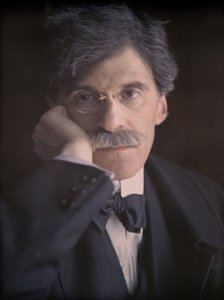
Alfred Stieglitz
1864 - 1946 , United States of America
Quick Facts
- Full Name: Alfred Stieglitz
- Nationality: American
- Date Of Birth: 1864
- Date Of Death: 1946
- Place Of Birth: Hoboken, United States of America
- Notable Artworks:
- Study of Georgia Engelhard with Dolls
- The Steerage
- Old and New New York
- Artistic Movement Or Style: Pictorialism, Modernism
- Artists Who Influenced This Artist: ['Hermann Wilhelm Vogel']
- Artists Or Movements Influenced By This Artist:
- Georgia O'Keeffe
- Arthur Garfield Dove
Related Articles

Masterpieces of Motion: The Top 25 Artworks by Sir Alfred James Munnings
Experience the vibrant spirit of British equestrian art through the top 25 masterpieces by Sir Alfred James Munnings. From impressionistic landscapes to iconic horse portraits, explore timeless stories and museum-quality reproductions for your decor. Discover all masterpieces on OriginalUniqueArt.com.

Masterpieces of Motion: The Top 25 Artworks by Sir Alfred James Munnings
Immerse yourself in the vibrant world of Sir Alfred James Munnings. Explore 25 iconic equestrian masterpieces capturing the soul of the British countryside through impressionistic light and motion. Find museum-quality reproductions for your decor. Discover all masterpieces on OriginalUniqueArt.com.
Paul Sérusier: Pioneering Synthetism & The Nabis’ Symbolic Revolution
Discover Paul Sérusier's pivotal role in the Nabis movement & the birth of Synthetism. Explore 'The Talisman,' his influence on modern art, and a deeper understanding of this symbolic revolution. Expert analysis & insights.

When Did Alfred Stieglitz Die? The Legacy of a Photography Pioneer
Find out when Alfred Stieglitz died and explore his artistic evolution through a year-by-year timeline of his works.
The Enduring Legacy of Masterpieces: Art Reproduction as a Thoughtful Gift
Discover museum-quality art reproductions & custom paintings at OriginalUniqueArt.com. Handmade oil paintings from skilled artists, personalized gifts, and expert art consultation. Find the perfect timeless masterpiece today!


