
 Send
Send Share
Share
 Details
 Guide
Guide

 Download
 Similars
 Diaporama
 Q&A
Q&A Stats
StatsKatherine (1905)

- 20.0 x 17.0 cm


 Read More
Get a print-ready file that goes far beyond the web preview. Every digital image we sell comes from a high-resolution master in our stock database — usually 5,000 to 15,000 pixels wide — so you can print large, crop tightly, or reproduce fine detail with confidence.
No file leaves our studio untouched. A digital expert checks the colors against the original painting and corrects them if needed, then improves clarity and detail with professional retouching tools — always staying faithful to the artist's brushwork and style. The result is an image that looks like the painting, not like a filtered scan.
You approve before you're done: our expert sends the image by e-mail within 72 hours for your review. Not satisfied? Ask for improvements or corrections, or request a refund if the quality falls short.
This is the quality relied on by publishers, design studios, galleries and print shops.
Digital Image
Download a high-resolution file for personal display, printing, and creative projects. ( Switch to Print Buy Hand Made Painting)
Included in Every Digital Image Order
Expert Digital Delivery, Guaranteed
When you choose OriginalUniqueArt.com, you're not just getting an image - you're receiving a professionally enhanced digital artwork, crafted with precision and backed by a satisfaction guarantee. Here's everything that comes with your order, automatically:

Fast Email Delivery
Your high-resolution digital image file will be emailed to you within 72 hours of ordering - ready for immediate use.

AI-Enhanced Digital File
Your artwork is professionally optimized using advanced AI tools and manual editing, ensuring maximum detail, clarity, and color accuracy.

Free Lifetime Re-Delivery
Accidentally deleted or lost your file? No worries - we'll resend it to you anytime, free of charge.

No Import Fees - Ever
Enjoy your artwork instantly with zero customs, duties, or delivery fees - digital downloads are always tax-free.

Color Accuracy Guarantee
We ensure your digital image reflects the original colors as closely as possible using professional tools and color management.

100-Day Satisfaction Guarantee
If you're not satisfied with your digital image, we'll revise it or refund 100% within 100 days - no questions asked.

100% Money-Back Guarantee
Not satisfied? Get a full refund within 100 days of receiving your digital file - no questions asked.

Bulk Order Discounts
Buy 3 images, save 10% - Buy 5, save 15% - Buy 10+, save 20%. Great for creative projects, galleries, and agencies.
A Moment Frozen in Time: Alfred Stieglitz’s “Katherine” (1905)
Alfred Stieglitz's "Katherine," created in 1905, is more than just a photograph; it’s a poignant snapshot of early 20th-century life and a testament to Stieglitz’s groundbreaking vision. This intimate portrait, measuring 20 x 17 cm, captures a young girl – Katherine – lost in the pages of a book, her gaze directed towards the viewer with an almost unsettling directness. The stark black and white tones amplify the image's inherent drama, drawing attention to the textures of her dress and the delicate curve of her hand holding the volume. The photograph’s power resides not just in its technical execution – a hallmark of Stieglitz’s meticulous approach – but also in the palpable sense of nostalgia it evokes, transporting us back to a time when childhood innocence seemed particularly vulnerable.
Pictorialism and the Rise of Photography as Art
- Historical Context: “Katherine” was produced during a pivotal moment for photography. Stieglitz, along with other artists like Edward Steichen, was instrumental in establishing photography as a legitimate art form, challenging the prevailing view that it was merely a mechanical process for documenting reality.
- Pictorialist Movement: Stieglitz’s work aligns perfectly with the Pictorialist movement, which sought to emulate the expressive qualities of painting through careful composition, soft focus, and manipulated printing techniques. This is evident in the photograph's gentle tones and deliberate blurring, creating an almost dreamlike quality.
- Stieglitz’s Influence: Stieglitz’s influence extended beyond simply producing beautiful images; he actively promoted photography as a serious artistic medium through exhibitions like the Photo-Secession group, laying the groundwork for future generations of photographers.
Symbolism and Narrative within the Frame
The seemingly simple composition of “Katherine” is rich with symbolic potential. The girl’s intense gaze suggests a contemplative spirit, perhaps hinting at the anxieties and uncertainties of the era. The book she holds represents knowledge, imagination, and escape – themes frequently explored in Stieglitz's work. Notably, the inclusion of the knife nearby introduces an element of unease and ambiguity. While its precise meaning remains open to interpretation, it could symbolize vulnerability, danger, or even the creative process itself—a tool for shaping ideas and realities. The partially visible figure on the left adds another layer of complexity, suggesting a hidden narrative or perhaps representing the societal constraints placed upon young women at the time.
Technique and Reproduction – A Legacy Preserved
OriginalUniqueArt’s hand-painted reproductions meticulously recreate Stieglitz's original vision. Utilizing archival quality materials and employing skilled artisans, each reproduction captures the nuances of light, shadow, and texture that define this iconic image. The process begins with a high-resolution scan of the original photograph, followed by painstaking manual painting to faithfully reproduce every detail. This ensures that the emotional impact and artistic merit of “Katherine” are preserved for generations to come. The resulting reproduction offers an unparalleled opportunity to own a piece of photographic history – a tangible connection to one of the most influential figures in the art world.
Questions & Answers
Where can I find artworks similar to "Katherine (1905)" by Alfred Stieglitz?
Works similar to "Katherine (1905)" are listed on the artwork's Similars page.
What emotional tone accompanies the Pictorialist Photography style of "Katherine (1905)"?
"Katherine (1905)" carries a nostalgic emotional tone within the Pictorialist Photography movement.
Which museum holds the original "Katherine (1905)"?
The original "Katherine (1905)" by Alfred Stieglitz is held at the Amon Carter Museum of American Art, Fort Worth, United States of America. A reproduction allows the work to be displayed at home.
Artist Biography
A Pioneer of Vision: The Life and Legacy of Alfred Stieglitz
Alfred Stieglitz, born in Hoboken, New Jersey, on January 1, 1864, was more than just a photographer; he was a revolutionary force who single-handedly elevated photography from a skilled craft to a recognized fine art. His journey began not with a camera in hand, but with an intellectual upbringing fostered by his German-Jewish immigrant family. Early education at the Charlier Institute and City College of New York provided a foundation, yet it was his studies in Berlin that ignited his artistic passion. There, under the tutelage of Hermann Wilhelm Vogel, Stieglitz discovered the captivating potential hidden within photographic processes – a revelation that would define his life’s work. He purchased his first camera and began to document the European countryside, quickly developing an aesthetic sensibility rooted in what became known as Pictorialism. This movement sought to mimic the expressive qualities of painting and drawing through manipulated printing techniques, soft focus, and evocative compositions. However, Stieglitz would eventually transcend these limitations, forging a path toward a uniquely photographic vision.Championing Modern Art and the American Voice
Upon his return to New York in 1890, Stieglitz embarked on a mission to legitimize photography as an art form. He became a prolific writer, publishing articles that passionately argued for its artistic merit, and founded the Camera Club of New York’s journal, *Camera Notes*. Dissatisfaction with the club's conservative outlook led him to establish the Photo-Secession in 1902, a group dedicated to promoting photographic artistry. This culminated in the opening of “291” – a gallery at 291 Fifth Avenue that became a crucible for modern art in America. It wasn’t merely a showcase for photography; Stieglitz boldly exhibited groundbreaking works by European avant-garde artists like Pablo Picasso, Henri Matisse, and Francis Picabia, introducing American audiences to the radical innovations of Cubism, Fauvism, and other emerging movements. “291” became a salon where ideas clashed, boundaries were pushed, and a distinctly American modern aesthetic began to take shape. Stieglitz’s influence extended beyond exhibition; he fostered dialogue, challenged conventions, and nurtured the careers of countless artists, including Georgia O'Keeffe, whom he would later marry.Evolving Styles: From Pictorialism to Straight Photography
Stieglitz’s own photographic style underwent a significant evolution throughout his career. Initially embracing the soft-focus aesthetic and painterly qualities of Pictorialism – exemplified in works like *Study of Georgia Engelhard with Dolls* (1910) – he gradually moved towards a more direct, unmanipulated approach known as “straight photography.” This shift was influenced by his growing appreciation for modern art’s emphasis on form, clarity, and the inherent qualities of materials. The Steerage (1907), arguably his most iconic image, marks this turning point. Captured during a transatlantic voyage, it depicts passengers traveling in steerage class with a stark realism and compositional boldness that foreshadowed modernist principles. The photograph isn’t sentimental or picturesque; instead, it presents a raw, unvarnished view of social reality, emphasizing geometric shapes and tonal contrasts. Later works, such as his series of cloud studies (*Equivalents*), further demonstrate his commitment to exploring the expressive potential of photography through pure form and light. These images were not intended to represent specific objects but rather to evoke emotional states – a concept that aligned with abstract expressionism.A Lasting Impact on American Art
Alfred Stieglitz’s legacy extends far beyond his photographic achievements. He was an educator, a promoter, and a tireless advocate for the recognition of photography as a legitimate art form. His galleries provided a platform for both established and emerging artists, shaping the landscape of American modernism. He championed the idea that art should reflect the realities of contemporary life, breaking away from traditional academic conventions. Through his writings, exhibitions, and personal relationships, he fostered a vibrant artistic community and inspired generations of photographers to explore the medium’s unique possibilities. His influence can be seen in the work of countless artists who followed, including Paul Strand, Edward Weston, and Ansel Adams.- He established photography as a respected art form.
- He introduced European modernism to American audiences.
- He fostered a vibrant artistic community through his galleries and mentorship.
- His own photographic work evolved from Pictorialism to Straight Photography, influencing subsequent generations.
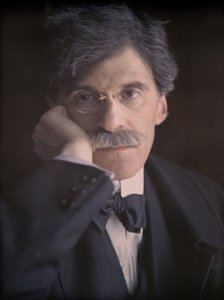
Alfred Stieglitz
1864 - 1946 , United States of America
Quick Facts
- Full Name: Alfred Stieglitz
- Nationality: American
- Date Of Birth: 1864
- Date Of Death: 1946
- Place Of Birth: Hoboken, United States of America
- Notable Artworks:
- Study of Georgia Engelhard with Dolls
- The Steerage
- Old and New New York
- Artistic Movement Or Style: Pictorialism, Modernism
- Artists Who Influenced This Artist: ['Hermann Wilhelm Vogel']
- Artists Or Movements Influenced By This Artist:
- Georgia O'Keeffe
- Arthur Garfield Dove