Preview
 Send
Send Share
Share
 Details
 Guide
Guide

 Download
 Similars
 X-Ray
X-Ray Diaporama
 Q&A
Q&A Stats
StatsADORATION

- 18.0 x 18.0 cm


 Read More
The artwork displayed on this page is protected by copyright law, which means we cannot legally create or sell an identical reproduction. This protection is enforced under international agreements such as the Berne Convention and by national laws, including those outlined by the U.S. Copyright Law - Title 17.
This method fully complies with copyright regulations because it does not involve copying or duplicating the protected artwork. Instead, it is a creative reinterpretation - a new painting that is influenced by the original but not identical to it.
Giclée / Art Print
Museum-quality giclée or canvas print with fast production and flexible finish options. ( Buy Hand Made Painting Switch to Digital Image)




































Pick from our preset sizes that match the artwork's original proportions.

Type the width and the height you need, to fit your frame or your wall. A print can only be cut, never made bigger than the picture, so a size with a different shape loses a part of the image. We send you a digital mockup to approve before we print anything. The picture shown on this page does not show the real cut — only the mockup does.
Worldwide Delivery () in 2 weeks instead of standard 4/5 weeks. (6 November)

Free Worldwide Express Shipping

High-Quality Linen Canvas

Full Shipping Insurance

Customs Tax Refund Guarantee

True Color Matching Guarantee

100-Day Return Policy (Defects Only)

100% Money-Back Guarantee

Bulk Discount Offer
 Glass option is only available in size under 110 CM

ADORATION
Giclée / Art Print
Reproduction Size
-


Total Price
$ 81
ADORATION – A Study in Obsession and Ritual by Alfred Freddy Krupa
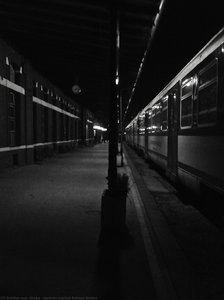
Alfred Freddy Krupa’s “Adoration” is not merely a photographic print; it's an unsettling meditation on the human impulse towards repetition, devotion, and perhaps, something darker. Created in 2016, this piece exemplifies Krupa’s pivotal role within the Western New Ink Art movement – a style characterized by its stark monochrome palettes, meticulous attention to texture, and exploration of deeply psychological themes. The artwork immediately confronts the viewer with a deliberately sparse composition: a dense arrangement of human footprints, rendered in shades of gray with a pronounced lithographic texture, dominates the image. This isn’t a romantic depiction of faith; it's a fragmented, almost obsessive, representation of the act itself.
The deliberate lack of context – the stark black background, the absence of any discernible narrative beyond the footprints – elevates “Adoration” to the realm of conceptual art. Krupa masterfully manipulates our perception, forcing us to confront the unsettling nature of ritual and the potential for it to become a consuming force. The technique itself is crucial; the grainy texture of the print echoes the physicality of the act being represented, grounding the abstract concept in a tangible reality. It’s a deliberate rejection of idealized beauty, opting instead for an honest, even uncomfortable, portrayal of human behavior.
The Roots of “Adoration”: Krupa and the New Ink Art
Alfred Freddy Krupa's artistic journey is deeply rooted in a desire to challenge traditional notions of representation. Emerging from the vibrant art scene of Yugoslavia in the 1990s, he became a key figure in the Western New Ink Art movement – a reaction against the perceived superficiality of contemporary art trends. This movement, largely centered around techniques like lithography and etching, prioritized texture, process, and psychological depth over representational accuracy. Krupa’s formal training at the University of Zagreb Academy of Fine Arts instilled within him a rigorous understanding of art history, particularly the traditions of printmaking and the expressive potential of monochrome.
Influenced by artists like William Strang (whose “Adoration” – referenced in the artwork's metadata – demonstrates a similar exploration of religious themes through symbolic imagery), Krupa developed his own unique visual language. However, unlike Strang’s overtly devotional approach, Krupa’s work leans towards a more ambiguous and unsettling interpretation of faith and devotion. His departure to Tokyo Gakugei University in 1998 further broadened his artistic horizons, exposing him to new perspectives on art and culture.
Symbolism and the Unsettling Composition
The arrangement of the footprints themselves is profoundly significant. They are not haphazard; they form a deliberate pattern, suggesting a ritualistic act – perhaps one of worship, or perhaps something far more sinister. The repetition inherent in the design evokes a sense of obsession, highlighting the potential for devotion to become an all-consuming fixation. The use of grayscale amplifies this effect, stripping away any comforting associations with color and intensifying the artwork’s emotional impact.
Drawing parallels to ancient practices – as explored in Wikipedia's entry on "Adoration" – Krupa subtly references historical forms of homage and veneration. The act of kissing the ground, a gesture found across various cultures and religions, is here presented in its most raw and unsettling form. The artwork’s ambiguity invites viewers to contemplate their own relationship with belief, ritual, and the power of human obsession.
A Statement in Texture and Form
"Adoration" isn't simply a visually striking image; it’s a testament to Krupa’s mastery of printmaking techniques. The lithographic process – or similar – is deliberately exploited, creating a surface rich with texture and subtle variations in tone. This textural complexity adds another layer of meaning to the artwork, reinforcing its themes of physicality and obsession. The deliberate flatness of the composition further emphasizes the two-dimensionality of the image, drawing attention to the materiality of the print itself.
This limited edition reproduction offers a unique opportunity to own a piece of contemporary art that challenges our perceptions and invites contemplation. Its stark beauty and unsettling subject matter make “Adoration” a powerful addition to any collection or interior space – a reminder of the complexities of human belief and the enduring power of ritual.
Questions & Answers
In what year was "ADORATION" by Alfred Freddy Krupa created?
The creation of "ADORATION" by Alfred Freddy Krupa is dated 2016.
What does "ADORATION" share with the rest of Alfred Freddy Krupa's output?
"ADORATION" belongs to Alfred Freddy Krupa's Contemporary Conceptual Art work, whose recorded themes include new ink art echoes, post-soviet anxieties", ritual & control themes, croatian identity explored, obsession as visual language.
Can I watch "ADORATION" as a full-screen slideshow?
The diaporama of "ADORATION" can be watched on the artwork's Diaporama page.
Artist Biography
A Life Etched in Ink: The World of Alfred Freddy Krupa
Alfred Freddy Krupa, born in 1971 in the Croatian city of Karlovac, is a figure whose artistic journey has been one of profound exploration and innovation. His name resonates within contemporary art circles as a pivotal force behind the Western New Ink Art movement, a testament to his dedication to pushing boundaries and redefining traditional techniques. Krupa’s story isn't simply about an artist mastering a medium; it’s about a relentless pursuit of expressing the complexities of human existence through the evocative power of monochrome. From early recognition in Yugoslavia during the 1990s to international acclaim, his path has been marked by both artistic experimentation and scholarly dedication. He formally laid the groundwork for his unique approach with studies at the University of Zagreb Academy of Fine Arts, graduating in 1995, a foundation that instilled within him a deep understanding of art history and technique—knowledge he would later skillfully subvert and reimagine.The Genesis of New Ink Art
Krupa’s most significant contribution to the art world arrived with the publication of his “New Ink Art” manifesto in 1996. This wasn't merely a declaration of style, but a philosophical statement challenging conventional approaches to ink painting. It was a call for artists to move beyond imitation and embrace the expressive potential of monochrome, to delve into themes previously unexplored within this medium. The manifesto positioned Krupa as a leading voice in a burgeoning movement that sought to bridge Eastern traditions—particularly Japanese Sumi-e—with Western sensibilities like Expressionism and Surrealism. Following the publication, he embarked on postgraduate research at Tokyo Gakugei University in 1998, immersing himself further in the nuances of ink techniques and solidifying his understanding of its historical context. This period was crucial in shaping his artistic vision, allowing him to synthesize diverse influences into a uniquely personal style. His work began to consistently explore themes of mortality, memory, vulnerability, and psychological depth—subjects rendered with an arresting intensity through masterful control of black ink on paper or canvas.Themes and Influences: A Dialogue with Existence
A recurring thread throughout Krupa’s oeuvre is a profound contemplation of the human condition. His pieces are often imbued with a sense of melancholy, reflecting on the transient nature of life and the weight of memory. Works like “After I die…” directly confront mortality, prompting viewers to consider their own place within the vastness of time. Nature serves as another powerful motif, particularly depictions of trees and rivers—especially the Kupa River that flows through his homeland. These landscapes aren’t merely representations of scenery; they are imbued with symbolic weight, often evoking feelings of solitude and introspection. The influence of Sumi-e is palpable in his brushwork, yet he transcends mere imitation, infusing it with a distinctly Western emotionality. The minimalist aesthetic found in pieces like “Birches” hints at abstract expressionist tendencies, while the raw emotion conveyed in works such as “Broken Nude” speaks to the influence of Expressionism’s unflinching portrayal of human suffering. His technical skill is also evident in detailed graphite drawings like "My Hand", demonstrating a mastery of form and realistic representation alongside his more abstract explorations.Recognition and Legacy
Alfred Freddy Krupa's impact on the art world has been widely acknowledged through numerous exhibitions, publications, and awards. He stands as the founding figure and theorist of the Western New Ink Art movement, a legacy that continues to inspire artists today. In 2023 alone, he received both the Order of Danica Hrvatska and the City of Karlovac Award—honors recognizing his significant contributions to Croatian culture. His work has garnered attention from prestigious institutions like the Museum of Modern Art (MoMA), with pieces entering their collection, and has been featured in exhibitions such as the London Art Biennale. Krupa’s historical significance lies not only in his artistic achievements but also in his willingness to challenge conventions and forge a new path for ink painting. He demonstrated that this traditionally restrained medium could be used to express complex emotions and explore profound philosophical questions. His work serves as a powerful reminder of the enduring relevance of art as a means of grappling with the fundamental mysteries of existence, solidifying his place as a notable contemporary artist whose influence will undoubtedly continue to resonate for generations to come. His ability to convey such depth through seemingly simple means is a testament to his skill and vision.
Alfred Freddy Krupa
1971 - , Croatia
Quick Facts
- Full Name: Alfred Freddy Krupa
- Nationality: Croatian
- Date Of Birth: 1971
- Place Of Birth: Karlovac, Croatia
- Notable Artworks:
- After I die…
- Dubovac
- My Hand
- Broken Nude
- Artistic Movement Or Style: New Ink Art
- Artists Who Influenced This Artist:
- Sumi-e
- Expressionism
- Surrealism
- Artists Or Movements Influenced By This Artist: ['Western New Ink Art']
Related Articles

Masterpieces of the English Countryside: Top 25 Sir Alfred James Munnings Artworks
Explore 25 iconic Sir Alfred James Munnings masterpieces. Discover timeless equine art on OriginalUniqueArt.com.

Echoes of Time: Exploring the Enduring Appeal & Historical Context of Vintage Art Prints
Explore the captivating world of vintage art prints! Discover their history, collecting tips & enduring appeal. Expert insights on chromolithography and building a legacy collection with OriginalUniqueArt.

The Enduring Legacy of Fine Art Prints: Technique, History & Aesthetic Impact
Explore the rich history & techniques of fine art prints. Discover investment potential, assess authenticity, and learn how to preserve your collection with expert guidance. Trusted insights for discerning collectors.

Giclée Prints: Archival Quality & Aesthetic Nuances for the Discerning Collector
Explore the world of giclée prints with OriginalUniqueArt. Learn about archival quality, aesthetic nuances & investment potential. Expert guidance for discerning art collectors seeking museum-quality reproductions and lasting value.
Gray Masterpieces: 10 Iconic Paintings & The Power of Subtle Light |
Explore 10 iconic paintings where light gray reigns supreme! From Monet's Impressionism to Hopper’s realism, discover the stories & subtle power of these masterpieces. Find museum-quality art reproductions at .