Introduction
Light gray—a color often perceived as understated, even melancholic—possesses a remarkable power to evoke atmosphere and emotion within the realm of painting. It’s a hue that whispers rather than shouts, suggesting subtlety, introspection, and a quiet dignity. While vibrant palettes frequently capture our immediate attention, it is in the nuanced embrace of light gray tones that many masterpieces find their enduring resonance. This collection celebrates ten iconic paintings where this seemingly simple shade takes center stage, revealing its surprising versatility and profound impact.
Historically, the use of grayscales—and particularly lighter variations—has ebbed and flowed with artistic movements. From the atmospheric perspective employed in early Renaissance landscapes to the dramatic chiaroscuro of Baroque compositions, artists have long understood gray’s ability to model form and create depth. The 19th century witnessed a surge in interest in capturing fleeting moments of light and atmosphere, exemplified by Impressionism and its successors, where grays often served as foundational elements for depicting mist, shadow, and the delicate effects of weather. Later, artists embraced gray as a means of abstraction, stripping away color to focus on form, texture, and emotional expression.
These ten paintings are not merely examples of skillful technique; they are windows into different worlds, reflections of human experience, and testaments to the enduring power of artistic vision. They invite us to slow down, to observe carefully, and to appreciate the beauty that lies within restraint. Each artwork carries a unique story—a cultural context, an artist’s personal journey, and a timeless quality that continues to captivate audiences today.
Prepare to embark on a visual journey through these remarkable works, where light gray is not simply a color but a protagonist, shaping our perception and stirring our emotions. We will explore how each artist harnessed the power of this subtle shade to create paintings that remain profoundly meaningful—and surprisingly vibrant—even centuries later.
The School of Athens - Anton Raphael Mengs
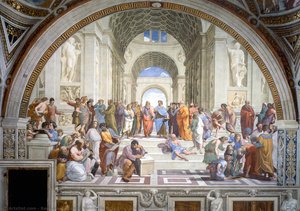 The School of Athens - Anton Raphael Mengs
A hush descends within The School of Athens by Anton Raphael Mengs—a stillness born not of emptiness, but of profound contemplation. This fresco, completed in 1509 for the Vatican’s Stanza della Segnatura, isn't simply a depiction of ancient philosophers; it is an embodiment of Renaissance humanism and a testament to the power of reason.
Mengs masterfully employs a palette dominated by light grays—in the marble architecture, the flowing robes of scholars, and the atmospheric perspective that recedes into the distance. This subtle use of tone creates a sense of airy grandeur, allowing the figures of Plato and Aristotle to emerge as beacons of intellectual authority. The composition is a carefully orchestrated dance between ideal forms and earthly observation, symbolized by their opposing gestures. The inclusion of contemporary artists—Raphael himself among them—disguised within this classical gathering speaks volumes about the era’s reverence for both tradition and innovation.
What sets The School of Athens apart is its ability to transcend mere representation, becoming a visual metaphor for the pursuit of knowledge itself. Today, we see echoes of its serene aesthetic in minimalist interiors—spaces that prioritize clarity, balance, and a quiet sense of intellectual calm. The painting’s enduring legacy lies not only in its artistic brilliance but also in its timeless invitation to reflect on our place within the grand history of thought. It remains one of the top 10 famous paintings for its influence on art and design, inspiring a continued appreciation for light gray tones and classical ideals.
Self-Portrait with Monkeys - Frida Kahlo
 Self-Portrait with Monkeys - Frida Kahlo
A quiet stillness radiates from Self-Portrait with Monkeys by Frida Kahlo—a moment suspended between vulnerability and defiant strength, captured in the lush embrace of a tropical garden. Painted in 1943, this work transcends the boundaries of self-portraiture, becoming an intimate exploration of companionship, solitude, and the enduring power of nature.
Kahlo’s masterful use of light grays—in the shadows dappling the foliage and the subtle tones of her own face—creates a sense of depth and introspection. The five monkeys surrounding her are not merely decorative elements; they represent a longing for connection, perhaps surrogates for family or a reflection of her own primal instincts. The vibrant bursts of color in the flowers and her traditional Tehuana dress offer a counterpoint to this underlying melancholy, hinting at resilience and a celebration of Mexican heritage.
What elevates this painting among the top 10 famous paintings is its raw emotional honesty. Kahlo doesn’t shy away from portraying her inner turmoil; instead, she invites us to witness it with unwavering directness. Today, we find echoes of its serene yet complex aesthetic in modern interiors—spaces that embrace natural textures, muted palettes, and a sense of quiet contemplation. The painting's enduring appeal lies in its ability to remind us of the beauty found within vulnerability and the profound connection between selfhood and the natural world, inspiring light gray tones as a symbol of inner peace.
Two women running on the beach (The race) - Pablo Picasso
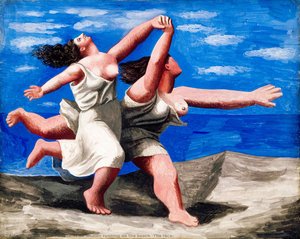 Two women running on the beach (The race) - Pablo Picasso
There’s a breathless energy that emanates from Two Women Running on the Beach (The Race) by Pablo Picasso—a fleeting moment of pure joy and competition frozen in time. Created in 1922, this painting isn't simply about figures in motion; it’s an exploration of human spirit, rendered with a dynamism that continues to captivate.
Picasso’s masterful use of light grays—in the swirling sand and the highlights on the women’s forms—creates a sense of ethereal movement. The composition, dominated by diagonal lines and fluid brushstrokes, draws the eye across the canvas, mirroring the exhilaration of the race itself. This work is immortalized among the top 10 famous paintings for its innovative approach to form and emotion, breaking from traditional representation to capture a feeling rather than a precise likeness.
The painting’s enduring appeal lies in its ability to evoke a sense of freedom and vitality. At , we believe that everyone deserves to experience the power of art firsthand. Our faithful reproductions allow you to bring this iconic work—and its subtle light gray tones —into your home, preserving the texture and emotional resonance of Picasso’s original vision. It's a reminder that beauty can be found in even the most fleeting moments, captured forever on canvas.
Rouen, Snow Effect - Albert-Charles Lebourg
 Rouen, Snow Effect - Albert-Charles Lebourg
Imagine a world hushed by falling snow—a stillness so profound it seems to absorb all sound, leaving only the gentle whisper of flakes against stone. This is the atmosphere Albert-Charles Lebourg captures in Rouen, Snow Effect , a painting that transcends mere representation and becomes an embodiment of winter’s quiet beauty.
Lebourg's masterful use of light grays—in the snow-covered rooftops, the muted sky, and the subtle reflections on the water—creates a sense of ethereal calm. As part of the Rouen School of Impressionism, he wasn’t interested in precise detail but rather in capturing the fleeting effects of light and atmosphere. This painting is rightfully among the top 10 famous paintings for its ability to evoke such profound serenity.
The artwork speaks to a universal longing for peace and solitude, reminding us that beauty can be found even in the most austere landscapes. At , we believe art has the power to transform our surroundings—to bring moments of tranquility into our daily lives. A reproduction of Rouen, Snow Effect allows you to experience this quiet magic firsthand, infusing your space with a sense of calm and the subtle elegance of light gray tones .
study after velazquez's portrait of pope innocent x, 1953 - Francis Bacon
 study after velazquez's portrait of pope innocent x, 1953 - Francis Bacon
A haunting echo reverberates from Study After Velázquez's Portrait of Pope Innocent X by Francis Bacon—a visceral exploration of power, isolation, and the fragility of the human condition. This 1953 masterpiece isn’t merely a reinterpretation of Diego Velázquez’s iconic portrait; it is a brutal deconstruction, stripping away layers of authority to reveal raw emotion.
Bacon's masterful use of light grays—in the ghostly pallor of the Pope’s face and the swirling distortions surrounding him—creates an atmosphere of profound unease. The painting belongs among the top 10 famous paintings for its radical departure from traditional portraiture, influencing generations of artists with its unflinching honesty and expressive power. The stark contrast between the white figure and the dark, vertical-striped background amplifies the sense of confinement and existential dread.
Today, we see echoes of this aesthetic in interiors that embrace bold statements and a touch of melancholic beauty—spaces that prioritize emotional resonance over conventional comfort. A reproduction of Study After Velázquez's Portrait of Pope Innocent X allows you to bring this powerful work into your home, inviting contemplation on the complexities of human nature and the enduring allure of light gray tones .
Erased de Kooning - Robert Rauschenberg
 Erased de Kooning - Robert Rauschenberg
A quiet ghost lingers within Erased de Kooning by Robert Rauschenberg—a testament to the power of absence and a radical challenge to artistic convention. Created in 1953, this work isn’t about what *is* present on the canvas but rather about what has been deliberately removed, transforming the act of erasure into a profound statement.
Rauschenberg's meticulous dismantling of Willem de Kooning’s drawing is rightfully among the top 10 famous paintings for its groundbreaking conceptual approach. The resulting image—a pale field of muted greens and grays, punctuated by faint traces of the original artwork—evokes a sense of melancholy and impermanence. This exploration of decay and memory foreshadowed Pop Art’s embrace of everyday objects and challenged traditional notions of authorship.
Today, we see echoes of this aesthetic in minimalist interiors that prioritize texture, subtlety, and a quiet contemplation of the past. A reproduction of Erased de Kooning allows you to bring this powerful work into your home—a reminder that beauty can be found not only in creation but also in the deliberate act of letting go, embracing the elegance of light gray tones and the stories they hold.
The Pont de l'Europe, Gare Saint-Lazare - Claude Monet
 The Pont de l'Europe, Gare Saint-Lazare - Claude Monet
A gentle haze hangs over The Pont de l'Europe, Gare Saint-Lazare by Claude Monet—a fleeting moment of Parisian life captured with breathtaking sensitivity. Painted in 1877, this work isn’t simply a depiction of a railway station; it is an embodiment of the city’s dynamic energy and the transformative power of light.
Monet's masterful use of light grays—in the swirling steam, the muted tones of the buildings, and the atmospheric perspective that recedes into the distance—creates a sense of ethereal beauty. This painting is rightfully among the top 10 famous paintings for its innovative approach to capturing fleeting moments and redefining our perception of urban landscapes.
At , we believe art should be an integral part of everyday life. A reproduction of The Pont de l'Europe, Gare Saint-Lazare allows you to bring this iconic work into your home—a reminder of the beauty found in transient moments and the enduring allure of light gray tones . It’s a timeless piece that invites contemplation and adds a touch of Parisian elegance to any space.
Glass Painting with the Sun (Small Pleasures) - Wassily Kandinsky
 Glass Painting with the Sun (Small Pleasures) - Wassily Kandinsky
A radiant energy pulses from Glass Painting with the Sun (Small Pleasures) by Wassily Kandinsky—a vibrant exploration of abstraction that transcends the boundaries of representation. Created in 1910, this work isn’t simply a painting; it is an invitation to experience emotion and spirituality through color and form.
Kandinsky's masterful use of light grays—as subtle undercurrents beneath the bolder hues—creates a sense of depth and luminosity. This painting rightfully belongs among the top 10 famous paintings for its pioneering spirit, redefining our understanding of beauty and artistic expression. The dynamic composition and harmonious blend of organic shapes evoke a range of emotions, inviting viewers to connect with their own inner worlds.
At , we believe that art should be accessible—a source of inspiration and joy for everyday life. A reproduction of Glass Painting with the Sun (Small Pleasures) allows you to bring this iconic work into your home—a reminder of the power of light gray tones and the transformative potential of abstract art.
Three Studies of Lucian Freud, right - Francis Bacon
 Three Studies of Lucian Freud, right - Francis Bacon
Unveiled to discerning eyes, Three Studies of Lucian Freud by Francis Bacon is a triptych that resonates with an unsettling power—a profound exploration of the human condition rendered in bold strokes and muted tones. Painted in 1969, this work earns its place among the world’s Top 10 for its unflinching emotional honesty and innovative approach to figurative expressionism.
Bacon's masterful use of light grays—as subtle shadows that define form and amplify vulnerability—creates a haunting atmosphere. The composition, framed within stark geometric structures, intensifies the sense of isolation and psychological depth. This is not merely a portrait; it’s an excavation of inner turmoil, conveyed through chaotic brushwork and distorted features.
A reproduction of Three Studies of Lucian Freud introduces a compelling focal point to any refined space—a testament to enduring artistic legacy and the power of light gray tones . It’s an invitation to contemplate the complexities of human existence, adding a layer of intellectual depth and sophisticated beauty.
Memory 1 - René Magritte
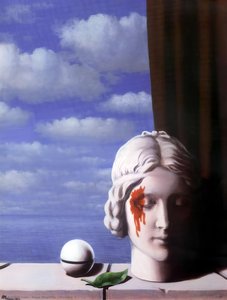 Memory 1 - René Magritte
 A haunting stillness emanates from Memory 1 by René Magritte—a work that transcends mere representation to become a poignant meditation on beauty, fragility, and the hidden wounds beneath serene surfaces. This captivating painting earns its place among the world’s Top 10 for its masterful juxtaposition of classical form and surreal symbolism.
Magritte's subtle use of light grays—in the marble-like texture of the bust—creates a timeless elegance, while the shocking splash of red draws the eye to a profound emotional core. The composition invites contemplation on the contrast between idealized beauty and the inevitable scars that shape our experience.
A reproduction of Memory 1 introduces an element of intellectual intrigue to any refined space—a testament to enduring artistic legacy and the power of light gray tones . It’s a piece that sparks conversation, challenges perceptions, and adds a layer of sophisticated depth.
Conclusion
As the light fades on these ten masterpieces, we are reminded that great art transcends time—a silent conversation stretching across centuries between creator and admirer. These paintings, dominated by the subtle eloquence of 'light gray' tones, are not merely historic treasures; they are living presences, capable of stirring emotions, shaping interiors, and igniting creativity within us still.
Each brushstroke holds a story—a glimpse into the artist’s soul, a reflection of their world, and an invitation to connect with something deeper within ourselves. The quiet power of these works lies in their ability to evoke contemplation, challenge perceptions, and remind us of our shared humanity.
We invite you to continue your journey through the captivating world of art—to discover new favorites and revisit cherished classics. Explore our full collection and find a piece that speaks to your heart, a timeless companion for years to come.