Switch to Print
 Read More







































 For artworks or reproductions larger than 105 cm (approximately 41 inches) on any side, the frame will be shipped as a kit, disassembled. This method ensures safe delivery and prevents damage during transport.


The Paumgartner Altar: A Testament to Faith and Artistic Innovation
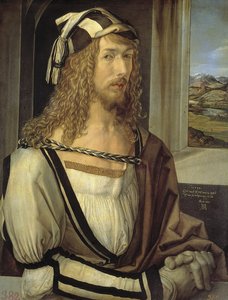
The Paumgartner Altar, created by Albrecht Dürer in 1503, stands as one of the most striking achievements of German Renaissance art. More than just a depiction of religious devotion, it’s a masterful demonstration of artistic skill—a testament to Dürer's unwavering commitment to pushing the boundaries of printmaking and conveying profound spiritual emotion.
Subject Matter & Context: The altar portrays Saint Jerome praying before the Virgin Mary and Saint Augustine, figures central to Christian theology. Commissioned by Johann Georg Paumgartner, a wealthy Nuremberg patrician, it reflects the fervent piety prevalent in the Holy Roman Empire during the early sixteenth century—a period marked by intense religious fervor and artistic patronage.
Style & Technique: Dürer employed the technique of woodcut engraving, a process he perfected to an unparalleled degree. This method involved transferring ink onto finely carved wooden blocks, allowing for multiple impressions on paper with remarkable precision and detail. Unlike painting, which relies on pigment layering, woodcut offered a unique aesthetic—a characteristic tonal richness achieved through careful manipulation of light and shadow—that Dürer skillfully exploited.
Symbolism: The altar’s symbolism is layered and deliberate. Jerome, traditionally depicted as the patron saint of scholars and translators, represents intellectual contemplation alongside spiritual devotion. Mary embodies maternal compassion and divine grace, while Augustine symbolizes repentance and faith. The horse beneath Augustine's feet serves as a potent emblem of humility—a reminder that even the most revered figures acknowledge their dependence on God.
Emotional Impact: Viewing the Paumgartner Altar evokes a palpable sense of serenity and reverence. Dürer’s meticulous rendering captures not merely the physical appearance of the saints but also their inner states – prayerful contemplation, unwavering faith—creating an image that transcends mere representation to communicate profound spiritual experience.
Reproductions & Considerations: High-quality reproductions of this iconic artwork capture the subtle nuances of Dürer’s technique and convey its emotional depth. Collectors appreciate the enduring beauty of this masterpiece, recognizing it as a cornerstone of Renaissance art history and an inspiration for interior designers seeking to infuse their spaces with timeless elegance.
Questions & Answers
Which palette and lead color define "Paumgartner Altar (central panel)"?
"Paumgartner Altar (central panel)" by Albrecht Dürer uses an earthy palette, with espresso (#3c261d) as the dominant color.
What is the format of "Paumgartner Altar (central panel)"?
The format of "Paumgartner Altar (central panel)" is portrait. This is useful when planning where a reproduction will be placed.
Which print setup is suggested for "Paumgartner Altar (central panel)" by Albrecht Dürer?
large size, portrait orientation: that is the print setup suggested for "Paumgartner Altar (central panel)" by Albrecht Dürer.
More about this painting
 Preview
 Send
Send Share
Share
 Details
 Guide
Guide

 Download
 Similars
 X-Ray
X-Ray Diaporama
 Q&A
Q&A Stats
Stats