

 Send
Send Share
Share
 Details

 Download
 Similars
 Diaporama
 Stats
StatsProject for a Passageway (Maquette)
 Plaster
- Sculpture
- Surrealism
 1931
1931- Modern
 16.0 x 126.0 cm
 Kunsthaus Zürich
 Read More
Giclée / Art Print
Museum-quality giclée or canvas print with fast production and flexible finish options. ( Buy Hand Made Painting Switch to Digital Image)




































Pick from our preset sizes that match the artwork's original proportions.

You may enter your own dimensions to fit a specific frame or space. If your selected size does not match the original image's proportions, we will either crop the artwork or extend the image with a mirrored or solid-fill edge. A digital mockup will be sent for your approval before production begins.
Please note that the on-screen preview does not reflect the actual cropping or extension. Only the mockup will accurately show the final composition.
While custom sizes are available, we recommend selecting a dimension from the predefined list to preserve the original proportions.
Worldwide Delivery () in 2 weeks instead of standard 4/5 weeks. (16 September)

Free Worldwide Express Shipping

High-Quality Linen Canvas

Full Shipping Insurance

Customs Tax Refund Guarantee

True Color Matching Guarantee

100-Day Return Policy (Defects Only)

100% Money-Back Guarantee

Bulk Discount Offer
 Glass option is only available in size under 110 CM

Project for a Passageway (Maquette)
Giclée / Art Print
Reproduction Size
-


Total Price
$ 81
A Surrealist Echo of Ritual Initiation
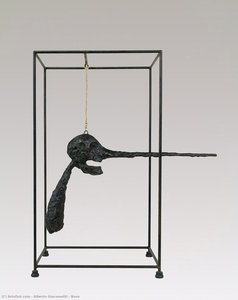
In the quiet, textured depths of Alberto Giacometti’s “Project for a Passageway (Maquette),” created in 1931, we encounter more than a mere sculptural model; we step into a psychological landscape where the boundaries between architecture and myth dissolve. This piece serves as a profound preliminary sketch for an ambitious architectural vision, yet its true power lies in its ability to evoke the primal spirit of Surrealism. Giacometti, a master of capturing the intangible, uses this maquette to explore the fascination with anthropological symbolism that gripped the avant-garde during the early twentieth century. The sculpture presents a roughly hewn plaster figure of a woman reclining, a composition that feels less like a static object and more like a threshold to an ancient, forgotten ritual.
The work is steeped in the transformative energy of initiation rites. By meticulously crafting vessels and trees within the sculpture's interior, Giacometti draws a direct line to African cultures and their sacred traditions, specifically those marking the transition from childhood to adulthood. This connection to the archetypal suggests that the "passageway" mentioned in the title is not merely a physical corridor of stone or wood, but a spiritual passage through which the soul must travel. For the collector or the designer, this piece offers a profound depth of meaning, inviting contemplation on themes of rebirth, transformation, and the cyclical nature of human existence.
The Mastery of Texture and Form
Technically, the maquette is a masterclass in Giacometti’s signature reduction of detail. Rather than pursuing a polished or hyper-realistic finish, the artist embraces a deliberate roughness. The plaster surface is tactile and weathered, creating a palpable sense of materiality that grounds the ethereal, dreamlike imagery of Surrealism in something earthy and real. This textured approach allows light to play across the uneven contours, casting shadows that shift with the viewer's perspective, much like the flickering light of a ritualistic fire.
The interplay between the delicate, almost fragile form of the reclining figure and the rugged, unrefined texture of the medium creates a tension that is central to the work's emotional impact. It is this very contrast—the ethereal subject matter meeting the heavy, grounded technique—that makes a high-quality reproduction of this piece so captivating for an interior space. Whether placed in a minimalist gallery setting or as a focal point in a sophisticated study, the sculpture commands attention through its quiet intensity and its ability to evoke a sense of mystery and timelessness.
An Invitation to Contemplation
For those seeking to curate a collection that speaks to the human condition, Giacometti’s work offers an unparalleled emotional resonance. This maquette does not merely decorate a room; it alters the atmosphere of a space, introducing a sense of profound introspection. It serves as a reminder of the beauty found in the unfinished, the raw, and the primal. To possess a reproduction of such a significant piece is to hold a fragment of the Surrealist revolution—a moment where art sought to liberate the unconscious mind from the constraints of rational thought.
As an element of interior design, the "Project for a Passageway" provides a sophisticated anchor for modern aesthetics. Its neutral tones and organic textures harmonize with contemporary materials like stone, glass, and reclaimed wood, while its historical weight adds a layer of intellectual prestige to any curated environment. It is a piece designed for those who appreciate art that does not just sit on a surface, but breathes life into the very air around it.
Artist Biography
A Life Sculpted by Existential Echoes
Alberto Giacometti, a name synonymous with the hauntingly elongated figures that define much of 20th-century sculpture, was born in 1901 amidst the breathtaking landscapes of Borgonovo, Switzerland. This alpine setting, nestled near the Italian border, instilled within him an early appreciation for form and space – qualities that would profoundly shape his artistic vision. He wasn’t simply entering a world of art; he was *born* into it. His father, Giovanni Giacometti, was a respected Post-Impressionist painter, and this familial immersion provided both encouragement and a foundation upon which young Alberto could build. The echoes of the Reformation resonated within his lineage too, as his family descended from Protestant refugees who had sought sanctuary from persecution, perhaps contributing to a lifelong exploration of isolation and the human condition. His brothers, Diego – himself a sculptor – and Bruno, an architect, further cemented art’s central role in their lives, creating a dynamic creative atmosphere that fostered experimentation and mutual influence.From Cubism to the Void: A Shifting Artistic Landscape
Giacometti's formal artistic journey began at the Geneva School of Fine Arts, but it was his move to Paris in 1922 that truly ignited his creative fire. He entered the studio of Antoine Bourdelle, a former associate of Rodin, absorbing classical techniques while simultaneously being swept up by the avant-garde currents swirling through the city. The early years were marked by an exploration of Cubism, dismantling and reassembling forms in a manner reflective of the era’s intellectual ferment. However, Giacometti wasn't content to merely mimic; he sought his own voice, moving towards a more personal style that focused intently on the human figure. This period saw him gravitating toward Surrealism, creating works imbued with dreamlike imagery and psychological depth, associating with luminaries like Miró, Ernst, and Picasso. Yet, even within this movement, Giacometti felt constrained. He ultimately rejected its purely subconscious approach, yearning for a more rigorous analysis of figurative composition – a desire to understand the essence of being through form. The late 1930s witnessed a dramatic shift in scale; he began producing incredibly small sculptures, often no larger than seven centimeters tall. These diminutive figures weren’t simply miniature representations but rather expressions of distance, both physical and emotional, reflecting a sense of detachment and loss that permeated his worldview.The Post-War Silhouette: Fragility and the Human Condition
The devastation of World War II profoundly impacted Giacometti's work. Taking refuge in Switzerland during the conflict, he continued to sculpt, but it was after the war that he achieved his most iconic style – the tall, attenuated figures for which he is celebrated today. These weren’t portraits in the traditional sense; they were distillations of human presence, stripped down to their essential forms. Rough surfaces and elongated limbs conveyed a profound sense of fragility and isolation, mirroring the existential anxieties of the post-war era. They seem perpetually on the verge of dissolving into nothingness, embodying the precariousness of existence. These sculptures weren’t merely *of* people; they were explorations of what it meant to *be* human in a world grappling with trauma and uncertainty. The space surrounding these figures is as crucial as the forms themselves – an imaginary yet tangible realm that speaks to our own sense of alienation and longing. Simultaneously, Giacometti's painting gained prominence, mirroring the themes of isolation and attenuation found in his sculptures through almost monochromatic depictions of the human form.Legacy of a Visionary
Giacometti’s artistic contributions were recognized with increasing acclaim throughout his career, culminating in the Grand Prize for Sculpture at the Venice Biennale in 1962. However, despite this success, he remained relentlessly self-critical, constantly reworking and sometimes even destroying sculptures that failed to meet his exacting standards. His unfinished commission for the Chase Manhattan Bank Building in New York – *Grande Femme Debout I–IV* – stands as a testament to his dissatisfaction with the relationship between art and its environment, highlighting his uncompromising artistic integrity. His work resonates deeply with existentialist philosophy, grappling with themes of human existence, mortality, and the search for meaning in an absurd world. He wasn’t simply creating aesthetically pleasing objects; he was posing fundamental questions about what it means to be alive. Alberto Giacometti is rightfully considered one of the most important sculptors of the 20th century, his influence continuing to inspire artists and captivate audiences with its profound exploration of the human condition and its uniquely evocative visual language. His sculptures are not merely representations of figures; they are embodiments of our shared vulnerability and search for connection in an increasingly fragmented world.
Alberto Giacometti
1901 - 1966 , Switzerland
Quick Facts
- Artistic Movement Or Style: Surrealism, Existentialism
- Artists Who Influenced This Artist:
- Antoine Bourdelle
- Rodin
- Miró
- Max Ernst
- Picasso
- Date Of Birth: 1901
- Date Of Death: 1966
- Full Name: Alberto Giacometti
- Nationality: Swiss
- Notable Artworks:
- The City Square
- Reclining Woman Who Dreams
- Surrealist Table
- Place Of Birth: Borgonovo, Switzerland
Related Articles

Bronze Sculptures That Defined Art History | OriginalUniqueArt
Journey through art history with our Top 10 bronze sculptures! Explore masterpieces by Rodin, Michelangelo & more. Discover stories behind iconic statues and find museum-quality reproductions for your home decor at OriginalUniqueArt.com.

The Enduring Form: Exploring Themes & Techniques in Sculpture Across Historical Periods
Explore the rich history of sculpture from ancient masterpieces to contemporary innovations. Discover key techniques, influential artists & investment potential for discerning art collectors.

The Enduring Form: Sculpture Across History, Technique & Emotional Resonance
Explore the rich history of sculpture with OriginalUniqueArt. Discover key techniques, influential artists & investment potential for discerning collectors. Expert insights into valuing and collecting timeless masterpieces.

Giovanni Giacometti: Sculpting Existentialism – A Study of Form, Space, and the Human Condition
Explore the profound artistic journey of Giovanni Giacometti, father to Alberto. Discover his unique transition from Surrealism to Existentialist sculpture and painting – a compelling study for elite collectors and art enthusiasts.

Bronze Age to Modern Masters: 10 Sculptures That Redefined Art | OriginalUniqueArt
Journey through art history with 10 legendary bronze sculptures – from Michelangelo's David to Rodin’s Thinker. Explore the stories, techniques & timeless beauty of these masterpieces. Find museum-quality reproductions & elevate your home decor on OriginalUniqueArt.com.




![Quatre femmes sur socle [Four Women on a Base]](/media/artworks/images-thumb/1c/72/1c722d6543f367f3d3096fdffeadda54.jpg)


