Switch to Print
 Read More







































 For artworks or reproductions larger than 105 cm (approximately 41 inches) on any side, the frame will be shipped as a kit, disassembled. This method ensures safe delivery and prevents damage during transport.


A Symphony of Twilight: The Ethereal Glow of Aert van der Neer
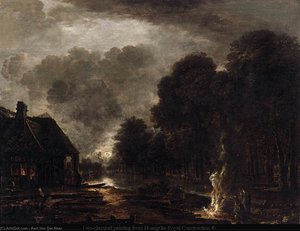
In the quiet transition between day and night, there exists a fleeting moment where the world seems suspended in a golden amber. It is this precise, ephemeral magic that Aert van der Neer captures so profoundly in his masterpiece, Landscape at Sunset. Painted around 1650, this work is far more than a mere topographical record of a Dutch river; it is a poetic meditation on the passage of time and the subtle shifts in atmosphere. As the sun dips below the horizon, the canvas breathes with the warmth of dying light, inviting the viewer to step into a realm where the boundaries between reality and dream begin to blur. For the discerning collector or interior designer, this painting offers more than visual beauty; it provides an emotional anchor, a sense of profound stillness that can transform any space into a sanctuary of peace.
The composition is a masterclass in guided observation. Van der Neer orchestrates the landscape with a delicate hand, using the gentle curve of the river to pull the eye deep into the heart of the scene. The water acts as a liquid mirror, reflecting the fiery oranges and soft pinks of the twilight sky, creating a luminous path that leads toward the distant horizon. Scattered throughout this tranquil expanse are small, vital signs of life: travelers on horseback, farmers tending to their livestock, and boats drifting slowly along the banks. These figures are not mere decorations; they provide a sense of scale and a touch of human narrative, grounding the vastness of nature with the rhythmic, quiet pulse of rural existence. The presence of a distant village, complete with a church spire, adds a layer of nostalgic charm, evoking a lost era of pastoral harmony.
The Alchemy of Light and Shadow
What truly distinguishes Van der Neer from his contemporaries in the Dutch Golden Age is his unparalleled sensitivity to light. In Landscape at Sunset, he employs a sophisticated technique of tonal contrast to simulate the atmospheric density of dusk. He utilizes dark, vertical strokes along the riverbanks—representing dense foliage and shadows—to frame the brilliant, horizontal bands of light that dance across the water's surface. This interplay between shadow and radiance creates a palpable sense of depth, making the air itself feel heavy with moisture and warmth. His ability to manipulate color—moving from the deep, earthy greens of the lush fields to the incandescent golds of the sky—demonstrates a technical virtuosity that remains breathtaking even centuries later.
For those looking to integrate such a piece into a curated collection or a sophisticated interior, the painting serves as a versatile focal point. Its palette of warm sunset hues can complement rich, traditional decor or provide a soft, organic contrast to modern, minimalist settings. The artwork does not demand attention through loud or jarring colors; instead, it commands respect through its subtle complexity and the way it captures the "language of feeling." To possess a reproduction of this caliber is to hold a fragment of the seventeenth century's most beautiful twilight, bringing an enduring sense of tranquility and historical elegance into the contemporary home.
Questions & Answers
What are the medium and date of "Landscape at Sunset" by Aert van der Neer?
The medium of "Landscape at Sunset" by Aert van der Neer is oil on canvas, and the work is dated 1650.
How do the colors of "Landscape at Sunset" relate to each other?
The colors of "Landscape at Sunset" by Aert van der Neer show a balanced harmony harmony. Harmony describes how the colors relate to each other.
Where should a reproduction of "Landscape at Sunset" by Aert van der Neer be hung?
With its landscape shape, a reproduction of "Landscape at Sunset" is suggested for a living room.
More about this painting
 Preview
 Send
Send Share
Share
 Details
 Guide
Guide

 Download
 Similars
 X-Ray
X-Ray Diaporama
 Q&A
Q&A Stats
Stats