Menu
FREE ART CONSULTATION
PreviewPreview AR previewAR preview Buy Print Buy PrintBuy Image Buy Image SendSend
DetailsDetails Add to favorites Add to favorites DownloadDownload SimilarsSimilars X-RayX-Ray DiaporamaDiaporama

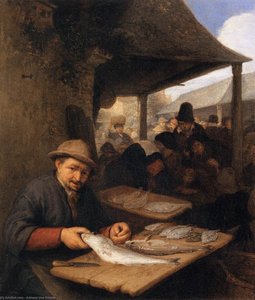
Peasant at a Window

Adriaen van Ostade’s ‘Peasant at a Window,’ painted around 1660, exemplifies Baroque realism with its focus on everyday peasant existence. Featuring a richly textured interior scene illuminated by candlelight, it captures the quiet dignity of rural life and reflects Ostade's skill in portraying light and shadow.

Explore Adriaen van Ostade's 17th-century Dutch genre paintings! Discover realistic scenes of daily life, taverns & peasant culture – a Golden Age master.

Hand Made Oil Reproduction

Hand-painted oil on canvas in your size and frame, made to order by our artists. (Buy Print Buy PrintBuy Image Buy Image)

P118B $10
P118H $10
P118W $10
P438Z $10
P508JH $12
P508YH $12
P805H $10
P805Z $10
P919BZ $10
P919G $10
P919XJ $10
P959ZH $10
P968JZ $12
W106C $8
W218G $10
W218JH $8
W218Y $10
W307PJ $10
W316G $10
W316PJ $8
W316Y $10
W398PJ $8
W4111J $10
W500HY $15
W500JH $15
W692G $12
W849H $8
W940BG $15
W953PJ $8

Standard
custom
CM
INCH

Pick from our preset sizes that match the artwork's original proportions.

width
height

You may enter your own dimensions to fit a specific frame or space. If your selected size does not match the original image's proportions, we will either crop the artwork or extend the painting with additional hand-painted elements. A digital mockup will be sent for your approval before production begins.
Please note that the on-screen preview does not reflect the actual cropping or extension. Only the mockup will accurately show the final composition.
While custom sizes are available, we recommend selecting a dimension from the predefined list to preserve the original proportions.

Examples of what can be changed: Replace face with customer photo; Add pet (e.g., replace cat with dog); Include hidden message in background; Change background landscape or elements.
After order, OriginalUniqueArt.com team will email client for instructions and provide a mockup preview

Worldwide Delivery () in 3/4 weeks instead of standard 5 weeks. (23 August). No compromise on quality.

why_choose_icon
Free Worldwide Express Shipping
why_choose_icon
High-Quality Linen Canvas
why_choose_icon
Full Shipping Insurance
why_choose_icon
Customs Tax Refund Guarantee
why_choose_icon
True Color Matching Guarantee
why_choose_icon
60-Day Return Policy (Defects Only)
why_choose_icon
100% Money-Back Guarantee
why_choose_icon
Bulk Discount Offer

Total Price

$ 300

reproduction

Peasant at a Window

Reproduction Medium

Reproduction Size

-

Total Price

$ 300

Quick Facts

  • Influences: Frans Hals
  • Year: 1662
  • Subject or theme: Peasant life
  • Dimensions: 50 x 44 cm
  • Movement: Baroque
  • Artist: Adriaen van Ostade
  • Medium: Oil on canvas

Art Quiz

There is only one correct answer for each question.

Question 1:
What artistic movement is ‘Peasant at a Window’ primarily associated with?
Question 2:
The painting utilizes chiaroscuro, which emphasizes:
Question 3:
Who painted ‘Peasant at a Window’?
Question 4:
What is the dominant subject matter depicted in this artwork?
Question 5:
The artist’s skillful use of light and shadow contributes to what effect?

Artwork Description

A Moment of Quiet Reflection: Adriaen van Ostade's "Peasant at a Window"

Adriaen van Ostade’s “Peasant at a Window,” painted in 1662, offers a poignant glimpse into the realities of everyday life during the Dutch Golden Age. This remarkable work, measuring 50 x 44 cm, transcends a simple depiction of a peasant enjoying a glass of wine; it is a masterclass in Baroque realism and a testament to van Ostade’s profound understanding of human character. The painting immediately draws the viewer into a scene of quiet contemplation, inviting us to consider the lives and experiences of those who shaped the era.

The Artist's Hand: Technique and Style

  • Baroque Realism: Van Ostade’s approach is firmly rooted in the Baroque style, characterized by a dramatic use of light and shadow – *chiaroscuro* – to sculpt forms and create a palpable sense of three-dimensionality. The artist meticulously renders the textures of the peasant's coarse coat, the smooth surface of the wine glass, and the delicate leaves above the archway, demonstrating an unparalleled attention to detail.
  • Meticulous Detail: As with many of van Ostade’s genre scenes, this work is defined by its painstaking observation and rendering of everyday objects and human features. The artist's brushwork is precise yet subtly expressive, conveying a sense of realism that was revolutionary for its time.
  • Color Palette: The restrained color palette – dominated by dark blues, browns, and greens – contributes to the painting’s somber mood and emphasizes the peasant’s humble status. The contrast between the cool tones of the figure and the warmer hues of the background further enhances the sense of depth and realism.

Historical Context and Symbolism

Painted in 1662, “Peasant at a Window” reflects the burgeoning interest in depicting ordinary people within the Dutch Golden Age. Following the influence of Frans Hals, van Ostade moved away from the flamboyant portraiture of his early training to focus on scenes of daily life, particularly those involving the working class. The peasant’s posture – seated and absorbed in his drink – suggests a moment of respite from labor, inviting viewers to contemplate the hardships and simple pleasures of rural existence. The archway and leafy backdrop subtly elevate the scene, hinting at a connection between the earthly and the divine, a common theme within Baroque art.

Van Ostade's Legacy: A Master of Genre

Adriaen van Ostade’s “Peasant at a Window” stands as a significant work in the history of Dutch genre painting. His ability to capture the essence of human emotion and everyday life with such realism and sensitivity cemented his place as one of the most important artists of the period. This reproduction offers an exceptional opportunity to own a piece of art that embodies the spirit of the Dutch Golden Age, showcasing van Ostade’s unparalleled skill and vision. The painting's enduring appeal lies in its ability to evoke empathy and contemplation, reminding us of the shared human experience across time and social strata.


Artist Biography

Adriaen van Ostade: A Life in Dutch Genre Painting

Early Life and Training

  • Born: 1610 in Haarlem, Netherlands.
  • Van Ostade came from a family of artists; his father, Jan van Ostade, was a tapestry weaver. This artistic environment likely fostered his early interest in visual arts.
  • Initial Training: He and his brother, Isaack Jansz van Ostade, were initially pupils of Frans Hals, a celebrated Dutch Golden Age painter known for his lively portraits and genre scenes.
  • However, their time with Hals was relatively brief. They soon diverged from Hals’s style, developing their own distinct approaches to painting.

Artistic Development and Style

  • Early Works (1630s): Van Ostade's early paintings often imitated Hals’s loose brushwork, but he gradually refined his technique.
  • He began to focus on genre scenes – depictions of everyday life, particularly those involving peasants and working-class individuals.
  • Distinctive Style: His style is characterized by meticulous detail, a subtle use of light and shadow (chiaroscuro), and an emphasis on realistic portrayals of his subjects.
  • He skillfully captured the textures of clothing, objects, and environments, creating a sense of authenticity in his work.
  • Subject Matter: Common themes included tavern scenes, village fairs, peasant interiors, and depictions of rural life.

Major Works and Achievements

  • Saying Grace (c. 1660): This painting, housed at the Cleveland Museum of Art, is considered one of his masterpieces. It exemplifies his ability to imbue even humble subjects with dignity and poetic beauty.
  • A Laughing Peasant (1634): A small but captivating work in the Kremer Collection, Amsterdam, showcasing his skill in capturing expressive faces and gestures.
  • Tavern Scenes: Van Ostade produced numerous tavern scenes, offering glimpses into the social lives of 17th-century Dutch people. These paintings often depict lively gatherings with drinking, smoking, and music.
  • Landscape Paintings: While primarily known for his genre works, he also created landscapes, often featuring rustic settings and figures engaged in everyday activities.

Influences and Legacy

  • Frans Hals’s Influence: His initial training under Frans Hals provided a foundation in Dutch painting techniques and genre subject matter.
  • Comparison with David Teniers the Younger: Art historians often compare Van Ostade's work to that of David Teniers the Younger, another prominent genre painter. However, their paintings reflect different regional characteristics – Van Ostade focused on Holland, while Teniers depicted Brabant.
  • Impact on Later Artists: Van Ostade’s emphasis on naturalism and everyday life paved the way for later artistic movements like Impressionism and Realism. His attention to light and shadow also influenced Baroque painting.
  • Historical Significance: He is considered a key figure in Dutch Golden Age painting, providing valuable insights into the lives and customs of 17th-century Dutch society.

Later Life and Death

  • Guild Membership: Van Ostade became a member of the Haarlem Guild of St. Luke in 1634, signifying his recognition as a professional artist.
  • Continued Success: He enjoyed continued success throughout his career, receiving commissions from wealthy patrons and establishing himself as a respected painter.
  • Death: Adriaen van Ostade died in Haarlem in 1685. His works continue to be admired for their realism, charm, and historical significance.
Adriaen van Ostade

Adriaen van Ostade

1610 - 1685 , Netherlands

Quick Facts

  • Birth_Date: 1610
  • Birth_Place: Haarlem, Netherlands
  • Death_Date: 1685
  • Influenced_By: Frans Hals
  • Movement: Dutch Golden Age painting
  • Name: Adriaen van Ostade
  • Nationality: Dutch
  • Notable_Works:
    • Saying Grace
    • A Laughing Peasant
Explore artworks organized by themes, styles, and characteristics.