
 Preview
 Send
Send Share
Share
 Details
 Guide
Guide

 Download
 Similars
 X-Ray
X-Ray Diaporama
 Q&A
Q&A Stats
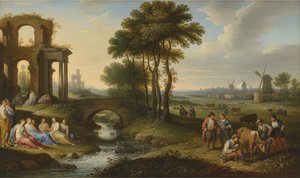
StatsShepherd and Shepherdess

- 47.0 x 38.0 cm


 Read More
Giclée / Art Print
Museum-quality giclée or canvas print with fast production and flexible finish options. ( Buy Hand Made Painting Switch to Digital Image)




P118B $10

P118H $10

P118W $10

P438Z $10

P508JH $12

P508YH $12

P805H $10

P805Z $10

P919BZ $10

P919G $10

P919XJ $10

P959ZH $10

P968JZ $12

W106C $8

W218G $10

W218JH $8

W218Y $10

W307PJ $10

W316G $10

W316PJ $8

W316Y $10

W398PJ $8

W4111J $10

W500HY $15

W500JH $15

W692G $12

W849H $8

W940BG $15

W953PJ $8




Pick from our preset sizes that match the artwork's original proportions.

Type the width and the height you need, to fit your frame or your wall. A print can only be cut, never made bigger than the picture, so a size with a different shape loses a part of the image. We send you a digital mockup to approve before we print anything. The picture shown on this page does not show the real cut — only the mockup does.
Worldwide Delivery () in 2 weeks instead of standard 4/5 weeks. (1 November)

Free Worldwide Express Shipping

High-Quality Linen Canvas

Full Shipping Insurance

Customs Tax Refund Guarantee

True Color Matching Guarantee

100-Day Return Policy (Defects Only)

100% Money-Back Guarantee

Bulk Discount Offer
 Glass option is only available in size under 110 CM

Shepherd and Shepherdess
Giclée / Art Print
Reproduction Size
-


Total Price
$ 81
A Dramatic Embrace: Adriaen van der Werff’s “Shepherd and Shepherdess”
Adriaen van der Werff's "Shepherd and Shepherdess," painted in 1696, isn’t merely a portrait; it’s a carefully constructed tableau of yearning and unspoken desire. This arresting scene, currently residing within the Wallace Collection in London, immediately draws the viewer into a world steeped in Baroque drama – a world where classical ideals intertwine with potent emotionality. The painting depicts a man and woman locked in an intense embrace amidst a subtly rendered pastoral backdrop, hinting at a narrative rooted in mythology, perhaps referencing the tragic tale of Narcissus and Echo, though Van der Werff’s masterful execution transcends simple allegory.
The composition is meticulously balanced, employing a pyramidal structure that anchors the central figures. The couple's intertwined forms dominate the upper portion of the canvas, their bodies almost merging in a gesture both passionate and vulnerable. Around them, a small group of onlookers – likely representing the community observing this intimate moment – adds depth to the scene and suggests a wider social context. Notice how Van der Werff uses light and shadow—a technique known as chiaroscuro—to sculpt the figures, highlighting their muscular forms and emphasizing the intensity of their connection. The cool blues and greens of the distant landscape provide a stark contrast to the warm golds and oranges that bathe the central couple, further intensifying the drama.
The Master’s Technique: A Symphony of Oil Paint
Van der Werff's skill as an artist is immediately apparent in the painting’s remarkable detail. He was renowned for his ability to render drapery with breathtaking realism – a testament to his rigorous training under Eglon van der Neer, a specialist in costume design. Observe how each fold of fabric appears to ripple and flow, conveying both weight and movement. The figures themselves are rendered with anatomical precision, yet imbued with an expressive quality that transcends mere representation. Van der Werff doesn’t simply depict; he captures the very essence of human emotion.
The painting's texture is rich and layered, achieved through meticulous application of oil paint. Van der Werff built up color gradually, creating subtle gradations in tone and value that add depth and luminosity to the scene. The artist’s use of glazing – applying thin layers of translucent paint over dried underlayers – allows light to penetrate deeply into the canvas, giving the figures a remarkable sense of volume and presence. The brushstrokes are generally smooth and controlled, contributing to the painting's overall polished appearance, yet there is also evidence of deliberate impasto—thickly applied paint—in areas where Van der Werff wanted to emphasize texture or create visual interest.
Historical Context & Symbolism
Created during the height of the Dutch Golden Age, “Shepherd and Shepherdess” reflects the era’s fascination with classical antiquity and its embrace of human emotion. The subject matter – a passionate love affair – was a common theme in Baroque art, often used to explore themes of desire, loss, and mortality. The inclusion of onlookers suggests that this intimate moment is being observed by society, highlighting the social implications of such intense emotions.
Beyond its immediate narrative, the painting can be interpreted as an allegory for the human condition. The embrace represents a yearning for connection and fulfillment, while the distant landscape symbolizes the isolation and uncertainty of life. The figures’ expressions – a mixture of longing, vulnerability, and perhaps even sorrow – invite viewers to contemplate their own experiences of love and loss. Van der Werff's ability to imbue such a seemingly simple scene with profound emotional resonance is what elevates “Shepherd and Shepherdess” beyond mere portraiture.
A Timeless Masterpiece: Reproduction & Beyond
“Shepherd and Shepherdess” stands as a testament to Adriaen van der Werff’s extraordinary talent and his mastery of the Baroque style. Today, high-quality reproductions offer an accessible way to experience this captivating artwork, bringing its drama and beauty into any setting. Whether adorning a grand salon or a cozy study, a faithful reproduction captures the essence of Van der Werff's vision – a poignant exploration of human emotion set against a backdrop of classical elegance.
Questions & Answers
What is a reproduction of "Shepherd and Shepherdess" by Adriaen van der Werff recommended for?
The suggested use for "Shepherd and Shepherdess" by Adriaen van der Werff is statement. It can serve other purposes as well.
What atmosphere does "Shepherd and Shepherdess" have?
"Shepherd and Shepherdess" has a romantic atmosphere.
How big is the original "Shepherd and Shepherdess"?
"Shepherd and Shepherdess" measures 47 x 38 cm in its original form. Original dimensions are a useful reference when choosing a reproduction size.
Artist Biography
The Master of Meticulous Grace: The Life of Adriaen van der Werff
In the grand tapestry of the Dutch Golden Age, few threads shine with as much polished brilliance as the work of Adriaen van der Werff. Born in The Hague in 1659, Van der Werff emerged from a lineage of artistic talent, the son of a painter, which provided him with an early and intimate introduction to the nuances of light and form. His formative years were shaped by the rigorous tutelage of Eglon van der Neer, a master of costume and drapery whose influence is still visible in the exquisite, silken textures that define Van der Werff’s later compositions. This early training instilled in him a devotion to precision, transforming his brush into an instrument capable of capturing the most delicate transitions of skin and fabric.
As his career progressed, Van der Werff moved beyond mere technical proficiency to achieve a level of psychological depth that captivated the European aristocracy. Alongside his brother and pupil, Pieter van der Werff, he established a formidable studio in Rotterdam. His ascent within the artistic community was marked by his leadership of the Saint Luke Guild, a position of immense prestige that allowed him to command the attention of the most influential patrons of the era. His work became a bridge between the rugged realism of earlier Dutch masters and the refined, elegant sensibilities of the burgeoning Rococo movement.
A Symphony of Light and Myth
The true magic of Van der Werff’s oeuvre lies in his ability to breathe life into the mythological and biblical narratives of antiquity. He did not merely illustrate stories; he staged them with a dramatic intensity that utilized chiaroscuro to evoke profound emotion. In works such as 'Lot and his Daughters', one can witness the masterful interplay of shadow and light, where every flicker of candlelight serves to heighten the tension and symbolic weight of the scene. His canvases often serve as windows into a world of classical elegance, where the human form is rendered with a porcelain-like perfection that feels both ethereal and tangibly present.
His technical repertoire was remarkably diverse, allowing him to navigate between different modes of portraiture and narrative painting:
- Mythological Grandeur: His depictions of gods and heroes often utilized monumental compositions to convey power and grace.
- Intimate Portraiture: In works like his 'Self-Portrait', he demonstrated an unflinching honesty, capturing the confidence and character of the subject through meticulous detail.
- Genre and Groupings: Pieces such as 'Children Playing before a Hercules Group' showcase his ability to blend domestic tenderness with the imposing presence of classical sculpture, creating a layered narrative of innocence meeting antiquity.
Legacy and Historical Significance
The reach of Adriaen van der Werff extended far beyond the borders of the Netherlands. His reputation as a "fine painter" earned him the patronage of the highest echelons of European royalty, including Johann Wilhelm, the Elector Palatine, and the illustrious Anna Maria Luisa de' Medici. The commission of monumental works for the Florentine court stands as a testament to his status as an international figure of the Baroque era. His ability to satisfy the sophisticated tastes of the Medici family solidified his legacy as an artist who could marry Northern precision with Southern elegance.
Ultimately, Van der Werff’s significance lies in his role as a transitional figure. He took the foundational elements of Dutch realism—the obsession with texture, light, and truth—and elevated them into a refined, courtly language that would influence the trajectory of 18th-century art. Though the era of the great Dutch Masters would eventually give way to new movements, the luminous, polished world created by Van der Werff remains an enduring monument to the heights of Baroque artistry.

Adriaen van der Werff
1659 - 1722 , Netherlands
Quick Facts
- Full Name: Adriaen van der Werff
- Nationality: Dutch
- Date Of Birth: 1659
- Date Of Death: 1722
- Place Of Birth: The Hague, Netherlands
- Notable Artworks:
- SAINTE MADELEINE MEDITANT DANS LA SOLITUDE
- ADAM ET EVE
- SARAH PRESENTE AGAR A ABRAHAM
- Artistic Movement Or Style: Baroque
- Artists Who Influenced This Artist: ['Eglon van der Neer']
- Artists Or Movements Influenced By This Artist: ['Dutch Masters']
Related Articles

Dutch Baroque Masters: 10 Paintings That Shaped an Era | OriginalUniqueArt
Journey through the Golden Age with our guide to the Top 10 Dutch Baroque masterpieces! Explore iconic paintings by Rembrandt, Vermeer & Frans Hals. Find museum-quality art reproductions and elevate your home decor at OriginalUniqueArt.com.
Cornelis van Poelenburch: Bridging Mannerism & the Dutch Baroque Landscape
Discover Cornelis van Poelenburch, a pivotal Dutch Baroque landscape painter bridging Mannerism & Italianate styles. Explore his life, key works, and lasting influence on 17th-century art with OriginalUniqueArt.

Early Netherlandish Masters: 10 Paintings That Revolutionized Art & Decor
Journey into the Early Netherlandish Renaissance! Explore 10 iconic paintings by Jan van Eyck, Rogier van der Weyden & more. Discover stunning detail, symbolism, and oil painting techniques. Find museum-quality art reproductions for your home at OriginalUniqueArt.com.

Mastering Light and Shadow: The 25 Greatest Artworks by Rembrandt van Rijn
Explore Rembrandt's greatest Baroque masterpieces through light and shadow. Discover the full collection online at OriginalUniqueArt.com.

Golden Age Reflections: Dutch Baroque Painting & Cultural Innovation
Explore the Dutch Golden Age of painting! Discover key artists like Vermeer & ter Borch, their innovative techniques, and the rich cultural context behind these Baroque masterpieces. Learn about collecting & appreciating this iconic art period.


