- Home

- Print on canvas
- Adriaen Hanneman
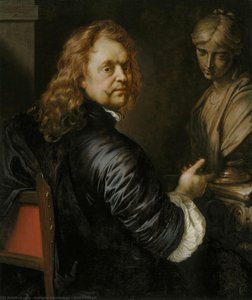
- John Evelyn

 Buy Painting
 Send
Send Share
Share
 Details

 Download
 Similars
 X-Ray
X-Ray Diaporama
John Evelyn

 Read More
Giclée / Art Print
Museum-quality giclée or canvas print with fast production and flexible finish options.




































Pick from our preset sizes that match the artwork's original proportions.

You may enter your own dimensions to fit a specific frame or space. If your selected size does not match the original image's proportions, we will either crop the artwork or extend the image with a mirrored or solid-fill edge. A digital mockup will be sent for your approval before production begins.
Please note that the on-screen preview does not reflect the actual cropping or extension. Only the mockup will accurately show the final composition.
While custom sizes are available, we recommend selecting a dimension from the predefined list to preserve the original proportions.
Worldwide Delivery () in 2 weeks instead of standard 4/5 weeks. (21 July)

Free Worldwide Express Shipping

High-Quality Linen Canvas

Full Shipping Insurance

Customs Tax Refund Guarantee

True Color Matching Guarantee

60-Day Return Policy (Defects Only)

100% Money-Back Guarantee

Bulk Discount Offer
 Glass option is only available in size under 110 CM

John Evelyn
Giclée / Art Print
Reproduction Size
-


Total Price
-
Artist Biography
Early Life and Artistic Foundations
Adriaen Hanneman emerged onto the Dutch Golden Age art scene around 1603, born into a prosperous Catholic family in The Hague. This background would subtly shape his career trajectory, influencing both his subject matter and eventual patronage networks. From a young age, he demonstrated an aptitude for artistry, beginning his formal training in 1619 under the tutelage of Jan Antonisz. van Ravesteyn the Younger—a respected Hague portraitist. Van Ravesteyn instilled in Hanneman a precise, sculptural approach to rendering form, a characteristic that would remain evident throughout much of his early work. This foundational period wasn’t merely about technical skill; it was about absorbing the established conventions of Dutch portraiture and learning to capture not just likeness, but also social standing and character. The crispness and clarity of Van Ravesteyn's style provided Hanneman with a solid base upon which he would later build his own distinctive artistic voice.The English Interlude: Embracing the Van Dyck Influence
In 1626, Hanneman embarked on a significant chapter in his development, relocating to England for approximately sixteen years. This move proved pivotal, placing him at the heart of a vibrant and evolving artistic landscape. The arrival of Anthony van Dyck in London in 1632 as court painter to Charles I profoundly impacted Hanneman’s style. Van Dyck's elegant compositions, dynamic brushwork, and rich palette captivated the young artist, who may have even had the opportunity to work within Van Dyck’s studio—a formative experience that undoubtedly shaped his aesthetic sensibilities. Beyond Van Dyck, Hanneman also encountered other prominent artists like Cornelis Janssens van Ceulen and Daniel Mytens, further broadening his artistic horizons. Crucially, he garnered patronage from Constantijn Huygens, a powerful figure at the English court who actively championed Hanneman’s career, facilitating introductions and commissions that propelled him into aristocratic circles. This period wasn't simply about imitation; it was an immersion in a sophisticated courtly culture that would define his future artistic endeavors.Return to The Hague and Artistic Maturity
Around 1638, Hanneman returned to The Hague, marking a turning point in both his personal and professional life. He solidified his ties to the local art community by marrying Maria van Ravesteyn, the daughter of his former teacher, thereby cementing a lineage of artistic expertise. In 1645, he became a deacon of the Guild of St. Luke, demonstrating his integration into the established artistic hierarchy of The Hague. Furthermore, Hanneman actively participated in the Confrerie Pictura—an influential artists’ society that he helped lead—underscoring his commitment to fostering collaboration and innovation within the Dutch art world. Back on Dutch soil, Hanneman continued to specialize in portraiture, skillfully blending the lessons learned from Van Dyck with a growing sense of Dutch artistic identity. He catered to the burgeoning demand for portraits among the Dutch nobility, as well as members of the exiled English court who sought refuge in The Hague following the tumultuous events of the English Civil War. His subjects included prominent figures like Constantijn Huygens himself, Charles II (then Prince of Wales), and William III, Prince of Orange—testifying to his rising reputation and access to influential patrons.Legacy and Lasting Impact
Hanneman’s later years were marked by financial difficulties, a common plight for artists during the “Rampjaar” (Disaster Year) of 1672—a period of war and economic hardship that gripped the Dutch Republic. He passed away in The Hague in 1671, leaving behind a modest estate despite his previous successes, a poignant reflection of the volatile economic climate. However, his artistic legacy endured. Hanneman’s notable works include striking portraits of Henry, Duke of Gloucester (now housed in the National Gallery of Art, Washington D.C.), a youthful depiction of William III (gracing the Rijksmuseum in Amsterdam), and a posthumous portrait of Maria I Stuart (displayed at the Mauritshuis in the Netherlands). He is remembered for his refined court portraits that masterfully captured both the physical likenesses and social status of his aristocratic sitters. His influence extended beyond his own creations, impacting other painters such as Govert Flinck, demonstrating his significant contribution to Dutch portraiture during the Golden Age. Hanneman’s ability to synthesize Flemish elegance with Dutch realism cemented his place as a key figure in 17th-century art—a painter who not only documented his era but also helped define its aesthetic ideals.Notable Works
- John Evelyn: A Baroque masterpiece showcasing rich detail and dramatic lighting.
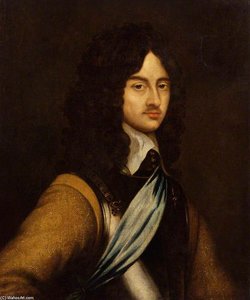
- Charles II: An exquisite 17th-century portrait embodying royal authority.
- Charles II as Prince of Wales: A stunning depiction of royal status and artistry, notable for its dramatic lighting.
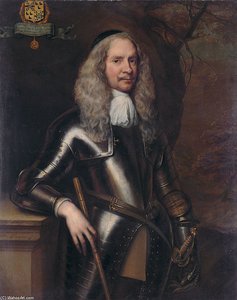
- Henry, Duke of Gloucester: Currently residing in the National Gallery of Art, Washington D.C., this portrait exemplifies Hanneman’s skill in capturing aristocratic presence.
- William III as a young prince: A captivating work held at the Rijksmuseum, Amsterdam, showcasing the future ruler's early years.
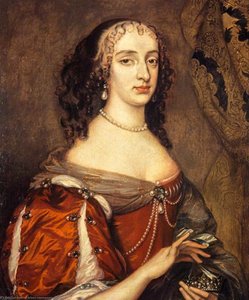
- Posthumous portrait of Maria I Stuart: Located in the Mauritshuis, Netherlands, this piece is a testament to Hanneman’s ability to create compelling portraits even from memory or description.

Adriaen Hanneman
1603 - 1671 , Netherlands
Quick Facts
- Artistic Movement Or Style: Baroque, Portraiture
- Artists Or Movements Influenced By This Artist: ['Govert Flinck']
- Artists Who Influenced This Artist:
- Anthony van Dyck
- Jan Ravesteyn
- Date Of Birth: c. 1603
- Date Of Death: 1671
- Full Name: Adriaen Hanneman
- Nationality: Dutch
- Notable Artworks:
- John Evelyn
- Charles II
- William III as Prince
- Henry, Duke of Gloucester
- Place Of Birth: The Hague, Netherlands
Related Articles
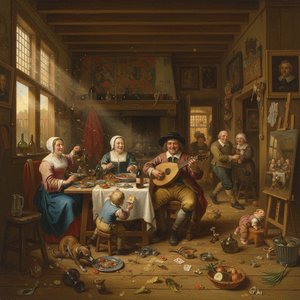
Jan Steen: A Master of Dutch Genre Painting & the Golden Age
Explore the life & art of Jan Steen, a leading Dutch Golden Age painter renowned for his humorous genre scenes & insightful social commentary. Discover his techniques, legacy, and collecting tips.
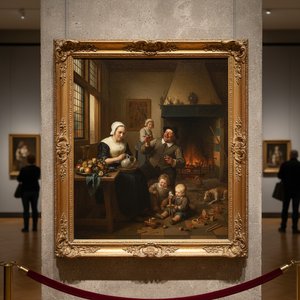
Genre Painting: A Window into Daily Life & Societal Values of the Dutch Golden Age
Explore the captivating world of Dutch Golden Age genre painting! Discover realistic depictions of daily life, masterful artists like Ostade & Metsu, and hidden symbolism. Learn about this influential art movement with OriginalUniqueArt.

Rembrandt van Rijn: A Life Illuminated – Innovation, Emotion, and the Dutch Golden Age
Explore the life & art of Rembrandt van Rijn, a Dutch Golden Age master. Discover his innovative techniques, iconic paintings like 'The Night Watch', and enduring legacy. Expert insights for collectors & enthusiasts.

Frans Hals I: Innovation, Intimacy & the Dutch Golden Age Portrait
Explore the revolutionary portraiture of Frans Hals I, a master of the Dutch Golden Age. Discover his innovative techniques, captivating character studies & lasting impact on art history. Learn more at OriginalUniqueArt.

Willem van de Velde the Elder: Master of Maritime Painting & Chronicler of the Dutch Golden Age
Discover the captivating maritime paintings of Willem van de Velde the Elder, a master chronicler of the Dutch Golden Age. Explore his unparalleled realism and lasting influence on naval art history.