The Life and Times of Jan Steen: Leiden Roots & Early Influences
Jan Havickszoon Steen, a name synonymous with lively domestic scenes and a uniquely Dutch brand of humour, occupies a fascinating position within the pantheon of 17th-century painters. Born circa 1626 in the bustling university town of Leiden, his life was far from the stereotypical image of the solitary artistic genius. Leiden, a thriving center of commerce and intellectual curiosity during the Dutch Golden Age, provided a rich backdrop for the artist’s formative years. His family were brewers – proprietors of “The Red Halbert” tavern for generations – a detail that would subtly inform his later work, imbuing it with an intimate understanding of everyday life and the social dynamics played out within the convivial atmosphere of the Dutch inn. Unlike some of his contemporaries who benefited from formal patronage early in their careers, Steen’s path was more circuitous. He briefly attended the University of Leiden, a testament to his family's aspirations, but it was within the workshops of Nicolaes Knupfer, Adriaen van Ostade, and Jan van Goyen that his artistic education truly began.
Knupfer, a German painter working in Utrecht, instilled in Steen a sense of composition and colour. Van Ostade’s influence is visible in the early depictions of peasant life, while Van Goyen, who would later become his father-in-law, provided valuable mentorship and a connection to the landscape tradition. This diverse training laid the foundation for Steen's distinctive style – one that blended narrative detail with a keen eye for character and an emerging talent for capturing fleeting moments of human interaction. The early years weren’t without their practical challenges; a brief foray into running his own brewery in Delft from 1654 to 1657 suggests a pragmatic streak alongside his artistic ambitions, a period that likely deepened his understanding of the Dutch bourgeoisie he would so often depict.
A Humorous Lens on Dutch Society: Themes and Characteristics in Steen’s Work
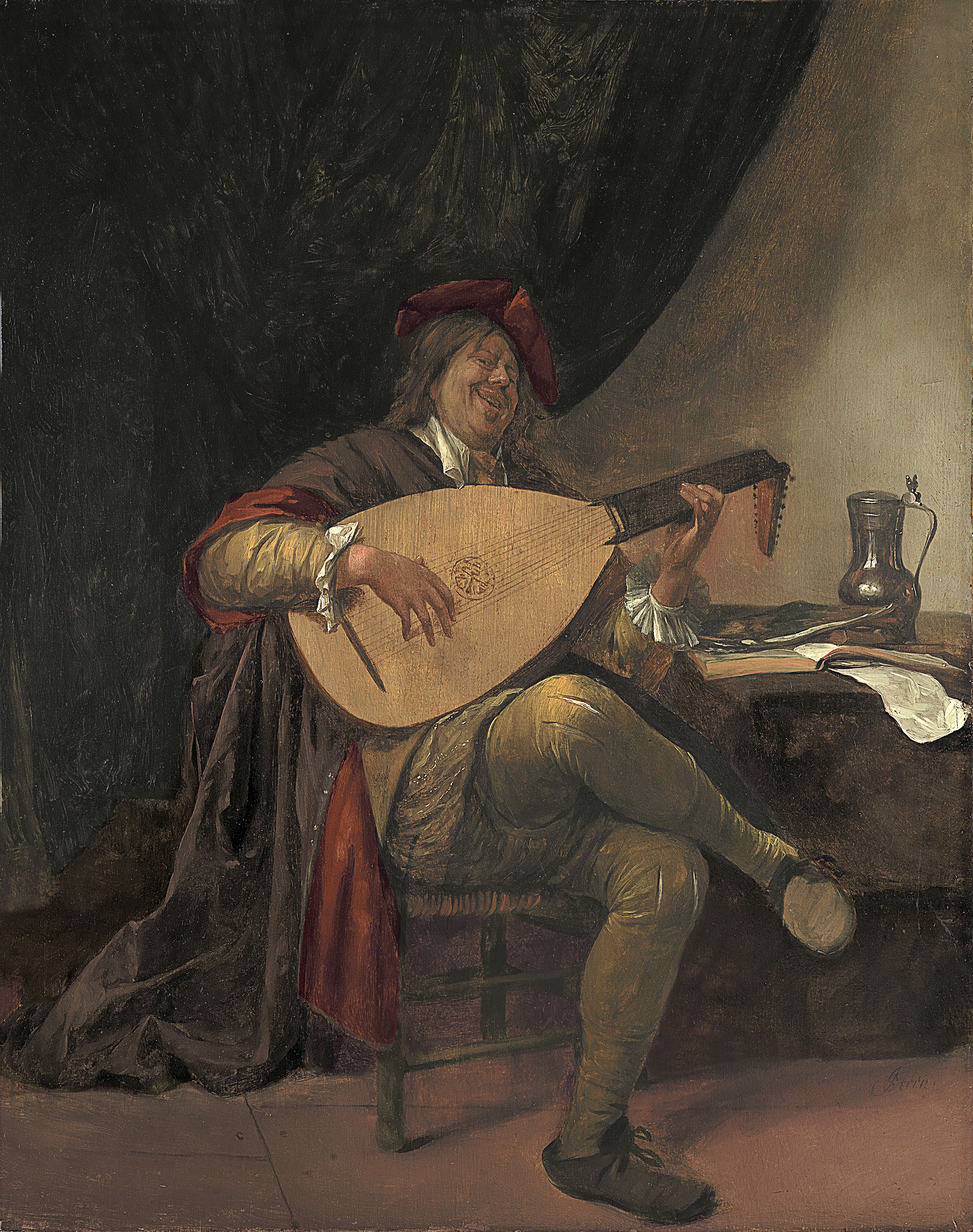 Wikipedia: Jan Steen
Jan Havickszoon Steen (c. 1626 – buried 3 February 1679) was a Dutch Golden Age painter, one of the leading genre painters of the 17th century. His works are known for their psychological insight, sense of humour and abundance of colour. Their satire...
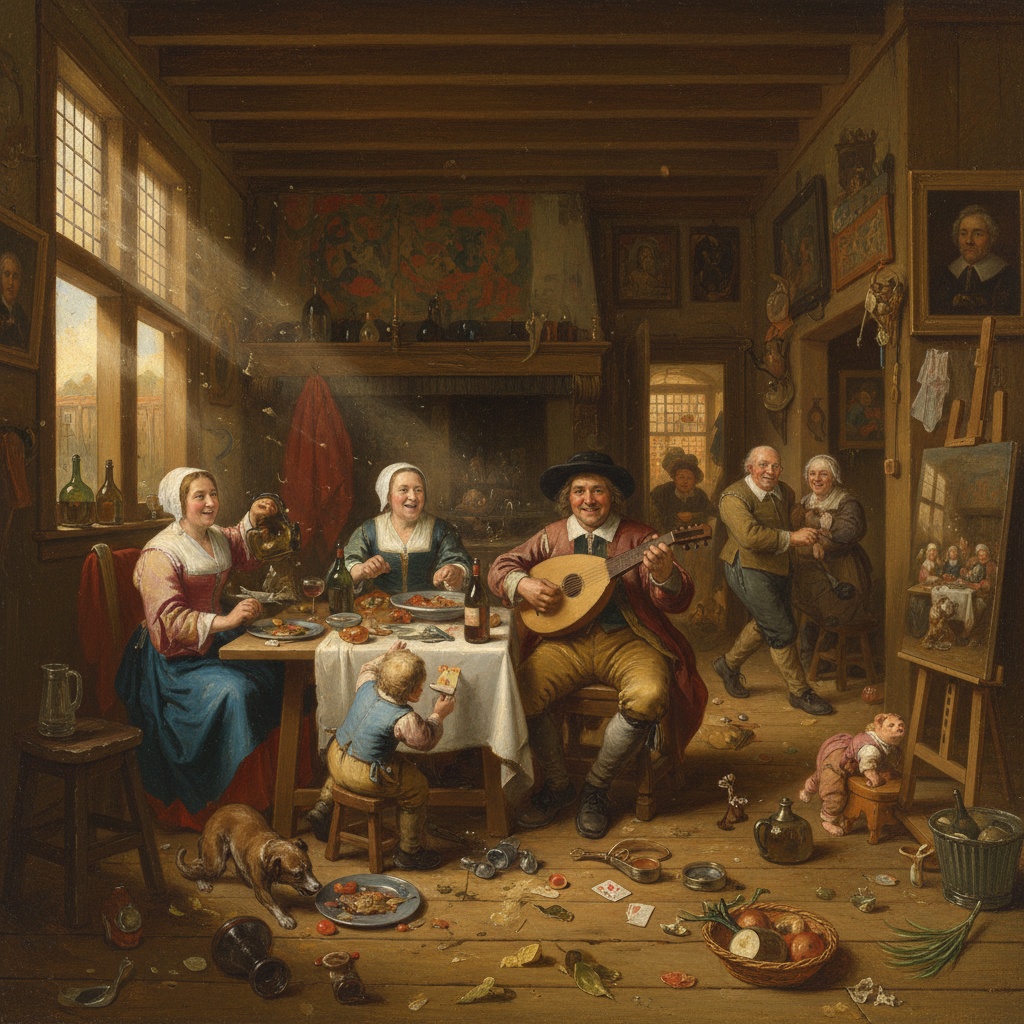
Steen's paintings are not merely depictions of everyday life; they are vibrant narratives teeming with psychological insight and subtle social commentary. He excelled at capturing the boisterous energy of domestic interiors, often portraying scenes of merriment, feasting, or playful chaos. However, beneath the surface of these seemingly lighthearted compositions lies a deeper layer of meaning. Steen was a master observer of human foibles, and his work is replete with satirical undertones that gently mock the behaviors and attitudes of the Dutch middle class. Consider “Skittle Players outside an Inn” (c. 1660), where the apparent joy of the game masks underlying tensions and opportunistic behavior – a playful critique of societal norms.
His scenes frequently feature children, rendered with remarkable realism and expressive faces, often engaged in mischief or mirroring the antics of their elders. This use of childhood as a microcosm for adult failings is a recurring motif. Steen’s paintings are rarely straightforward celebrations; they invite viewers to question the morality of the characters and reflect on the complexities of human nature. He frequently employed allegorical elements and proverbs, embedding hidden meanings within seemingly simple scenes – a practice that adds another layer of intellectual engagement for the discerning viewer. The comparison often drawn between Steen and Molière, his French contemporary, is apt; both artists possessed an uncanny ability to hold a mirror up to society, exposing its absurdities with wit and nuance.
Steen's Artistic Technique: Colour, Composition, and Psychological Insight
While Steen’s subject matter often draws the initial attention, it is his masterful technique that truly elevates his work. He possessed an exceptional command of colour, employing a rich palette and skillful use of light and shadow to create dynamic compositions. Unlike some of his contemporaries who favoured a more restrained approach, Steen embraced vibrant hues and bold contrasts, lending his paintings a sense of energy and immediacy. His brushwork is loose and expressive, contributing to the lively atmosphere of his scenes.
Steen’s compositional skills are equally noteworthy. He often employed complex arrangements with multiple figures and overlapping planes, creating a sense of depth and movement. His ability to capture fleeting moments – a stolen glance, a mischievous grin – is remarkable, imbuing his characters with a palpable sense of life. The psychological insight evident in his portraits is particularly striking; he seems to have possessed an innate understanding of human expression, capturing the subtle nuances of emotion with astonishing accuracy. This talent for portraying character, combined with his vibrant colour palette and dynamic compositions, sets Steen apart from many of his contemporaries.
Beyond the Merriment: Satire, Morality, and Hidden Meanings in His Paintings
Genre painting (or petit genre) is the painting of genre art, which depicts aspects of everyday life by portraying ordinary people engaged in common activities. One common definition of a genre scene is that it shows figures to whom no identity can b...
To view Jan Steen’s work as simply cheerful depictions of Dutch life is to miss a crucial dimension. His paintings are often imbued with moralizing themes, subtly warning against excess, deceit, or foolishness. The seemingly innocent scenes frequently contain allegorical references and proverbs that offer a deeper commentary on human behavior. For example, the boisterous gatherings in his tavern scenes can be interpreted as cautionary tales about the dangers of indulgence and the fleeting nature of pleasure.
The inclusion of symbolic objects – overturned chairs, broken pottery, or strategically placed animals – often serves to reinforce these underlying messages. Steen’s paintings are not didactic; he rarely offers explicit moral pronouncements. Instead, he invites viewers to interpret the scenes for themselves, prompting reflection on their own values and behaviors. This ambiguity is part of what makes his work so enduringly fascinating. The satire in Steen's paintings isn’t malicious but rather a gentle nudge towards self-awareness, a playful critique that resonates even today. His ability to blend humour with moral complexity distinguishes him as a truly unique voice within the Dutch Golden Age.
Jan Steen's Legacy & Influence on Subsequent Artists
Despite facing financial difficulties throughout much of his life and achieving relatively limited recognition during his lifetime, Jan Steen’s influence on subsequent generations of artists is undeniable. His ability to capture the essence of everyday life with humour and psychological insight paved the way for later genre painters who sought to portray the complexities of human experience. Artists like Frans van Mieris (who became a drinking companion in Steen's later years) and Adriaen Jansz Hendricx were directly influenced by his style, adopting his vibrant colour palette and dynamic compositions.
Steen’s work also resonated with collectors who appreciated his ability to capture the spirit of Dutch society. Today, his paintings are highly sought after and can be found in major museums around the world, including the National Gallery in London and The Leiden Collection in New York City. His enduring appeal lies in his ability to connect with viewers on a deeply human level – to recognize themselves and their own foibles within the lively scenes he so masterfully portrayed. Steen’s legacy is not simply as a painter of genre scenes, but as a keen observer of human nature and a subtle satirist who continues to provoke thought and delight audiences centuries later.
Collecting Jan Steen Today: Key Works and Market Trends
Acquiring a work by Jan Steen represents more than just an investment in art history; it’s acquiring a window into the soul of 17th-century Dutch society. While his paintings rarely appear on the market, when they do, they command significant prices reflecting their rarity and artistic merit. Key works to look for include “Skittle Players outside an Inn,” “Merry Company on a Terrace,” and “The Feast of Saint Nicholas.” These pieces exemplify Steen’s signature style – vibrant colour, dynamic composition, and subtle social commentary.
Market trends indicate a continued appreciation for his genre scenes, with prices steadily increasing over the past decade. Provenance is particularly important when considering a purchase, as it can provide valuable insight into the painting's history and authenticity. OriginalUniqueArt.com offers high-quality reproductions of Jan Steen’s masterpieces, allowing art enthusiasts to experience his work firsthand. Whether you are a seasoned collector or simply appreciate the beauty and wit of Dutch Golden Age painting, exploring the world of Jan Steen is a rewarding endeavor. His paintings offer not only aesthetic pleasure but also a fascinating glimpse into a bygone era – a testament to the enduring power of art to capture the complexities of human life.