

 Preview
 Send
Send Share
Share
 Details
 Guide
Guide

 Download
 Similars
 X-Ray
X-Ray Diaporama
 Stats
StatsW. E. B. Du Bois
 Acrylic On Canvas
- WallArt
- Black Washington Photography
 1911
1911 34.0 x 41.0 cm
 National Portrait Gallery
 Read More
The artwork displayed on this page is protected by copyright law, which means we cannot legally create or sell an identical reproduction. This protection is enforced under international agreements such as the Berne Convention and by national laws, including those outlined by the U.S. Copyright Law - Title 17.
This method fully complies with copyright regulations because it does not involve copying or duplicating the protected artwork. Instead, it is a creative reinterpretation - a new painting that is influenced by the original but not identical to it.
Giclée / Art Print
Museum-quality giclée or canvas print with fast production and flexible finish options. ( Buy Hand Made Painting Switch to Digital Image)




P118B $10

P118H $10

P118W $10

P438Z $10

P508JH $12

P508YH $12

P805H $10

P805Z $10

P919BZ $10

P919G $10

P919XJ $10

P959ZH $10

P968JZ $12

W106C $8

W218G $10

W218JH $8

W218Y $10

W307PJ $10

W316G $10

W316PJ $8

W316Y $10

W398PJ $8

W4111J $10

W500HY $15

W500JH $15

W692G $12

W849H $8

W940BG $15

W953PJ $8




Pick from our preset sizes that match the artwork's original proportions.

Type the width and the height you need, to fit your frame or your wall. A print can only be cut, never made bigger than the picture, so a size with a different shape loses a part of the image. We send you a digital mockup to approve before we print anything. The picture shown on this page does not show the real cut — only the mockup does.
Worldwide Delivery () in 2 weeks instead of standard 4/5 weeks. (23 October)

Free Worldwide Express Shipping

High-Quality Linen Canvas

Full Shipping Insurance

Customs Tax Refund Guarantee

True Color Matching Guarantee

100-Day Return Policy (Defects Only)

100% Money-Back Guarantee

Bulk Discount Offer
 Glass option is only available in size under 110 CM

W. E. B. Du Bois
Giclée / Art Print
Reproduction Size
-


Total Price
$ 81
The Weight of the Color Line: Addison N. Scurlock’s Masterpiece
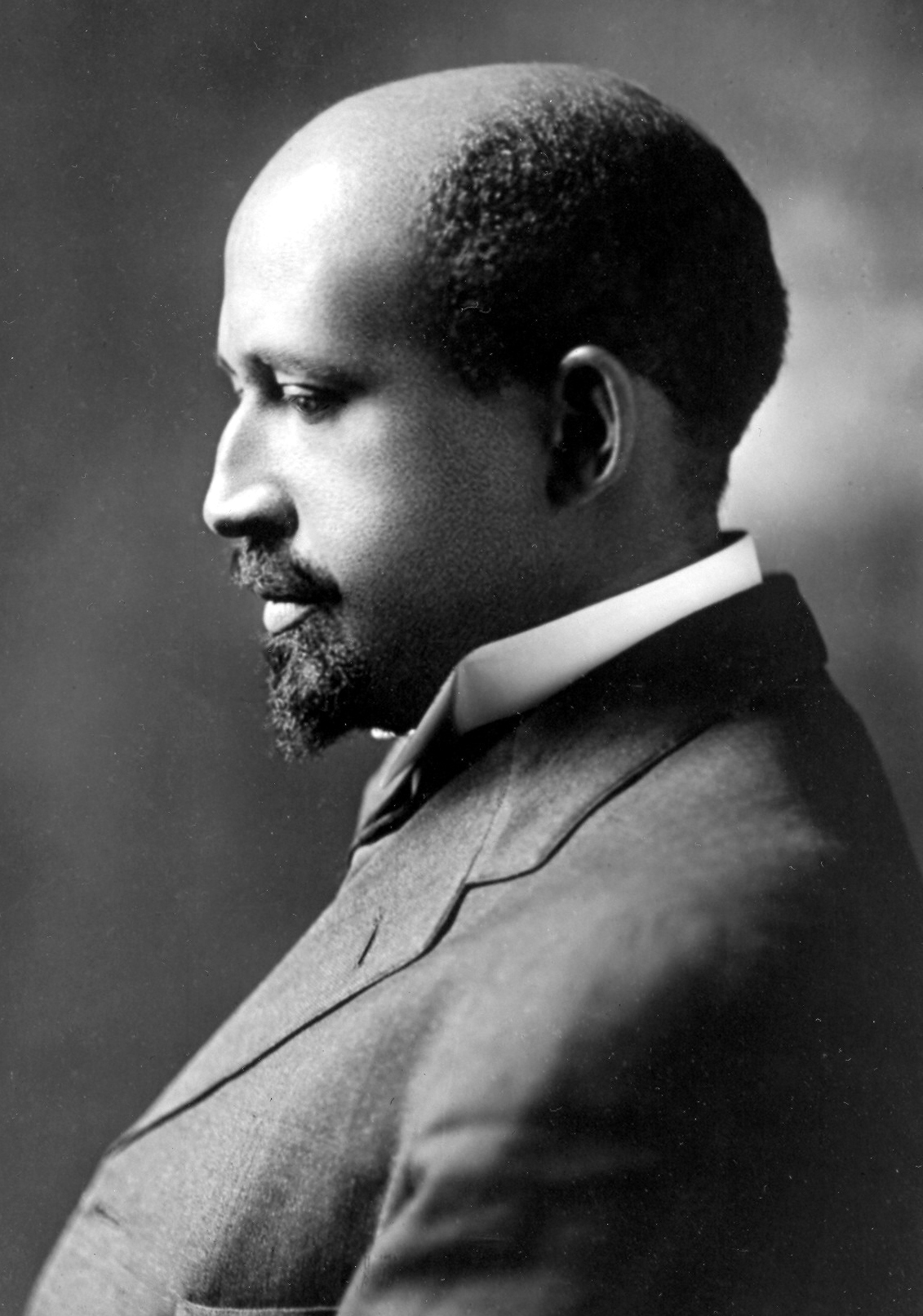
Addison Norton Scurlock's 1911 photograph of W. E. B. Du Bois stands as more than just a portrait; it is a meticulously crafted document of an era, a visual embodiment of the complex social and intellectual currents shaping early 20th-century America. The image captures Du Bois not merely as a prominent scholar and activist, but as a man wrestling with the profound “double consciousness” – a term he himself coined – that defined the Black experience in a nation grappling with its own identity. Scurlock’s skill lies not just in his technical proficiency, but in his ability to subtly convey the weight of this historical burden through composition, light, and the very gaze of the subject.
(Image courtesy of Smithsonian Archives)
A Window into Washington’s Black Community
Scurlock's work was deeply rooted in the vibrant, yet often overlooked, community of African Americans in Washington D.C. during this period. He wasn’t simply a portraitist; he was an active participant in documenting the daily lives, cultural expressions, and political aspirations of Black Washingtonians. His studio became a central hub, a place where families sought dignified portraits – a tangible assertion of their presence and identity within a society that frequently denied them recognition. The photograph itself reflects this community engagement, hinting at a setting beyond the formal studio, suggesting a moment captured in a more relaxed, intimate environment.
The backdrop, though subtly rendered, speaks volumes about the era. It’s not a grand cityscape or an opulent interior; instead, it suggests a quiet street scene – a deliberate choice that anchors Du Bois within his immediate context and highlights his connection to the everyday realities of Black life in Washington.
Technical Mastery and Photographic Language
Scurlock's mastery is evident in the photograph’s nuanced details. The use of black and white gelatin silver print lends a timeless quality, with subtle tonal variations creating depth and texture. Note the careful control of light – it illuminates Du Bois’s face, drawing attention to his thoughtful expression while leaving the background softly shadowed. This technique emphasizes the subject's presence without overwhelming him. The composition is carefully balanced; Du Bois’s posture conveys a sense of quiet contemplation, while his slightly turned head invites the viewer into his thoughts.
Furthermore, Scurlock’s use of photographic techniques—particularly in capturing the subtle nuances of expression—demonstrates an understanding that went beyond mere documentation. He was striving to create a portrait that resonated with both intellectual and emotional depth.
Symbolism and the “Double Consciousness”
Du Bois's gaze, directed slightly off-camera, is particularly significant. It’s not a direct, confrontational stare; rather, it suggests introspection and a considered awareness of his position within American society. This subtle shift in focus powerfully embodies the concept of "double consciousness" – the feeling of always looking at oneself through the eyes of others, as articulated by Du Bois himself. The photograph becomes a visual representation of this internal struggle: the simultaneous experience of being both an African American and an American citizen.
The image serves as a poignant reminder of the challenges faced by Black intellectuals during this period – the constant need to navigate racial prejudice while striving for social justice and intellectual advancement. Scurlock’s photograph is not simply a portrait; it's a powerful testament to Du Bois’s legacy and the enduring significance of his ideas.
Questions & Answers
Where in the home does a reproduction of "W. E. B. Du Bois" fit well?
The recommended space for "W. E. B. Du Bois" by Addison N. Scurlock is a living room. The suggestion can of course be adapted to your interior.
Can the image of "W. E. B. Du Bois" by Addison N. Scurlock be freely reproduced?
Regarding copyright, "W. E. B. Du Bois" is still protected by copyright.
What size and orientation are recommended for a print of "W. E. B. Du Bois" by Addison N. Scurlock?
A print of "W. E. B. Du Bois" by Addison N. Scurlock is recommended at a medium size in portrait orientation.
Artist Biography
**a pioneer in documenting black washington**
addison n. scurlock, an american photographer, founder of the scurlock studio, and astute businessman, left an indelible mark on the early and mid-20th century with his photographs of black washington. born in fayetteville, north carolina in 1883, scurlock's life trajectory is a testament to his dedication to capturing the essence of african american life during a pivotal era.**early life and career**
scurlock's photographic journey began in the early 20th century, with a focus on documenting the lives of african americans in washington, d.c. this pioneering work not only showcased his technical skill but also highlighted the social and cultural landscape of the time.- key achievements:
- founding the scurlock studio, a hub for photographic excellence.
- capturing the essence of black washington, providing a visual archive of its history.
- mentoring his sons, robert and george scurlock, who followed in his footsteps as photographers.
- notable works:*
- w. e. b. du bois (gelatin silver print, national portrait gallery, washington, united states) - a testament to scurlock's ability to capture the essence of influential figures.
- other works, though not as widely recognized, continue to serve as a window into the lives of african americans during the early 20th century.
**legacy and impact**
scurlock's legacy extends beyond his photographic contributions. he paved the way for future generations of photographers, particularly those from underrepresented communities. his work serves as a reminder of the importance of documenting diverse experiences.- influence on future generations: scurlock's sons and other photographers have continued to build upon his legacy.
- cultural significance: his photographs offer a unique perspective on african american life during a transformative period in u.s. history.
**conclusion**
addison n. scurlock's photographic legacy is a powerful reminder of the importance of documenting diverse experiences. through his work, we gain a deeper understanding of the social and cultural dynamics at play during the early 20th century.- explore more:*
- visit the scurlock studio's page on OriginalUniqueArt.com for more information on his life and works.
- discover other photographers who have made significant contributions to the world of photography on OriginalUniqueArt.com.
- references:

Addison N. Scurlock
1883 - 1964 , United States of America
Quick Facts
- Full Name: Addison N. Scurlock
- Nationality: American
- Date Of Birth: 1883
- Date Of Death: 1964
- Place Of Birth: Fayetteville, United States of America
- Notable Artworks:
- W. E. B. Du Bois
- Madam C. J. Walker
- Artistic Movement Or Style: Documentary photography
Related Articles
Ferdinand du Puigaudeau: Bridging Impressionism & Symbolism in Breton Landscapes
Discover Ferdinand du Puigaudeau's captivating Breton landscapes – a bridge between Impressionism & Symbolism. Explore his life, unique style, and enduring legacy with OriginalUniqueArt.
Floating World: The Captivating Art and Legacy of Japanese Ukiyo-e
Explore the profound beauty of Japanese Ukiyo-e. Discover the history, masters like Hokusai, and the enduring legacy of the 'Floating World' through an expert art-historical lens.
Ukiyo-e: Exploring Japan's Floating World & Enduring Artistic Legacy
Explore the captivating world of Ukiyo-e – Japan's iconic woodblock prints! Discover masters like Hokusai & Hiroshige, learn about Edo period culture, and find expert art collecting guidance at OriginalUniqueArt.
Suzuki Harunobu: Pioneering Ukiyo-e & the Refinement of Edo Period Printmaking
Discover the revolutionary world of Suzuki Harunobu, a pioneer of ukiyo-e printmaking. Explore his exquisite nishiki-e techniques, diverse subjects & lasting impact on Japanese art history. Learn more at OriginalUniqueArt.

Hokusai's Masterpieces: 25 Iconic Prints & Paintings for Art Lovers | OriginalUniqueArt
Journey through Katsushika Hokusai’s 25 most iconic artworks, including *The Great Wave*. Explore the ukiyo-e master's history, style & timeless Japanese woodblock prints. Find museum-quality reproductions for your home at OriginalUniqueArt.com.

