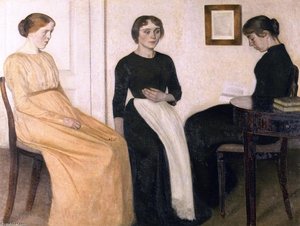
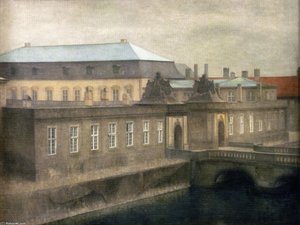
Portrait of Vilhelm Hammershøi

The 100 Most Famous Vilhelm Hammershøi Paintings, Each One of a Kind

Updated October 2026 · ranked by our popularity score (searches, visits and orders for each work) · 224 works by Vilhelm Hammershøi in our catalogue

In short

Interior, Strandgade 30 (1909) is the Vilhelm Hammershøi painting that draws the most eyes. After it, the eye goes to Montague Street in London (1906) and Figure of a Woman (1888). Among the 224 works of Vilhelm Hammershøi in our catalog, these 100 are the most famous, each a unique original presented with its year, its museum and the reason it endures.

1864 – 1916, Copenhagen Symbolism Most works: Statens Museum For Kunst

Top 10 paintings by Vilhelm Hammershøi, through the gallery's eye

1
Interior, Strandgade 30 (1909) by Vilhelm Hammershøi

Interior, Strandgade 30

1909 · Oil On Panel

A Masterpiece of Danish Art Vilhelm Hammershøi's 'Interior, Strandgade 30' is a captivating oil on panel painting that embodies the essence of Danish art from the early 20th century. Created in 1909, this masterpiece measures and is a testament to Hammershøi's unique ability to capture the quiet beauty of everyday life. The painting is a black and white depiction of a woman sitting in a chair next to a window,…

2
Montague Street in London (1906) by Vilhelm Hammershøi

Montague Street in London

1906 · Oil On Panel · Ny Carlsberg Glyptotek, Copenhagen

To encounter Vilhelm Hammershøi’s Montague Street in London is to step into a realm where time itself seems to have paused, caught in a delicate suspension between reality and a dream. Created in 1906, this exquisite oil on panel painting serves as a profound meditation on the beauty of stillness. The scene presents an empty London street, stripped of the frantic energy typically associated with urban life. Instead, we are…

3
Figure of a Woman (1888) by Vilhelm Hammershøi

Figure of a Woman

1888 · Oil On Canvas · Statens Museum For Kunst, Copenhagen

In this 1888 oil on canvas, we encounter Figure of a Woman, a quiet portrait by the Danish artist Vilhelm (Hammershøi)Hammershoi. The work captures a solitary female figure, presented in a moment of stillness that feels almost suspended. It is a study of presence and domesticity, rendered with a restraint that defines the artist's approach to the human form.

4
Interior with the Artist's Easel (1910) by Vilhelm Hammershøi

Interior with the Artist's Easel

1910 · Oil On Canvas · Statens Museum For Kunst, Copenhagen

To gaze upon Vilhelm Hammershøi’s Interior with the Artist's Easel is not merely to observe a room; it is to slip into a state of profound, almost sacred stillness. This oil on canvas, dating from 1910, captures the essence of late nineteenth and early twentieth-century Danish domestic life, yet elevates it far beyond mere genre painting. Hammershøi possessed an unparalleled gift for rendering silence visible—a palpable quietude that seems to…

5
Interior from Strandgade with Sunlight on the Floor (1901) by Vilhelm Hammershøi

Interior from Strandgade with Sunlight on the Floor

1901 · Oil On Panel · Statens Museum For Kunst, Copenhagen

A single room becomes a stage for quietude in this 1901 composition. A woman sits at a desk, her form partially illuminated by a soft halo of light filtering through a window behind her. The space is defined by a muted palette of creams, browns, and pale greens, creating an atmosphere of profound silence. Beside her, an empty chair sits in shadow, while a dining table rests in the background,…

6
St. Peter's Church, Copenhagen (1906) by Vilhelm Hammershøi

St. Peter's Church, Copenhagen

1906 · Oil On Canvas · Statens Museum For Kunst, Copenhagen

To gaze upon Vilhelm Hammershøi’s depiction of St. Peter's Church in Copenhagen is not merely to observe architecture; it is to enter a hushed, contemplative space suspended outside the rush of modern life. Painted in 1906, this oil on canvas captures the enduring spirit of Danish craftsmanship blended with an almost ethereal sense of stillness. The composition immediately draws the eye upward, following the vertical thrust of the steeple and…

7
Moonlight, Strandgade 30 (1900) by Vilhelm Hammershøi

Moonlight, Strandgade 30

1900 · Oil On Canvas · Metropolitan Museum of Art, New York

Moonlight, Strandgade 30 emerges from the canvas as a quiet meditation on a private world. Painted by Vilhelm Hammershøi, this oil on canvas captures the unadorned interior of the artist's own apartment in Copenhagen. The scene looks out toward a windowed loggia, where the pale light of the moon begins to settle into the room. It is a space defined by its stillness and the soft, muted tones of a…

8
Ida Hammershøi (1907) by Vilhelm Hammershøi

Ida Hammershøi

1907 · Oil On Panel

In this 1907 oil on panel painting, a woman named Ida Hammershøi sits at a table, her form positioned slightly off-center. She is captured in a moment of stillness, holding a cup and spoon as she gazes into the distance. A white cloth covers the table, providing a bright contrast to the muted tones of the surrounding space. The background remains largely undefined, composed of dark, receding shades that focus…

9
Sunbeams (also known as Sunshine. Dust Motes Dancing in the Sunbeams) (1900) by Vilhelm Hammershøi

Sunbeams (also known as Sunshine. Dust Motes Dancing in the Sunbeams)

1900 · Oil On Canvas · Ordrupgaard, Gentofte

A stillness settles over the room, a silence so heavy it feels tangible. Through a large, multi-paned window, shafts of winter sunlight pierce the dimness, cutting diagonally across the space. In these beams, tiny particles of dust dance in a slow, rhythmic motion, visible only because the light catches them in their descent. The room itself feels suspended in time, an empty interior in a 17th-century apartment in the Christianshavn…

10
Young Girl Sewing. Anna Hammershoi, the Artist's Sister (1887) by Vilhelm Hammershøi

Young Girl Sewing. Anna Hammershoi, the Artist's Sister

1887 · Oil On Canvas

In the quietude of 1888, Vilhelm Hammershøi captures a moment of domestic stillness in his work, Young Girl Sewing. Anna Hammershoi, the Artist's Sister. The scene centers on Anna Hammershøi, the artist's sister, who lived from 1866 to 1955. She sits absorbed in her task, her presence filling the space with a sense of focused, private labor. There is a weight to her concentration, a stillness that suggests the world…

Vilhelm Hammershøi's famous paintings, numbers 11 to 100

11From the British Museum, Winter (1906) by Vilhelm HammershøiFrom the British Museum, Winter1906 12Four Rooms, Interior from the Artist's Home, Strandgade 25 (1914) by Vilhelm HammershøiFour Rooms, Interior from the Artist's Home, Strandgade 251914 · Ordrupgaard 13Sunshine in the Drawing Room III (1903) by Vilhelm HammershøiSunshine in the Drawing Room III1903 · Nationalmuseum 14A Greek Relief in the Louvre (1891) by Vilhelm HammershøiA Greek Relief in the Louvre1891 · Ny Carlsberg Glyptotek 15Interior with Ida Playing the Piano - Vilhelm Hammershøi (2026) by Vilhelm HammershøiInterior with Ida Playing the Piano - Vilhelm Hammershøi2026 16Interior tate gallery (1899) by Vilhelm HammershøiInterior tate gallery1899 · National Gallery 17Untitled (566) by Vilhelm HammershøiUntitled (566) 18Nude Female Model (1884) by Vilhelm HammershøiNude Female Model1884 · Statens Museum For Kunst 19Portrait of Young Woman, The Artist's Sister, Anna Hammershoi (1885) by Vilhelm HammershøiPortrait of Young Woman, The Artist's Sister, Anna Hammershoi1885 · Hirschsprung Collection 20Frederikke Hammershøi, the artist's mother (1886) by Vilhelm HammershøiFrederikke Hammershøi, the artist's mother1886 21Malerinden Elisabeth Wandel (1890) by Vilhelm HammershøiMalerinden Elisabeth Wandel1890 · Statens Museum For Kunst 22Ida Ilsted, the Artist's Fiancée (1890) by Vilhelm HammershøiIda Ilsted, the Artist's Fiancée1890 · Statens Museum For Kunst 23Evening in the Drawing Room. The Artist's Mother and Wife (1891) by Vilhelm HammershøiEvening in the Drawing Room. The Artist's Mother and Wife1891 · Statens Museum For Kunst 24The art historian Karl Madsen, later Director of Statens Museum for Kunst (1890) by Vilhelm HammershøiThe art historian Karl Madsen, later Director of Statens Museum for Kunst1890 · Statens Museum For Kunst 25The Painter Kristian Zahrtmann (1889) by Vilhelm HammershøiThe Painter Kristian Zahrtmann1889 · Statens Museum For Kunst 26Ida Ilsted, the Artist's Wife (1890) by Vilhelm HammershøiIda Ilsted, the Artist's Wife1890 · Nationalmuseum 27An Old Woman (1886) by Vilhelm HammershøiAn Old Woman1886 · Hirschsprung Collection 28Frederikke Amalie Hammershøi, f. Rentzmann, kunstnerens moder (1894) by Vilhelm HammershøiFrederikke Amalie Hammershøi, f. Rentzmann, kunstnerens moder1894 · Statens Museum For Kunst 29Portræt af fru Thora Bendix (Anne Victoria, f. Sundberg) (1896) by Vilhelm HammershøiPortræt af fru Thora Bendix (Anne Victoria, f. Sundberg)1896 · Statens Museum For Kunst 30Komponisten Fini Henriques (1896) by Vilhelm HammershøiKomponisten Fini Henriques1896 · Statens Museum For Kunst 31Maleren Svend Hammershøi, kunstnerens broder (1897) by Vilhelm HammershøiMaleren Svend Hammershøi, kunstnerens broder1897 · Statens Museum For Kunst 32The Artist's Wife, Ida Hammershøi, née Ilsted (1894) by Vilhelm HammershøiThe Artist's Wife, Ida Hammershøi, née Ilsted1894 · Statens Museum For Kunst 33Vilhelm Hammershøi (1895) by Vilhelm HammershøiVilhelm Hammershøi1895 34Interior with a View of an Exterior Gallery (1903) by Vilhelm HammershøiInterior with a View of an Exterior Gallery1903 35Ida in an Interior with Piano (1901) by Vilhelm HammershøiIda in an Interior with Piano1901 36Portrait of Svend Hammershøi, the Artist´s Brother (1901) by Vilhelm HammershøiPortrait of Svend Hammershøi, the Artist´s Brother1901 · Statens Museum For Kunst 37Henry Madsen (1904) by Vilhelm HammershøiHenry Madsen1904 · Statens Museum For Kunst 38J.F. Willumsen (1901) by Vilhelm HammershøiJ.F. Willumsen1901 · Statens Museum For Kunst 39Henry Madsen (1904) by Vilhelm HammershøiHenry Madsen1904 · Statens Museum For Kunst 40The Architect Thorvald Bindesbøll (1904) by Vilhelm HammershøiThe Architect Thorvald Bindesbøll1904 · Statens Museum For Kunst 41A Room in the Artist’s Home in Strandgade, Copenhagen, with the Artist’s Wife (1902) by Vilhelm HammershøiA Room in the Artist’s Home in Strandgade, Copenhagen, with the Artist’s Wife1902 · Statens Museum For Kunst 42Aften i stuen (1904) by Vilhelm HammershøiAften i stuen1904 · Statens Museum For Kunst 43Interior with a Reading Lady (1900) by Vilhelm HammershøiInterior with a Reading Lady1900 · Nationalmuseum 44A room. The corner of a room with walls painted grey-lilac, divided into panels. (1903) by Vilhelm HammershøiA room. The corner of a room with walls painted grey-lilac, divided into panels.1903 45The Coin Collector (study) (1904) by Vilhelm HammershøiThe Coin Collector (study)1904 46Interior with Ida in a White Chair (1900) by Vilhelm HammershøiInterior with Ida in a White Chair1900 47Interior with the Artist's Wife (1910) by Vilhelm HammershøiInterior with the Artist's Wife1910 · National Museum of Art, Architecture and Design 48Ida Hammershøi, the Artist's Wife, with a Teacup (1907) by Vilhelm HammershøiIda Hammershøi, the Artist's Wife, with a Teacup1907 · Statens Museum For Kunst 49Self-Portrait (1911) (1911) by Vilhelm HammershøiSelf-Portrait (1911)1911 50Interior with Ida Playing the Piano (1910) by Vilhelm HammershøiInterior with Ida Playing the Piano1910 · National Museum of Western Art 51Self-Portrait at Spurveskjul (1911) by Vilhelm HammershøiSelf-Portrait at Spurveskjul1911 · Metropolitan Museum of Art 52Open Doors (also known as White Doors) (1905) by Vilhelm HammershøiOpen Doors (also known as White Doors)1905 53Interior, Strandgade 25 (1915) by Vilhelm HammershøiInterior, Strandgade 251915 54Interior with the Artist's Mother and Sister (1889) by Vilhelm HammershøiInterior with the Artist's Mother and Sister1889 · Nationalmuseum 55Interior, Bredgade (1911) by Vilhelm HammershøiInterior, Bredgade1911 56Interior (1899) by Vilhelm HammershøiInterior1899 · Tate Gallery 57Self-Portrait (1890) by Vilhelm HammershøiSelf-Portrait1890 · Statens Museum For Kunst 58Landscape in the Snow (1895) by Vilhelm HammershøiLandscape in the Snow1895 · Hirschsprung Collection 59Sunshine in the Drawing Room (Solskin i dagligstuen) (1910) by Vilhelm HammershøiSunshine in the Drawing Room (Solskin i dagligstuen)1910 · National Gallery of Canada 60Three Young Women (1895) by Vilhelm HammershøiThree Young Women1895 61Portrait of Ida, the Artist (1898) by Vilhelm HammershøiPortrait of Ida, the Artist1898 · National Gallery of Denmark 62Interior. Strandgade 30 (1906) by Vilhelm HammershøiInterior. Strandgade 301906 · Tate Gallery 63View of Refsnæs (1900) by Vilhelm HammershøiView of Refsnæs1900 64Interior with a Woman at a Sewing Table (1897) by Vilhelm HammershøiInterior with a Woman at a Sewing Table1897 · Nasjonalgalleriet 65Young Girl Pouring Tea - the Artist's Sister. (1884) by Vilhelm HammershøiYoung Girl Pouring Tea - the Artist's Sister.1884 66Study showing the back of a boy. (1884) by Vilhelm HammershøiStudy showing the back of a boy.1884 67Study of Standing Woman, Seen from Behind (1884) by Vilhelm HammershøiStudy of Standing Woman, Seen from Behind1884 68The Farm (1883) by Vilhelm HammershøiThe Farm1883 69Landscape with Barn (1883) by Vilhelm HammershøiLandscape with Barn1883 70Study drawing of plaster cast of ancient Greek Aphrodite, toss from c. 500 BC (1880) by Vilhelm HammershøiStudy drawing of plaster cast of ancient Greek Aphrodite, toss from c. 500 BC1880 71Bedroom (Interior) (1890) by Vilhelm HammershøiBedroom (Interior)1890 72View from Frederiksholms Kanal, Copenhagen. (1892) by Vilhelm HammershøiView from Frederiksholms Kanal, Copenhagen.1892 73Landscape on the Island of Falster (1891) by Vilhelm HammershøiLandscape on the Island of Falster1891 · Statens Museum For Kunst 74View of Jægersborg Allé. Gentofte, North of Copenhagen (1892) by Vilhelm HammershøiView of Jægersborg Allé. Gentofte, North of Copenhagen1892 · Statens Museum For Kunst 75Dagligstuen på Frederiksberg Allé (1887) by Vilhelm HammershøiDagligstuen på Frederiksberg Allé1887 · Statens Museum For Kunst 76Rainy summer landscape from Virum near Frederiksdal. (1888) by Vilhelm HammershøiRainy summer landscape from Virum near Frederiksdal.1888 77View of Christiansborg Castle, Late Autumn (1890) by Vilhelm HammershøiView of Christiansborg Castle, Late Autumn1890 · Statens Museum For Kunst 78Interior with Ida in a White Chair (1890) by Vilhelm HammershøiInterior with Ida in a White Chair1890 · Ordrupgaard 79Portrait of Ida Ilsted, Later the Artist's Wife (1890) by Vilhelm HammershøiPortrait of Ida Ilsted, Later the Artist's Wife1890 · Statens Museum For Kunst 80Self-Portrait (1891) by Vilhelm HammershøiSelf-Portrait1891 81Interior in Louis Seize style. From the artist's home. Rahbeks Allé (1897) by Vilhelm HammershøiInterior in Louis Seize style. From the artist's home. Rahbeks Allé1897 · Hirschsprung Collection 82Karen Bramsen (1898) by Vilhelm HammershøiKaren Bramsen1898 83Interior (1893) by Vilhelm HammershøiInterior1893 84Interior wit a Young Man Reading (1898) by Vilhelm HammershøiInterior wit a Young Man Reading1898 · Hirschsprung Collection 85Interior (1898) by Vilhelm HammershøiInterior1898 · Nationalmuseum 86Cello Player (1893) by Vilhelm HammershøiCello Player1893 87Two Figures, The Artist and His Wife (1898) by Vilhelm HammershøiTwo Figures, The Artist and His Wife1898 88Figures by the Window (1895) by Vilhelm HammershøiFigures by the Window1895 89Artemis (1894) by Vilhelm HammershøiArtemis1894 · National Gallery of Denmark 90White Doors, Strandgade 30 (1899) by Vilhelm HammershøiWhite Doors, Strandgade 301899 · Ordrupgaard 91Sunny Parlor. (1901) by Vilhelm HammershøiSunny Parlor.1901 · Alte Nationalgalerie 92The Coin Collector (1904) by Vilhelm HammershøiThe Coin Collector1904 · National Museum of Art, Architecture and Design 93Forstudie til "Solregn. Gentofte Sø" (1903) by Vilhelm HammershøiForstudie til "Solregn. Gentofte Sø"1903 · Statens Museum For Kunst 94Five Portraits. Study for painting in Thielska Galleriet, Stockholm (1901) by Vilhelm HammershøiFive Portraits. Study for painting in Thielska Galleriet, Stockholm1901 · Statens Museum For Kunst 95Interior with the artist's wife seen from behind. (1901) by Vilhelm HammershøiInterior with the artist's wife seen from behind.1901 96Interior with the artist's wife Ida in their home at Strandgade 30. (1905) by Vilhelm HammershøiInterior with the artist's wife Ida in their home at Strandgade 30.1905 97Dunkebakke, Frederiksværk (1904) by Vilhelm HammershøiDunkebakke, Frederiksværk1904 98Interior, Strandgade 30 (1899) by Vilhelm HammershøiInterior, Strandgade 301899 99Interior with Punchbowl (1904) by Vilhelm HammershøiInterior with Punchbowl1904 100Interior, Frederiksberg Allé (1900) by Vilhelm HammershøiInterior, Frederiksberg Allé1900

Vilhelm Hammershøi's famous paintings, period by period

The subjects that held Vilhelm Hammershøi's eye

The four subjects that come back most often in these originals, each with its finest example.

The museums that keep Vilhelm Hammershøi's originals

The 8 museums that hold the most of the paintings on this page.

Museum City Works by Vilhelm Hammershøi Paintings from this list
Statens Museum For Kunst, CopenhagenStatens Museum For Kunst Copenhagen 42 Figure of a Woman, Interior with the Artist's Easel, Interior from Strandgade with Sunlight on the Floor
Nationalmuseum, StockholmNationalmuseum Stockholm 7 Sunshine in the Drawing Room III, Ida Ilsted, the Artist's Wife, Interior with a Reading Lady
Hirschsprung Collection, CopenhagenHirschsprung Collection Copenhagen 5 Portrait of Young Woman, The Artist's Sister, Anna Hammershoi, An Old Woman, Landscape in the Snow
Ordrupgaard, GentofteOrdrupgaard Gentofte 5 Sunbeams (also known as Sunshine. Dust Motes Dancing in the Sunbeams), Four Rooms, Interior from the Artist's Home, Strandgade 25, Interior with Ida in a White Chair
National Museum of Art, Architecture and Design, OsloNational Museum of Art, Architecture and Design Oslo 3 Interior with the Artist's Wife, The Coin Collector
National Gallery of Denmark, CopenhagenNational Gallery of Denmark Copenhagen 3 Portrait of Ida, the Artist, Artemis
Ny Carlsberg Glyptotek, CopenhagenNy Carlsberg Glyptotek Copenhagen 2 Montague Street in London, A Greek Relief in the Louvre
Metropolitan Museum of Art, New YorkMetropolitan Museum of Art New York 2 Moonlight, Strandgade 30, Self-Portrait at Spurveskjul

Vilhelm Hammershøi across the decades: one unique original for each

Works per decade

Pick a decade to see the original that defines it.

Vilhelm Hammershøi's paintings: questions for the gallery

What is the single most famous work of Vilhelm Hammershøi?Reveal the answer

Interior, Strandgade 30 (1909). Montague Street in London (1906) and Figure of a Woman (1888) come next.

At what age did Vilhelm Hammershøi create Interior, Strandgade 30?Reveal the answer

45 years old: Interior, Strandgade 30 dates from 1909, and Vilhelm Hammershøi was born in 1864.

Which ten paintings by Vilhelm Hammershøi are the most famous?Reveal the answer

Interior, Strandgade 30, Montague Street in London, Figure of a Woman, Interior with the Artist's Easel, Interior from Strandgade with Sunlight on the Floor, St. Peter's Church, Copenhagen, Moonlight, Strandgade 30, Ida Hammershøi, Sunbeams (also known as Sunshine. Dust Motes Dancing in the Sunbeams) and Young Girl Sewing. Anna Hammershoi, the Artist's Sister. The ranking above gives each one's year and museum.

How many works by Vilhelm Hammershøi are known?Reveal the answer

Our catalog holds 224 works by Vilhelm Hammershøi, dated from 1880 to 1915.

Where can the most famous Vilhelm Hammershøi originals be seen?Reveal the answer

Mostly in Statens Museum For Kunst (Copenhagen), Nationalmuseum (Stockholm) and Hirschsprung Collection (Copenhagen). The museum table above lists them all.

During which period did Vilhelm Hammershøi create the best-known paintings?Reveal the answer

In 1890s: 38 of the 100 works on this page were made then, A Greek Relief in the Louvre among them.

Which famous Vilhelm Hammershøi painting is the earliest, and which the latest?Reveal the answer

On this page, the earliest is Study drawing of plaster cast of ancient Greek Aphrodite, toss from c. 500 BC (1880) and the latest Interior, Strandgade 25 (1915).

What subjects did Vilhelm Hammershøi favour?Reveal the answer

Interior (15), Danish art (13) and Window (6), across the 100 works on this page.

What materials did Vilhelm Hammershøi paint with most?Reveal the answer

Oil On Canvas, for 17 of the 100 works on this page.

Which movement does the work of Vilhelm Hammershøi belong to?Reveal the answer

Symbolism, judging by the originals on this page.

What Vilhelm Hammershøi originals can I see at the Statens Museum For Kunst?Reveal the answer

Figure of a Woman, Interior with the Artist's Easel and Interior from Strandgade with Sunlight on the Floor: the Statens Museum For Kunst, Copenhagen holds 31 of the works on this page.

Vilhelm Hammershøi: a portrait of the artist

The Enigmatic Stillness of Vilhelm Hammershøi

To stand before a painting by Vilhelm Hammershøi is to step across a threshold into a realm suspended between memory and dream. His work possesses an almost palpable silence, a quietude that seems to absorb the noise of the modern world. Born in Copenhagen in 1864, this Danish master developed a visual language so distinct, so profoundly atmospheric, that it continues to captivate collectors and critics alike today. Hammershøi’s canvases are not merely depictions of rooms or figures; they are meditations on absence, light, and the delicate passage of time.

His early life was rooted in the cultural milieu of late 19th-century Copenhagen, a period ripe with artistic ferment. While he navigated the currents of academic art, his true calling lay in capturing moments of profound introspection. His dedication to interior spaces became legendary, transforming domestic settings into grand stages for psychological drama. The muted tones—the soft grays, the pale creams, the whisper of dusty ochre—are hallmarks that define his unique visual signature.

Mastery of Light and Atmosphere

The technical brilliance underpinning Hammershøi’s seemingly simple scenes is nothing short of masterful. He possessed an unparalleled ability to render light not as a mere illumination, but as a tangible, atmospheric element itself. In his depictions of empty hallways or sparsely furnished drawing rooms, the quality of the light seems to emanate from within the paint, suggesting unseen sources and untold narratives. This preoccupation with atmosphere elevated his work beyond simple genre painting; it became an exploration of mood.

His compositions often feature receding perspectives, drawing the viewer deep into the painted space, only to have that depth ultimately dissolve into a soft, ambiguous haze. Whether portraying solitary figures—often veiled or seen from the back—or simply empty architectural volumes, the sense of enclosure and quiet contemplation is overwhelming. It is in this careful management of negative space that his genius resides; the emptiness itself becomes the most eloquent subject.

Symbolism and the Inner Landscape

Hammershøi’s art has always been deeply intertwined with Symbolist currents, even if he never strictly adhered to the movement's dogma. His paintings invite viewers into a space of ambiguity. The figures, when present, often seem detached from their surroundings or lost in thought, suggesting an internal life far richer than what the canvas portrays. There is a pervasive sense of melancholy beauty—a sublime yearning that speaks to universal human experiences: solitude, memory, and the passage of time.

Some scholars have interpreted his work as a visual diary of his own emotional landscape, a retreat into the controlled environment of art when the external world proved too loud or complex. The repetition of motifs—the curtain, the empty chair, the distant window view—lends his oeuvre a ritualistic quality, suggesting that these quiet moments were necessary anchors against the flux of existence.

Legacy and Enduring Influence

Though he passed away relatively young in 1916, Vilhelm Hammershøi’s influence proved remarkably enduring. His commitment to understatement and tonal subtlety provided a crucial counterpoint to the bolder palettes emerging from other contemporary movements. His work resonated deeply with modern sensibilities that valued introspection over overt narrative.

Today, his paintings are sought after for their ability to transform any space they inhabit. They do not shout; they whisper profound truths about beauty found in restraint. To appreciate Hammershøi is to accept the poetry of the unsaid, to find grandeur in the muted tones, and to allow oneself to become momentarily lost within the exquisite, enveloping silence of his painted worlds.