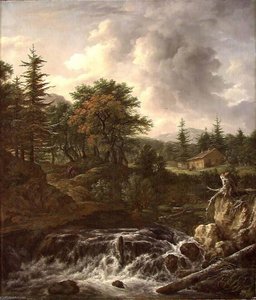
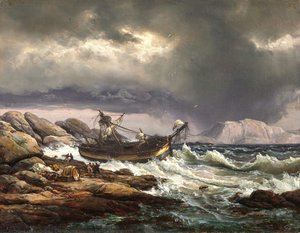
Portrait of Johan Christian Dahl

The 100 Most Famous Johan Christian Dahl Paintings, a Gallery Selection

Updated November 2026 · ranked by our popularity score (searches, visits and orders for each work) · 503 works by Johan Christian Dahl in our catalogue

In short

Of all the originals Johan Christian Dahl left, the most famous is Alpine Landscape (1821), in the collection of the Germanisches Nationalmuseum, Nuremberg. Close behind it come Norwegian Mountain Landscape with Waterfall (1821) and Eruption of the Volcano Vesuvius (1821). Our catalog holds 503 works by Johan Christian Dahl; the gallery has kept the 100 the world admires most, each shown with its date, its museum and its story.

1788 – 1857, Bergen Romanticism Most works: KODE Art museums and composer homes

Johan Christian Dahl's top 10 paintings: the gallery's choice

1
Alpine Landscape (1821) by Johan Christian Dahl

Alpine Landscape

1821 · Oil On Canvas · Germanisches Nationalmuseum, Nuremberg

Johan Christian Dahl's "Alpine Landscape," painted in 1821, isn’t merely a depiction of a mountain scene; it’s a profound meditation on nature’s power and humanity’s place within its vastness. This seminal work, deeply rooted in the Romantic movement, transcends simple landscape painting to become a powerful expression of emotion and a testament to Dahl's mastery of capturing the spirit of Norway. The painting immediately draws the viewer into a dramatic…

2
Norwegian Mountain Landscape with Waterfall (1821) by Johan Christian Dahl

Norwegian Mountain Landscape with Waterfall

1821 · Oil On Canvas · Thorvaldsen Museum, Copenhagen

Johan Christian Clausen Dahl’s “Norwegian Mountain Landscape with Waterfall,” painted in 1821, isn’t merely a depiction of a Norwegian vista; it’s an embodiment of the Romantic spirit itself. This oil on canvas masterpiece, currently residing within the hallowed halls of the Thorvaldsen Museum in Copenhagen, transports the viewer to a realm where nature reigns supreme, and the sublime is palpable. Dahl, recognized as Norway's first great romantic painter and the…

3
Eruption of the Volcano Vesuvius (1821) by Johan Christian Dahl

Eruption of the Volcano Vesuvius

1821 · Oil On Canvas · National Gallery of Denmark, Copenhagen

In the annals of Norwegian Romanticism, few works command the senses as profoundly as Johan Christian Dahl’s “Eruption of the Volcano Vesuvius.” Completed in 1821, this monumental oil on canvas is far more than a mere geological record; it is a breathtaking window into the 19th-century soul, capturing that precise, heart-stopping moment where terror meets transcendence. As the viewer approaches this masterpiece, they are immediately swept into a landscape of…

4
Untitled (AQZAMU) (1830) by Johan Christian Dahl

Untitled (AQZAMU)

1830 · Acrylic On Canvas · Thorvaldsen Museum, Copenhagen

A Vision of the Sea – Unveiling Dahl’s “Untitled (AQZAMU)” Johan Christian Claussen Dahl, a name synonymous with the dawn of Norwegian Romanticism, gifted us with an extraordinary ability to capture not just landscapes but the very soul of his nation. “Untitled (AQZAMU),” painted in 1830, is a prime example of this profound connection – a breathtaking oil on canvas that transcends mere representation and plunges directly into the heart…

5
English Elbe and the Neustadt bank in Dresden in the evening light Deutsch Elbe und Neustädter Ufer in Dresden im Abendlicht Русский Эльба и банк Нойштадт в Дрездене в вечернем свете (1837) by Johan Christian Dahl

English Elbe and the Neustadt bank in Dresden in the evening light Deutsch Elbe und Neustädter Ufer in Dresden im Abendlicht Русский Эльба и банк Нойштадт в Дрездене в вечернем свете

1837 · Oil On Canvas · Hamburger Kunsthalle, Hamburg

We are looking at English Elbe and the Neustadt bank in Dresden in the evening light Deutsch Elbe und Neustädter Ufer in Dresden im Abendlicht Русский Эльба и банк Нойштадт в Дрездене в вечернем свете, a work created by Johan Christian Dahl. This piece was painted in 1837, capturing a specific moment of transition as the day recedes. The artist, Johan Christian Dahl, was a central figure in the Romanticism…

6
Eruption of the Vesuvius (1823) by Johan Christian Dahl

Eruption of the Vesuvius

The Eruption of the Vesuvius is an oil on canvas painting created by Johan Christian Clausen Dahl in 1823. This artwork depicts the eruption of Mount Vesuvius, capturing the moment ash and smoke billow into the sky to create an ominous atmosphere. The scene illustrates the chaos and destruction caused by the volcanic eruption, with ash covering the landscape and smoke filling the sky.

7
The Frankenkirche, Dresden (1840) by Johan Christian Dahl

The Frankenkirche, Dresden

1840

The composition centers on the Frankenkirche in Dresden, captured in a monochrome palette. A large, vertical steeple dominates the center of the frame, rising against a dark sky. The moonlight originates from above, casting a bright, circular glow that illuminates the edges of the church structure and the surrounding atmosphere. Two clocks are positioned on the side of the building, one located near the top of the structure and another…

8
Dresden at Night (1845) by Johan Christian Dahl

Dresden at Night

1845 · Oil On Panel

Dresden at Night is an oil on cardboard work executed in 1845 by Johan Christian Dahl. This piece offers a quiet glimpse into the nocturnal atmosphere of the city, captured during a period when the artist was deeply established within the German Romantic movement. The work is a small-scale study, a detail that lends it a certain intimacy, as if we are observing a private moment of reflection caught in…

9
View from a Window at Quisisana (1820) by Johan Christian Dahl

View from a Window at Quisisana

1820 · Oil On Canvas · KODE Art museums and composer homes, Bergen

The scene unfolds through the title View from a Window at Quisisana, a work that captures a specific, quiet moment in 1820. The artist, Johan Christian Dahl, looks out from a vantage point that feels immediate and lived-in. This is not a distant, detached observation, but a view felt from the very edge of a terrace. The brushwork holds the light of a particular afternoon, anchoring the viewer to a…

10
Mother and Child by the Sea (1830) by Johan Christian Dahl

Mother and Child by the Sea

1830 · Oil On Canvas · Metropolitan Museum of Art, New York

The salt spray and the quiet tension of the shoreline find their form in Mother and Child by the Sea, an oil on canvas created by the artist Johan Christian Dahl in 1830. This intimate scene captures a moment of profound connection amidst the vastness of the coast. The figures on the shore are not mere silhouettes; Johan Christian Dahl identified them specifically as the wife and child of a…

The Johan Christian Dahl selection continues, 11 to 100

11Norwegian Bjørk med storm Birch Tree in a Storm (1849) by Johan Christian DahlNorwegian Bjørk med storm Birch Tree in a Storm1849 12Crucifixion of Christ with Saints and the prince bishop Ulrich IV von Liechtenstein (1504) by Johan Christian DahlCrucifixion of Christ with Saints and the prince bishop Ulrich IV von Liechtenstein1504 · Museo Diocesano Tridentino 13View of Naerodalen (1847) by Johan Christian DahlView of Naerodalen1847 14Norwegian Vill skogegn Mountainous landscape with waterfall (1812) by Johan Christian DahlNorwegian Vill skogegn Mountainous landscape with waterfall1812 · National Museum of Art, Architecture and Design 15Bergen seen from Kronstad (1810) by Johan Christian DahlBergen seen from Kronstad1810 · KODE Art museums and composer homes 16Copy of an Italian Landscape by Jan Both (1813) by Johan Christian DahlCopy of an Italian Landscape by Jan Both1813 · KODE Art museums and composer homes 17Portrait Study of an Old Man (1813) by Johan Christian DahlPortrait Study of an Old Man1813 · KODE Art museums and composer homes 18Italian Peasant Woman (1821) by Johan Christian DahlItalian Peasant Woman1821 · KODE Art museums and composer homes 19Italian fisherman (1821) by Johan Christian DahlItalian fisherman1821 · KODE Art museums and composer homes 20Portrait of a Monk (1815) by Johan Christian DahlPortrait of a Monk1815 · KODE Art museums and composer homes 21Two Men in a Rowing Boat (1820) by Johan Christian DahlTwo Men in a Rowing Boat1820 · KODE Art museums and composer homes 22Portrait of a Man (1815) by Johan Christian DahlPortrait of a Man1815 · National Museum of Art, Architecture and Design 23Boy on a Donkey (1820) by Johan Christian DahlBoy on a Donkey1820 · National Museum of Art, Architecture and Design 24Princess Caroline Amalie of Denmark (1820) by Johan Christian DahlPrincess Caroline Amalie of Denmark1820 · National Museum of Art, Architecture and Design 25Boat in southern rocky bay (1821) by Johan Christian DahlBoat in southern rocky bay1821 26Coast near Castellammare in the morning mist (1822) by Johan Christian DahlCoast near Castellammare in the morning mist1822 · Art Collections Chemnitz 27Portrait of Amalie von Bassewitz (1830) by Johan Christian DahlPortrait of Amalie von Bassewitz1830 28Woman and Child on a River Bank (1823) by Johan Christian DahlWoman and Child on a River Bank1823 · National Museum of Art, Architecture and Design 29Studies of Female Costumes from Luster in Sogn (1826) by Johan Christian DahlStudies of Female Costumes from Luster in Sogn1826 · National Museum of Art, Architecture and Design 30The Polish General Karol Kniacziewicz (1825) by Johan Christian DahlThe Polish General Karol Kniacziewicz1825 · National Museum of Art, Architecture and Design 31Danish coast by moonlight (1828) by Johan Christian DahlDanish coast by moonlight1828 · Kurpfälzisches Museum 32Partie in Dresden (view over the fields near Dresden) (1830) by Johan Christian DahlPartie in Dresden (view over the fields near Dresden)1830 33View from Vaekero near Christiania (1827) by Johan Christian DahlView from Vaekero near Christiania1827 · National Gallery of Art 34Stedje in Sogn (1836) by Johan Christian DahlStedje in Sogn1836 · KODE Art museums and composer homes 35Morning after a Stormy Night (1819) by Johan Christian DahlMorning after a Stormy Night1819 · Neue Pinakothek 36Winter Landscape near Vordingborg, Denmark (1829) by Johan Christian DahlWinter Landscape near Vordingborg, Denmark1829 · National Gallery of Denmark 37Larvik, Vestfold county, Norway (1848) by Johan Christian DahlLarvik, Vestfold county, Norway1848 38Forest Fire (1846) by Johan Christian DahlForest Fire1846 39Untitled (AQZAM2) (1817) by Johan Christian DahlUntitled (AQZAM2)1817 · Statens Museum For Kunst 40Waterfall in Norway (1852) by Johan Christian DahlWaterfall in Norway1852 · Alte Nationalgalerie 41View of Øylo Farm, Valdres (1846) by Johan Christian DahlView of Øylo Farm, Valdres1846 42Moonlight over the sea (1820) by Johan Christian DahlMoonlight over the sea1820 · Statens Museum For Kunst 43Landscape in Evening Light by Johan Christian DahlLandscape in Evening Light 44Gorge in the Sächsische Schweiz (1820) by Johan Christian DahlGorge in the Sächsische Schweiz1820 · Bavarian State Painting Collections 45Rocks in the Plauenscher Grund (1819) by Johan Christian DahlRocks in the Plauenscher Grund1819 · Kunsthaus Zürich 46Maridalen (1852) by Johan Christian DahlMaridalen1852 · Galerie Neue Meister 47Evening on a Rocky Shore. View from Monte Sant'Angelo (1824) by Johan Christian DahlEvening on a Rocky Shore. View from Monte Sant'Angelo1824 · Statens Museum For Kunst 48Northern Landscape (1822) by Johan Christian DahlNorthern Landscape1822 · Hamburger Kunsthalle 49Landskab fra Pedersborg nær Sorø. Pedersborg Kirke (1832) by Johan Christian DahlLandskab fra Pedersborg nær Sorø. Pedersborg Kirke1832 · Ny Carlsberg Glyptotek 50Shipwreck on the Norwegian Coast (1831) by Johan Christian DahlShipwreck on the Norwegian Coast1831 · Hamburger Kunsthalle 51Tyrolean Landscape with a Shepherd (1824) by Johan Christian DahlTyrolean Landscape with a Shepherd1824 · National Gallery Prague 52Morning after a Stormy Night (1819) by Johan Christian DahlMorning after a Stormy Night1819 · Neue Pinakothek 53An Oak. View of the Garden at Wörlitz near Dessau (1838) by Johan Christian DahlAn Oak. View of the Garden at Wörlitz near Dessau1838 · Statens Museum For Kunst 54Norwegian Landscape (1822) by Johan Christian DahlNorwegian Landscape1822 · Nationalmuseum 55Plantain. Study (1830) by Johan Christian DahlPlantain. Study1830 · Nationalmuseum 56The Lower Falls of the Labrofoss (1827) by Johan Christian DahlThe Lower Falls of the Labrofoss1827 57Der Ausbruch des Vesuv im Dezember 1820 (1826) by Johan Christian DahlDer Ausbruch des Vesuv im Dezember 18201826 · Städel Museum 58The Eruption of Vesuvius (1821) by Johan Christian DahlThe Eruption of Vesuvius1821 · Statens Museum For Kunst 59Shipwrech by Johan Christian DahlShipwrechThe Art Museum RIGA BOURSE 60Ships in the Lærdalsfiord (1800) by Johan Christian DahlShips in the Lærdalsfiord1800 · KODE Art museums and composer homes 61A Forester`s Cottage (1800) by Johan Christian DahlA Forester`s Cottage1800 · Nivaagaards Malerisamling 62Store Kongens Mølle on Schacks Bastion (1810) by Johan Christian DahlStore Kongens Mølle on Schacks Bastion1810 63Nordic Landscape with a Thatched Cottage (1814) by Johan Christian DahlNordic Landscape with a Thatched Cottage1814 64Norwegian Landscape (1814) by Johan Christian DahlNorwegian Landscape1814 · KODE Art museums and composer homes 65Southern Landscape with a Stone Bridge (1814) by Johan Christian DahlSouthern Landscape with a Stone Bridge1814 · KODE Art museums and composer homes 66From Møllendal (1812) by Johan Christian DahlFrom Møllendal1812 · KODE Art museums and composer homes 67The Entrance to Bergen (1810) by Johan Christian DahlThe Entrance to Bergen1810 · Kunsthaus Zürich 68View of Engen in Bergen (1809) by Johan Christian DahlView of Engen in Bergen1809 · KODE Art museums and composer homes 69Landscape (1806) by Johan Christian DahlLandscape1806 · KODE Art museums and composer homes 70Rådhusalmenningen in Bergen (1806) by Johan Christian DahlRådhusalmenningen in Bergen1806 · KODE Art museums and composer homes 71View of Engen in Bergen (1806) by Johan Christian DahlView of Engen in Bergen1806 · KODE Art museums and composer homes 72View of Engen in Bergen (1806) by Johan Christian DahlView of Engen in Bergen1806 · KODE Art museums and composer homes 73The Naval Battle at Alvøen (1808) by Johan Christian DahlThe Naval Battle at Alvøen1808 · KODE Art museums and composer homes 74Nordic Landscape with a dead Tree (1814) by Johan Christian DahlNordic Landscape with a dead Tree1814 · National Museum of Art, Architecture and Design 75Coastal Landscape with Rocks (1813) by Johan Christian DahlCoastal Landscape with Rocks1813 · National Museum of Art, Architecture and Design 76Copy of Landscape by M. Hobbema (1812) by Johan Christian DahlCopy of Landscape by M. Hobbema1812 · National Museum of Art, Architecture and Design 77Copy of Landscape by M. Hobbema (Nasjonalmuseet, NG.M.00708) (1812) by Johan Christian DahlCopy of Landscape by M. Hobbema (Nasjonalmuseet, NG.M.00708)1812 · National Museum of Art, Architecture and Design 78Nordic Landscape with a Waterfall (1812) by Johan Christian DahlNordic Landscape with a Waterfall1812 · National Museum of Art, Architecture and Design 79Nordic Landscape with a Wooden Bridge (1813) by Johan Christian DahlNordic Landscape with a Wooden Bridge1813 · National Museum of Art, Architecture and Design 80The Naval Battle at Alvøen (1808) by Johan Christian DahlThe Naval Battle at Alvøen1808 · KODE Art museums and composer homes 81View of Vesterbro, Seen from Enighedsværn (1810) by Johan Christian DahlView of Vesterbro, Seen from Enighedsværn1810 · Trondheim Kunstmuseum 82Forest Scene near Engelholm (1814) by Johan Christian DahlForest Scene near Engelholm1814 · National Museum of Art, Architecture and Design 83Mountainous landscape with waterfall, after Jacob van Ruisdael (1813) by Johan Christian DahlMountainous landscape with waterfall, after Jacob van Ruisdael1813 · National Museum of Art, Architecture and Design 84Bergen Seen from Møllendal (1809) by Johan Christian DahlBergen Seen from Møllendal1809 · KODE Art museums and composer homes 85View of Bergen Harbour (1806) by Johan Christian DahlView of Bergen Harbour1806 · KODE Art museums and composer homes 86The ruined church at Avaldsnes on Karmøy (1813) by Johan Christian DahlThe ruined church at Avaldsnes on Karmøy1813 · National Museum of Art, Architecture and Design 87Study of a Beech at Engelholm in Zealand (1814) by Johan Christian DahlStudy of a Beech at Engelholm in Zealand1814 · Statens Museum For Kunst 88Landscape with a Big Tree (1814) by Johan Christian DahlLandscape with a Big Tree1814 · Statens Museum For Kunst 89The Morning, copy after Jan Vermeer van Haarlem (1811) by Johan Christian DahlThe Morning, copy after Jan Vermeer van Haarlem1811 90Bergen viewed from Kronstad (1810) by Johan Christian DahlBergen viewed from Kronstad1810 91Frederiksborg Castle (1814) by Johan Christian DahlFrederiksborg Castle1814 · National Museum of Art, Architecture and Design 92Norwegian Den Esrum sjøen i måneskinn Lake Esrom by Moonlight (1814) by Johan Christian DahlNorwegian Den Esrum sjøen i måneskinn Lake Esrom by Moonlight1814 93Norsk landskap, Rogna vannfall (1812) by Johan Christian DahlNorsk landskap, Rogna vannfall1812 94Cloud study (1820) by Johan Christian DahlCloud study1820 · KODE Art museums and composer homes 95Landscape with a Windmill (1817) by Johan Christian DahlLandscape with a Windmill1817 · KODE Art museums and composer homes 96Mountain landscape with waterfall, castle and traveler on horseback in front of a hut (1816) by Johan Christian DahlMountain landscape with waterfall, castle and traveler on horseback in front of a hut1816 97View of the Elbe from Coselschen Garten near Dresden (1822) by Johan Christian DahlView of the Elbe from Coselschen Garten near Dresden1822 · Kunsthaus Zürich 98Cloud study (1820) by Johan Christian DahlCloud study1820 · KODE Art museums and composer homes 99Tyrolean Landscape (1822) by Johan Christian DahlTyrolean Landscape1822 · National Museum in Wrocław 100River in the Plauenscher Grund (1820) by Johan Christian DahlRiver in the Plauenscher Grund1820 · KODE Art museums and composer homes

Johan Christian Dahl's famous paintings, period by period

The subjects that held Johan Christian Dahl's eye

The four subjects that come back most often in these originals, each with its finest example.

The museums that keep Johan Christian Dahl's originals

The 8 museums that hold the most of the paintings on this page.

Museum City Works by Johan Christian Dahl Paintings from this list
KODE Art museums and composer homes Bergen 133 View from a Window at Quisisana, Bergen seen from Kronstad, Copy of an Italian Landscape by Jan Both
National Museum of Art, Architecture and Design, OsloNational Museum of Art, Architecture and Design Oslo 139 Eruption of the Vesuvius, Norwegian Vill skogegn Mountainous landscape with waterfall, Portrait of a Man
Statens Museum For Kunst, CopenhagenStatens Museum For Kunst Copenhagen 30 Untitled (AQZAM2), Moonlight over the sea, Evening on a Rocky Shore. View from Monte Sant'Angelo
Hamburger Kunsthalle, HamburgHamburger Kunsthalle Hamburg 10 English Elbe and the Neustadt bank in Dresden in the evening light Deutsch Elbe und Neustädter Ufer in Dresden im Abendlicht Русский Эльба и банк Нойштадт в Дрездене в вечернем свете, Northern Landscape, Shipwreck on the Norwegian Coast
Kunsthaus Zürich, ZurichKunsthaus Zürich Zurich 7 Rocks in the Plauenscher Grund, The Entrance to Bergen, View of the Elbe from Coselschen Garten near Dresden
Thorvaldsen Museum, CopenhagenThorvaldsen Museum Copenhagen 11 Norwegian Mountain Landscape with Waterfall, Untitled (AQZAMU)
Nationalmuseum, StockholmNationalmuseum Stockholm 7 Norwegian Landscape, Plantain. Study
Neue Pinakothek, MunichNeue Pinakothek Munich 4 Morning after a Stormy Night, Morning after a Stormy Night

Johan Christian Dahl decade by decade: the original that defines each

Works per decade

Pick a decade to see the original that defines it.

Collectors' questions about Johan Christian Dahl's paintings

Which work is Johan Christian Dahl most famous for?Reveal the answer

Alpine Landscape (1821), Germanisches Nationalmuseum, Nuremberg. Norwegian Mountain Landscape with Waterfall (1821) and Eruption of the Volcano Vesuvius (1821) come next.

What age was Johan Christian Dahl when Alpine Landscape was made?Reveal the answer

33 years old: Alpine Landscape dates from 1821, and Johan Christian Dahl was born in 1788.

What are the ten most famous Johan Christian Dahl paintings?Reveal the answer

Alpine Landscape, Norwegian Mountain Landscape with Waterfall, Eruption of the Volcano Vesuvius, Untitled (AQZAMU), English Elbe and the Neustadt bank in Dresden in the evening light Deutsch Elbe und Neustädter Ufer in Dresden im Abendlicht Русский Эльба и банк Нойштадт в Дрездене в вечернем свете, Eruption of the Vesuvius, The Frankenkirche, Dresden, Dresden at Night, View from a Window at Quisisana and Mother and Child by the Sea. The ranking above gives each one's year and museum.

How many paintings did Johan Christian Dahl leave?Reveal the answer

Our catalog holds 503 works by Johan Christian Dahl, dated from 1800 to 1852.

In which museums do Johan Christian Dahl's masterpieces hang?Reveal the answer

Mostly in KODE Art museums and composer homes (Bergen), National Museum of Art, Architecture and Design (Oslo) and Statens Museum For Kunst (Copenhagen). The museum table above lists them all.

In which years did Johan Christian Dahl paint the most famous works?Reveal the answer

In 1810s: 35 of the 100 works on this page were made then, Norwegian Vill skogegn Mountainous landscape with waterfall among them.

What are the first and the last famous originals of Johan Christian Dahl?Reveal the answer

On this page, the earliest is Ships in the Lærdalsfiord (1800) and the latest Waterfall in Norway (1852).

Which subjects did Johan Christian Dahl choose most often?Reveal the answer

Sky (46), Clouds (28) and Water (27), across the 100 works on this page.

Which technique did Johan Christian Dahl use most?Reveal the answer

Oil On Canvas, for 70 of the 100 works on this page.

To which art movement does Johan Christian Dahl belong?Reveal the answer

Romanticism, judging by the originals on this page.

Which Johan Christian Dahl works hang at the KODE Art museums and composer homes?Reveal the answer

View from a Window at Quisisana, Bergen seen from Kronstad and Copy of an Italian Landscape by Jan Both: the KODE Art museums and composer homes, Bergen holds 26 of the works on this page.

Johan Christian Dahl: life and work

Early Life and Artistic Training

Johan Christian Claussen Dahl emerged from a background far removed from the academic elite. Born on February 24, 1788, in Bergen, Norway, his origins were rooted in the practical realities of a fishing community; his father worked as a modest fisherman. This early environment provided a direct, unvarnished connection to the rugged Norwegian coast that would later define his visual language. He did not possess the luxury of formal, structured education in his youth, a fact he later viewed with a certain bitterness. Instead, his path was shaped by early apprenticeships and the recognition of his precocious talent by local mentors.

His formal development began in earnest between 1803 and 1809, when he studied under Johan Georg Müller. This period was less about refined theory and more about the labor of painting theatrical sets and portraits. Such practical work, while perhaps unglamorous, grounded his technique in the physical reality of light and shadow. By 1811, Dahl had moved beyond the local workshop to enter the Copenhagen Academy. Under the instruction of C. A. Lorentzen, he began to transition from a provincial talent into a disciplined practitioner of landscape. This move to Copenhagen was the essential catalyst that shifted his focus from mere depiction toward the more complex atmospheric studies that would characterize his career.

The Formative Years in Copenhagen

Dahl’s time at the Royal Danish Academy of Fine Arts in Copenhagen was the crucible for his technical development. He entered the academy as a pupil of C. A. Lorentzen, a painter whose work lacked distinction but provided the necessary institutional entry point. This period was less about the specific instruction of his mentor and more about the access it granted. The Danish royal collection provided a direct link to the past, allowing him to study established works that would inform his understanding of composition and scale.

The most decisive influence during these years was not found in the classroom, but in the sketches and paintings produced by Eckersberg. Exposure to Eckersberg’s approach was essential to Dahl's artistic formation. It shifted his focus toward the necessity of plein-air observation. This move away from purely academic, idealized scenes toward a direct engagement with the physical environment defined his trajectory. He learned to prioritize the immediacy of the landscape over the rigid conventions of the academy.

Professional Life in Dresden

Dahl’s move to Dresden in the 1820s shifted his focus from the periphery of European art to its academic center. He did not merely inhabit the city; he became a fixture of its institutional life. From 1824 until his death, he held the senior professorship at the Dresden Academy. This position gave him direct influence over a generation of German painters. His presence in the city was so established that he shared a house with Caspar David Friedrich. This proximity placed him at the heart of the Romantic movement, even as his own work remained tethered to the specificities of the Norwegian landscape.

His tenure in Dresden was marked by a commitment to the direct observation of nature. While many of his contemporaries leaned into abstraction or heavy symbolism, Dahl utilized his academic standing to promote a more grounded, topographical approach to the sublime. He relied on plein-air sketches to inform his large-scale compositions, ensuring his depictions of the North remained physically accurate rather than purely imaginative. His work from this period demonstrates a technical precision that earned him international standing during his lifetime.

Technique and Artistic Style

Dahl’s approach to the canvas was rooted in the immediate reality of the landscape rather than idealized studio constructions. His method relied heavily on the use of plein-air sketches, a practice that grounded his work in direct observation. This commitment to the physical truth of nature allowed him to move beyond mere imitation. He drew significant technical influence from the Dutch landscape masters Jacob v. Ruisdael and Albert v. Everdingen, adopting their focus on the natural world while applying a more direct, observational rigor. His style is firmly anchored in the Romantic movement, prioritizing the visceral impact of weather and light over rigid academic perfection.

The physical texture of his paintings reveals a preference for dynamism. He utilized a rich impasto, employing thick brushstrokes to build up surface texture and convey movement. This tactile quality works in tandem with his sophisticated use of tonal gradations. By carefully managing the interplay between light and shadow, he captured the shifting atmosphere of the Norwegian and German landscapes. This technical control ensured that the weather—be it a storm or a sudden clearing—remained a central, active component of the composition rather than a static backdrop.

Notable Works and Subjects

Dahl’s output centers on the tension between geological permanence and the immediate violence of weather. In 1819, he produced German Morgen nach einer Sturmnacht, a work that captures the aftermath of a storm through a turbulent seascape and crashing waves. This focus on the raw power of nature is not a mere stylistic choice but a core component of his visual language. He frequently utilized a rich impasto, employing thick brushstrokes to build texture and convey the physical dynamism of the elements. This technique allowed him to move beyond simple depiction, instead capturing the visceral impact of wind and water on the landscape.

His ability to translate the ruggedness of his homeland into a structured composition is evident in Norwegian Mountain Landscape with Waterfall (1821). Here, the subject is the sheer scale of the terrain, emphasizing the weight of stone and the movement of water. This interest in the dramatic aspects of the natural world continued into his later years. In 1849, he painted Birch Tree in a Storm, a work that uses the struggle of a single tree to mirror the broader, chaotic forces of the environment. Even his more tranquil scenes possess a certain weight; Copenhagen Harbor by Moonlight, painted about 1846, demonstrates his command over tonal gradations and the interplay between light and shadow.

The human element in his work often serves to highlight the scale of the environment rather than to dominate it. This is most apparent in Shipwreck on the Norwegian Coast (1832), where the sea is a site of struggle and the landscape remains the primary force. His subjects are rarely static; they are defined by the immediacy of experience, from the suddenness of a thunderstorm to the slow, heavy presence of a mountain range.

Legacy and Cultural Impact

Dahl’s influence is measured by the institutional structures he helped build. He was a primary force behind the founding of the Norwegian National Gallery in Oslo and the Art Society in Oslo. These were not mere administrative efforts; they were the practical foundations for a national art scene. By establishing these institutions, he ensured that the visual identity of Norway had a permanent, physical home. His work helped shift the focus of Norwegian art away from portraiture and toward the landscape, effectively initiating the "golden age" of Norwegian painting.

He is frequently identified as the father of Norwegian landscape painting. This title is earned through his ability to move the genre from a secondary pursuit to a central pillar of national expression. His presence in the European art scene, particularly through his long tenure in Dresden, allowed him to bridge the gap between Nordic subject matter and international Romanticism. He did not merely paint scenery; he provided the visual language for a nation seeking to define itself through its rugged topography.

Where to See His Works Today

To encounter the physical reality of Dahl’s landscape vision, one must look to the major institutions of Northern Europe. His presence in the public sphere remains significant, anchored by collections in Norway, Denmark, and Germany. These holdings provide the necessary evidence of his ability to translate the ruggedness of the North into a formal visual language.

In Copenhagen, the Statens Museum For Kunst maintains Fredericksborg Castle, a work that highlights his command over architectural integration within a landscape. Nearby, the Thorvaldsen Museum houses Norwegian Mountain Landscape with Waterfall, a piece that captures the specific geological character of his homeland. These Danish collections offer a direct link to the era when his reputation began to solidify across borders.

The weight of his legacy is also felt in the National Gallery of Norway, which holds Shipwreck on the Norwegian Coast. This work remains a central part of the Norwegian collection, representing the dramatic intersection of sea and storm. In Germany, the Hamburger Kunsthalle preserves Norwegian Tordenvær i nærheten av Dresden, a piece that reflects his long-standing connection to the Dresden art scene. These locations ensure his technical approach to light and atmosphere remains accessible to those studying the development of 19th-century landscape painting.