Portrait of J. Ottis Adams

The 100 Most Famous J. Ottis Adams Paintings, Each One of a Kind

Updated October 2026 · ranked by our popularity score (searches, visits and orders for each work) · 317 works by J. Ottis Adams in our catalogue

In short

Wash Day, Bavaria (1885) is the J. Ottis Adams painting that draws the most eyes; the original belongs to the Indianapolis Museum of Art, Indianapolis. After it, the eye goes to The Closing of an Autumn Day (1901) and Trees on Bank. Among the 317 works of J. Ottis Adams in our catalog, these 100 are the most famous, each a unique original presented with its year, its museum and the reason it endures.

1851 – 1927, Indiana Impressionism Most works: Indianapolis Museum of Art

Top 10 paintings by J. Ottis Adams, through the gallery's eye

1
Wash Day, Bavaria (1885) by J. Ottis Adams

Wash Day, Bavaria

1885 · Oil On Canvas · Indianapolis Museum of Art, Indianapolis

A Glimpse into Rural Life "CITE">John Ottis Adams's "Wash Day, Bavaria" is a captivating oil on canvas painting that offers a serene and intimate glimpse into rural life in the late 19th century. Created in 1885, this piece is now housed at the Indianapolis Museum of Art, Indiana, United States. The Scene Unfolds The painting depicts a woman engaged in her daily chore of washing clothes outside her house. She…

4
Thornberry's Pasture Brooklyn, Indiana (1904) by J. Ottis Adams

Thornberry's Pasture Brooklyn, Indiana

1904 · Oil On Canvas · Indianapolis Museum of Art, Indianapolis

The sun hangs low over Brooklyn, Indiana, casting a long, amber glow across the pasture. In this 1904 oil on canvas, the light does not merely illuminate; it breathes. It filters through the canopy of trees, turning leaves into shards of gold and orange against a pale blue sky. A river or stream winds through the scene, its surface catching the shifting light of a late afternoon. Near the water,…

J. Ottis Adams's famous paintings, numbers 11 to 100

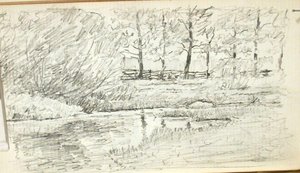
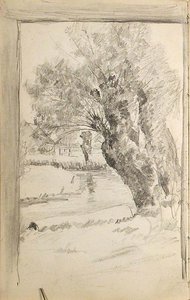
11The Glimmerglass of the Mississinewa (1895) by J. Ottis AdamsThe Glimmerglass of the Mississinewa1895 12Spring Landscape (1895) by J. Ottis AdamsSpring Landscape1895 13The Farm, Prarie Dell (1894) by J. Ottis AdamsThe Farm, Prarie Dell1894 14Our Village (1902) by J. Ottis AdamsOur Village1902 15The Grist Mill (1902) by J. Ottis AdamsThe Grist Mill1902 16Sycamores on the Whitewater (1901) by J. Ottis AdamsSycamores on the Whitewater1901 17Morning on the Whitewater (1901) by J. Ottis AdamsMorning on the Whitewater1901 18Moonlight on the Whitewater (1900) by J. Ottis AdamsMoonlight on the Whitewater1900 19Winter - Brookville (1900) by J. Ottis AdamsWinter - Brookville1900 20Hollyhocks and Poppies - The Hermitage (1901) by J. Ottis AdamsHollyhocks and Poppies - The Hermitage1901 21The Wane of Winter (1901) by J. Ottis AdamsThe Wane of Winter1901 · Indianapolis Museum of Art 22The Widow, Munich by J. Ottis AdamsThe Widow, MunichIndianapolis Museum of Art 23Portrait of Mary Gertrude Ethell Walker by J. Ottis AdamsPortrait of Mary Gertrude Ethell WalkerIndianapolis Museum of Art 24Frosty Morning (1910) by J. Ottis AdamsFrosty Morning1910 · Indianapolis Museum of Art 25Study Head (Old Woman) by J. Ottis AdamsStudy Head (Old Woman)Indianapolis Museum of Art 26Late Autumn (1906) by J. Ottis AdamsLate Autumn1906 · Indianapolis Museum of Art 27Portrait of Winifred Brady by J. Ottis AdamsPortrait of Winifred BradyIndianapolis Museum of Art 28Katrina by J. Ottis AdamsKatrinaIndianapolis Museum of Art 29Young Man Resting on Hand by J. Ottis AdamsYoung Man Resting on Hand 30Boy with Pitchfork, study for Wheat-wain Afield by J. Ottis AdamsBoy with Pitchfork, study for Wheat-wain Afield 31Man Seated by J. Ottis AdamsMan Seated 32Bearded Man with Glasses by J. Ottis AdamsBearded Man with Glasses 33Man Sketching by J. Ottis AdamsMan Sketching 34STUDY of a HEAD 1 by J. Ottis AdamsSTUDY of a HEAD 1 35Head and Shoulder Study by J. Ottis AdamsHead and Shoulder Study 36Study Head (Woman) by J. Ottis AdamsStudy Head (Woman) 37TO THE FIELDS by J. Ottis AdamsTO THE FIELDS 38Tree by River by J. Ottis AdamsTree by River 39Railroad Station by J. Ottis AdamsRailroad Station 40Trees 9 by J. Ottis AdamsTrees 9 41Woman Under Tree Reading by J. Ottis AdamsWoman Under Tree Reading 42Study of a Bearded Man by J. Ottis AdamsStudy of a Bearded Man 43Buildings by J. Ottis AdamsBuildings 44Figures at Well by J. Ottis AdamsFigures at Well 45Art Students Drawing at Easels by J. Ottis AdamsArt Students Drawing at Easels 46Twilight Along the Florida Coast (1915) by J. Ottis AdamsTwilight Along the Florida Coast1915 47Half-Length Figure Study (1883) by J. Ottis AdamsHalf-Length Figure Study1883 · Indianapolis Museum of Art 48Still Life (1883) by J. Ottis AdamsStill Life1883 49The Ebb of Day (also known as The Bank) (1904) by J. Ottis AdamsThe Ebb of Day (also known as The Bank)1904 50In Poppyland (1901) by J. Ottis AdamsIn Poppyland1901 51Hanging Moss, St. Petersburg (1914) by J. Ottis AdamsHanging Moss, St. Petersburg1914 · Indianapolis Museum of Art 52Gleaners at Rest (also known as Nooning) (1886) by J. Ottis AdamsGleaners at Rest (also known as Nooning)1886 53Iredescence of a Shallow Stream (1902) by J. Ottis AdamsIredescence of a Shallow Stream1902 54The Old Mills of Brookville (1900) by J. Ottis AdamsThe Old Mills of Brookville1900 55Field Study, Florida by J. Ottis AdamsField Study, FloridaIndianapolis Museum of Art 56A Grey Frosty Morning, Sketch, Brookville by J. Ottis AdamsA Grey Frosty Morning, Sketch, BrookvilleIndianapolis Museum of Art 57The Wave-Whitewater, Brookville, Indiana (Autumn on Whitewater) by J. Ottis AdamsThe Wave-Whitewater, Brookville, Indiana (Autumn on Whitewater)Indianapolis Museum of Art 58Sketch for Sun Room of Indianapolis City Hospital by J. Ottis AdamsSketch for Sun Room of Indianapolis City HospitalIndianapolis Museum of Art 59Cows by J. Ottis AdamsCows 60Boy with Basket by J. Ottis AdamsBoy with Basket 61Landscape with Stream 1 by J. Ottis AdamsLandscape with Stream 1 62Rotunda by J. Ottis AdamsRotunda 63Dog by J. Ottis AdamsDog 64Folded Hands by J. Ottis AdamsFolded Hands 65Corn Shock on Hillside by J. Ottis AdamsCorn Shock on Hillside 66Tree on Bank of Stream by J. Ottis AdamsTree on Bank of Stream 67Trees by Stream 4 by J. Ottis AdamsTrees by Stream 4 68Trees and Fence by Stream by J. Ottis AdamsTrees and Fence by Stream 69Marshy Landscape 4 by J. Ottis AdamsMarshy Landscape 4 70Horses, Study for Wheat-wain Afield by J. Ottis AdamsHorses, Study for Wheat-wain Afield 71Houses by Stream by J. Ottis AdamsHouses by Stream 72Landscape with Stream by J. Ottis AdamsLandscape with Stream 73Landscape with Pond and Fence by J. Ottis AdamsLandscape with Pond and Fence 74Tree 6 by J. Ottis AdamsTree 6 75Tree 5 by J. Ottis AdamsTree 5 76Sapling by J. Ottis AdamsSapling 77Foliage by J. Ottis AdamsFoliage 78Peasant Woman Raking by J. Ottis AdamsPeasant Woman Raking 79Trellis by J. Ottis AdamsTrellis 80Flower by J. Ottis AdamsFlower 81City seen Through Trees by J. Ottis AdamsCity seen Through Trees 82Woman's Head by J. Ottis AdamsWoman's Head 83Man Sawing Table by J. Ottis AdamsMan Sawing Table 84Leaf by J. Ottis AdamsLeaf 85Boy with Stick by J. Ottis AdamsBoy with Stick 86Girl's Head by J. Ottis AdamsGirl's Head 87Pollard Willow 1 by J. Ottis AdamsPollard Willow 1 88Male Academy Figure by J. Ottis AdamsMale Academy Figure 89Reclining Man Reading by J. Ottis AdamsReclining Man Reading 90Horse 1 by J. Ottis AdamsHorse 1 91City Street 1 by J. Ottis AdamsCity Street 1 92Woman in Bonnet 1 by J. Ottis AdamsWoman in Bonnet 1 93Townhouse by J. Ottis AdamsTownhouse 94Man's Head by J. Ottis AdamsMan's Head 95Landscape 11 by J. Ottis AdamsLandscape 11 96Woman Carrying Sythe by J. Ottis AdamsWoman Carrying Sythe 97Man Lurching by J. Ottis AdamsMan Lurching 98Pollard Willow 2 by J. Ottis AdamsPollard Willow 2 99House and Woods by J. Ottis AdamsHouse and Woods 100Field and Trees by J. Ottis AdamsField and Trees

The subjects that held J. Ottis Adams's eye

The four subjects that come back most often in these originals, each with its finest example.

The museums that keep J. Ottis Adams's originals

The museum that holds the most of the paintings on this page.

Museum City Works by J. Ottis Adams Paintings from this list
Indianapolis Museum of Art, IndianapolisIndianapolis Museum of Art Indianapolis 18 Wash Day, Bavaria, Thornberry's Pasture Brooklyn, Indiana, The Wane of Winter

J. Ottis Adams across the decades: one unique original for each

Works per decade

Pick a decade to see the original that defines it.

J. Ottis Adams's paintings: questions for the gallery

What is the single most famous work of J. Ottis Adams?Reveal the answer

Wash Day, Bavaria (1885), Indianapolis Museum of Art, Indianapolis. The Closing of an Autumn Day (1901) and Trees on Bank come next.

At what age did J. Ottis Adams create Wash Day, Bavaria?Reveal the answer

34 years old: Wash Day, Bavaria dates from 1885, and J. Ottis Adams was born in 1851.

Which ten paintings by J. Ottis Adams are the most famous?Reveal the answer

Wash Day, Bavaria, The Closing of an Autumn Day, Trees on Bank, Thornberry's Pasture Brooklyn, Indiana, Unterschleissheim, Summertime, Wheat-wain Afield, November Freshet, A Misty Morning on the Mississinewa and Metamora (also known as A Quiet Neighborhood, Metamora). The ranking above gives each one's year and museum.

How many works by J. Ottis Adams are known?Reveal the answer

Our catalog holds 317 works by J. Ottis Adams, dated from 1883 to 1915.

Where can the most famous J. Ottis Adams originals be seen?Reveal the answer

Mostly in Indianapolis Museum of Art (Indianapolis). The museum table above lists them all.

During which period did J. Ottis Adams create the best-known paintings?Reveal the answer

In 1900s: 15 of the 100 works on this page were made then, The Closing of an Autumn Day among them.

Which famous J. Ottis Adams painting is the earliest, and which the latest?Reveal the answer

On this page, the earliest is Half-Length Figure Study (1883) and the latest Twilight Along the Florida Coast (1915).

What subjects did J. Ottis Adams favour?Reveal the answer

Forests (11), Landscape (9) and Men (7), across the 100 works on this page.

What materials did J. Ottis Adams paint with most?Reveal the answer

Oil On Canvas, for 5 of the 100 works on this page.

Which movement does the work of J. Ottis Adams belong to?Reveal the answer

Impressionism, judging by the originals on this page.

What J. Ottis Adams originals can I see at the Indianapolis Museum of Art?Reveal the answer

Wash Day, Bavaria, Thornberry's Pasture Brooklyn, Indiana and The Wane of Winter: the Indianapolis Museum of Art, Indianapolis holds 16 of the works on this page.

J. Ottis Adams: a portrait of the artist

A Forgotten Voice of American Impressionism

John Ottis Adams, born in the quiet Indiana countryside in 1851, occupies a somewhat enigmatic position within the narrative of American Impressionist painters. Though he didn’t achieve the widespread recognition enjoyed by contemporaries like T.C. Steele or William Forsyth – with whom he formed the core of the celebrated Hoosier Group – Adams's dedication to capturing the serene beauty of the American landscape and the subtle nuances of everyday life deserves renewed attention. His artistic journey, marked by periods of relative obscurity, reveals a skilled observer deeply attuned to the shifting light and atmosphere that defined the late 19th and early 20th centuries. Adams’s story is one of quiet perseverance, a commitment to his craft fueled not by ambition for fame but by an intrinsic need to translate the world around him onto canvas. He embarked on formal training at the South Kensington School of Art in London, followed by seven years immersed in the rigorous academic tradition of the Academy of Fine Arts in Munich. These formative experiences instilled within him a strong foundation in technique and composition, yet he ultimately chose to forge his own path, one that resonated with the uniquely American spirit of Impressionism.

The Hoosier Group and Artistic Development

Upon returning to Indiana in 1887, Adams became a pivotal figure in establishing a distinctly Midwestern artistic identity. Alongside Steele, Forsyth, Otto Stark, and Richard Gruelle, he formed the Hoosier Group, artists united by their shared commitment to depicting the landscapes and rural life of their native state. This collective fostered an environment of mutual support and experimentation, allowing each artist to refine their individual style while contributing to a broader artistic movement. Initially, the group’s work leaned towards tonalism, characterized by muted colors and evocative depictions of mood and atmosphere. However, influenced by the burgeoning Impressionist movement in Europe, Adams and his colleagues gradually embraced brighter palettes and looser brushwork, seeking to capture the fleeting effects of light and color. His landscapes, particularly those painted along the Whitewater River near Brookville, Indiana – where he established a beloved home and studio known as The Hermitage – exemplify this shift. These paintings are not merely representations of scenery; they are immersive experiences, inviting the viewer to share in the tranquility and beauty of the natural world. Adams’s skill extended beyond landscapes; he also produced compelling portraits that offer glimpses into the lives of ordinary Americans during a period of significant social change. He possessed an ability to capture not just likenesses but also the inner character and dignity of his subjects, reflecting a deep empathy for the human condition.

A Life Dedicated to Art and Education

Beyond his own artistic pursuits, Adams was deeply committed to fostering creativity in others. He co-founded the Muncie Art School with William Forsyth, providing aspiring artists with access to quality instruction. He also played a crucial role in developing art programs at the John Herron Art Institute (now the Indianapolis Museum of Art), shaping the next generation of Indiana artists. His dedication to education reflects a belief in the transformative power of art and its ability to enrich individual lives and communities. The Hermitage, his home near Brookville, became not only a personal sanctuary but also a gathering place for fellow artists and students, fostering a vibrant artistic community. It was here, surrounded by the landscapes that inspired him, that Adams continued to paint and teach until his death in 1927. His influence extended beyond formal instruction; he offered informal lessons at The Hermitage, creating an inclusive environment where creativity could flourish. He believed that art should be accessible to all, and he actively encouraged experimentation and individual expression among his students.

Legacy and Rediscovery

Despite his contributions to American art, John Ottis Adams’s work remained largely overlooked for much of the 20th century. However, in recent years, there has been a growing appreciation for his subtle yet powerful paintings. His works can now be found in various collections, both public and private, offering opportunities for new audiences to discover his unique vision. Platforms like OriginalUniqueArt play a vital role in making his art accessible through reproductions, ensuring that his legacy endures. While he may not be a household name, Adams’s paintings offer a valuable window into the artistic landscape of late 19th and early 20th century America. His dedication to capturing the essence of the American experience – its landscapes, its people, and its evolving identity – makes him a significant figure in the history of American Impressionism. Exploring his work is not merely an act of art appreciation; it’s a rediscovery of a forgotten voice, one that speaks eloquently of beauty, tranquility, and the enduring power of artistic vision. His paintings serve as a reminder that true artistry lies not in grand gestures or revolutionary statements, but in the quiet observation and faithful representation of the world around us.

Further Exploration

  • Explore similar styles at the Musée des Beaux-Arts (Auxerre, France) for broader context.
  • Delve deeper into American art through OriginalUniqueArt’s artist portfolio.
  • Research the Hoosier Group and their impact on Midwestern art history.

Adams's work stands as a testament to the enduring power of observation, the beauty of the American landscape, and the importance of artistic education. His legacy deserves continued recognition and celebration.