Impressionism
Sapling (J. Ottis Adams)
J. Ottis Adams (1851–1927) made Sapling. It belongs to the Impressionism movement.

 Preview

 Hand Made Oil Painting
 Send
 Share
 Fact sheet


 Download
 Similars
 X-Ray
 Diaporama
 Q&A

 Stats
Sapling, in brief
- Title
- Sapling
- Artist
- J. Ottis Adams (1851–1927)
- Artist born in
- Indiana, United States
- Movement
- Impressionism
- Subject
- forests
High-resolution images of Sapling
J. Ottis Adams, Sapling. Public domain.
Questions on Sapling, answered
What is "Sapling" about?
The themes present in "Sapling" by J. Ottis Adams include forests. Together they summarize the artwork's subject matter.
Can the image of "Sapling" by J. Ottis Adams be freely reproduced?
"Sapling" by J. Ottis Adams is in the public domain - its copyright has expired. This status governs how the image of the work may be reproduced.
Which artist is "Sapling" attributed to?
"Sapling" was created by J. Ottis Adams. The information on this page describes J. Ottis Adams's original work.
What style does "Sapling" belong to?
The movement associated with "Sapling" by J. Ottis Adams is Impressionism. This classification situates the work among related artists and artworks.
Why is the copyright status of "Sapling" what it is?
The copyright status of "Sapling" - in the public domain - its copyright has expired - follows from the artist's death in 1927.
About the artist, J. Ottis Adams

1851–1927, United States
J. Ottis Adams
A Forgotten Voice of American ImpressionismJohn Ottis Adams, born in the quiet Indiana countryside in 1851, occupies a somewhat enigmatic position within the narrative of American Impressionist painters. Though he didn’t achieve the widespread recognition enjoyed by contemporaries like T.C. Steele or William Forsyth – with whom he formed the core of the celebrated Hoosier Group – Adams's dedication to capturing the serene beauty of the American landscape and the subtle nuances of everyday life deserves renewed attention. His artistic journey, marked by periods of relative obscurity, reveals a skilled observer deeply attuned to the shifting light and atmosphere that defined the late 19th and early 20th centuries.
Also by J. Ottis Adams
 Wash Day, Bavaria1885
 The Closing of an Autumn Day1901
 Trees on Bank
 Thornberry's Pasture Brooklyn, Indiana1904
Essays around Sapling
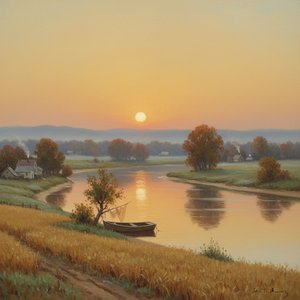 John Ottis Adams: Capturing Rural Indiana's Luminist SpiritExplore the serene landscapes of John Ottis Adams, a key American Impressionist of the Hoosier Group. Discover his Luminist style & forgott…
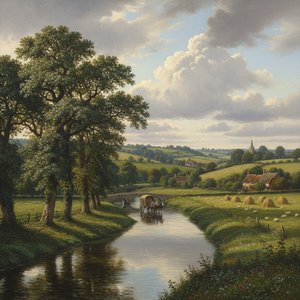 John Constable: Nature, Light & the Romantic Vision of Rural EnglandExplore the life & art of John Constable, the Romantic painter who revolutionized landscape with emotive scenes of rural England. Discover …
 John Singer Sargent's 25 Masterpieces: Portraits & Beyond | OriginalUniqueArtExplore 25 iconic John Singer Sargent paintings – from dazzling portraits to Impressionist landscapes. Discover the stories behind Madame X…