Portrait of Francisco Goya

The 100 Most Famous Francisco Goya Paintings, a Gallery Selection

Updated November 2026 · ranked by our popularity score (searches, visits and orders for each work) · 1,429 works by Francisco Goya in our catalogue

In short

Of all the originals Francisco Goya left, the most famous is Saturn Devouring His Son (1823), in the collection of the Museo del Prado, Madrid. Close behind it come The Third of May 1808 (Execution of the Defenders of Madrid) (1814) and The Naked Maja (1798). Our catalog holds 1,429 works by Francisco Goya; the gallery has kept the 100 the world admires most, each shown with its date, its museum and its story.

1746 – 1828, Fuendetodos Romanticism Most works: Museo del Prado

Francisco Goya's top 10 paintings: the gallery's choice

1
Saturn Devouring His Son (1823) by Francisco Goya

Saturn Devouring His Son

1823 · Oil On Canvas · Museo del Prado, Madrid

Francisco Goya's “Saturn Devouring His Son” is arguably one of the most disturbing and powerfully emotive works in Western art history. This haunting image, part of his famed Black Paintings series, transcends mere depiction to become a visceral embodiment of fear, tyranny, and the relentless passage of time.

2
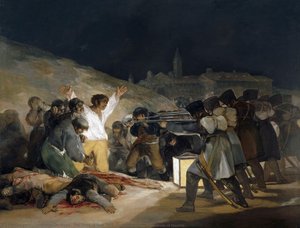
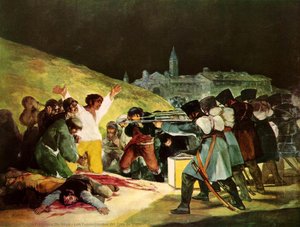
The Third of May 1808 (Execution of the Defenders of Madrid) (1814) by Francisco Goya

The Third of May 1808 (Execution of the Defenders of Madrid)

1814 · Oil On Canvas · Museo del Prado, Madrid

Francisco Goya's 1814 painting is more than just a depiction of an event; it’s a visceral cry against the brutality of war and a powerful testament to the human spirit in the face of oppression. Commemorating the events of May 3rd, 1808, in Madrid during the Peninsular War, this artwork stands as one of the most significant and emotionally resonant works in art history.

3
The Naked Maja (1798) by Francisco Goya

The Naked Maja

1798 · Oil On Canvas · Museo del Prado, Madrid

This exquisite oil painting captures a reclining nude woman, her form rendered with striking realism and delicate attention to detail. The subject’s relaxed pose, arms resting behind her head, exudes confidence and ease, inviting viewers into an intimate moment of natural beauty. Her gaze directly confronts the viewer, creating a powerful connection that challenges traditional notions of modesty and invites contemplation of female autonomy and self-assurance. The composition centers the…

4
Charles IV of Spain and his family (1800) by Francisco Goya

Charles IV of Spain and his family

1800 · Oil On Canvas

Francisco de Goya's "Charles IV of Spain and His Family" was created in 1800, a pivotal moment in Spanish history. Goya had recently been appointed as the First Court Painter, a prestigious position that granted him access to the royal family and significant patronage. This commission came at a time when Spain was navigating complex political landscapes, including the aftermath of the French Revolution and growing tensions with France under…

5
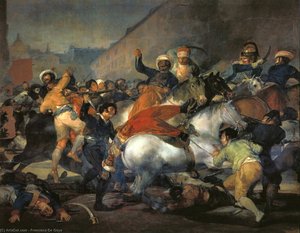
The Second of May, 1808 at the Puerta del Sol by Francisco Goya

The Second of May, 1808 at the Puerta del Sol

Oil On Canvas

A Chronicle of Rebellion: Goya’s “The Second of May, 1808” Francisco de Goya's "The Second of May, 1808" isn’t merely a painting; it’s a visceral scream frozen in time. Completed in 1814, this monumental oil on canvas transports us directly into the heart of the Dos de Mayo Uprising – a pivotal moment in Spanish history and a searing indictment of war's brutal realities. The scene unfolds within the Calle…

6
Dog (1820) by Francisco Goya

Dog

1820 · Oil On Canvas · Museo del Prado, Madrid

Created in 1820 during Goya’s self-imposed exile from Madrid following the Napoleonic invasion, “Dog” resonates deeply with the anxieties of its time. The political instability gripping Spain fueled a pervasive sense of disillusionment and despair—themes that permeate Goya's broader oeuvre. This painting isn’t merely a portrait; it’s a visual manifestation of the human condition confronting solitude and questioning existence.

7
The Clothed Maja (1800) by Francisco Goya

The Clothed Maja

1800 · Oil On Canvas · Museo del Prado, Madrid

In the quiet, shadowed corners of art history, few portraits command the room with as much silent authority as Francisco Goya’s The Clothed Maja. Painted in 1800, this work is far more than a mere depiction of a noblewoman; it is a profound exploration of femininity, social standing, and the psychological depth of the human spirit. The central figure, identified as María del Pilar Teresa Cayetana de Silva y Álvarez…

8
Witches' sabbath (1821) by Francisco Goya

Witches' sabbath

1821 · Oil On Canvas · Museo del Prado, Madrid

An Enigmatic Gathering: A Dark Vision of Mystery Francisco de Goya's "Witches' Sabbath" is a haunting masterpiece that plunges viewers into a world of supernatural intrigue and eerie beauty. This captivating artwork, created in 1821, depicts a chaotic scene filled with figures engaged in what appears to be a ritualistic gathering. The central figure, dressed in dark robes, commands attention, suggesting themes of power, mystery, and the occult. A Masterpiece…

9
Witches' Sabbath 1 by Francisco Goya

Witches' Sabbath 1

Acrylic On Canvas

Witches' Sabbath 1: A Gothic Vision of Inquisition’s Fear Francisco de Goya’s 'Witches' Sabbath 1' stands as a chilling testament to the anxieties of Romanticism and a searing indictment of religious persecution in Spain. Painted in 1798 using oil on canvas, this monumental artwork transcends mere depiction; it plunges viewers into a realm of unsettling symbolism and psychological depth. The painting’s dark palette—dominated by blacks, browns, and muted reds—immediately establishes…

10
The Colossus (1812) by Francisco Goya

The Colossus

1812 · Oil On Canvas · Museo del Prado, Madrid

Subject and Composition This monumental masterpiece vividly captures a colossal figure emerging from a tumultuous landscape, set against a swirling, stormy sky. The figure, rendered with muscular detail and a commanding presence, appears to be in a moment of contemplation or sorrow, embodying themes of divine power, vulnerability, and human resilience. The composition emphasizes the grandeur and emotional intensity of the scene, inviting viewers to contemplate the mythic or biblical…

The Francisco Goya selection continues, 11 to 100

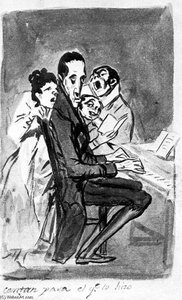
11Fight With Cudgels (1823) by Francisco GoyaFight With Cudgels1823 · Museo del Prado 12Flight of the witches by Francisco GoyaFlight of the witchesMuseo del Prado 13Atropos (The Fates) (1823) by Francisco GoyaAtropos (The Fates)1823 · Museo del Prado 14The Parasol (1777) by Francisco GoyaThe Parasol1777 · Museo Nacional Centro de Arte Reina Sofía 15Judith and Holovernes (1823) by Francisco GoyaJudith and Holovernes1823 · Museo del Prado 16two old women eating from a bowl by Francisco Goyatwo old women eating from a bowlMuseo del Prado 17Asmodea (1823) by Francisco GoyaAsmodea1823 · Museo del Prado 18The Milkmaid of Bordeaux by Francisco GoyaThe Milkmaid of BordeauxMuseo del Prado 19The Pilgrimage of San Isidro (1823) by Francisco GoyaThe Pilgrimage of San Isidro1823 · Museo del Prado 20The vendor comedians by Francisco GoyaThe vendor comediansКоролівська академія витончених мистецтв Сан-Фернандо 21Leocadia (1823) by Francisco GoyaLeocadia1823 · Museo del Prado 22The Madhouse by Francisco GoyaThe Madhouse 23Two Young People Laughing at a Man by Francisco GoyaTwo Young People Laughing at a ManMuseo del Prado 24The Third of May, 1808 The Execution of the Defenders of Madrid by Francisco GoyaThe Third of May, 1808 The Execution of the Defenders of Madrid 25La maja desnuda. . Madrid, Museo del Prado. (1797) by Francisco GoyaLa maja desnuda. . Madrid, Museo del Prado.1797 26Charles IV and His Family by Francisco GoyaCharles IV and His FamilyMuseo del Prado 273rd May 1808 in Madrid by Francisco Goya3rd May 1808 in Madrid 28The sleep of reason produces monsters (1799) by Francisco GoyaThe sleep of reason produces monsters1799 29Time and the Old Women (1810) by Francisco GoyaTime and the Old Women1810 · Palais des Beaux-Arts 30St Isabel of Portugal treating the wounds of an injured by Francisco GoyaSt Isabel of Portugal treating the wounds of an injured 31El Lazarillo de Tormes (1819) by Francisco GoyaEl Lazarillo de Tormes1819 32The Witches' Sabbath (1797) by Francisco GoyaThe Witches' Sabbath1797 33Fire at Night (1794) by Francisco GoyaFire at Night1794 34the colossus (1812) by Francisco Goyathe colossus1812 35Atropos (Atropos or Fate) by Francisco GoyaAtropos (Atropos or Fate) 36The Annunciation (1785) by Francisco GoyaThe Annunciation1785 37Judith and Holofernes by Francisco GoyaJudith and Holofernes 38The Devil's Lamp (1797) by Francisco GoyaThe Devil's Lamp1797 · National Gallery 39The dance (1784) by Francisco GoyaThe dance1784 · Palácio Nacional da Ajuda 40And his house is on fire (1799) by Francisco GoyaAnd his house is on fire1799 41witches sabbath by Francisco Goyawitches sabbath 42Manner of Flying, plate 13 in (1865) by Francisco GoyaManner of Flying, plate 13 in1865 43Returning from the hunt (1784) by Francisco GoyaReturning from the hunt1784 · Palácio Nacional da Ajuda 44The Second of May 1808 (1814) by Francisco GoyaThe Second of May 18081814 45Squealers. (1799) by Francisco GoyaSquealers.1799 46The Yard of a Madhouse (1794) by Francisco GoyaThe Yard of a Madhouse1794 47The Family of the Duke of Osuna by Francisco GoyaThe Family of the Duke of Osuna 48Poor Folly (1819) by Francisco GoyaPoor Folly1819 49Should God forgive her She was her mother (1799) by Francisco GoyaShould God forgive her She was her mother1799 50Los Fusilamientos del Tres de Mayo by Francisco GoyaLos Fusilamientos del Tres de Mayo 51There it goes (1799) by Francisco GoyaThere it goes1799 52Spanish Entertainment (1825) by Francisco GoyaSpanish Entertainment1825 53Love and Death (1799) by Francisco GoyaLove and Death1799 54The dog - - (1823) by Francisco GoyaThe dog - -1823 55Strolling Players (1793) by Francisco GoyaStrolling Players1793 56The Duchess of Alba, Sketch (1796) by Francisco GoyaThe Duchess of Alba, Sketch1796 · Hispanic Society Museum - Library 57Bartholomew Suerda (1806) by Francisco GoyaBartholomew Suerda1806 58Portrait of King Charles IV (1790) by Francisco GoyaPortrait of King Charles IV1790 · Museo del Prado 59The Holy Family (1787) by Francisco GoyaThe Holy Family1787 · Museo del Prado 60The Arrest of Christ (1788) by Francisco GoyaThe Arrest of Christ1788 · Toledo Cathedral 61dona teresa sureda - - (1805) by Francisco Goyadona teresa sureda - -1805 62The inquisition tribunal by Francisco GoyaThe inquisition tribunal 63They who Cannot (1799) by Francisco GoyaThey who Cannot1799 64What Will he Die. (1799) by Francisco GoyaWhat Will he Die.1799 65Maja and Celestina on a Balcony (1812) by Francisco GoyaMaja and Celestina on a Balcony1812 66Saint Lucy (1799) by Francisco GoyaSaint Lucy1799 · Bavarian State Painting Collections 67Charles IV, King of Spain (1790) by Francisco GoyaCharles IV, King of Spain1790 · Harvard Art Museums 68She prays for her (1799) by Francisco GoyaShe prays for her1799 69Bravissimo (1799) by Francisco GoyaBravissimo1799 70What more can one do. (1815) by Francisco GoyaWhat more can one do.1815 71Girl Listening to a Guitar (1799) by Francisco GoyaGirl Listening to a Guitar1799 72Queen María Luisa Wearing a Mantilla (1799) by Francisco GoyaQueen María Luisa Wearing a Mantilla1799 · Palacio Real 73Portrait of Don Francisco de Borja Tellez Giron (1816) by Francisco GoyaPortrait of Don Francisco de Borja Tellez Giron1816 74Neither more nor less (1799) by Francisco GoyaNeither more nor less1799 75El comercio by Francisco GoyaEl comercio 76Why hide them. (1799) by Francisco GoyaWhy hide them.1799 77The Great He-Goat or Witches Sabbath d1 by Francisco GoyaThe Great He-Goat or Witches Sabbath d1 78Poor little girls! (1799) by Francisco GoyaPoor little girls!1799 79They spin finely (1799) by Francisco GoyaThey spin finely1799 80Those Specks of Dust (1799) by Francisco GoyaThose Specks of Dust1799 81They have flown (1799) by Francisco GoyaThey have flown1799 82They Sing for the Composer (1797) by Francisco GoyaThey Sing for the Composer1797 83Queen María Luisa (1789) by Francisco GoyaQueen María Luisa1789 84War scene (1812) by Francisco GoyaWar scene1812 85Till death (1799) by Francisco GoyaTill death1799 86All will fall (1799) by Francisco GoyaAll will fall1799 87Witches Sabbath (1789) by Francisco GoyaWitches Sabbath1789 88The Countess of Chinchón by Francisco GoyaThe Countess of Chinchón 89Little goblins (1799) by Francisco GoyaLittle goblins1799 90The Water Carrier ( (1812) by Francisco GoyaThe Water Carrier (1812 · Szépművészeti Múzeum 91Portrait of Ferdinand VII of Spain (1808) by Francisco GoyaPortrait of Ferdinand VII of Spain1808 · Museu de Arte de São Paulo Assis Chateaubriand 92Self-Portrait (1799) by Francisco GoyaSelf-Portrait1799 93Fight with Clubs by Francisco GoyaFight with Clubs 94This certainly is reading (1799) by Francisco GoyaThis certainly is reading1799 95Subir y bajar by Francisco GoyaSubir y bajar 96The Giant by Francisco GoyaThe Giant 97the colossus by Francisco Goyathe colossus 98Sharing the Old Woman (1810) by Francisco GoyaSharing the Old Woman1810 99The Great He Goat or Witches Sabbath by Francisco GoyaThe Great He Goat or Witches Sabbath 100To the Count Palatine (1799) by Francisco GoyaTo the Count Palatine1799

Francisco Goya's famous paintings, period by period

The subjects that held Francisco Goya's eye

The four subjects that come back most often in these originals, each with its finest example.

The museums that keep Francisco Goya's originals

The 8 museums that hold the most of the paintings on this page.

Museum City Works by Francisco Goya Paintings from this list
Museo del Prado, MadridMuseo del Prado Madrid 131 Saturn Devouring His Son, The Third of May 1808 (Execution of the Defenders of Madrid), The Naked Maja
Palácio Nacional da Ajuda, LisbonPalácio Nacional da Ajuda Lisbon 10 The dance, Returning from the hunt
Bavarian State Painting Collections, MunichBavarian State Painting Collections Munich 13 Saint Lucy
Королівська академія витончених мистецтв Сан-Фернандо, MadridКоролівська академія витончених мистецтв Сан-Фернандо Madrid 11 The vendor comedians
Hispanic Society Museum - Library, New YorkHispanic Society Museum - Library New York 6 The Duchess of Alba, Sketch
National Gallery, LondonNational Gallery London 5 The Devil's Lamp
Szépművészeti Múzeum, BudapestSzépművészeti Múzeum Budapest 5 The Water Carrier (
Museu de Arte de São Paulo Assis Chateaubriand, Sao PauloMuseu de Arte de São Paulo Assis Chateaubriand Sao Paulo 4 Portrait of Ferdinand VII of Spain

Francisco Goya decade by decade: the original that defines each

Works per decade

Pick a decade to see the original that defines it.

Collectors' questions about Francisco Goya's paintings

Which work is Francisco Goya most famous for?Reveal the answer

Saturn Devouring His Son (1823), Museo del Prado, Madrid. The Third of May 1808 (Execution of the Defenders of Madrid) (1814) and The Naked Maja (1798) come next.

What age was Francisco Goya when Saturn Devouring His Son was made?Reveal the answer

77 years old: Saturn Devouring His Son dates from 1823, and Francisco Goya was born in 1746.

What are the ten most famous Francisco Goya paintings?Reveal the answer

Saturn Devouring His Son, The Third of May 1808 (Execution of the Defenders of Madrid), The Naked Maja, Charles IV of Spain and his family, The Second of May, 1808 at the Puerta del Sol, Dog, The Clothed Maja, Witches' sabbath, Witches' Sabbath 1 and The Colossus. The ranking above gives each one's year and museum.

How many paintings did Francisco Goya leave?Reveal the answer

Our catalog holds 1,429 works by Francisco Goya, dated from 1777 to 1825.

In which museums do Francisco Goya's masterpieces hang?Reveal the answer

Mostly in Museo del Prado (Madrid), Palácio Nacional da Ajuda (Lisbon) and Bavarian State Painting Collections (Munich). The museum table above lists them all.

In which years did Francisco Goya paint the most famous works?Reveal the answer

In 1790s: 36 of the 100 works on this page were made then, The Naked Maja among them.

What are the first and the last famous originals of Francisco Goya?Reveal the answer

On this page, the earliest is The Parasol (1777) and the latest Spanish Entertainment (1825).

Which subjects did Francisco Goya choose most often?Reveal the answer

Darkness (19), Spanish art (18) and Spain (16), across the 100 works on this page.

Which technique did Francisco Goya use most?Reveal the answer

Oil On Canvas, for 46 of the 100 works on this page.

To which art movement does Francisco Goya belong?Reveal the answer

Romanticism, judging by the originals on this page.

Which Francisco Goya works hang at the Museo del Prado?Reveal the answer

Saturn Devouring His Son, The Third of May 1808 (Execution of the Defenders of Madrid) and The Naked Maja: the Museo del Prado, Madrid holds 20 of the works on this page.

Francisco Goya: life and work

Early Life, Family and Training

Francisco José de Goya y Lucientes was born on 30 March 1746 in Fuendetodos, Aragon. He grew up in a lower middle-class household alongside his siblings: Rita, Tomás, Jacinta, Mariano, and Camilo. His father, José Benito de Goya y Franque, worked as a gilder, a trade that required a steady hand and an eye for detail. This domestic setting provided the early, quiet backdrop to a life that would eventually move far beyond the provincial borders of his birthplace.

At the age of fourteen, his formal training began. He studied under José Luzán y Martínez, learning the foundational mechanics of his craft. These early years were spent absorbing the technical requirements of the medium before he eventually moved to Madrid. In the capital, his education continued under Anton Raphael Mengs, a significant figure in the artistic circles of the time. This transition from the provincial instruction of his youth to the formal environment of Madrid shaped the technical precision he would carry into his later years.

Patrons, Workshop and Commissions

The steady climb through the Spanish court began in 1786, when he was named a painter to the Royal Chamber. By 1790, his position had solidified as the first court painter. His work was tied to the shifting fortunes of the monarchy, serving as a painter to Charles IV and later to Ferdinand VII. These roles brought him into constant contact with the aristocracy, requiring a steady hand for the portraits and official duties expected by the Crown.

Between 1775 and 1792, much of his output was directed toward the Royal Tapestry Factory at Santa Barbara near Madrid. He produced the preliminary designs for these works, often depicting scenes of daily life and rural settings. These commissions required a specific kind of precision to ensure the imagery translated well from canvas to thread. His studio was a place of constant production, moving from these decorative designs to the more formal, psychological studies of the royal family.

Key Works and Artistic Periods

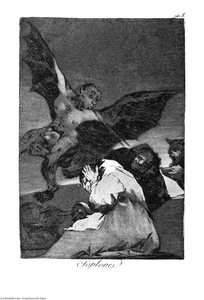
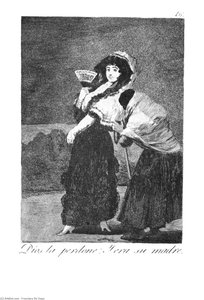
The shift in his work became visible as his world grew quieter. In 1799, he produced Los Caprichos, a series of eighty etchings. These prints used aquatint to look at the follies and superstitions of Spanish society, populating the pages with witches and monsters. This period of intense observation continued through the years of conflict in Spain. Between 1810 and 1820, he created The Disasters of War, a series of etchings that recorded the brutality and starvation of the Peninsular War. These works do not look for heroism; they focus on the raw suffering of the people.

By 1814, he had completed The Third of May 1808, a painting that captures the execution of defenders in Madrid. As he moved into his later years, his focus turned toward the walls of his home, the Quinta del Sordo. Between 1819 and 1823, he painted the Black Paintings directly onto the plaster. These murals, including Saturn Devouring His Son and Asmodea, deal with madness and existential dread. They are heavy, dark, and stripped of the lighter themes of his earlier years.

In his final years in Bordeaux, he turned his attention to the spectacle of the bullring. This resulted in the La Tauromaquia series, which explored the violence of the bullfight. His output remained steady until his death, moving from the social critiques of his youth to the deep, private shadows of his later life.

Technique and Style

His hands moved through a wide range of textures and methods. In his printmaking, he utilized aquatint to create tonal depth and experimented with lithography in his later years. These technical choices allowed him to move between the sharp, biting lines of satire and the softer, more atmospheric qualities of his drawings. His output was varied, shifting from the social critiques found in Los Caprichos to the heavy, visceral depictions of the Disasters of War. He also turned his attention to the spectacle of the bullring in his La Tauromaquia series.

The way he applied paint changed as his life became more isolated. For the Black Paintings, he did not use a traditional canvas. Instead, he applied oil paint directly onto the plaster walls of his home. This method resulted in a heavy, somber quality that captured a sense of psychological weight. His work often moved from the lighter, more decorative scenes of his early career toward a style that prioritized expressive freedom. This shift is visible in the way he handled light and shadow to reveal character rather than just a likeness.

Later Years and Death

By 1819, Goya was in his mid-seventies when he retreated to the Quinta del Sordo, a farmhouse on the outskirts of Madrid. The walls of this house became a canvas for his most intense and private visions, where he applied oil paint directly onto the plaster to create the Black Paintings. These works, including Saturn Devouring His Son and Asmodea, emerged from a period of deep isolation. He continued to produce work that explored the darker, more unsettling corners of the human psyche during these years.

Political unrest in Spain eventually prompted a change in his surroundings. In 1824, he sought exile in Bordeaux, France. He remained there, continuing his practice and focusing on printmaking, until his death on 16 April 1828. His final years in Bordeaux were marked by a renewed interest in the spectacle of the bullring, seen in his La Tauromaquia series.

Legacy and Influence

The weight of his work sits heavily between two eras. He is often called the last of the Old Masters and the first of the moderns, a position that marks the transition from the structured traditions of the past to the expressive freedom of the new. As a leader of the Romanticism movement, he moved away from the polished surfaces of his early courtly years toward a style that prioritized the raw reality of the human condition. His ability to capture the psychological truth of a sitter, even in the most unsettling or dark compositions, changed how artists approached the canvas.

This shift toward a more subjective and intense way of seeing left a mark on those who followed. His influence reaches through the decades, appearing in the works of Édouard Manet and Pablo Picasso. Later, the visceral, distorted energy found in the paintings of Francis Bacon carries echoes of the darkness Goya explored. He remains the most important Spanish artist of the late eighteenth and early nineteenth centuries, having bridged the gap between the formal requirements of the Spanish Crown and the inward, often turbulent, explorations of the individual spirit.