Portrait of Francis Cadell

Francis Cadell Paintings: The 100 Most Famous, Through a Gallery's Eye

Updated October 2026 · ranked by our popularity score (searches, visits and orders for each work) · 146 works by Francis Cadell in our catalogue

In short

To the gallery's eye, Francis Cadell's most famous painting is Portrait of a Lady in Black (1921). The Famille Rose Coffee Pot (1911) and Still Life and Rosechatel (1924) complete the trio every eye recognises. Of the 146 works by Francis Cadell in our catalog, the gallery presents the 100 most famous below, each original with its year, its museum and what makes it unique.

1883 – 1937, Edinburgh Impressionism Most works: Scottish National Gallery of Modern Art

The gallery's top 10 Francis Cadell paintings

1
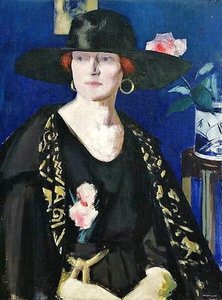
Portrait of a Lady in Black (1921) by Francis Cadell

Portrait of a Lady in Black

1921 · Oil On Canvas

A woman sits before us, her presence commanding a quiet, heavy stillness. She is draped in deep blacks that seem to absorb the very light of the room, a stark contrast to the pale luminosity of her skin. Her gaze is direct, meeting the viewer with an unflinching, steady composure that suggests a life lived with significant social weight. A large, dark hat crowns her head, casting soft shadows that…

2
The Famille Rose Coffee Pot (1911) by Francis Cadell

The Famille Rose Coffee Pot

1911 · Oil On Canvas

The Famille Rose Coffee Pot is an oil on canvas work by Francis Cadell. Created about 1911, the piece reflects the artist's engagement with the evolving modernism of the early twentieth century. Cadell, who lived from 1883 to 1937, was a central figure in the Scottish Colourists, a group noted for their rhythmic use of pigment and focus on light.

3
Still Life and Rosechatel (1924) by Francis Cadell

Still Life and Rosechatel

1924 · Oil On Canvas

A collection of domestic objects rests upon a table, arranged with a deliberate sense of balance. A red chair with a white cushion anchors the left side of the composition, its straight lines providing a structural contrast to the organic shapes of the items before it. A green book lies open, its pages catching the light, positioned near a bright yellow lemon. Nearby, a white bowl sits partially obscured, while…

4
The Parting (1915) by Francis Cadell

The Parting

1915 · Drawing · Scottish National Gallery of Modern Art, Edinburgh

In this 1915 work, the atmosphere is thick with the quiet tension of a goodbye. The monochrome palette strips away the distractions of the world, leaving only the essential geometry of the human form and the emotional gravity of the encounter. The street becomes a stage for a private drama, where the simple act of standing together carries the weight of what is being left behind. It is a study…

Francis Cadell paintings, ranked 11 to 100

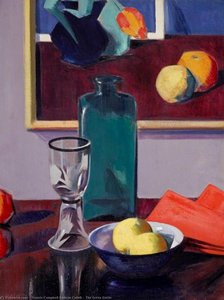
11Cecilia (1912) by Francis CadellCecilia1912 12Interior with Figure (1915) by Francis CadellInterior with Figure1915 · Manchester Art Gallery 13May Easter (1920) by Francis CadellMay Easter1920 14Lady in Blue (1918) by Francis CadellLady in Blue1918 15The Harbour, Cassis (1923) by Francis CadellThe Harbour, Cassis1923 16Iona Croft (1929) by Francis CadellIona Croft1929 17Interior: The Orange Blind (1927) by Francis CadellInterior: The Orange Blind1927 · Glasgow Art Gallery and Museum 18Their Lordships (1915) by Francis CadellTheir Lordships1915 · Scottish National Gallery of Modern Art 19On the Canal, Venice (1910) by Francis CadellOn the Canal, Venice1910 · Scottish National Gallery of Modern Art 20White, Pink and Blue (1907) by Francis CadellWhite, Pink and Blue1907 21Adam and Eve by Francis CadellAdam and Eve 22A Lady in Black and Gold by Francis CadellA Lady in Black and Gold 23Florian's Café, Venice by Francis CadellFlorian's Café, Venice 24Pink and Gold by Francis CadellPink and GoldPaisley Art Institute Collection 25Dancer by Francis CadellDancer 26St. Mark's Square, Venice (1910) by Francis CadellSt. Mark's Square, Venice1910 27Lady Lavery by Francis CadellLady LaveryCity Art Centre 28Florian's Café, Venice by Francis CadellFlorian's Café, Venice 29The Striped Chair by Francis CadellThe Striped Chair 30Girl in Pink and White (1911) by Francis CadellGirl in Pink and White1911 31Normandy Farmyard (1907) by Francis CadellNormandy Farmyard1907 32Chintz Curtains (1911) by Francis CadellChintz Curtains1911 33Interior, Santa Maria della Salute (1910) by Francis CadellInterior, Santa Maria della Salute1910 34Portrait of a Man, Seated (1908) by Francis CadellPortrait of a Man, Seated1908 · Scottish National Gallery of Modern Art 35Santa Maria della Salute, Venice (1910) by Francis CadellSanta Maria della Salute, Venice1910 · Scottish National Gallery of Modern Art 36From the Calcina Hotel (1910) by Francis CadellFrom the Calcina Hotel1910 · Scottish National Gallery of Modern Art 37Self Portrait (1914) by Francis CadellSelf Portrait1914 · Scottish National Portrait Gallery 38A Sailor (1915) by Francis CadellA Sailor1915 · Scottish National Gallery of Modern Art 39Still Life (1915) by Francis CadellStill Life1915 40The North End, Iona (1914) by Francis CadellThe North End, Iona1914 41Winter Nellis (1913) by Francis CadellWinter Nellis1913 42Reflections (1915) by Francis CadellReflections1915 · Kelvingrove Art Gallery and Museum 43Ben More from Iona (1913) by Francis CadellBen More from Iona1913 44Girl in Blue (Reflections) (1912) by Francis CadellGirl in Blue (Reflections)1912 · Kelvingrove Art Gallery and Museum 45The Model (1912) by Francis CadellThe Model1912 · Scottish National Gallery of Modern Art 46The Air Ship (1915) by Francis CadellThe Air Ship1915 · Scottish National Gallery of Modern Art 47The Recruit (1915) by Francis CadellThe Recruit1915 · Scottish National Gallery of Modern Art 48Woman seated on ground (1915) by Francis CadellWoman seated on ground1915 · Scottish National Gallery of Modern Art 49Jack and Tommy (1915) by Francis CadellJack and Tommy1915 · Scottish National Gallery of Modern Art 50The Model (1912) by Francis CadellThe Model1912 51Delicate Banter (1915) by Francis CadellDelicate Banter1915 · Scottish National Gallery of Modern Art 52The Black Hat (1914) by Francis CadellThe Black Hat1914 53Tommy and the Flapper (1915) by Francis CadellTommy and the Flapper1915 · Scottish National Gallery of Modern Art 54Mrs Patrick Dudgeon of Cargen (1915) by Francis CadellMrs Patrick Dudgeon of Cargen1915 · Dumfries Museum And Camera Obscura 55The Poet (1912) by Francis CadellThe Poet1912 · Royal Scottish Academy of Art - Architecture 56Peggy in Blue and White (1912) by Francis CadellPeggy in Blue and White1912 · Scottish National Gallery of Modern Art 57Crème de menthe (1915) by Francis CadellCrème de menthe1915 58In the Park - Sylvan (1915) by Francis CadellIn the Park - Sylvan1915 · Scottish National Gallery of Modern Art 59The Feathered Hat (1915) by Francis CadellThe Feathered Hat1915 · The Fleming Collection 60The Rugby Player (1920) by Francis CadellThe Rugby Player1920 61The Gold Chair (1921) by Francis CadellThe Gold Chair1921 62Iona (1920) by Francis CadellIona1920 · Scottish National Gallery of Modern Art 63Pensive (1922) by Francis CadellPensive1922 64Iona, North End (1918) by Francis CadellIona, North End1918 65Still LIfe (Tomatoes) (1920) by Francis CadellStill LIfe (Tomatoes)1920 66Negro in White (1922) by Francis CadellNegro in White1922 67Portrait of a Lady in Black (1921) by Francis CadellPortrait of a Lady in Black1921 · Scottish National Gallery of Modern Art 68Aspidistra and Bottle on Table (1920) by Francis CadellAspidistra and Bottle on Table1920 · Scottish National Gallery of Modern Art 69The Blue Fan (1922) by Francis CadellThe Blue Fan1922 · Scottish National Gallery of Modern Art 70The Dutchman's Cap from Iona (1919) by Francis CadellThe Dutchman's Cap from Iona1919 · Kelvingrove Art Gallery and Museum 71Iona, Cows Rock, and the Ross of Mull (1926) by Francis CadellIona, Cows Rock, and the Ross of Mull1926 72Interior of Iona Abbey (1925) by Francis CadellInterior of Iona Abbey1925 73Lunga from Iona (1926) by Francis CadellLunga from Iona1926 74Cassis (1923) by Francis CadellCassis1923 75Loch na Keal (1923) by Francis CadellLoch na Keal1923 76Lady in Black (1925) by Francis CadellLady in Black1925 · Glasgow Art Gallery and Museum 77Iona (1925) by Francis CadellIona1925 78A Lady in Black (1926) by Francis CadellA Lady in Black1926 · Kelvingrove Art Gallery and Museum 79Rhum and Skye from Iona (1923) by Francis CadellRhum and Skye from Iona1923 80Iona (1925) by Francis CadellIona1925 · Sheffield City Art Galleries 81Lunga from Iona (1928) by Francis CadellLunga from Iona1928 82The Red Chair (1928) by Francis CadellThe Red Chair1928 83Studio Interior (1923) by Francis CadellStudio Interior1923 84Carnations (1923) by Francis CadellCarnations1923 85Roses (1925) by Francis CadellRoses1925 86The Cathedral Rock, Iona (1923) by Francis CadellThe Cathedral Rock, Iona1923 87Iona, North End Eilean Annraidh (1923) by Francis CadellIona, North End Eilean Annraidh1923 88Interior The Orange Blind (1927) by Francis CadellInterior The Orange Blind1927 89The Green Bottle (1927) by Francis CadellThe Green Bottle1927 90Black and Gold (1925) by Francis CadellBlack and Gold1925 91Still Life (The Grey Fan) (1925) by Francis CadellStill Life (The Grey Fan)1925 · Scottish National Gallery of Modern Art 92The Embroidered Cloak (1929) by Francis CadellThe Embroidered Cloak1929 93The Farm, Dumfriesshire (1930) by Francis CadellThe Farm, Dumfriesshire1930 94The Dunara Castle at Iona (1929) by Francis CadellThe Dunara Castle at Iona1929 95Interior, The Open Wiindow (1933) by Francis CadellInterior, The Open Wiindow1933 96Lady in a Black Hat (also known as Miss Don Wauchope of Edinburgh) (1929) by Francis CadellLady in a Black Hat (also known as Miss Don Wauchope of Edinburgh)1929 · Manchester Art Gallery 97Interior, Regent Terrace, Edinburgh (1933) by Francis CadellInterior, Regent Terrace, Edinburgh1933 · Mcmanus: Dundee's Art Galleries And Museums 98The Sea Avenue (1934) by Francis CadellThe Sea Avenue1934 · Walker Art Gallery 99Still LIfe with White Teapot (1913) by Francis CadellStill LIfe with White Teapot1913 100The Rose and the Lacquer Screen by Francis CadellThe Rose and the Lacquer Screen

Francis Cadell's famous paintings, period by period

The subjects that held Francis Cadell's eye

The four subjects that come back most often in these originals, each with its finest example.

The museums that keep Francis Cadell's originals

The 8 museums that hold the most of the paintings on this page.

Museum City Works by Francis Cadell Paintings from this list
Scottish National Gallery of Modern Art, EdinburghScottish National Gallery of Modern Art Edinburgh 23 The Parting, Study for Venus and Adonis, Their Lordships
Kelvingrove Art Gallery and Museum, GlasgowKelvingrove Art Gallery and Museum Glasgow 4 Reflections, Girl in Blue (Reflections), The Dutchman's Cap from Iona
Manchester Art Gallery, ManchesterManchester Art Gallery Manchester 2 Interior with Figure, Lady in a Black Hat (also known as Miss Don Wauchope of Edinburgh)
Glasgow Art Gallery and Museum, GlasgowGlasgow Art Gallery and Museum Glasgow 2 Interior: The Orange Blind, Lady in Black
The Fleming Collection, LondonThe Fleming Collection London 4 The Feathered Hat
Gracefield Arts Center, DumfriesGracefield Arts Center Dumfries 1 Lady with Fan
Paisley Art Institute Collection, PaisleyPaisley Art Institute Collection Paisley 1 Pink and Gold
City Art Centre, EdinburghCity Art Centre Edinburgh 1 Lady Lavery

Francis Cadell, one signature painting per decade

Works per decade

Pick a decade to see the original that defines it.

Francis Cadell's paintings: the gallery answers

Which Francis Cadell painting is the most famous of all?Reveal the answer

Portrait of a Lady in Black (1921). The Famille Rose Coffee Pot (1911) and Still Life and Rosechatel (1924) come next.

How old was Francis Cadell on completing Portrait of a Lady in Black?Reveal the answer

38 years old: Portrait of a Lady in Black dates from 1921, and Francis Cadell was born in 1883.

Which are Francis Cadell's top 10 paintings?Reveal the answer

Portrait of a Lady in Black, The Famille Rose Coffee Pot, Still Life and Rosechatel, The Parting, Study for Venus and Adonis, Head of a Boy, Lady in White, Lady with Fan, The White Room and The Mirror. The ranking above gives each one's year and museum.

How many works did Francis Cadell create?Reveal the answer

Our catalog holds 146 works by Francis Cadell, dated from 1907 to 1934.

Where do Francis Cadell's most famous originals hang?Reveal the answer

Mostly in Scottish National Gallery of Modern Art (Edinburgh), Kelvingrove Art Gallery and Museum (Glasgow) and Manchester Art Gallery (Manchester). The museum table above lists them all.

When did Francis Cadell create the most famous paintings?Reveal the answer

In 1910s: 44 of the 100 works on this page were made then, The Famille Rose Coffee Pot among them.

Which are Francis Cadell's earliest and latest famous works?Reveal the answer

On this page, the earliest is Head of a Boy (1907) and the latest The Sea Avenue (1934).

Which subjects did Francis Cadell return to most?Reveal the answer

Portrait (5), Scottish art (5) and Woman (3), across the 100 works on this page.

Which medium did Francis Cadell work in most?Reveal the answer

Oil On Canvas, for 4 of the 100 works on this page.

Which movement is Francis Cadell associated with?Reveal the answer

Impressionism, judging by the originals on this page.

Which Francis Cadell originals does the Scottish National Gallery of Modern Art hold?Reveal the answer

The Parting, Study for Venus and Adonis and Their Lordships: the Scottish National Gallery of Modern Art, Edinburgh holds 22 of the works on this page.

Francis Cadell: the artist

The Vibrant Legacy of Francis Campbell Cadell

Born into the refined atmosphere of Edinburgh in 1883, Francis Campbell Cadell was destined for a life touched by the arts. As the son of the esteemed surgeon Dr. Francis Cadell and Mary Hamilton Boileau, his upbringing at 22 Ainslie Place within the prestigious Moray Estate provided a backdrop of cultural sophistication. This environment, enriched by the theatrical presence of his sister, the renowned actress Jean Cadell, nurtured a sensibility that would later define his approach to the canvas. From the tender age of sixteen, Cadell sought the pulse of the modern art world, traveling to Paris to study at the Académie Julian. It was within the vibrant, experimental atmosphere of the French capital that his artistic identity began to coalesce, as he moved away from rigid academicism toward a more liberated expression of light and hue.

The evolution of Cadell’s technique was profoundly shaped by the arrival of Fauvism. Inspired by the radical color palettes of masters like Matisse, Cadell embraced a style that prioritized emotional resonance over mere photographic accuracy. He became a key figure among the Scottish Colourists, a group celebrated for their ability to infuse landscapes and interiors with a rhythmic, almost musical use of pigment. His brushwork, often bold and decisive, sought to capture the fleeting essence of light hitting a surface, whether it was the rugged coastlines of Iona or the polished elegance of an Edinburgh drawing room. This mastery of color allowed him to transform ordinary scenes into extraordinary studies of atmosphere and mood.

A Master of Light and Interiority

Cadell’s oeuvre is perhaps most celebrated for its exquisite depiction of high-society interiors and the quiet dignity of domestic life. He possessed a singular ability to render the textures of silk, the sheen of porcelain, and the soft glow of afternoon light filtering through a window. These works are not merely portraits of rooms, but rather psychological landscapes that reflect the elegance and social nuances of early 20th-century Scotland. His compositions often feature a sophisticated interplay between structured form and fluid color, creating a sense of modern vitality within traditional settings.

Beyond the confines of the salon, Cadell found profound inspiration in the natural world. His landscapes, particularly those capturing the rugged beauty of the Hebridean islands, demonstrate a different facet of his genius. In these works, the influence of French Impressionism and Fauvism merges with a deep, localized appreciation for the Scottish terrain. The following elements characterize his most significant artistic contributions:

  • Chromatic Boldness: A fearless use of pure, unadulterated color to define shape and depth.
  • Luminous Interiors: The creation of atmospheric spaces that evoke a sense of timeless elegance.
  • Textural Mastery: An expert command over the physical properties of paint to simulate light and fabric.
  • Modernist Spirit: A rejection of Victorian sentimentality in favor of a more direct, sensory experience.

An Unconventional Spirit and Lasting Significance

The persona of Francis Campbell Cadell was as striking as his palette. Known for his wit and a certain rebellious intellect, he famously embraced his identity as a left-handed painter. When faced with the skepticism of traditionalists who questioned his unconventional methods, he would wryly invoke the greatness of Michelangelo, using historical precedent to silence his critics. This characteristic defiance of convention mirrored his artistic mission: to break free from the stifling grip of academic tradition and pursue a more authentic, colorful reality.

Though his life was relatively short, ending in 1937, Cadell’s impact on British art history remains indelible. He helped bridge the gap between the traditional Scottish landscape tradition and the radical innovations of the European avant-garde. Today, his works are cherished not only for their aesthetic beauty but as vital historical documents of a period of immense cultural transition. Through his vibrant portraits and sweeping landscapes, Cadell continues to invite viewers into a world where color is the primary language of emotion and light is the ultimate architect of form.