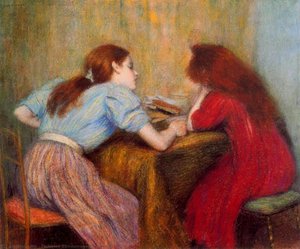
Portrait of Federico Zandomeneghi

The 100 Most Famous Federico Zandomeneghi Paintings, a Gallery Selection

Updated November 2026 · ranked by our popularity score (searches, visits and orders for each work) · 123 works by Federico Zandomeneghi in our catalogue

In short

Of all the originals Federico Zandomeneghi left, the most famous is Mother and Daughter (1879). Close behind it come Girl with flowers (1894) and Naked woman in the mirror (1890). Our catalog holds 123 works by Federico Zandomeneghi; the gallery has kept the 100 the world admires most, each shown with its date, its museum and its story.

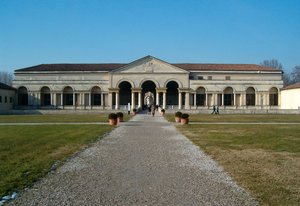
1841 – 1917, Venice Impressionism Most works: Palazzo del Tè

Federico Zandomeneghi's top 10 paintings: the gallery's choice

1
Mother and Daughter (1879) by Federico Zandomeneghi

Mother and Daughter

1879 · Oil

In this 1879 work, we find ourselves in a private, domestic interior where the rush of the outside world seems to have paused. A woman and a young girl are seated before a mirror, a composition that captures a fleeting, tender ritual of preparation. The mother is focused on her daughter, perhaps adjusting a lock of hair or smoothing a stray strand, a gesture that speaks to the quiet, repetitive…

2
Girl with flowers (1894) by Federico Zandomeneghi

Girl with flowers

1894 · Oil

The scene unfolds in Girl with flowers, a work by the Italian Impressionist painter Federico Zandomeneghi. Created about 1894, this piece captures a quiet, suspended moment of rest. The subject lies amidst a scattering of blossoms, her presence anchored in a tranquil outdoor setting. There is a subtle, unexpected tension in her relaxed posture, as a cigarette rests in her mouth, lending a sense of maturity to her youthful repose.

3
Naked woman in the mirror (1890) by Federico Zandomeneghi

Naked woman in the mirror

1890 · Oil On Canvas

Naked woman in the mirror is an oil on canvas painting by the Italian artist Federico Zandomeneghi. The work is also recognized by the titles Le matin - (The Young Model at mirror) and Giovane donna allo specchio. It originated between 1890 and 1893.

4
Palazzo Pretorio (1865) by Federico Zandomeneghi

Palazzo Pretorio

1865 · Oil

Federico Zandomeneghi, an Italian Impressionist painter, produced Palazzo Pretorio about 1865. Born in Venice, Italy, Zandomeneghi developed a style that would eventually bridge the gap between the traditions of his Venetian roots and the modern movements of Paris.

5
Self portrait (1875) by Federico Zandomeneghi

Self portrait

1875 · Oil On Canvas

Self portrait is a work by the Italian painter Federico Zandomeneghi. The artist, who was born in Venice, Italy, on June 2, 1841, presents his own likeness in this composition. The painting dates to about 1875, a period during which Zandomeneghi was establishing his presence within the European art scene. He was the son of Pietro and the grandson of Luigi, both of whom were neoclassical sculptors.

6
Portrait of Diego Martelli (1879) by Federico Zandomeneghi

Portrait of Diego Martelli

1879 · Oil On Canvas

The painting titled Portrait of Diego Martelli is an oil on canvas work created by the artist Federico Zandomeneghi. This portrait, executed in 1879, depicts the subject Diego Martelli. The work is categorized under the genre of portraiture and was produced in Paris.

7
The Cellist (1879) by Federico Zandomeneghi

The Cellist

1879 · Oil

In The Cellist, Federico Zandomeneghi presents a medium close-up of a male musician captured in profile. The focus remains tightly on the figure and the curves of his instrument, creating a sense of profound, soulful concentration. By choosing a side view, the artist establishes an intimate perspective that draws the viewer into the musician's private space. This arrangement provides a quiet depth, layering the subject against a textured, non-descript background…

8
Cafè Nouvelle Athènes, Paris (1885) by Federico Zandomeneghi

Cafè Nouvelle Athènes, Paris

1885 · Oil On Canvas

is an oil painting by the Italian Impressionist artist Federico Zandomeneghi. Executed in 1885, the work originates from a period when the artist was established within the Parisian art scene. Zandomeneghi, who was born in Venice on June 2, 1841, spent much of his professional life in France before his death in Paris in 1917.

9
Portrait of the Doctor (1881) by Federico Zandomeneghi

Portrait of the Doctor

1881 · Oil On Canvas

In this 1881 portrait, we find ourselves in a private, intimate space with an elderly man. He is seated, his presence filling the frame with a sense of immediate proximity. There is a certain weight to his posture, a stillness that suggests a life lived through observation and perhaps a quiet melancholy. He looks directly at us, his gaze steady and unhurried, while a single hand is raised in a…

10
Le matin - (The Young Model at mirror) (1890) by Federico Zandomeneghi

Le matin - (The Young Model at mirror)

1890 · Oil On Canvas

Le matin - (The Young Model at mirror) is an oil on canvas painting by the Italian artist Federico Zandomeneghi. The work is also recognized by the titles Naked woman in the mirror and Giovane donna allo specchio. It originated about 1890.

The Federico Zandomeneghi selection continues, 11 to 100

11Cycling (1896) by Federico ZandomeneghiCycling1896 12A Bunch of Flowers (1894) by Federico ZandomeneghiA Bunch of Flowers1894 · Palazzo del Tè 13Headdressing (1894) by Federico ZandomeneghiHeaddressing1894 14La Terrasse (1895) by Federico ZandomeneghiLa Terrasse1895 15The good book (1897) by Federico ZandomeneghiThe good book1897 16A woman in a house dress holding flowers (1905) by Federico ZandomeneghiA woman in a house dress holding flowers1905 17Woman on an armchair (1908) by Federico ZandomeneghiWoman on an armchair1908 18Typewriter girl (Target) (1912) by Federico ZandomeneghiTypewriter girl (Target)1912 19'Waiting (also known as Girl by the Window)' by Federico Zandomeneghi'Waiting (also known as Girl by the Window)' 20House, Montmartre by Federico ZandomeneghiHouse, Montmartre 21The Moulin de la Galette (1878) by Federico ZandomeneghiThe Moulin de la Galette1878 22Signora con Cappello (1866) by Federico ZandomeneghiSignora con Cappello1866 23The Moulin de la Galette (1878) by Federico ZandomeneghiThe Moulin de la Galette1878 24The cafe (1884) by Federico ZandomeneghiThe cafe1884 25Portrait of M. Diego Martelli (1879) by Federico ZandomeneghiPortrait of M. Diego Martelli1879 26The Singing Lesson (1890) by Federico ZandomeneghiThe Singing Lesson1890 · Gallerie d'Italia – Milano 27The Awakening (1895) by Federico ZandomeneghiThe Awakening1895 · Palazzo del Tè 28Study of figures (1895) by Federico ZandomeneghiStudy of figures1895 29The Conversation (1895) by Federico ZandomeneghiThe Conversation1895 30The tea (1893) by Federico ZandomeneghiThe tea1893 31LIttle Hélène (1895) by Federico ZandomeneghiLIttle Hélène1895 32Woman Drying Herself (1898) by Federico ZandomeneghiWoman Drying Herself1898 33Lesson (1902) by Federico ZandomeneghiLesson1902 34Woman in corset (1900) by Federico ZandomeneghiWoman in corset1900 35Woman with child sitting in a wood by Federico ZandomeneghiWoman with child sitting in a woodMuseum of 18th-century Venice 36Figure of man sitting by Federico ZandomeneghiFigure of man sitting 37The Reader by Federico ZandomeneghiThe Reader 38A Visit in the Dressing Room by Federico ZandomeneghiA Visit in the Dressing Room 39Girl with Blond Hair by Federico ZandomeneghiGirl with Blond Hair 40Reverie by Federico ZandomeneghiReverie 41At the Theater by Federico ZandomeneghiAt the Theater 42Chest of a Young Girl by Federico ZandomeneghiChest of a Young Girl 43In Front of the Fireplace (1911) by Federico ZandomeneghiIn Front of the Fireplace1911 44The Mirror (also known as Woman Fixing Her Hair) by Federico ZandomeneghiThe Mirror (also known as Woman Fixing Her Hair) 45An Earthly Paradise by Federico ZandomeneghiAn Earthly Paradise 46Woman at the Window by Federico ZandomeneghiWoman at the Window 47Flowers in a Blue Vase (1914) by Federico ZandomeneghiFlowers in a Blue Vase1914 48Homage to Toulouse-Lautrec (1917) by Federico ZandomeneghiHomage to Toulouse-Lautrec1917 49The Curl (also known as La Toilette) by Federico ZandomeneghiThe Curl (also known as La Toilette)Civica Galleria d'Arte Moderna 50Woman with Rose Bouquet (1916) by Federico ZandomeneghiWoman with Rose Bouquet1916 51Place d'Anvers, Paris (1880) by Federico ZandomeneghiPlace d'Anvers, Paris1880 · Galleria d'arte moderna Ricci Oddi 52Girl with Braid (1896) by Federico ZandomeneghiGirl with Braid1896 53The Purple Hat by Federico ZandomeneghiThe Purple Hat 54Portrait of Domenico Galati of Riella (1879) by Federico ZandomeneghiPortrait of Domenico Galati of Riella1879 55In the Salon (also known as In the Living Room) (1913) by Federico ZandomeneghiIn the Salon (also known as In the Living Room)1913 56Young Girl Reading by Federico ZandomeneghiYoung Girl Reading 57Dressing Before The Mirror by Federico ZandomeneghiDressing Before The Mirror 58The Reading by Federico ZandomeneghiThe Reading 59In Bed by Federico ZandomeneghiIn Bed 60Rencontré à bicyclettes by Federico ZandomeneghiRencontré à bicyclettes 61Coquetterie by Federico ZandomeneghiCoquetterie 62The Flower Seller by Federico ZandomeneghiThe Flower Seller 63The Red Roof by Federico ZandomeneghiThe Red Roof 64Girl picking flowers by Federico ZandomeneghiGirl picking flowers 65After Bath by Federico ZandomeneghiAfter Bath 66Promenade by Federico ZandomeneghiPromenade 67The Coiffure by Federico ZandomeneghiThe Coiffure 68The Cook by Federico ZandomeneghiThe Cook 69La conversazione by Federico ZandomeneghiLa conversazione 70Girl in Blue from the Rear by Federico ZandomeneghiGirl in Blue from the Rear 71Donna in rosso by Federico ZandomeneghiDonna in rosso 72Crochet lesson by Federico ZandomeneghiCrochet lesson 73The Flowered Shawl by Federico ZandomeneghiThe Flowered Shawl 74Fashion Magazine by Federico ZandomeneghiFashion Magazine 75The Tree by Federico ZandomeneghiThe Tree 76La Toilette by Federico ZandomeneghiLa Toilette 77The Letter by Federico ZandomeneghiThe Letter 78Girl and Her Dog by Federico ZandomeneghiGirl and Her Dog 79The Romance by Federico ZandomeneghiThe Romance 80Languor by Federico ZandomeneghiLanguor 81The First Wrinkle (also known as Woman with Mirror) by Federico ZandomeneghiThe First Wrinkle (also known as Woman with Mirror) 82Girl in Blue from the Rear by Federico ZandomeneghiGirl in Blue from the Rear 83Woman leaning on a chair by Federico ZandomeneghiWoman leaning on a chair 84The Road by Federico ZandomeneghiThe Road 85A Cup of Tea by Federico ZandomeneghiA Cup of Tea 86Vase of Flowers and Gloves by Federico ZandomeneghiVase of Flowers and Gloves 87Flower Seller in Montmartre by Federico ZandomeneghiFlower Seller in Montmartre 88Red Head Lying Down by Federico ZandomeneghiRed Head Lying Down 89Little girl by Federico ZandomeneghiLittle girl 90Woman with bouquet by Federico ZandomeneghiWoman with bouquet 91The New Hat (also known as Milliners) by Federico ZandomeneghiThe New Hat (also known as Milliners) 92In the Greenhouse (study) by Federico ZandomeneghiIn the Greenhouse (study) 93Woman with Dog by Federico ZandomeneghiWoman with Dog 94La Freddolosa by Federico ZandomeneghiLa Freddolosa 95The Chat by Federico ZandomeneghiThe Chat 96Woman with Dog by Federico ZandomeneghiWoman with Dog 97Girl reading a book by Federico ZandomeneghiGirl reading a book 98Woman with a Bouquet by Federico ZandomeneghiWoman with a Bouquet 99Portrait of a Young Beauty by Federico ZandomeneghiPortrait of a Young Beauty 100The washtub by Federico ZandomeneghiThe washtub

Federico Zandomeneghi's famous paintings, period by period

The subjects that held Federico Zandomeneghi's eye

The four subjects that come back most often in these originals, each with its finest example.

The museums that keep Federico Zandomeneghi's originals

The 5 museums that hold the most of the paintings on this page.

Museum City Works by Federico Zandomeneghi Paintings from this list
Palazzo del Tè, MantuaPalazzo del Tè Mantua 2 A Bunch of Flowers, The Awakening
Galleria d'arte moderna Ricci Oddi, PiacenzaGalleria d'arte moderna Ricci Oddi Piacenza 2 Place d'Anvers, Paris
Gallerie d'Italia – Milano, MilanGallerie d'Italia – Milano Milan 1 The Singing Lesson
Museum of 18th-century Venice, VeniceMuseum of 18th-century Venice Venice 1 Woman with child sitting in a wood
Civica Galleria d'Arte Moderna, MilanCivica Galleria d'Arte Moderna Milan 1 The Curl (also known as La Toilette)

Federico Zandomeneghi decade by decade: the original that defines each

Works per decade

Pick a decade to see the original that defines it.

Collectors' questions about Federico Zandomeneghi's paintings

Which work is Federico Zandomeneghi most famous for?Reveal the answer

Mother and Daughter (1879). Girl with flowers (1894) and Naked woman in the mirror (1890) come next.

What age was Federico Zandomeneghi when Mother and Daughter was made?Reveal the answer

38 years old: Mother and Daughter dates from 1879, and Federico Zandomeneghi was born in 1841.

What are the ten most famous Federico Zandomeneghi paintings?Reveal the answer

Mother and Daughter, Girl with flowers, Naked woman in the mirror, Palazzo Pretorio, Self portrait, Portrait of Diego Martelli, The Cellist, Cafè Nouvelle Athènes, Paris, Portrait of the Doctor and Le matin - (The Young Model at mirror). The ranking above gives each one's year and museum.

How many paintings did Federico Zandomeneghi leave?Reveal the answer

Our catalog holds 123 works by Federico Zandomeneghi, dated from 1865 to 1917.

In which museums do Federico Zandomeneghi's masterpieces hang?Reveal the answer

Mostly in Palazzo del Tè (Mantua), Galleria d'arte moderna Ricci Oddi (Piacenza) and Gallerie d'Italia – Milano (Milan). The museum table above lists them all.

In which years did Federico Zandomeneghi paint the most famous works?Reveal the answer

In 1890s: 16 of the 100 works on this page were made then, Girl with flowers among them.

What are the first and the last famous originals of Federico Zandomeneghi?Reveal the answer

On this page, the earliest is Palazzo Pretorio (1865) and the latest Homage to Toulouse-Lautrec (1917).

Which subjects did Federico Zandomeneghi choose most often?Reveal the answer

Women (21), Woman (12) and Flowers (11), across the 100 works on this page.

Which technique did Federico Zandomeneghi use most?Reveal the answer

Oil On Canvas, for 12 of the 100 works on this page.

To which art movement does Federico Zandomeneghi belong?Reveal the answer

Impressionism, judging by the originals on this page.

Which Federico Zandomeneghi works hang at the Palazzo del Tè?Reveal the answer

A Bunch of Flowers and The Awakening: the Palazzo del Tè, Mantua holds 2 of the works on this page.

Federico Zandomeneghi: life and work

Federico Zandomeneghi: Bridging Tradition and Impressionism

Federico Zandomeneghi (1841-1917) was an Italian painter whose career beautifully illustrates the shifting currents of 19th-century art. Born in Venice on June 2, 1841, into a family steeped in artistic tradition – his father and grandfather were renowned neoclassical sculptors responsible for the magnificent Titian monument in the Frari – Zandomeneghi initially pursued sculpture but quickly gravitated towards painting, a decision that would ultimately define his legacy. His early life was marked by a desire to escape the constraints of Venetian society, leading him to briefly join Giuseppe Garibaldi’s expedition in 1860 and subsequently relocate to Florence, immersing himself in the vibrant atmosphere of the Macchiaioli movement. This period proved pivotal, exposing him to the revolutionary techniques of *plein air* painting and fostering a deep appreciation for capturing fleeting moments of light and color.

The Macchiaioli and Early Influences

Zandomeneghi’s time with the Macchiaioli – a group of Tuscan painters known for their direct observation of nature and use of “dry brush” techniques – profoundly shaped his artistic development. He found kinship with artists like Telemaco Signorini, Giovanni Fattori, and Giuseppe Abbati, learning to translate the immediacy of outdoor scenes onto canvas. This exposure to *plein air* painting was a radical departure from the academic traditions he’d initially studied, encouraging him to prioritize capturing the essence of light and atmosphere over meticulous detail. The influence of these early mentors is evident in his landscapes, characterized by loose brushstrokes and an emphasis on coloristic effects – a crucial step toward his later embrace of Impressionism.

A Parisian Journey and Embracing Impressionism

In 1874, Zandomeneghi embarked on a transformative journey to Paris, the epicenter of artistic innovation at the time. There, he quickly integrated himself into the burgeoning Impressionist circle, finding common ground with artists like Renoir, Cassatt, and Degas. He participated in four major Impressionist exhibitions between 1879 and 1886, solidifying his place within this groundbreaking movement. His style, while retaining elements of his Macchiaioli training – particularly a sensitivity to light and color – increasingly mirrored the Impressionists’ focus on capturing transient effects and depicting everyday life. His paintings often featured intimate scenes of women engaged in domestic activities, reflecting a quiet observation of the female experience, an influence likely drawn from artists like Mary Cassatt.

Notable Works and Artistic Style

Zandomeneghi's oeuvre is characterized by a remarkable ability to convey atmosphere and emotion through subtle color variations and delicate brushwork. Works such as *At the Café (Femme au bar)* offer compelling glimpses into late 19th-century Parisian society, capturing not just the physical appearance of the subjects but also their mood and interactions. His series depicting Venetian scenes – exemplified by *Vue de Venise* – showcase his mastery of light and shadow, transforming familiar landscapes into evocative compositions. His pastel works, particularly those from the early 1890s, reveal a refined technique and a heightened sensitivity to texture and tone. The artist’s use of color was often muted and atmospheric, prioritizing mood over precise representation.

Legacy and Historical Significance

Federico Zandomeneghi stands as a crucial bridge between the traditional artistic practices of his family and the revolutionary innovations of the Impressionist movement. He skillfully absorbed the lessons of the Macchiaioli while embracing the new possibilities offered by Parisian art. His work, often overlooked in mainstream narratives of Italian Impressionism, deserves greater recognition for its quiet beauty, insightful observations, and its contribution to the evolution of modern painting. His legacy lies not only in his individual paintings but also in his ability to synthesize diverse influences into a uniquely personal artistic vision – a testament to the dynamism and complexity of 19th-century art.