Portrait of David Wilkie

David Wilkie Paintings: The 100 Most Famous, Through a Gallery's Eye

Updated October 2026 · ranked by our popularity score (searches, visits and orders for each work) · 214 works by David Wilkie in our catalogue

In short

To the gallery's eye, David Wilkie's most famous painting is Queen victoria. The First Council of Queen Victoria (1838) and Augustus, Duke of Sussex (1773-1843) (1833) complete the trio every eye recognises. Of the 214 works by David Wilkie in our catalog, the gallery presents the 100 most famous below, each original with its year, its museum and what makes it unique.

1785 – 1841, Fife Romanticism Most works: Scottish National Gallery

The gallery's top 10 David Wilkie paintings

1
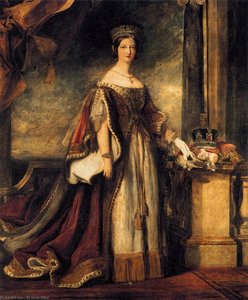
Queen victoria by David Wilkie

Queen victoria

Oil On Canvas

A bust-length portrait captures the monarch in a moment of composed dignity. Positioned slightly off-center, she gazes directly at the viewer, her expression steady and solemn. The composition relies on a dark, somber palette of browns and blacks, which pushes the figure forward through subtle shifts in light. Accents of gold, cream, and pale blue emerge from her attire, providing a sharp contrast against the shadowed background. This lighting, descending…

2
The First Council of Queen Victoria (1838) by David Wilkie

The First Council of Queen Victoria

1838 · Oil On Canvas · Royal Collection, London

In this 1838 oil painting, we find ourselves within the Red Saloon at Kensington Palace, witnessing a quiet yet monumental shift in British history. The scene captures the very first meeting of the Privy Council following the death of King William IV and the subsequent accession of his eighteen-year-old niece, Victoria. There is a palpable sense of gravity in the room, as senior politicians from both the Whig and Tory…

3
Augustus, Duke of Sussex (1773-1843) (1833) by David Wilkie

Augustus, Duke of Sussex (1773-1843)

1833 · Oil On Canvas · Buckingham Palace, London

Augustus, Duke of Sussex, is presented in a full-length portrait that emphasizes his stature through a vertical composition. He stands in the center-right foreground, draped in a deep crimson cloak that flows around his figure. Beneath the cloak, he wears a red tartan kilt, a deliberate choice of traditional Scottish Highland dress. To his left, a large hunting dog rests, grounding the subject within a rugged, natural landscape. The background…

5
The Holy Family with Saint Elizabeth and Saint John the Baptist (1841) by David Wilkie

The Holy Family with Saint Elizabeth and Saint John the Baptist

1841 · Oil On Canvas · National Gallery of Art, Washington

The Holy Family with Saint Elizabeth and Saint John the Baptist emerges from the shadows of 1841, a quiet moment captured by the Scottish artist David Wilkie. In this intimate scene, the figures gather closely, their attention drawn to the shared focus of an open book. The composition pulls the viewer into a tight, triangular arrangement where light seems to emanate from the very pages being read, illuminating faces and…

6
The Pedlar (1814) by David Wilkie

The Pedlar

1814 · Oil On Panel · Yale Center for British Art, New Haven

is a genre painting by the British artist David Wilkie, executed in 1814. The oil on panel work captures a Scottish pedlar visiting an English cottage to sell his wares, specifically bonnets and various textiles. The scene focuses on a domestic transaction where a man in the window reaches reluctantly into his pocket to pay for the cloth his wife desires to buy.

8
A Woody Landscape (1822) by David Wilkie

A Woody Landscape

1822 · Oil On Canvas

In the quietude of A Woody Landscape, painted in 1822, we are invited to step into a world where time seems to slow to the rhythm of nature itself. Sir David Wilkie, a master of capturing the profound beauty found in the everyday, presents us with a serene rural scene that transcends mere topography. The composition is anchored by dense, majestic trees that flank a central clearing, acting as natural…

9
Washington Irving in the Archives of Seville (1829) by David Wilkie

Washington Irving in the Archives of Seville

1829 · Oil On Canvas · New Walk Museum - Art Gallery, Leicester

The painting depicts two men within a library setting. One man is shown reading from a book while the other man looks on, appearing to be engaged in discussing or sharing information with him. The room contains several books scattered throughout the scene, with some placed on shelves and others lying open on tables. In addition to the books, there are two cups visible, one near the left side of…

10
Nelson sealing the Copenhagen letter (1835) by David Wilkie

Nelson sealing the Copenhagen letter

1835 · Oil On Canvas · The Ashmolean Museum of Art And Archaeology, Oxford

This captivating scene, titled "Nelson sealing the Copenhagen letter," transports us directly into the charged atmosphere of early nineteenth-century diplomatic life. At its heart lies a portrait moment imbued with palpable significance. We observe a gentleman, likely a figure of considerable military or political standing, engaged in the solemn act of affixing a seal to an important correspondence. The setting is intimate yet formal—a gathering around a substantial dining table…

David Wilkie paintings, ranked 11 to 100

11Maria Arabella, Marchioness of Lansdowne and her Page (1809) by David WilkieMaria Arabella, Marchioness of Lansdowne and her Page1809 · National Gallery of Ireland 12The blind violinist (1807) by David WilkieThe blind violinist1807 · Gemäldegalerie 13Hartley Coleridge (1796–1849), as a Boy (1806) by David WilkieHartley Coleridge (1796–1849), as a Boy1806 14Sir David Wilkie (1813) by David WilkieSir David Wilkie1813 · National Portrait Gallery 15Chelsea Pensioners Receiving the Gazette Announcing the Battle of Waterloo (1819) by David WilkieChelsea Pensioners Receiving the Gazette Announcing the Battle of Waterloo1819 · Yale Center for British Art 16Sketch for 'The Reading of a Will' (1820) by David WilkieSketch for 'The Reading of a Will'1820 · Yale Center for British Art 17Reading a Tract (1820) by David WilkieReading a Tract1820 18The Gypsy Mother (1817) by David WilkieThe Gypsy Mother1817 19Distraining for Rent (1815) by David WilkieDistraining for Rent1815 · Scottish National Gallery 20Study of a Head for 'The Rabbit on the Wall' (1815) by David WilkieStudy of a Head for 'The Rabbit on the Wall'1815 21Portrait of a Young Man (1830) by David WilkiePortrait of a Young Man1830 · Slovak National Gallery 22Prince Charles of Leiningen (1804-1856) (1827) by David WilkiePrince Charles of Leiningen (1804-1856)1827 · Royal Collection 23A Roman Princess Washing the Feet of Pilgrims (1827) by David WilkieA Roman Princess Washing the Feet of Pilgrims1827 · Royal Collection 24Sir Alexander Keith (1830) by David WilkieSir Alexander Keith1830 25The Gentle Shepherd (1823) by David WilkieThe Gentle Shepherd1823 26Portrait of Daniel O'Connell as Governor of the National Bank (1838) by David WilkiePortrait of Daniel O'Connell as Governor of the National Bank1838 · National Gallery of Ireland 27Study for 'The First Council of Queen Victoria' (1837) by David WilkieStudy for 'The First Council of Queen Victoria'1837 · Royal Collection 28Sir William Knighton (1776-1836) (1834) by David WilkieSir William Knighton (1776-1836)1834 · Royal Collection 29Matthias Prime Lucas, Lord Mayor of London (1827) (1838) by David WilkieMatthias Prime Lucas, Lord Mayor of London (1827)1838 · Guildhall Art Gallery 30King William IV (1837) by David WilkieKing William IV1837 31Queen Victoria (1819–1901), in Robes of State (1840) by David WilkieQueen Victoria (1819–1901), in Robes of State1840 32Josephine and the Fortune Teller (1837) by David WilkieJosephine and the Fortune Teller1837 · Scottish National Gallery 33Chelsea Pensioners Reading the Waterloo Dispatch (detail) (1818) by David WilkieChelsea Pensioners Reading the Waterloo Dispatch (detail)1818 · Wellington Museum 34General Sir David Baird (1757–1829), Soldier (study for Sir David Baird Discovering the Body of Tippoo Sahib) (1838) by David WilkieGeneral Sir David Baird (1757–1829), Soldier (study for Sir David Baird Discovering the Body of Tippoo Sahib)1838 · Scottish National Portrait Gallery 35George IV (1762–1830) (1830) by David WilkieGeorge IV (1762–1830)1830 · English Heritage 36A Highland Family (1823) by David WilkieA Highland Family1823 · Nottingham Castle Museum And Art Gallery 37The Rev Edward Irving When a Young Man by David WilkieThe Rev Edward Irving When a Young ManAuckland Art Gallery Toi o Tāmaki 38The Letter of Introduction (1813) by David WilkieThe Letter of Introduction1813 · Scottish National Gallery 39The Burial of the Scottish Regalia (1836) by David WilkieThe Burial of the Scottish Regalia1836 · Fitzwilliam College 40The Bride at her Toilet on the Day of her Wedding (1838) by David WilkieThe Bride at her Toilet on the Day of her Wedding1838 41An Incident in the Life of Queen Elizabeth I by David WilkieAn Incident in the Life of Queen Elizabeth IWolverhampton Art Gallery 42Portrait of the Artist's Brother, Captain James Wilkie (1784 - 1824) by David WilkiePortrait of the Artist's Brother, Captain James Wilkie (1784 - 1824)Scottish National Gallery 43William Chalmers Bethune (1744–1807), his Wife Isobel Morison (1760–1850) and their Daughter Isabella Maxwell Morison (1795–1818) (1804) by David WilkieWilliam Chalmers Bethune (1744–1807), his Wife Isobel Morison (1760–1850) and their Daughter Isabella Maxwell Morison (1795–1818)1804 · Scottish National Gallery 44The Bag Piper (1813) by David WilkieThe Bag Piper1813 45Sir Robert Liston (1742–1836), Diplomat (1811) by David WilkieSir Robert Liston (1742–1836), Diplomat1811 · Scottish National Portrait Gallery 46Study for 'Blind Man's Buff' (1811) by David WilkieStudy for 'Blind Man's Buff'1811 47The Soldier's Grave (1813) by David WilkieThe Soldier's Grave1813 · Nottingham Castle Museum And Art Gallery 48A Head and Two Hands (sketch) (1806) by David WilkieA Head and Two Hands (sketch)1806 49The Jew's Harp (1808) by David WilkieThe Jew's Harp1808 50A Book Case (sketch for 'The Letter of Introduction') (1813) by David WilkieA Book Case (sketch for 'The Letter of Introduction')1813 51Sir David Wilkie (1785–1841), Artist, Self Portrait (1805) by David WilkieSir David Wilkie (1785–1841), Artist, Self Portrait1805 · Scottish National Gallery 52The Refusal (1814) by David WilkieThe Refusal1814 53Boys Digging for Rats (1812) by David WilkieBoys Digging for Rats1812 54The Artist's Parents, the Reverend David Wilkie (1738–1812) and his Wife Isabella Lister (1763–1824) (1813) by David WilkieThe Artist's Parents, the Reverend David Wilkie (1738–1812) and his Wife Isabella Lister (1763–1824)1813 · Scottish National Gallery 55Portrait of Andrew Geddes (1816) by David WilkiePortrait of Andrew Geddes1816 · Scottish National Portrait Gallery 56The Flemish Mother (1820) by David WilkieThe Flemish Mother1820 57A Wooded Landscape (1815) by David WilkieA Wooded Landscape1815 58The Nursey Family in a Park (1816) by David WilkieThe Nursey Family in a Park1816 · The Hunterian Museum and Art Gallery 59A Picnic (1822) by David WilkieA Picnic1822 60Reading the News (1820) by David WilkieReading the News1820 · Laing Art Gallery 61Interior of Pitlessie Mill with a Man Sieving Corn (1818) by David WilkieInterior of Pitlessie Mill with a Man Sieving Corn1818 · Yale Center for British Art 62Bathsheba at the Bath (1817) by David WilkieBathsheba at the Bath1817 · Walker Art Gallery 63The Abbotsford Family (1817) by David WilkieThe Abbotsford Family1817 · Scottish National Portrait Gallery 64The Daughters of Sir Walter Scott (1817) by David WilkieThe Daughters of Sir Walter Scott1817 65The Broken Jar (1816) by David WilkieThe Broken Jar1816 66Abraham Raimbach (1818) by David WilkieAbraham Raimbach1818 · National Portrait Gallery 67Billy Waters (c.1778–1823) (1815) by David WilkieBilly Waters (c.1778–1823)1815 · National Maritime Museum 68Sketch of a Head for 'The Rabbit on the Wall' (1816) by David WilkieSketch of a Head for 'The Rabbit on the Wall'1816 69Robert Saunders Dundas (1771–1851), 2nd Viscount Melville (1831) by David WilkieRobert Saunders Dundas (1771–1851), 2nd Viscount Melville1831 70The Highland Family (1824) by David WilkieThe Highland Family1824 71Thomas Erskine (c.1745–1828), 9th Earl of Kellie (1828) by David WilkieThomas Erskine (c.1745–1828), 9th Earl of Kellie1828 · Cupar County Buildings 72The Guerilla's Departure (1828) by David WilkieThe Guerilla's Departure1828 · Royal Collection 73Blind Man's Bluff (1830) by David WilkieBlind Man's Bluff1830 74Sotiri, Dragoman of Mr Colquhoun (1840) by David WilkieSotiri, Dragoman of Mr Colquhoun1840 · Ashmolean Museum 75The Artist's Sister, Helen Wilkie (1793–1870), Later Mrs William Hunter (1823) by David WilkieThe Artist's Sister, Helen Wilkie (1793–1870), Later Mrs William Hunter1823 · Scottish National Gallery 76The Artist's Niece, Sophia Wilkie, Later Mrs James Winfield (1829) by David WilkieThe Artist's Niece, Sophia Wilkie, Later Mrs James Winfield1829 · Scottish National Gallery 77John Knox Preaching before the Lords of the Congregation, 10 June 1559 (1827) by David WilkieJohn Knox Preaching before the Lords of the Congregation, 10 June 15591827 · Petworth House 78Cardinals, Priests and Roman Citizens Washing the Pilgrims' Feet (1827) by David WilkieCardinals, Priests and Roman Citizens Washing the Pilgrims' Feet1827 79The Entrance of George IV at the Palace of Holyroodhouse (1828) by David WilkieThe Entrance of George IV at the Palace of Holyroodhouse1828 80Grace before Meat (1839) by David WilkieGrace before Meat1839 · Birmingham Museum and Art Gallery 81Miss Julia Emily Gordon (1833) by David WilkieMiss Julia Emily Gordon1833 82King William IV (1765–1837) (1838) by David WilkieKing William IV (1765–1837)1838 · Birmingham Museum and Art Gallery 83The Duke of Wellington Writing Dispatches (1836) by David WilkieThe Duke of Wellington Writing Dispatches1836 84Queen Adelaide (1792–1849) (1838) by David WilkieQueen Adelaide (1792–1849)1838 · Examination Schools 85Thomas Daniell, RA (1838) by David WilkieThomas Daniell, RA1838 86William IV (1765–1837) (1838) by David WilkieWilliam IV (1765–1837)1838 · Examination Schools 87The First Ear Ring (1835) by David WilkieThe First Ear Ring1835 88The Preaching of Knox before the Lords of the Congregation, 10th June 1559 (1832) by David WilkieThe Preaching of Knox before the Lords of the Congregation, 10th June 15591832 89William IV (1765–1837), Reigned 1830–1837 (1837) by David WilkieWilliam IV (1765–1837), Reigned 1830–18371837 · Scottish National Portrait Gallery 90The Cottar's Saturday Night (1837) by David WilkieThe Cottar's Saturday Night1837 91Queen Adelaide (1792–1849), Princess Adelaide Louisa Theresa Caroline Amelia of Saxe Meiningen, Queen of William IV (1833) by David WilkieQueen Adelaide (1792–1849), Princess Adelaide Louisa Theresa Caroline Amelia of Saxe Meiningen, Queen of William IV1833 · Scottish National Portrait Gallery 92His Imperial Majesty the Sultan Abdul Meedgid (1841) by David WilkieHis Imperial Majesty the Sultan Abdul Meedgid1841 93Queen Victoria (detail) (1840) by David WilkieQueen Victoria (detail)1840 94Jews at the Wailing Wall (1841) by David WilkieJews at the Wailing Wall1841 · University of Dundee 95The Village Festival (1842) by David WilkieThe Village Festival1842 96The Turkish Letter Writer (1840) by David WilkieThe Turkish Letter Writer1840 97Maria, Lady Callcott (1840) by David WilkieMaria, Lady Callcott1840 98The Irish Whiskey Still (1840) by David WilkieThe Irish Whiskey Still1840 · Scottish National Gallery 99Duncan Gray (1819) by David WilkieDuncan Gray1819 · Scottish National Gallery 100Henry VIII and Anne Boleyn (1865) by David WilkieHenry VIII and Anne Boleyn1865

David Wilkie's famous paintings, period by period

The subjects that held David Wilkie's eye

The four subjects that come back most often in these originals, each with its finest example.

The museums that keep David Wilkie's originals

The 8 museums that hold the most of the paintings on this page.

Museum City Works by David Wilkie Paintings from this list
Scottish National Gallery, EdinburghScottish National Gallery Edinburgh 25 Distraining for Rent, Josephine and the Fortune Teller, The Letter of Introduction
Royal Collection, LondonRoyal Collection London 15 The First Council of Queen Victoria, Prince Charles of Leiningen (1804-1856), A Roman Princess Washing the Feet of Pilgrims
Scottish National Portrait Gallery, EdinburghScottish National Portrait Gallery Edinburgh 8 General Sir David Baird (1757–1829), Soldier (study for Sir David Baird Discovering the Body of Tippoo Sahib), Sir Robert Liston (1742–1836), Diplomat, Portrait of Andrew Geddes
Yale Center for British Art, New HavenYale Center for British Art New Haven 7 Self-Portrait, The Pedlar, Chelsea Pensioners Receiving the Gazette Announcing the Battle of Waterloo
National Gallery of Ireland, Dublin CityNational Gallery of Ireland Dublin City 3 Maria Arabella, Marchioness of Lansdowne and her Page, Portrait of Daniel O'Connell as Governor of the National Bank
National Portrait Gallery, LondonNational Portrait Gallery London 3 Sir David Wilkie, Abraham Raimbach
Auckland Art Gallery Toi o Tāmaki, AucklandAuckland Art Gallery Toi o Tāmaki Auckland 2 Ceres in search of Proserpine, The Rev Edward Irving When a Young Man
Nottingham Castle Museum And Art Gallery, NottinghamNottingham Castle Museum And Art Gallery Nottingham 2 A Highland Family, The Soldier's Grave

David Wilkie, one signature painting per decade

Works per decade

Pick a decade to see the original that defines it.

David Wilkie's paintings: the gallery answers

Which David Wilkie painting is the most famous of all?Reveal the answer

Queen victoria. The First Council of Queen Victoria (1838) and Augustus, Duke of Sussex (1773-1843) (1833) come next.

Which are David Wilkie's top 10 paintings?Reveal the answer

Queen victoria, The First Council of Queen Victoria, Augustus, Duke of Sussex (1773-1843), Self-Portrait, The Holy Family with Saint Elizabeth and Saint John the Baptist, The Pedlar, Ceres in search of Proserpine, A Woody Landscape, Washington Irving in the Archives of Seville and Nelson sealing the Copenhagen letter. The ranking above gives each one's year and museum.

How many works did David Wilkie create?Reveal the answer

Our catalog holds 214 works by David Wilkie, dated from 1803 to 1841.

Where do David Wilkie's most famous originals hang?Reveal the answer

Mostly in Scottish National Gallery (Edinburgh), Royal Collection (London) and Scottish National Portrait Gallery (Edinburgh). The museum table above lists them all.

When did David Wilkie create the most famous paintings?Reveal the answer

In 1830s: 29 of the 100 works on this page were made then, The First Council of Queen Victoria among them.

Which are David Wilkie's earliest and latest famous works?Reveal the answer

On this page, the earliest is Ceres in search of Proserpine (1803) and the latest The Holy Family with Saint Elizabeth and Saint John the Baptist (1841).

Which subjects did David Wilkie return to most?Reveal the answer

Portrait (9), Men (7) and Victorian era (7), across the 100 works on this page.

Which medium did David Wilkie work in most?Reveal the answer

Oil On Canvas, for 14 of the 100 works on this page.

Which movement is David Wilkie associated with?Reveal the answer

Romanticism, judging by the originals on this page.

Which David Wilkie originals does the Scottish National Gallery hold?Reveal the answer

Distraining for Rent, Josephine and the Fortune Teller and The Letter of Introduction: the Scottish National Gallery, Edinburgh holds 11 of the works on this page.

David Wilkie: the artist

The People’s Painter: The Soul of Scottish Genre

In the grand tapestry of nineteenth-century British art, few threads shine with as much warmth and human empathy as those woven by Sir David Wilkie. Born in the humble village of Pitlessie, Fife, Wilkie emerged from a background steeped in the quiet dignity of rural Scotland. As the son of a parish minister, his path toward the canvas was not initially destined by tradition, yet his burgeoning passion for art proved an undeniable force. His early education at the Trustees’ Academy in Edinburgh, under the guidance of John Graham, provided him with a rigorous foundation, but it was his habit of haunting fairs and marketplaces that truly defined his vision. By capturing the fleeting, characteristic moments of everyday life, he developed a profound ability to transfer the spirit of a scene into his sketchbook, finding extraordinary beauty in the most ordinary subjects.

Wilkie’s artistic journey was marked by an indomitable perseverance and a unique ability to elevate the mundane to the level of high art. While many of his contemporaries sought glory in grand historical narratives or mythological allegories, Wilkie turned his gaze toward the common man. He became a master of genre painting, creating vibrant microcosms of society through works that were teeming with character and anecdotal detail. His early studies were deeply influenced by the likes of Alexander Carse and David Allan, whose focus on scenes from humble life resonated with his own sensibilities. This dedication to realism allowed him to capture the nuances of human experience—the subtle expressions of emotion, the intimate interactions between individuals, and the atmospheric details that breathed life into every canvas.

A Legacy of Light and Narrative Detail

As his reputation expanded from Scotland to the bustling art scene of London, Wilkie’s style underwent a magnificent evolution. His early work possessed a sharp, precise, and spirited touch, often characterized by subdued coloring and a silvery grey tone reminiscent of Dutch genre painters like Teniers and Ostade. However, as he matured, his brushwork grew broader and his palette more luminous, embracing a richness of tone and a powerful use of color that reflected the burgeoning Romantic movement. This transition allowed him to tackle even more monumental subjects without losing the psychological depth that was his hallmark. His appointment as Principal Painter in Ordinary to King William IV and Queen Victoria stands as a testament to this unparalleled skill, securing him prestigious commissions for royal portraits and historical scenes.

<

The breadth of Wilkie’s oeuvre is truly remarkable, spanning from the intimate to the epic. His masterpiece, The Chelsea Pensioners Reading the Waterloo Dispatch, remains one of his most celebrated achievements, offering an immersive portrayal of camaraderie and shared anxiety that continues to captivate audiences at Apsley House. Beyond these narrative triumphs, he excelled in historical paintings such as Sir David Baird Discovering the Body of Sultan Tipoo Sahib, and even captured the scholarly atmosphere of intellectual pursuits in works like Washington Irving in the Archives of Seville. Whether depicting a bustling village festival or a formal royal figure, Wilkie’s work remains anchored by a distinctly Scottish sensibility and an unwavering commitment to capturing the essence of life as it is lived.