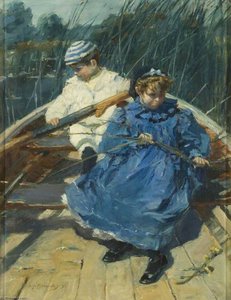
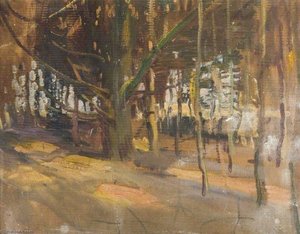
Portrait of Alfred Munnings

The 100 Most Famous Alfred Munnings Paintings, Each One of a Kind

Updated October 2026 · ranked by our popularity score (searches, visits and orders for each work) · 1,189 works by Alfred Munnings in our catalogue

In short

Crossing the Ford is the Alfred Munnings painting that draws the most eyes; the original belongs to the The Munnings Art Museum, Colchester. After it, the eye goes to The Fancy Dress Ball (1901) and A Suffolk Horse Fair, Lavenham (1901). Among the 1,189 works of Alfred Munnings in our catalog, these 100 are the most famous, each a unique original presented with its year, its museum and the reason it endures.

1878 – 1959, Mendham Impressionism Most works: The Munnings Art Museum

Top 10 paintings by Alfred Munnings, through the gallery's eye

1
Crossing the Ford by Alfred Munnings

Crossing the Ford

Oil On Canvas · The Munnings Art Museum, Colchester

A Moment Frozen in Motion: Munnings’ “Crossing the Ford” Sir Alfred James Munnings' "Crossing the Ford" isn’t merely a depiction of horses traversing a stream; it’s a vibrant distillation of rural England, a fleeting moment captured with an artist’s profound understanding of light, movement, and the enduring spirit of the countryside. Painted in 1908, this oil on canvas transports us to a world where man and beast are inextricably linked,…

2
The Fancy Dress Ball (1901) by Alfred Munnings

The Fancy Dress Ball

1901 · Oil On Canvas · The Munnings Art Museum, Dedham

Alfred James Munnings’ “The Fancy Dress Ball,” completed in 1901, isn't merely a depiction of a social gathering; it’s a masterful distillation of the atmosphere and spirit of the Edwardian era. Painted with characteristic Impressionistic brushstrokes—loose, vibrant, prioritizing light and color over meticulous detail—the artwork transports us back to a time of opulent costumes, masked identities, and a palpable sense of excitement within the confines of a bustling ballroom.

3
A Suffolk Horse Fair, Lavenham (1901) by Alfred Munnings

A Suffolk Horse Fair, Lavenham

1901 · Oil On Canvas · The Munnings Art Museum, Colchester

The scene unfolds in the bustling atmosphere of A Suffolk Horse Fair, Lavenham, a work that captures a specific moment of rural activity. This painting is the creation of Alfred Munnings, an artist whose connection to the landscape is deeply rooted in his own beginnings. He was born in 1878 at Mendham Mill, Mendham, Suffolk, a place where the steady rhythms of the river and the presence of working animals…

4
The Start, October Meeting, Newmarket, Suffolk by Alfred Munnings

The Start, October Meeting, Newmarket, Suffolk

The Start, October Meeting, Newmarket, Suffolk is an oil on panel painting created circa 1947 by Sir Alfred James Munnings. The work depicts a horse race at Newmarket, Suffolk, capturing a dynamic scene of jockeys and horses. The composition features at least nine people riding different horses, with jockeys spread throughout the painting. Some riders are positioned in the foreground while others are further back in the scene, creating a…

5
Study for 'Coming up the Canter' by Alfred Munnings

Study for 'Coming up the Canter'

Oil On Canvas · The Munnings Art Museum, Colchester

Sir Alfred James Munnings’s “Study for ‘Coming up the Canter’” isn’t merely a depiction of a horse in motion; it’s an embodiment of England’s pastoral heritage, captured with breathtaking Impressionistic fervor. Executed around 1908-1909, this oil painting resides within The Munnings Art Museum's collection and exemplifies Munnings’s unwavering dedication to portraying the dynamism of rural life – specifically, the ritualistic exercise of racehorses.

6
Elder Blossom (1935) by Alfred Munnings

Elder Blossom

1935 · Acrylic On Canvas · The Munnings Art Museum, Colchester

Alfred James Munnings (1878–1959), a titan amongst British Impressionists, possessed an unparalleled ability to capture the essence of the English countryside—specifically its fleeting beauty during springtime. “Elder Blossom,” painted in 1935, exemplifies this mastery, presenting a deceptively simple scene that unfolds into a complex tapestry of observation and emotion.

7
A Dark Bay Hunter (1922) by Alfred Munnings

A Dark Bay Hunter

1922 · Acrylic On Canvas · The Munnings Art Museum, Colchester

A Portrait of Rural Grace: Exploring Munnings’s “A Dark Bay Hunter” Sir Alfred James Munnings, a name synonymous with the evocative depiction of horses and the romantic spirit of rural England, stands as an undeniable cornerstone within 20th-century British art. Born in Mendham Township, Suffolk, in 1878, his life unfolded inextricably linked to the profound fascination he held for equine subjects – a connection that would not only define his…

8
The Royal Carriage Entering the Long Walk, Windsor, on the Return from the Ascot Races, 1925 (1925) by Alfred Munnings

The Royal Carriage Entering the Long Walk, Windsor, on the Return from the Ascot Races, 1925

1925 · Oil On Canvas · National Trust, Cambridge

A Snapshot of Elegance: Munnings’s “The Royal Carriage Entering the Long Walk” Subject Matter: This captivating painting portrays a quintessential British scene – the return procession from Ascot Races following a triumphant day for the monarchy. Specifically, it depicts a horse-drawn carriage carrying members of the royal family as they make their way back along Windsor’s Long Walk, capturing a moment of celebratory grandeur. Artist Style: Sir Alfred James Munnings…

9
Moving up to the Start by Alfred Munnings

Moving up to the Start

Oil On Canvas · The Munnings Art Museum, Colchester

Alfred James Munnings’s “Moving Up to the Start,” painted in 1907, isn't merely a depiction of horses and jockeys; it’s a distillation of raw energy, a fleeting capture of anticipation before the thunder of hooves and the roar of the crowd. This oil on canvas transports us to the heart of Newmarket Racecourse, not just as observers but as participants in the palpable excitement that permeates the scene. Munnings, a…

10
Tombland Fair (1904) by Alfred Munnings

Tombland Fair

1904 · Oil On Canvas · The Ashmolean Museum of Art And Archaeology, Oxford

Alfred James Munnings' "Tombland Fair," painted in 1904, isn’t merely a depiction of a rural gathering; it’s a vibrant snapshot of a vanishing world – a poignant testament to the rhythms of English countryside life on the cusp of profound change. The canvas bursts with an almost palpable energy, capturing not just the visual spectacle of the fair but also the atmosphere of bustling commerce, social interaction, and the enduring…

Alfred Munnings's famous paintings, numbers 11 to 100

11After The Race by Alfred MunningsAfter The Race 12Lady Munnings Riding a Grey Hunter ('Magnolia') Side Saddle, with Her Dogs on Exmoor (1924) by Alfred MunningsLady Munnings Riding a Grey Hunter ('Magnolia') Side Saddle, with Her Dogs on Exmoor1924 · The Munnings Art Museum 13Before the Start, Newmarket (1949) by Alfred MunningsBefore the Start, Newmarket1949 · The Munnings Art Museum 14Study for 'Early Morning, Newmarket' (1949) by Alfred MunningsStudy for 'Early Morning, Newmarket'1949 · The Munnings Art Museum 15Study for 'The Start at Newmarket' by Alfred MunningsStudy for 'The Start at Newmarket'The Munnings Art Museum 16Study of the Gold Coach in the Palace Yard by Alfred MunningsStudy of the Gold Coach in the Palace YardThe Munnings Art Museum 17Before the Race by Alfred MunningsBefore the RaceThe Munnings Art Museum 18Study For 'start Of A Steeplechase' by Alfred MunningsStudy For 'start Of A Steeplechase' 19Cornwall, Blossom (1912) by Alfred MunningsCornwall, Blossom1912 · The Munnings Art Museum 20A Winter Landscape by Alfred MunningsA Winter LandscapeThe Munnings Art Museum 21Sunset Over A Harvest Field by Alfred MunningsSunset Over A Harvest Field 22A Racehorse Held by a Groom by Alfred MunningsA Racehorse Held by a GroomThe Munnings Art Museum 23Exmoor Sheep (recto) (1940) by Alfred MunningsExmoor Sheep (recto)1940 · The Munnings Art Museum 24Nobby Gray with the Hunt by Alfred MunningsNobby Gray with the HuntThe Munnings Art Museum 25Early Morning, Newmarket by Alfred MunningsEarly Morning, NewmarketThe Munnings Art Museum 26Sunset over a Harvest Field by Alfred MunningsSunset over a Harvest FieldThe Munnings Art Museum 27The 6th Earl Winterton, MFH by Alfred MunningsThe 6th Earl Winterton, MFHThe Vestey Gallery of British Sporting Art 28A Horse in a Landscape by Alfred MunningsA Horse in a LandscapeThe Munnings Art Museum 29Study of a Landscape (verso) by Alfred MunningsStudy of a Landscape (verso)The Munnings Art Museum 30The Stour at Dedham by Alfred MunningsThe Stour at DedhamThe Munnings Art Museum 31Study for 'Lady Munnings Riding on Exmoor' by Alfred MunningsStudy for 'Lady Munnings Riding on Exmoor'The Munnings Art Museum 32Study of a Bay Racehorse by Alfred MunningsStudy of a Bay RacehorseThe Munnings Art Museum 33Tree Study (verso) by Alfred MunningsTree Study (verso)The Munnings Art Museum 34Moving up to the Start, Newmarket, Suffolk by Alfred MunningsMoving up to the Start, Newmarket, SuffolkThe Vestey Gallery of British Sporting Art 35Exercising the Horses by Alfred MunningsExercising the HorsesThe Munnings Art Museum 36Study of a Horse and Jockey (recto) by Alfred MunningsStudy of a Horse and Jockey (recto)The Munnings Art Museum 37A Landscape with Trees by a Field by Alfred MunningsA Landscape with Trees by a FieldThe Munnings Art Museum 38View with Tendring Hall, Suffolk (demolished in 1955) by Alfred MunningsView with Tendring Hall, Suffolk (demolished in 1955)The Munnings Art Museum 39My Wife, My Horse and Myself by Alfred MunningsMy Wife, My Horse and MyselfThe Munnings Art Museum 40Stranded (1898) by Alfred MunningsStranded1898 · Bristol Museum - Art Gallery 41A Chestnut with Jockey up by Alfred MunningsA Chestnut with Jockey upThe Munnings Art Museum 42Study of a Wood (verso) by Alfred MunningsStudy of a Wood (verso)The Munnings Art Museum 43Cloud Study on Exmoor by Alfred MunningsCloud Study on ExmoorThe Munnings Art Museum 44Moving up for the Start (painted after the last race in the artist's studio, Newmarket) (1950) by Alfred MunningsMoving up for the Start (painted after the last race in the artist's studio, Newmarket)1950 · The Munnings Art Museum 45A Landscape with Farm Buildings by Alfred MunningsA Landscape with Farm BuildingsThe Munnings Art Museum 46On the Stour, Dedham by Alfred MunningsOn the Stour, DedhamThe Munnings Art Museum 47Racehorses Training in a Landscape by Alfred MunningsRacehorses Training in a LandscapeThe Munnings Art Museum 48A Horse with a Groom by Alfred MunningsA Horse with a GroomThe Munnings Art Museum 49The Ford by Alfred MunningsThe FordWolverhampton Art Gallery 50Sheep on Exmoor by Alfred MunningsSheep on ExmoorThe Munnings Art Museum 51The Harness Room (1912) by Alfred MunningsThe Harness Room1912 · The Munnings Art Museum 52Cloud Studies (recto) by Alfred MunningsCloud Studies (recto)The Munnings Art Museum 53A View in Suffolk by Alfred MunningsA View in SuffolkThe Munnings Art Museum 54A Winter Landscape with Trees by Alfred MunningsA Winter Landscape with TreesThe Munnings Art Museum 55Autumn, Richmond Park by Alfred MunningsAutumn, Richmond ParkThe Munnings Art Museum 56Captain Prince Antoine of Orleans and Braganza (1918) by Alfred MunningsCaptain Prince Antoine of Orleans and Braganza1918 · Canadian War Museum 57Racehorses in a Landscape by Alfred MunningsRacehorses in a LandscapeThe Munnings Art Museum 58Study of a Bay Racehorse by Alfred MunningsStudy of a Bay RacehorseThe Munnings Art Museum 59The Poppy Field (1906) by Alfred MunningsThe Poppy Field1906 60A Barge on the Stour at Dedham by Alfred MunningsA Barge on the Stour at DedhamThe Munnings Art Museum 61Study of a Chestnut Racehorse from the Back by Alfred MunningsStudy of a Chestnut Racehorse from the BackThe Munnings Art Museum 62Study for 'The Saddling Paddock, Cheltenham March Meeting' by Alfred MunningsStudy for 'The Saddling Paddock, Cheltenham March Meeting'The Vestey Gallery of British Sporting Art 63A Bay Horse in a Stable (verso) by Alfred MunningsA Bay Horse in a Stable (verso)The Munnings Art Museum 64Brightworthy Ford, Withypool, Exmoor by Alfred MunningsBrightworthy Ford, Withypool, ExmoorThe Munnings Art Museum 65Study of 'Rufus' for 'Our Mutual Friend the Horse' by Alfred MunningsStudy of 'Rufus' for 'Our Mutual Friend the Horse'The Munnings Art Museum 66Study of a Leaping Horse by Alfred MunningsStudy of a Leaping HorseThe Munnings Art Museum 67Brigade Major Geoffrey Brooke DSO (1916) by Alfred MunningsBrigade Major Geoffrey Brooke DSO1916 · Canadian War Museum 68The Stour at Dedham, with a Man in a Boat by Alfred MunningsThe Stour at Dedham, with a Man in a BoatThe Munnings Art Museum 69Brightworthy Ford, Withypool, Exmoor (verso) by Alfred MunningsBrightworthy Ford, Withypool, Exmoor (verso)The Munnings Art Museum 70Grisaille Study of a Hunter by Alfred MunningsGrisaille Study of a HunterThe Munnings Art Museum 71Tagg's Island (1920) by Alfred MunningsTagg's Island1920 · The Munnings Art Museum 72Watering Horses, Canadian Troops in France, 1917 (1918) by Alfred MunningsWatering Horses, Canadian Troops in France, 19171918 73The Young Entry, A Snowy Road, Woolsthorpe (1921) by Alfred MunningsThe Young Entry, A Snowy Road, Woolsthorpe1921 74My Grey Mare by Alfred MunningsMy Grey MareThe Munnings Art Museum 75Study of a Barge on the Stour at Dedham in Snow by Alfred MunningsStudy of a Barge on the Stour at Dedham in SnowThe Munnings Art Museum 76Bungay Races, Suffolk (1901) by Alfred MunningsBungay Races, Suffolk1901 77The Woodcutters (1903) by Alfred MunningsThe Woodcutters1903 · Maidstone Museum - Bentlif Art Gallery 78Lamorna Inn (1915) by Alfred MunningsLamorna Inn1915 · The Munnings Art Museum 79Study of Racehorses by Alfred MunningsStudy of RacehorsesThe Munnings Art Museum 80The Drummer of His Majesty's First Life Guards (1922) by Alfred MunningsThe Drummer of His Majesty's First Life Guards1922 · National Trust 81The Grey Pony, Augereau, in a Sandpit with Groom, George Curzon (1905) by Alfred MunningsThe Grey Pony, Augereau, in a Sandpit with Groom, George Curzon1905 · The Munnings Art Museum 82A Light Bay Horse with a Stable Boy by Alfred MunningsA Light Bay Horse with a Stable BoyThe Munnings Art Museum 83The Horse Fair (1902) by Alfred MunningsThe Horse Fair1902 84Major E. Shackle, Buckinghamshire Farmers' Hunt by Alfred MunningsMajor E. Shackle, Buckinghamshire Farmers' HuntThe Munnings Art Museum 85The Grey Team (1910) by Alfred MunningsThe Grey Team1910 · Canadian War Museum 86An April Day in the Forest (1910) by Alfred MunningsAn April Day in the Forest1910 · Canadian War Museum 87Le Comte d'Etchegoyen (1910) by Alfred MunningsLe Comte d'Etchegoyen1910 · Canadian War Museum 88Lumbermen Amongst the Pines (1910) by Alfred MunningsLumbermen Amongst the Pines1910 · Canadian War Museum 89Major General the Right Honourable J.E.B. Seely, CB, CMG, DSO, on his Charger "Warrior" (1910) by Alfred MunningsMajor General the Right Honourable J.E.B. Seely, CB, CMG, DSO, on his Charger "Warrior"1910 · Canadian War Museum 90Watering Horses (1910) by Alfred MunningsWatering Horses1910 · Canadian War Museum 91A Summer Evening at Cliveden, Waldorf Astor, 2nd Viscount Astor (1879-1952) seated (1910) by Alfred MunningsA Summer Evening at Cliveden, Waldorf Astor, 2nd Viscount Astor (1879-1952) seated1910 · Cliveden 92A Canadian Trooper and his Horse (1918) by Alfred MunningsA Canadian Trooper and his Horse1918 · Canadian War Museum 93Fort Garrys on the March (II) (1918) by Alfred MunningsFort Garrys on the March (II)1918 · Canadian War Museum 94On the Edge of the Wood (1918) by Alfred MunningsOn the Edge of the Wood1918 · Canadian War Museum 95Arrival at Epsom Downs for Derby Week (1920) by Alfred MunningsArrival at Epsom Downs for Derby Week1920 96A Lady Seated in a Park (1903) by Alfred MunningsA Lady Seated in a Park1903 · The Munnings Art Museum 97Beach Scene (1905) by Alfred MunningsBeach Scene1905 · Towner 98King George V Riding His Favourite Pony 'Jock' in Sandringham Great Park (1935) by Alfred MunningsKing George V Riding His Favourite Pony 'Jock' in Sandringham Great Park1935 99Study for 'Southern Hero' (1942) by Alfred MunningsStudy for 'Southern Hero'1942 · The Munnings Art Museum 100Hunting Morning (1913) by Alfred MunningsHunting Morning1913 · The Munnings Art Museum

Alfred Munnings's famous paintings, period by period

The subjects that held Alfred Munnings's eye

The four subjects that come back most often in these originals, each with its finest example.

The museums that keep Alfred Munnings's originals

The 8 museums that hold the most of the paintings on this page.

Museum City Works by Alfred Munnings Paintings from this list
The Munnings Art Museum, ColchesterThe Munnings Art Museum Colchester 484 Crossing the Ford, A Suffolk Horse Fair, Lavenham, Study for 'Coming up the Canter'
Canadian War Museum, OttawaCanadian War Museum Ottawa 43 Captain Prince Antoine of Orleans and Braganza, Brigade Major Geoffrey Brooke DSO, The Grey Team
The Vestey Gallery of British Sporting Art, NewmarketThe Vestey Gallery of British Sporting Art Newmarket 5 The Start, October Meeting, Newmarket, Suffolk, The 6th Earl Winterton, MFH, Moving up to the Start, Newmarket, Suffolk
National Trust, CambridgeNational Trust Cambridge 2 The Royal Carriage Entering the Long Walk, Windsor, on the Return from the Ascot Races, 1925, The Drummer of His Majesty's First Life Guards
The Munnings Art Museum, DedhamThe Munnings Art Museum Dedham 2 The Fancy Dress Ball
The Ashmolean Museum of Art And Archaeology, OxfordThe Ashmolean Museum of Art And Archaeology Oxford 2 Tombland Fair
Bristol Museum - Art Gallery, BristolBristol Museum - Art Gallery Bristol 1 Stranded
Wolverhampton Art Gallery, WolverhamptonWolverhampton Art Gallery Wolverhampton 1 The Ford

Alfred Munnings across the decades: one unique original for each

Works per decade

Pick a decade to see the original that defines it.

Alfred Munnings's paintings: questions for the gallery

What is the single most famous work of Alfred Munnings?Reveal the answer

Crossing the Ford, The Munnings Art Museum, Colchester. The Fancy Dress Ball (1901) and A Suffolk Horse Fair, Lavenham (1901) come next.

Which ten paintings by Alfred Munnings are the most famous?Reveal the answer

Crossing the Ford, The Fancy Dress Ball, A Suffolk Horse Fair, Lavenham, The Start, October Meeting, Newmarket, Suffolk, Study for 'Coming up the Canter', Elder Blossom, A Dark Bay Hunter, The Royal Carriage Entering the Long Walk, Windsor, on the Return from the Ascot Races, 1925, Moving up to the Start and Tombland Fair. The ranking above gives each one's year and museum.

How many works by Alfred Munnings are known?Reveal the answer

Our catalog holds 1,189 works by Alfred Munnings, dated from 1898 to 1950.

Where can the most famous Alfred Munnings originals be seen?Reveal the answer

Mostly in The Munnings Art Museum (Colchester), Canadian War Museum (Ottawa) and The Vestey Gallery of British Sporting Art (Newmarket). The museum table above lists them all.

During which period did Alfred Munnings create the best-known paintings?Reveal the answer

In 1910s: 17 of the 100 works on this page were made then, Cornwall, Blossom among them.

Which famous Alfred Munnings painting is the earliest, and which the latest?Reveal the answer

On this page, the earliest is Stranded (1898) and the latest Moving up for the Start (painted after the last race in the artist's studio, Newmarket) (1950).

What subjects did Alfred Munnings favour?Reveal the answer

Landscape (49), Horses (39) and British art (24), across the 100 works on this page.

What materials did Alfred Munnings paint with most?Reveal the answer

Oil On Canvas, for 59 of the 100 works on this page.

Which movement does the work of Alfred Munnings belong to?Reveal the answer

Impressionism, judging by the originals on this page.

What Alfred Munnings originals can I see at the The Munnings Art Museum?Reveal the answer

Crossing the Ford, A Suffolk Horse Fair, Lavenham and Study for 'Coming up the Canter': the The Munnings Art Museum, Colchester holds 66 of the works on this page.

Alfred Munnings: a portrait of the artist

The Life of Sir Alfred James Munnings

The story of Sir Alfred James Munnings began in the quiet, industrious atmosphere of Mendham Mill. Born on 8 October 1878, he entered a world defined by the steady rhythms of the river and the mill. He was the second of four sons born to John and Ellen Munnings, and his early years were shaped by the presence of his father, a miller. This mill sat in Mendham, Suffolk, positioned right across the River Waveney from Harleston in Norfolk, a place where the movement of water and the labor of animals were constant companions.

Growing up in such a setting, the boy was surrounded by the activity of a working mill, where horses and horse-drawn carts arrived daily to attend to the needs of the community. This early exposure to the strength of animals and the practicalities of rural life would eventually find its way onto his canvases. He was a child of the Suffolk countryside, a land of rolling fields that would remain a central character in his life and his work for many decades to come.

Early Life, Family and Training

Born in 1878 at Mendham Mill, on the border between Suffolk and Norfolk, Alfred James Munnings was the second of four sons. His father, John, was a miller, and his mother, Emily, came from a family of farmers. The boy grew up amidst the constant, rhythmic activity of a working mill, where the arrival of horses and heavy, horse-drawn carts provided a steady backdrop to his childhood. This early immersion in the movement of animals and the labor of the countryside would later inform his keen eye for the equine form.

His path toward art began quite early, at the age of fourteen, when he entered an apprenticeship with Page Brothers, a printing house in Norwich. This period of training was essential, as it taught him the discipline of design and the precision of observation through the creation of advertising posters. While working his apprenticeship, he sought further instruction at the Norwich School of Art, attempting to balance the practical demands of the printing house with his growing ambitions as a painter.

A sudden and painful accident in 1898 threatened to derail his burgeoning career. While out in the fields, a bramble and a hound puppy caused him to lose sight in his right eye. Such a blow might have ended the aspirations of a lesser man, but he continued his studies and his work. By 1899, his talent was already being recognized by the Royal Academy of Arts, where his first two paintings were accepted for the Summer Exhibition.

Artistic Development and Newlyn School

As the young man moved away from the practicalities of the printing house, his eyes began to seek the light of the natural world. He spent his early years painting en plein air, a practice that allowed him to capture the shifting atmosphere of the countryside directly from the source. This commitment to working outdoors helped him develop a keen sense of how light interacts with the landscape. His early subjects were drawn from the life he knew so well, often focusing on the rural scenes of the Suffolk countryside. He found much inspiration in the sight of horses and the presence of gypsies roaming through the fields, subjects that would remain central to his vision for many years.

By 1912, his path led him toward the Newlyn School of artists, where he remained associated with the group until 1914. This period was vital for his growth, as he moved deeper into the traditions of representational painting. He was not merely a student of form, but a man deeply invested in the rhythms of the land and the animals that inhabited it. His time with the Newlyn artists helped refine his ability to translate the movement and spirit of his subjects onto the canvas, moving beyond simple observation toward a more profound understanding of his chosen themes.

War Artist and Official Commissions

The Great War pulled Munnings away from the quietude of the English countryside and into the heavy atmosphere of military service. In 1917, his intimate understanding of equine anatomy and temperament led him to work as an army horse examiner at Calcot Park, near Reading, Berkshire. This role required a keen eye for the physical condition of the animals essential to the war effort. His expertise was soon recognized on a larger scale when he was engaged as an official war artist with the Canadian Cavalry Brigade. By early 1918, he found himself embedded with the Canadian Expeditionary Force, witnessing the realities of the front lines firsthand.

This period of conflict left a lasting mark on his perspective, as he moved from observing the simple rhythms of rural life to documenting the vital, often harrowing, logistical and combat roles played by horses in war. His ability to capture these subjects led to further significant recognition after the hostilities had ceased. He was engaged by Lord Beaverbrook's Canadian War Memorials Fund to create works that would memorialize the Canadian war effort. Through these commissions, Munnings transitioned from a painter of local scenes to a chronicler of a nation's sacrifice, securing his place among the most significant artists of his generation.

Patrons, Commissions and Social Circles

As his reputation grew, Munnings found himself moving through the most influential circles of British society. He became a sought-after portraitist, finding steady work among the aristocracy and the high-stakes world of horse racing. These prestigious commissions brought him significant wealth, allowing him to secure Castle House in Dedham, Essex, where he lived and worked for many years. His social standing was reflected in the company he kept; he was a member of Sir Winston Churchill’s Other Club and maintained deep, lifelong friendships with figures such as the artist Dame Laura Knight and the Poet Laureate John Masefield.

His ability to capture the spirit of his subjects allowed him to navigate both the formal halls of the establishment and the more spirited gatherings of the elite. He moved with ease between the quietude of his studio and the lively atmosphere of the racing world. This social fluidity was a hallmark of his middle years, as he transitioned from a young man observing the rural life of Suffolk to a central figure in the nation's cultural landscape. His connections were not merely professional; they were the threads that wove his personal life into the very fabric of mid-century British life.

Technique and Artistic Style

His brush moved with a certain freedom, favoring loose brushwork that allowed a palpable sense of movement to settle upon the canvas. He did not merely seek to replicate a scene but to capture a feeling, often employing a palette that felt alive and full of light. This approach was particularly evident when he turned his attention to the equine form. He possessed a deep mastery of equine portraiture, understanding the way muscle and sinew shifted under skin, a skill that allowed him to portray horses with a profound sense of their spirit and power.

This dedication to the physical reality of his subjects was a constant throughout his career. He aimed to create art that would fill a man's soul with admiration and sheer joy, a goal he pursued through a commitment to representational skill. His ability to translate the energy of a landscape or the tension of a race was recognized on a grand scale, as his work was included in the Olympic art competitions held in 1928, 1932, and 1948. He sought to find the essence of the English countryside, focusing on the rhythms of rural life and the light that washed over the fields.

Later Years and Royal Academy Presidency

The twilight of his career saw Munnings ascend to the very heights of the British art establishment. In 1944, he was elected President of the Royal Academy of Arts, a position he held until 1949. This period marked a significant era of recognition for his lifelong devotion to traditional representation. During that same year, he was knighted a Bachelor, a distinction that reflected his standing within the nation's cultural life. His influence within these institutions was profound, even as he remained a vocal defender of classical values against the shifting tides of modernism.

His honors continued to grow as he moved through the late 1940s. In 1947, he was appointed a Knight Commander of the Royal Victorian Order, further cementing his prestige. He spent much of this time at Castle House in Dedham, Essex, where he continued to work and live. The artist remained active in his pursuits until his death on 17 July 1959. His life, which began in the quiet milllands of Suffolk, had come to a close after decades of documenting the movement and spirit of the English countryside.

Legacy and Enduring Influence

Munnings remained a steadfast guardian of the old ways, even as the winds of change swept through the galleries of Europe. He held a deep conviction in the necessity of preserving traditional artistic values, a stance that often placed him at odds with the shifting tides of his era. This defiance was most famously heard during a 1949 BBC radio broadcast, where he launched a sharp and candid critique against the rise of Cubism and Surrealism. He did not merely observe these movements from afar; he actively challenged their departure from the representational skill he held dear.

His life was a constant struggle to capture a vanishing England, a pursuit that left behind a vast body of work documenting the rhythms of the countryside and the spirit of the horse. This dedication to the tangible and the real ensured that his vision would persist long after the subjects themselves had faded from the landscape. Even his personal life was marked by a certain intensity of character, a trait that saw him rise from the son of a Suffolk miller to the highest echelons of the British art establishment. Upon his passing, his ashes were interred at St Paul's Cathedral in London, a final resting place befitting a man of such public prominence and conviction.

Where to See the Works Today

To walk through the rooms of the Munnings Art Museum in Dedham, Essex, is to step into the very space where the artist once lived and worked. This museum preserves the atmosphere of his studio, offering a view into the quiet life he built at Castle House. It remains a vital place for those seeking to understand the man through the objects and canvases that surrounded his daily existence.

In Colchester, the Munnings Museum provides a different perspective, holding a collection of approximately 150 paintings and drawings. This site allows for a close study of his technical skill and his devotion to the equestrian subjects that defined his career. Beyond these dedicated spaces, his presence is felt in the great institutions of the capital. The British Museum holds works by the artist, while the National Army Museum in London exhibits his paintings, including those that document the vital role of horses during the Great War.

  • The Red Prince Mare
  • The State Procession to Ascot
  • Winter Exercise
  • The gypsy