Preview
 Send
Send Share
Share
 Details
 Guide
Guide

 Download
 Similars
 X-Ray
X-Ray Diaporama
 Stats
StatsSamson Shattering the Pillars of the Temple, Maarten van Heemskerck, c. 1550 - c. 1560
 Oil On Panel
- Northern Renaissance
 1560
1560- Renaissance
 46.0 x 16.0 cm
 Read More
Hand Made Oil Reproduction
Hand-painted oil on canvas in your size and frame, made to order by our artists. ( Switch to Print Switch to Digital Image)




































Pick from our preset sizes that match the artwork's original proportions.

Type the width and the height you need, to fit your frame or your wall. This is hand-painted, so for a size with a different shape the artist can paint a bit more around the picture, or cut a bit — you choose. We send you a digital mockup to approve before the painting starts. The picture shown on this page does not show the real result — only the mockup does.
After order, OriginalUniqueArt.com team will email client for instructions and provide a mockup preview
Worldwide Delivery () in 3/4 weeks instead of standard 5 weeks. (26 October). No compromise on quality.

Free Worldwide Express Shipping

High-Quality Linen Canvas

Full Shipping Insurance

Customs Tax Refund Guarantee

True Color Matching Guarantee

100-Day Return Policy (Defects Only)

100% Money-Back Guarantee

Bulk Discount Offer
 Glass option is only available in size under 110 CM

Samson Shattering the Pillars of the Temple, Maarten van Heemskerck, c. 1550 - c. 1560
Reproduction Medium
Reproduction Size
-


Total Price
$ 300
A Moment of Divine Destruction
In the quiet intensity of Maarten van Heemskerck’s Samson Shattering the Pillars of the Temple, we witness the climax of a biblical tragedy. This small yet profoundly powerful grisaille panel captures the exact heartbeat of catastrophe. The scene depicts the legendary Samson, blinded and imprisoned by the Philistine oppressors, exerting his final, superhuman strength to bring down the very foundations of their temple. There is an undeniable tension in the way the figures are positioned; the physical strain of the protagonist is palpable, as if the viewer can feel the structural groan of stone under immense pressure. The composition focuses our attention on this singular, transformative act of destruction and sacrifice, making it a masterpiece of dramatic storytelling.
The technique employed here is nothing short of masterful. Working in grisaille—a method of painting entirely in shades of grey to mimic the appearance of stone sculpture—Heemskerck achieves a remarkable sense of three-dimensionality. This stylistic choice serves a dual purpose: it honors the classical tradition of sculptural relief and reinforces the thematic connection between the biblical hero and the monumental architecture he is destroying. The intricate brushwork creates subtle gradations of light and shadow, lending a lifelike texture to the muscular forms and the heavy drapery of the robes. For the discerning collector, this piece offers a sophisticated interplay of monochromatic elegance and high-relief illusionism that commands attention in any curated space.
Historical Grandeur and Symbolic Depth
To understand this work, one must view it as part of a much larger narrative tapestry. This panel is one of twelve exquisite small works created by Heemskerck between 1550 and 1560, a series that weaves together the mythologies of Greek gods, the labors of Hercules, and the biblical trials of Samson. By placing these disparate legends within the same artistic framework, Heemskerck bridges the gap between classical antiquity and Christian scripture, suggesting a universal struggle between strength, fate, and divine will. The historical context of the Northern Renaissance is evident in his ability to blend the anatomical precision learned from Italian influences with the meticulous detail characteristic of Dutch masters.
Symbolically, the shattering of the pillars represents much more than a physical collapse; it is an emblem of the ultimate triumph of spirit over captivity. The destruction of the temple, while resulting in Samson's own death, serves as a profound metaphor for the breaking of chains and the reclamation of justice. For interior designers and art enthusiasts, integrating a reproduction of such a piece into a room provides a focal point of intellectual and emotional depth. It invites conversation about resilience, the weight of destiny, and the beauty found in the most turbulent moments of human history. Whether placed in a private study or a grand gallery, this work radiates an aura of timeless strength and classical sophistication.
Questions & Answers
What feeling does "Samson Shattering the Pillars of the Temple, Maarten van Heemskerck, c. 1550 - c. 1560" by Maerten Van Heemskerck convey?
The recorded mood of "Samson Shattering the Pillars of the Temple, Maarten van Heemskerck, c. 1550 - c. 1560" by Maerten Van Heemskerck is dramatic, and its emotional tone is dramatic.
What is the perceived brightness of "Samson Shattering the Pillars of the Temple, Maarten van Heemskerck, c. 1550 - c. 1560" by Maerten Van Heemskerck?
The perceived brightness of "Samson Shattering the Pillars of the Temple, Maarten van Heemskerck, c. 1550 - c. 1560" by Maerten Van Heemskerck is balanced. It can be matched to the light of the intended space.
What technique was used for "Samson Shattering the Pillars of the Temple, Maarten van Heemskerck, c. 1550 - c. 1560", and when was it created?
"Samson Shattering the Pillars of the Temple, Maarten van Heemskerck, c. 1550 - c. 1560" was made in 1560, in oil on panel.
Artist Biography
early life and training
maerten van heemskerck, a prominent dutch portrait and religious painter, was born on june 1, 1498, in the village of heemskerk, north holland. his artistic journey began under the guidance of cornelius willemsz in haarlem, followed by a brief stint in delft with jan lucasz. eventually, he became a pupil of jan van scorel, adopting his teacher's italian-influenced style.career highlights
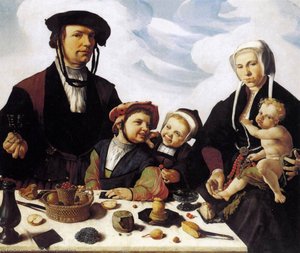
- maerten van heemskerck's work is characterized by its innovative blend of dutch and italian influences, as seen in his famous family portrait, considered the first of its kind in a long line of dutch family paintings.
- his collaboration with antonio da sangallo the younger, battista franco, and francesco de' rossi (il salviati) on the redecoration of the porta san sebastiano in rome, a triumphal arch in honor of charles v, showcases his rapid execution as a scene-painter.
- heemskerck's drawings of classical sculpture and architecture, now preserved in two sketchbooks at the kupferstichkabinett berlin, demonstrate his skill in capturing the essence of italian art.
notable works and legacy
- the donor and saint mary magdalene (view at OriginalUniqueArt)
- the virgin and saint john the evangelist (view at OriginalUniqueArt)
- samson shattering the pillars of the temple, maarten van heemskerck (view at OriginalUniqueArt)
conclusion
maerten van heemskerck's profound impact on the art world is undeniable. his works, now a part of various museum collections, including the rijksmuseum, continue to inspire artists and art enthusiasts alike. to explore more of his masterpieces, visit maerten van heemskerck's page on OriginalUniqueArt. for a deeper understanding of his life and works, refer to his biography on wikipedia.
Maerten Van Heemskerck
1498 - 1574
Quick Facts
- Full Name: Maerten Jacobsz van Heemskerck
- Nationality: Dutch
- Date Of Birth: 1498
- Date Of Death: 1574
- Place Of Birth: Heemskerk, Netherlands
- Notable Artworks:
- Lamentation on the Dead Christ
- Pieter Jan Foppeszoon and his Family
- Christ as the Man of Sorrows
- Artistic Movement Or Style: Mannerism
- Artists Who Influenced This Artist:
- Jan van Scorel
- Antonio da Sangallo the Younger
Related Articles
Oil on Panel: A Historical Survey of Technique, Support & Aesthetic Evolution
Explore the rich history of oil on panel painting! Discover Renaissance techniques, support structures & aesthetic evolution. Expert insights for art collectors and enthusiasts.
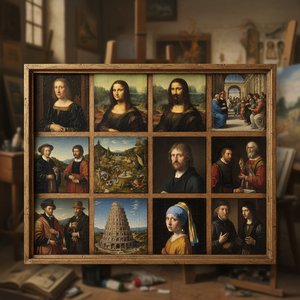
Oil on Panel Masters: 10 Paintings That Revolutionized Art |
Journey through 10 legendary 'Oil on Panel' masterpieces by Van Eyck, Bosch & Bruegel. Explore the stories behind these iconic Renaissance & Baroque paintings and find museum-quality art reproductions to elevate your home decor. Discover all masterpieces on !
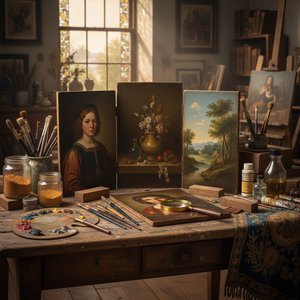
Oil on Panel: A Historical Survey of Technique, Support, and Aesthetic Impact
Explore the rich history of oil on panel painting! Discover Renaissance techniques, support construction, & the enduring legacy of this masterful art form. Expert insights for collectors and enthusiasts.

Mastering the Surface: The Timeless Elegance and Technical Brilliance of Oil on Panel Painting
Discover the enduring allure of oil on panel painting. Explore the technical mastery, historical significance, and luminous depth that define this prestigious medium, from Renaissance masters to modern fine art reproductions for discerning collectors.

OriginalUniqueArt.com F.A.Q.: Elevate Your Space with Custom Multi-Panel Group Set Art
Discover the elegance of custom multi-panel group set art at OriginalUniqueArt.com. From bespoke layouts to hand-painted oil masterpieces, our expert guide helps elite collectors curate breathtaking, large-scale installations tailored for sophisticated interiors.