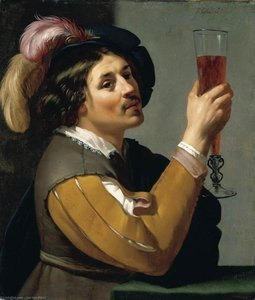
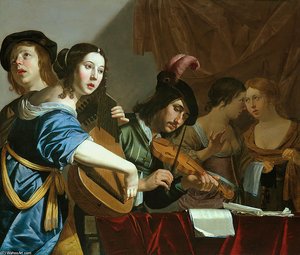
Portret Jan Van Bijlert

61 najsłynniejszych obrazów artysty Jan Van Bijlert – wybór z galerii

Aktualizacja: Listopad 2026 · ranking według naszego wskaźnika popularności (liczba wyszukiwań, wizyt i zamówień dla każdego dzieła) · 63 dzieł Jan Van Bijlert w naszym katalogu

W skrócie

Spośród wszystkich dzieł oryginalnych, które pozostawił Jan Van Bijlert, najsłynniejszym jest Portrait of Beatrix Gibels van Linschoten. (1650), znajdujący się w kolekcji Muzeum Narodowe w Warszawie w Warszawa. Tuż za nimi znajdują się Portrait of Jan Strick van Linschoten (1647) oraz Young man tuning his violin (1630). Nasz katalog zawiera 63 dzieł autorstwa Jan Van Bijlert; galeria zachowała 61 najbardziej podziwianych na świecie prac, z których każda została przedstawiona wraz z datą powstania, informacją o muzeum oraz jej historią.

1597 – 1671, Utrecht Baroque Najwięcej dzieł: Centraal Museum

10 najlepszych obrazów artysty Jan Van Bijlert: wybór galerii

1
Portrait of Beatrix Gibels van Linschoten. (1650) autorstwa Jan Van Bijlert

Portrait of Beatrix Gibels van Linschoten.

1650 · Oil · Muzeum Narodowe w Warszawie, Warszawa

This 1650 oil portrait presents a formal and dignified bust-length depiction of an elderly woman, identified as Beatrix Gibels van Linschoten. Positioned slightly off-center, the subject faces toward the viewer's left, though her gaze is directed toward the observer. She is dressed in formal or mourning attire, which includes a black headpiece and a translucent black veil that drapes behind her. A crisp, white collar provides a sharp geometric contrast…

2
Portrait of Jan Strick van Linschoten (1647) autorstwa Jan Van Bijlert

Portrait of Jan Strick van Linschoten

1647 · Oil On Panel · Muzeum Narodowe w Warszawie, Warszawa

The man sits before us, caught in a moment of quiet dignity that feels as though it might break at any second. He is Jan Strick van Linschoten, and his gaze meets the viewer with a calm, composed steadying force. The light, sweeping in from the upper left, carves his features out of a deep, indeterminate darkness, casting soft shadows that trace the lines of his face and the texture…

3
Young man tuning his violin (1630) autorstwa Jan Van Bijlert

Young man tuning his violin

1630 · Oil On Canvas · Ermitaż, Sankt Petersburg

The painting titled Young man tuning his violin is a work by the Dutch artist Jan van Bijlert. It captures a solitary moment of musical preparation, frozen in the year 1630. The subject is caught in a quiet, private interval, his attention fixed upon the tension of the strings.

4
Portrait of Beatrix Gibels van Linschoten (1650) autorstwa Jan Van Bijlert

Portrait of Beatrix Gibels van Linschoten

1650 · Oil On Canvas · Muzeum Narodowe w Warszawie, Warszawa

An elderly woman gazes toward the viewer from a position slightly off-center, her presence defined by a somber and formal composure. The composition is a bust-length portrait, rendered with the precision characteristic of the Dutch Golden Age. A dark, indistinct background pushes the subject forward, allowing the play of light to define her features. Directional light enters from the upper left, casting soft shadows across the right side of her…

5
Girl with a flute (1630) autorstwa Jan Van Bijlert

Girl with a flute

1630 · Oil On Canvas · Art Gallery of New South Wales, Sydney

A young woman leans forward toward the viewer, her body arranged in a diagonal composition that creates a sense of immediate presence. She holds a wooden flute to her lips, her fingers positioned upon the instrument. The lighting originates from the upper left, casting a strong glow across her face, chest, and hands, while leaving the background in deep, near-black shadow. This use of chiaroscuro defines the contours of her…

6
Dice Players (1620) autorstwa Jan Van Bijlert

Dice Players

In this intimate scene from 1620, we find ourselves pulled directly into a quiet, tense corner of a tavern or a private room. Four figures are gathered around a table, their attention fixed entirely on the small, decisive movement of dice. The composition is tight, almost claustrophobic, which forces us to become silent observers of this gambling game. A man leans forward, his posture suggesting a heavy investment in the…

7
Calling of Matthew (1627) autorstwa Jan Van Bijlert

Calling of Matthew

1627 · Oil On Canvas · Museum Catharijneconvent, Utrecht

In this oil on canvas, Jan van Bijlert presents the biblical scene of the Calling of Matthew. Painted around 1627, the work captures a moment of profound transition. The composition centers on a group of men gathered around a wooden table, their attention drawn to a central figure whose gesture of invitation initiates the narrative. It is a scene of immediate, theatrical action, where the quietude of contemplation meets the…

8
Saint John the Evangelist (1625) autorstwa Jan Van Bijlert

Saint John the Evangelist

1625 · Oil · Centraal Museum, Utrecht

In Saint John the Evangelist, Jan van Bijlert presents a medium shot that focuses on the upper body of the subject. The composition is centered on the figure of the saint, who is positioned slightly to the right of the frame. He is depicted with his hands clasped, looking upward toward an unseen light source. On a table before him lies an open book, while an eagle is situated in…

9
Fortune-teller with Young Couple (1630) autorstwa Jan Van Bijlert

Fortune-teller with Young Couple

1630 · Oil On Canvas · Gemäldegalerie, Berlin

We are looking at Fortune-teller with Young Couple, a work from 1630 by the Dutch artist Jan van Bijlert. This oil painting captures a quiet, tense moment of interaction between four figures. The scene is centered on an elderly woman who acts as a fortune-teller, holding the hand of a young woman. A man leans in closely to observe the exchange, while a small child clings to the woman's back.

10
Man in Armour Holding a Pike (1630) autorstwa Jan Van Bijlert

Man in Armour Holding a Pike

1630 · Oil On Canvas · Norton Simon Museum, Pasadena

A single light source strikes from the upper left, carving a face out of the darkness. The man turns, his gaze meeting the viewer with a calm, commanding stillness. He is encased in polished dark armor, the metal reflecting the room in cold, silvered glints. A golden-yellow sash cinches his waist, a sharp puncture of color against the deep blacks of his breastplate. He holds a pike, its long diagonal…

Kontynuacja zestawienia Jan Van Bijlert, od 11 do 61

11Venus Chastising Cupid (1628) autorstwa Jan Van BijlertVenus Chastising Cupid1628 · Museum of Fine Arts 12Family Group as Cornelia, Mother of the Gracchi, Showing Her Children - c.1635 (1635) autorstwa Jan Van BijlertFamily Group as Cornelia, Mother of the Gracchi, Showing Her Children - c.16351635 · Musée des Beaux-Arts 13Portrait of a man from the Van Soesdijk family, probably Steven Jansz. van Soesdijk (ca. 1560-1646) (1630) autorstwa Jan Van BijlertPortrait of a man from the Van Soesdijk family, probably Steven Jansz. van Soesdijk (ca. 1560-1646)1630 · Centraal Museum 14The Rejected Offer (1635) autorstwa Jan Van BijlertThe Rejected Offer1635 · Centraal Museum 15The camp follower (1630) autorstwa Jan Van BijlertThe camp follower1630 · Centraal Museum 16Venus trying to prevent Adonis from going hunting (fragment) (1630) autorstwa Jan Van BijlertVenus trying to prevent Adonis from going hunting (fragment)1630 · Centraal Museum 17Merry Company (1630) autorstwa Jan Van BijlertMerry Company1630 · Walters Art Museum 18Girl Teasing a Cat (1630) autorstwa Jan Van BijlertGirl Teasing a Cat1630 · Walters Art Museum 19The procuress (1626) autorstwa Jan Van BijlertThe procuress1626 · Herzog Anton Ulrich Museum 20Charity (1630) autorstwa Jan Van BijlertCharity1630 · Musée des Beaux-Arts de Quimper 21The Feast of Alexander and Kleitos (1635) autorstwa Jan Van BijlertThe Feast of Alexander and Kleitos1635 · Gemäldegalerie 22Mercury (1627) autorstwa Jan Van BijlertMercury1627 · Gemäldegalerie 23Vanitas (1640) autorstwa Jan Van BijlertVanitas1640 · Centraal Museum 24The Black King (1645) autorstwa Jan Van BijlertThe Black King1645 25Fantasied portrait of Emperor Hendrik IV (1050-1106) (1641) autorstwa Jan Van BijlertFantasied portrait of Emperor Hendrik IV (1050-1106)1641 · Centraal Museum 26Heraclitus and Democritus (1640) autorstwa Jan Van BijlertHeraclitus and Democritus1640 · Centraal Museum 27Pastoral (1640) autorstwa Jan Van BijlertPastoral1640 · Centraal Museum 28A Concert. (1637) autorstwa Jan Van BijlertA Concert.1637 · Muzeum Narodowe w Warszawie 29At the procuress. (1637) autorstwa Jan Van BijlertAt the procuress.1637 · Muzeum Narodowe w Warszawie 30Finding of Moses (1640) autorstwa Jan Van BijlertFinding of Moses1640 · Gemäldegalerie 31Portrait of Hendrik van Leeuwen ( -1657) (1652) autorstwa Jan Van BijlertPortrait of Hendrik van Leeuwen ( -1657)1652 · Rijksmuseum Twenthe 32Portrait of a man (1650) autorstwa Jan Van BijlertPortrait of a man1650 · Centraal Museum 33Portrait of an unknown woman (1650) autorstwa Jan Van BijlertPortrait of an unknown woman1650 · Centraal Museum 34Vanity (1650) autorstwa Jan Van BijlertVanity1650 · Centraal Museum 35Paris and Oenone (1650) autorstwa Jan Van BijlertParis and Oenone1650 · Centraal Museum 36Saint Sebastian attended by Saint Irene (1650) autorstwa Jan Van BijlertSaint Sebastian attended by Saint Irene1650 37An allegory of the sense of smell (1671) autorstwa Jan Van BijlertAn allegory of the sense of smell1671 38The Concert (1635) autorstwa Jan Van BijlertThe Concert1635 39Venus and Amor and an Old Woman (1630) autorstwa Jan Van BijlertVenus and Amor and an Old Woman1630 · Musée des Beaux-Arts 40Young Man Drinking a Glass of Wine (1635) autorstwa Jan Van BijlertYoung Man Drinking a Glass of Wine1635 41Shepherd Holding a Flute (1630) autorstwa Jan Van BijlertShepherd Holding a Flute1630 42The Lute Player, Jan van Bijlert, c. 1630 - c. 1640 (1640) autorstwa Jan Van BijlertThe Lute Player, Jan van Bijlert, c. 1630 - c. 16401640 · Rijksmuseum 43Saint Marc the Evangelist autorstwa Jan Van BijlertSaint Marc the Evangelist 44Saint Matthew the Evangelist autorstwa Jan Van BijlertSaint Matthew the Evangelist 45The Holy Family autorstwa Jan Van BijlertThe Holy Family 46The Five Senses autorstwa Jan Van BijlertThe Five SensesNiedersächsisches Landesmuseum 47A Bagpipe Player autorstwa Jan Van BijlertA Bagpipe Player 48The concert (Den Haag) autorstwa Jan Van BijlertThe concert (Den Haag)Muzeum Kunstmuseum Den Haag 49Young Man Playing the Lute (1625) autorstwa Jan Van BijlertYoung Man Playing the Lute1625 · Thyssen-Bornemisza Museum 50Virgin and Child (1635) autorstwa Jan Van BijlertVirgin and Child1635 · Herzog Anton Ulrich Museum 51Portrait of a Woman, Jan van Bijlert, c. 1650 (1650) autorstwa Jan Van BijlertPortrait of a Woman, Jan van Bijlert, c. 16501650 · Rijksmuseum 52A Woman Holding Pancakes autorstwa Jan Van BijlertA Woman Holding Pancakes 53Ulysses and Circe autorstwa Jan Van BijlertUlysses and Circe 54A Shepherdess autorstwa Jan Van BijlertA Shepherdess 55Musical Company autorstwa Jan Van BijlertMusical Company 56Kompozycja muzyczna (1629) autorstwa Jan Van BijlertKompozycja muzyczna1629 · Academy of Fine Arts Vienna 57Portraits of the Inhabitants at St Jobsgasthuis in Utrecht (1630) autorstwa Jan Van BijlertPortraits of the Inhabitants at St Jobsgasthuis in Utrecht1630 · Centraal Museum 58Adoration of the kings: the Wise Men present their gifts to the Christ-child (1630) autorstwa Jan Van BijlertAdoration of the kings: the Wise Men present their gifts to the Christ-child1630 · Centraal Museum 59Pulling the Pretzel (1630) autorstwa Jan Van BijlertPulling the Pretzel1630 · Centraal Museum 60in the brothel autorstwa Jan Van Bijlertin the brothelNational Museum in Wrocław 61Portrait of an Elderly Man and Two Women autorstwa Jan Van BijlertPortrait of an Elderly Man and Two WomenNational Gallery

Słynne obrazy Jan Van Bijlert epoka po epoce

Tematy, które przyciągnęły wzrok Jan Van Bijlert

Cztery motywy najczęściej powracające w tych oryginałach, z których każdy doczekał się swojego najdoskonalszego przykładu.

Muzea przechowujące oryginały Jan Van Bijlert

8 muzeów, w których znajduje się najwięcej obrazów z tej strony.

Muzea Miasto Dzieła artysty Jan Van Bijlert Obrazy z tej listy
Centraal Museum, UtrechtCentraal Museum Utrecht 16 Saint John the Evangelist, Portrait of a man from the Van Soesdijk family, probably Steven Jansz. van Soesdijk (ca. 1560-1646), The Rejected Offer
Muzeum Narodowe w Warszawie, WarszawaMuzeum Narodowe w Warszawie Warszawa 5 Portrait of Beatrix Gibels van Linschoten., Portrait of Jan Strick van Linschoten, Portrait of Beatrix Gibels van Linschoten
Gemäldegalerie, BerlinGemäldegalerie Berlin 4 Fortune-teller with Young Couple, The Feast of Alexander and Kleitos, Mercury
Walters Art Museum, BaltimoreWalters Art Museum Baltimore 2 Merry Company, Girl Teasing a Cat
Herzog Anton Ulrich Museum, BrunszwikHerzog Anton Ulrich Museum Brunszwik 2 The procuress, Virgin and Child
Rijksmuseum, AmsterdamRijksmuseum Amsterdam 2 The Lute Player, Jan van Bijlert, c. 1630 - c. 1640, Portrait of a Woman, Jan van Bijlert, c. 1650
Ermitaż, Sankt PetersburgErmitaż Sankt Petersburg 1 Young man tuning his violin
Art Gallery of New South Wales, SydneyArt Gallery of New South Wales Sydney 1 Girl with a flute

Jan Van Bijlert dekada po dekadzie: oryginały definiujące każdy okres

Dzieła według dekad

Wybierz dekadę, aby zobaczyć dzieło, które ją definiuje.

Pytania kolekcjonerów o obrazy Jan Van Bijlert

Z jakiego dzieła najbardziej znany jest Jan Van Bijlert?Odkryj odpowiedź

Portrait of Beatrix Gibels van Linschoten. (1650), Muzeum Narodowe w Warszawie, Warszawa. Następne są Portrait of Jan Strick van Linschoten (1647) oraz Young man tuning his violin (1630).

W jakim wieku był Jan Van Bijlert, gdy powstało Portrait of Beatrix Gibels van Linschoten.?Odkryj odpowiedź

53 lat: Portrait of Beatrix Gibels van Linschoten. pochodzi z 1650, a Jan Van Bijlert urodził(a) się w 1597.

Jakie są dziesięć najsłynniejszych obrazów, których autorem jest Jan Van Bijlert?Odkryj odpowiedź

Portrait of Beatrix Gibels van Linschoten., Portrait of Jan Strick van Linschoten, Young man tuning his violin, Portrait of Beatrix Gibels van Linschoten, Girl with a flute, Dice Players, Calling of Matthew, Saint John the Evangelist, Fortune-teller with Young Couple i Man in Armour Holding a Pike. Powyższy ranking zawiera rok powstania oraz muzeum dla każdego z nich.

Ile obrazów pozostawił po sobie Jan Van Bijlert?Odkryj odpowiedź

Nasz katalog zawiera 63 dzieł artysty Jan Van Bijlert, datowanych od 1620 do 1671.

W których muzeach znajdują się arcydzieła Jan Van Bijlert?Odkryj odpowiedź

W większości znajdują się w Centraal Museum (Utrecht), Muzeum Narodowe w Warszawie (Warszawa) i Gemäldegalerie (Berlin). Powyższa tabela muzeów zawiera ich pełną listę.

W których latach Jan Van Bijlert namalował swoje najsłynniejsze dzieła?Odkryj odpowiedź

W 1630s: 23 z 61 dzieł na tej stronie powstało w tym czasie, w tym Young man tuning his violin.

Jakie są pierwsze i ostatnie słynne oryginały Jan Van Bijlert?Odkryj odpowiedź

Na tej stronie najwcześniejszy to Dice Players (1620), a najpóźniejszy An allegory of the sense of smell (1671).

Jakie tematy Jan Van Bijlert wybierał najczęściej?Odkryj odpowiedź

Woman (24), Man (23) i Dark background (7), w ramach 61 dzieł na tej stronie.

Której techniki Jan Van Bijlert używał najczęściej?Odkryj odpowiedź

Oil, dla 22 z 61 dzieł na tej stronie.

Do jakiego nurtu artystycznego należy Jan Van Bijlert?Odkryj odpowiedź

Baroque, sądząc po oryginałach na tej stronie.

Które dzieła Jan Van Bijlert znajdują się w Centraal Museum?Odkryj odpowiedź

Saint John the Evangelist, Portrait of a man from the Van Soesdijk family, probably Steven Jansz. van Soesdijk (ca. 1560-1646) i The Rejected Offer: Centraal Museum, Utrecht posiada 16 dzieł widocznych na tej stronie.

Jan Van Bijlert: życie i twórczość

Jan Van Bijlert: Dramatyczna Wizja Utrecht Karawaggisty

Jan Hermansz van Bijlert, urodzony w Utrechcie około 1598 roku i zmarły w tym samym mieście w 1671 roku, jawi się jako postać kluczowa dla tętniącego życiem krajobrazu artystycznego Złotego Wieku Holandii. Początkowo zainspirowany intensywnym realizmem i dramatycznym światłocieniem Caravaggia, van Bijlert wyewoluował w jednego z najbardziej znaczących przedstawicieli nurtu znanego jako karawaggizm utrechcki – wyraźnie regionalnego stylu, który połączył zasady włoskiego baroku z unikalną, niderlandzką wrażliwością. Jego bogata twórczość, obejmująca około 200 obrazów, oferuje fascynujący wgląd w epokę artystycznych eksperymentów oraz rosnącego wpływu mistrzów włoskich na sztukę Europy Północnej. Wczesne lata życia van Bijlerta pozostają częściowo spowite tajemnicą, choć przypuszcza się, że pierwsze szlify odebrał pod okiem ojca, Hermana Beernts van Bijlerta, sprawnego twórcy witraży. To fundamentalne doświadczenie prawdopodobnie zaszczepiło w nim niezwykłą dbałość o detal i kunszt rzemieślniczy – cechy, które później z wielką siłą objawiły się w jego malarstwie. W dalszej kolejności studiował u Abrahama Bloemaerta, szanowanego malarza z Utrechtu, znanego z pieczołowitych przedstawień scen mitologicznych i portretów. Co niezwykle istotne, artystyczna podróż van Bijlerta wykraczała poza granice Niderlandów, obejmując znaczące okresy spędzone we Francji i we Włoszech. Doświadczenia te okazały się przełomowe, wystawiając go na kontakt z rewolucyjnymi technikami i dramatyczną intensywnością promowaną przez Caravaggia, którego wpływ nieodwracalnie ukształtował jego styl.

Krąg Bentvueghel i wczesne lata rzymskie

Przyjazd van Bijlerta do Rzymu w 1621 roku stanowił przełomowy moment w jego karierze. Szybko stał się częścią Bentvueghels – słynnego, pełnego swobody kręgu artystów – Holendrów, Flamandów i Włochów – którzy wypracowali wspólną tożsamość poprzez przyjęte pseudonimy. Van Bijlert wybrał imię „Eneasz”, nawiązując do rzymskiego bohatera znanego ze swojej siły i wytrwałości. Członkowie Bentvueghels nie byli jedynie współpracownikami artystycznymi; byli również zapalonymi towarzyszami życia towarzyskiego, wymieniając się dowcipnymi wierszami, satyrycznymi grafikami i, oczywiście, obrazami. Środowisko to sprzyjało atmosferze intensywnej wymiany myśli i eksperymentowania, pozwalając artystom przesuwać granice i rozwijać własne, indywidualne style. Podczas tego rzymskiego okresu van Bijlert doskonalił swoje umiejętności, opanowując charakterystyczne techniki Caravaggia: ostry kontrast między światłem a cieniem (chiaroscuro), dramatyczne kadrowanie kompozycji w celu uzyskania poczucia bezpośredniości oraz niezachwiane dążenie do realistycznej reprezentacji. Jego wczesne dzieła z tej ery charakteryzują się tymi elementami, przedstawiając sceny pełne głębokich emocji, często ukazując postacie uchwycone w momentach działania lub zadumy.

Zwrot ku klasycyzmowi i scenom rodzajowym

Około 1630 roku trajektoria artystyczna van Bijlerta uległa wyraźnej zmianie. Choć zachował on rdzenne zasady karawaggizmu – w szczególności dramatyczne operowanie światłem – zaczął wprowadzać elementy stylu klasyzującego, prawdopodobnie pod wpływem innego artysty z Utrechtu, Cornelisa van Poelenburcha. Ta ewolucja objawiła się rozjaśnieniem palety barw oraz przejściem ku bardziej podniosłej tematyce, obejmującej sceny religijne i kompozycje alegoryczne. Co ciekawe, ten sam okres przyniósł narodziny fascynacji van Bijlerta scenami rodzajowymi. Stworzył on serię obrazów przedstawiających intymne momenty z codziennego życia – domy publiczne, spotkania muzyczne czy sceny karczemne – często zamieszkane przez drobne postaci oddane z niezwykłą szczegółowością i psychologiczną głębią. Prace te, przypominające dzieła Jacoba Ducka, oferowały wgląd w tkankę społeczną Utrechtu i dowodziły zdolności van Bijlerta do chwytania ludzkich emocji oraz interakcji z subtelną gracją.

Życie cechowe, mecenat i dziedzictwo

Życie van Bijlerta było głęboko splecione z instytucjami obywatelskimi i religijnymi Utrechtu. W 1625 roku wstąpił do schutterij (milicji obywatelskiej), a w 1630 roku został członkiem utrechskiego cechu świętego Łucjana, pełniąc funkcję diakona w latach 1632–1637, a później zostając regentem szpitala Sint-Jobsgasthuis w 1634 roku. Jego zaangażowanie wykraczało poza sferę artystyczną; odegrał istotną rolę w powołaniu „Schilders-College” (szkoły malarskiej) w 1639 roku, służąc jako jej regent i mentorując nowemu pokoleniu artystów, w tym Bartramowi de Fouchierowi i Ludolfowi Leendertszowi de Jongh. To oddanie zarówno sztuce, jak i wspólnocie podkreśla jego pozycję jako szanowanej postaci w elicie kulturalnej Utrechtu. Dziedzictwo Jana Van Bijlerta jest trwale zakorzenione w ruchu karawaggistów utrechskich. Jego malarstwo, charakteryzujące się dramatycznym oświetleniem, realistycznym przedstawieniem ludzkich postaci i eksploracją emocjonalnej intensywności, nieustannie zachwyca widzów do dziś. Jego twórczość stanowi świadectwo dynamicznej wymiany idei artystycznych, która rozkwitła podczas Złotego Wieku Holandii – epoki, w której zasady włoskiego baroku zostały przyjęte, zaadaptowane i ostatecznie przekształcone w unikalny styl Europy Północnej. Jego około 200 obrazów stanowi bogaty i szczegółowy zapis tej fascynującej ewolucji artystycznej.