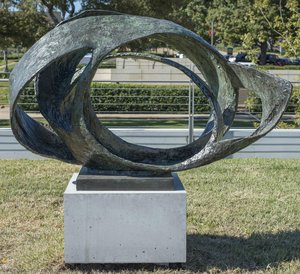
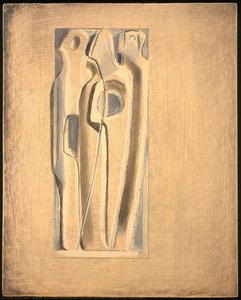
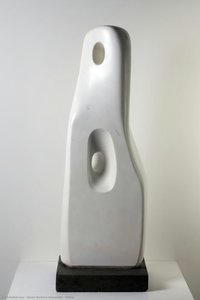
Barbara Hepworth portretas

100 garsiausių Barbara Hepworth paveikių – kiekvienas yra unikalus

Atnaujinta lapkritis 2026 · pagal mūsų populiarumumo koeficientą (paieškos, lankytojai ir užsakymai kiekvienam kūriniui) · 153 Barbara Hepworth darbai mūsų kataloge

Trumpai tariant

Barbara Hepworth with the plaster of Figure for Landscape and a bronze cast of Figure (Archaean), November 1964. (1964) yra viena矚 most žiūrėlių pritraukiančių Barbara Hepworth tapierių; originalas saugomas The Hepworth Wakefield, Wakefield. Po to akmuo patenka į Spring (Arts Council Collection) (1966) ir Hollow Form with White Interior (1963). Iš 153 Barbara Hepworth darbų mūsų kataloge šios 100 yra garsiausios – kiekvienas yra unikali originali dai̇lia, pateikta su jos metais, muziejumi ir priežastimi, kodėl ji išlieka per amžius.

1903 – 1975, Wakefield Modernism Daugiausia darbų: The Hepworth Wakefield

10 geriausių Barbara Hepworth paveikslų: galerijos akimais

1
Barbara Hepworth with the plaster of Figure for Landscape and a bronze cast of Figure (Archaean), November 1964. (1964) aut. Barbara Hepworth

Barbara Hepworth with the plaster of Figure for Landscape and a bronze cast of Figure (Archaean), November 1964.

1964 · Black and White Photography · The Hepworth Wakefield, Wakefield

In this evocative black and white photograph from November 1964, we are invited into the intimate, creative sanctuary of one of the twentieth century's most formidable sculptors, Dame Barbara Hepworth. The image captures more than just a person; it captures the very essence of the modernist spirit. Seated with a quiet, contemplative poise, Hepworth is framed by her own monumental creations—the plaster of Figure for Landscape and a bronze cast…

2
Spring (Arts Council Collection) (1966) aut. Barbara Hepworth

Spring (Arts Council Collection)

1966 · Sculpture · The Hepworth Wakefield, Wakefield

In the quiet dialogue between form and space, few works resonate with the rhythmic pulse of life quite like Barbara Hepworth’s Spring. A masterpiece of British Modernism, this sculpture serves as a profound meditation on the cyclical nature of existence. At first glance, the viewer is met with an evocative, egg-like silhouette—a shape that inherently suggests the potentiality of new beginnings. Yet, this organic smoothness is masterfully disrupted by horizontal…

4
Prototype for Mrs A.R.T. Richards (Quita) (1924) aut. Barbara Hepworth

Prototype for Mrs A.R.T. Richards (Quita)

1924 · Plaster · The Hepworth Wakefield, Wakefield

The image presents a photograph of a white plaster bust titled Prototype for Mrs A.R.T. Richards (Quita). The composition is centered on the bust, which depicts a woman's head and neck against a uniform gray background. The sculpture exhibits smooth, flowing lines that define the contours of the face and hair, characterized by organic and rounded shapes. The textures appear subtle, with a slight roughness visible on the plaster surface…

5
Rhythmic Form (1949) aut. Barbara Hepworth

Rhythmic Form

1949 · Wood · British Council, Londonas

Created in 1949, Rhythmic Form is a wooden sculpture crafted from Rosewood. The work is characterized by its monumental forms and a striking central hole, which serves as a deliberate gesture to unify opposing forces. The sculpture features a smooth, polished surface that contrasts with subtle textural variations resulting from the carving process. Positioned against a neutral white background, the piece emphasizes a geometric form and a harmonious integration into…

6
Cone and Sphere (1973) aut. Barbara Hepworth

Cone and Sphere

1973 · Marble · The Hepworth Wakefield, Wakefield

Created in 1973, this sculpture explores the fundamental relationship between two primary geometric forms: a cone and a sphere. Carved from white marble, the piece utilizes a vertical orientation to establish a sense of structural stability. The cone serves as the base, its surface marked by vertical striations that suggest upward movement. Resting atop this conical form is a smooth sphere, which introduces a rounded, organic counterpoint to the angularity…

7
Three Forms aut. Barbara Hepworth

Three Forms

Stone · Tate Britain, Londras

In the quiet, monochromatic realm of Barbara Hepworth’s Three Forms, we encounter a profound dialogue between matter and void. Captured in a striking black-and-white composition, this work serves as a masterclass in the minimalist aesthetic that defined much of the twentieth-century sculptural revolution. The photograph presents three abstract sculptures, each a testament to Hepworth's ability to breathe life into stone. Arranged with meticulous balance upon a rectangular platform, these organic…

9
Barbara Hepworth at work on the plaster for Oval Form (Trezion) (Photo: Val Wilmer) (1963) aut. Barbara Hepworth

Barbara Hepworth at work on the plaster for Oval Form (Trezion) (Photo: Val Wilmer)

1963 · Sculpture · The Hepworth Wakefield, Wakefield

The photograph captures more than just an artist at work; it presents a profound meditation on form, space, and the very act of making. Val Wilmer's black-and-white image focuses intently on Barbara Hepworth as she meticulously shapes a large, circular plaster form – “Oval Form (Trezion),” a pivotal piece in her evolving exploration of abstract sculpture. The composition is strikingly intimate, drawing us into the heart of the creative process.…

10
Single Form (Chûn Quoit) (1961) aut. Barbara Hepworth

Single Form (Chûn Quoit)

1961 · Stone · The Hepworth Wakefield, Wakefield

Barbara Hepworth’s “Single Form (Chûn Quoit)” is not merely a sculpture; it's an invitation into a dialogue with the ancient, a resonant echo of prehistoric ritual and the enduring power of form. Created in 1961, this arresting piece—a study in dark stone, meticulously carved and subtly textured—captures Hepworth’s signature style: a masterful blend of abstraction and deeply rooted connection to the natural world. The work immediately commands attention with its…

žinomi Barbara Hepworth paveikslai, nuo 11 iki 100 numerio

11Three Oblique Forms (February) (1967) aut. Barbara HepworthThree Oblique Forms (February)1967 · The Hepworth Wakefield 12Curved Form (Pavan) (1956) aut. Barbara HepworthCurved Form (Pavan)1956 · The Hepworth Wakefield 13Genesis III (1966) aut. Barbara HepworthGenesis III1966 · The Hepworth Wakefield 14Oblique Forms (1969) aut. Barbara HepworthOblique Forms1969 · The Hepworth Wakefield 15Four-Square (Four Circles) (On long loan to THW from the Hepworth Estate) (1966) aut. Barbara HepworthFour-Square (Four Circles) (On long loan to THW from the Hepworth Estate)1966 · The Hepworth Wakefield 16Wave (1943) aut. Barbara HepworthWave1943 · The Hepworth Wakefield 17Torso II (Torcello) (1958) aut. Barbara HepworthTorso II (Torcello)1958 · Auckland Art Gallery Toi o Tāmaki 18Barbara Hepworth’s Contrapuntal Forms at the Festival of Britain, South Bank, London, with the Skylon, 1951. Photograph by Anthony Panting (1951) aut. Barbara HepworthBarbara Hepworth’s Contrapuntal Forms at the Festival of Britain, South Bank, London, with the Skylon, 1951. Photograph by Anthony Panting1951 · The Hepworth Wakefield 19Involute II (1956) aut. Barbara HepworthInvolute II1956 · The Hepworth Wakefield 20Single Form (Chûn Quoit) (1961) aut. Barbara HepworthSingle Form (Chûn Quoit)1961 · The Hepworth Wakefield 21River Form (1965) aut. Barbara HepworthRiver Form1965 · New Orleans Museum of Art 22Oval Form (Trezion) (1962) aut. Barbara HepworthOval Form (Trezion)1962 · Kimbell Art Museum 23Single Form (Antiphon) (1969) aut. Barbara HepworthSingle Form (Antiphon)1969 · The Hepworth Wakefield 24Disc with Strings (Moon) (1969) aut. Barbara HepworthDisc with Strings (Moon)1969 · The Hepworth Wakefield 25Figure (Archaean) (1959) aut. Barbara HepworthFigure (Archaean)1959 · The Hepworth Wakefield 26Award board at Wakefield Girls School, 1920 (1920) aut. Barbara HepworthAward board at Wakefield Girls School, 19201920 · The Hepworth Wakefield 27Figure Nanjizal (1958) aut. Barbara HepworthFigure Nanjizal1958 · The Hepworth Wakefield 28Orpheus (Maquette I) (1956) aut. Barbara HepworthOrpheus (Maquette I)1956 · The Hepworth Wakefield 29Oval Sculpture (1943) aut. Barbara HepworthOval Sculpture1943 · The Hepworth Wakefield 30Pierced Hemisphere I (1937) aut. Barbara HepworthPierced Hemisphere I1937 · The Hepworth Wakefield 31Sun Setting (1971) aut. Barbara HepworthSun Setting1971 · The Hepworth Wakefield 32Fenestration of the Ear (1948) aut. Barbara HepworthFenestration of the Ear1948 · The Hepworth Wakefield 33Garden Sculpture (Model for Meridian) aut. Barbara HepworthGarden Sculpture (Model for Meridian)Bechtler moderniosios dailės muziejus 34Mother and Child (1934) aut. Barbara HepworthMother and Child1934 · The Hepworth Wakefield 35Olympus (1971) aut. Barbara HepworthOlympus1971 · The Hepworth Wakefield 36The Shadow Dance (1919) aut. Barbara HepworthThe Shadow Dance1919 · The Hepworth Wakefield 37Two Forms with White (Greek) aut. Barbara HepworthTwo Forms with White (Greek)The Hepworth Wakefield 38Mother and Child (1934) aut. Barbara HepworthMother and Child1934 39Turning Form (1946) aut. Barbara HepworthTurning Form1946 · The Hepworth Wakefield 40Spring (1966) aut. Barbara HepworthSpring1966 · The Hepworth Wakefield 41Prototype for (1962) aut. Barbara HepworthPrototype for1962 · The Hepworth Wakefield 42Two Girls with Teacups (1949) aut. Barbara HepworthTwo Girls with Teacups1949 · Arts Council Collection 43Drawing for Sculpture (Santorin) (1955) aut. Barbara HepworthDrawing for Sculpture (Santorin)1955 · The Hepworth Wakefield 44Mrs A.R.T. Richards (Quita) (1924) aut. Barbara HepworthMrs A.R.T. Richards (Quita)1924 · The Hepworth Wakefield 45Konstrukcija (Šventosios Švėdos Križišio) (1966) aut. Barbara HepworthKonstrukcija (Šventosios Švėdos Križišio)1966 · The Hepworth Wakefield 46Barbara, Joan, Elizabeth and Tony Hepworth (The Hepworth Photograph Collection) (1915) aut. Barbara HepworthBarbara, Joan, Elizabeth and Tony Hepworth (The Hepworth Photograph Collection)1915 · The Hepworth Wakefield 47Portrait of George Henry Butler (1922) aut. Barbara HepworthPortrait of George Henry Butler1922 · The Hepworth Wakefield 48Itea (1971) aut. Barbara HepworthItea1971 · The Hepworth Wakefield 49Figure (1930) aut. Barbara HepworthFigure1930 · The Pier Arts Centre 50Two Figures with Folded Arms (1947) aut. Barbara HepworthTwo Figures with Folded Arms1947 51Theatre Group No.3 (1947) aut. Barbara HepworthTheatre Group No.31947 52Fenestration of the Ear (The Microscope) (1948) aut. Barbara HepworthFenestration of the Ear (The Microscope)1948 · The Ingram Collection of Modern British And Contemporary Art 53Three Groups of Figures on a Pink Ground (1949) aut. Barbara HepworthThree Groups of Figures on a Pink Ground1949 54Tibia Graft (1949) aut. Barbara HepworthTibia Graft1949 · The Hepworth Wakefield 55Two Forms (1937) aut. Barbara HepworthTwo Forms1937 · The Hepworth Wakefield 56Three Figures – Project for Sculpture (1951) aut. Barbara HepworthThree Figures – Project for Sculpture1951 · The Hepworth Wakefield 57Totem (1960) aut. Barbara HepworthTotem1960 · The Hepworth Wakefield 58Two Piece Marble (Rangatira) (1968) aut. Barbara HepworthTwo Piece Marble (Rangatira)1968 59Drawing for Sculpture (Santorin) (1955) aut. Barbara HepworthDrawing for Sculpture (Santorin)1955 · The Hepworth Wakefield 60Totem (1960) aut. Barbara HepworthTotem1960 · The Hepworth Wakefield 61Cone and Sphere (1973) aut. Barbara HepworthCone and Sphere1973 · The Hepworth Wakefield 62Curved Form (Pavan) (1956) aut. Barbara HepworthCurved Form (Pavan)1956 · The Hepworth Wakefield 63Ascending Form (Gloria) (1958) aut. Barbara HepworthAscending Form (Gloria)1958 · The Hepworth Wakefield 64Barbara Hepworth, Leeds School of Art (1920) aut. Barbara HepworthBarbara Hepworth, Leeds School of Art1920 · The Hepworth Wakefield 65Torso III, Galatea\n\nTorso III, Galatea aut. Barbara HepworthTorso III, Galatea\n\nTorso III, GalateaAbbot Hall Art Gallery 66Study of Robin Hood (1920) aut. Barbara HepworthStudy of Robin Hood1920 · The Hepworth Wakefield 67Child with Mother (1972) aut. Barbara HepworthChild with Mother1972 · The Hepworth Wakefield 68Granite Forms, Red, Yellow and Deep Blue (1953) aut. Barbara HepworthGranite Forms, Red, Yellow and Deep Blue1953 · The Hepworth Wakefield 69Two forms (1933) aut. Barbara HepworthTwo forms1933 · Tate Modern 70Infant (1929) aut. Barbara HepworthInfant1929 71Torso (1930) aut. Barbara HepworthTorso1930 · The Hepworth Wakefield 72Figure of a Woman (1929) aut. Barbara HepworthFigure of a Woman1929 73Mask (1928) aut. Barbara HepworthMask1928 · The Hepworth Wakefield 74Sculpture with Colour (Deep Blue and Red) (1940) aut. Barbara HepworthSculpture with Colour (Deep Blue and Red)1940 · The Hepworth Wakefield 75Three Forms (1935) aut. Barbara HepworthThree Forms1935 76Pierced Hemisphere II (1937) aut. Barbara HepworthPierced Hemisphere II1937 77Forms in Echelon (1938) aut. Barbara HepworthForms in Echelon1938 78Oval Sculpture (No. 2) (1943) aut. Barbara HepworthOval Sculpture (No. 2)1943 79Abstract Composition (1940) aut. Barbara HepworthAbstract Composition1940 · The Hepworth Wakefield 80Drawing for ‘Sculpture with Colour’ (Forms with Colour) (1941) aut. Barbara HepworthDrawing for ‘Sculpture with Colour’ (Forms with Colour)1941 · Art Institute of Chicago 81Sculpture with Colour (Deep Blue and Red) (1940) aut. Barbara HepworthSculpture with Colour (Deep Blue and Red)1940 82Torso (1929) aut. Barbara HepworthTorso1929 · The Hepworth Wakefield 83Prelude I (1948) aut. Barbara HepworthPrelude I1948 84Pelagos (1946) aut. Barbara HepworthPelagos1946 85Fenestration of the Ear (The Hammer) (1948) aut. Barbara HepworthFenestration of the Ear (The Hammer)1948 86Concourse (2) (1948) aut. Barbara HepworthConcourse (2)1948 87The Hands and the Arm (1948) aut. Barbara HepworthThe Hands and the Arm1948 · The Hepworth Wakefield 88Fenestration – The Magnifying Glass, Stage 2 (1948) aut. Barbara HepworthFenestration – The Magnifying Glass, Stage 21948 · Bolton Museum And Art Gallery 89Study for Lisa (Hands to Face) (1949) aut. Barbara HepworthStudy for Lisa (Hands to Face)1949 · Jerwood Gallery 90Curved Form (Trevalgan) (1956) aut. Barbara HepworthCurved Form (Trevalgan)1956 91Prototype for Maquette, Three Forms in Echelon (1961) aut. Barbara HepworthPrototype for Maquette, Three Forms in Echelon1961 · The Hepworth Wakefield 92Forms in Movement (Galliard) (1956) aut. Barbara HepworthForms in Movement (Galliard)1956 · The Hepworth Wakefield 93Configuration (Phira) (1955) aut. Barbara HepworthConfiguration (Phira)1955 · The Hepworth Wakefield 94Image II (1960) aut. Barbara HepworthImage II1960 95Stringed Figure (Curlew), Version II (1959) aut. Barbara HepworthStringed Figure (Curlew), Version II1959 96Orpheus (Maquette 2) (Version II) (1959) aut. Barbara HepworthOrpheus (Maquette 2) (Version II)1959 97Oval Sculpture (No. 2) (1958) aut. Barbara HepworthOval Sculpture (No. 2)1958 98Sea Form (Porthmeor) (1958) aut. Barbara HepworthSea Form (Porthmeor)1958 99Garden Sculpture (Model for Meridian) (1958) aut. Barbara HepworthGarden Sculpture (Model for Meridian)1958 100Figure for Landscape (1959) aut. Barbara HepworthFigure for Landscape1959

žymios Barbara Hepworth tapiojamos, pagal laikotarpį

Temos, kurios domino Barbara Hepworth

Ketverios temos, dažniausiai pasikrausto originaluose, kiekvienos su savo puikiausiu pavyzdžiu.

Muziejai, kuriuose saugomi Barbara Hepworth originalūs darbai

8 muziejai, kuriuose saugoma daugiausia šioje pusėje esamų paveikslų.

Muzejaus Miestas Barbara Hepworth darbai Šiojo sąrašo paveikslai
The Hepworth Wakefield, WakefieldThe Hepworth Wakefield Wakefield 91 Barbara Hepworth with the plaster of Figure for Landscape and a bronze cast of Figure (Archaean), November 1964., Spring (Arts Council Collection), Hollow Form with White Interior
Bechtler moderniosios dailės muziejus, ŠarlotoBechtler moderniosios dailės muziejus Šarloto 2 Garden Sculpture (Model for Meridian)
Arts Council Collection, LondonasArts Council Collection Londonas 2 Two Girls with Teacups
British Council, LondonasBritish Council Londonas 1 Rhythmic Form
Tate Britain, LondrasTate Britain Londras 1 Three Forms
Auckland Art Gallery Toi o Tāmaki, AucklandasAuckland Art Gallery Toi o Tāmaki Aucklandas 1 Torso II (Torcello)
New Orleans Museum of Art, Niu OrleanasNew Orleans Museum of Art Niu Orleanas 1 River Form
Kimbell Art Museum, Fort WorthKimbell Art Museum Fort Worth 1 Oval Form (Trezion)

Barbara Hepworth per dešimtmečius: vieniškas originalas kiekvienam

Darbai pagal dešimtmečius

Pasirinkite dešimtmetį, kad pamatytėte jį apibrėžusį originalą.

Barbara Hepworth tapų klausimai galerijai

Koks yra garsiausias Barbara Hepworth kūrinys?Atsakymas

Barbara Hepworth with the plaster of Figure for Landscape and a bronze cast of Figure (Archaean), November 1964. (1964), The Hepworth Wakefield, Wakefield. Toliau seka Spring (Arts Council Collection) (1966) ir Hollow Form with White Interior (1963).

Kuriuo amžiaus atσταση Barbara Hepworth sukūrė Barbara Hepworth with the plaster of Figure for Landscape and a bronze cast of Figure (Archaean), November 1964.?Atsakymas

61 metų amžiaus: Barbara Hepworth with the plaster of Figure for Landscape and a bronze cast of Figure (Archaean), November 1964. sukurta 1964 m. Nr. Barbara Hepworth gimė 1903.

Kurios Barbara Hepworth dešimt paveikslų yra garsiausi?Atsakymas

Barbara Hepworth with the plaster of Figure for Landscape and a bronze cast of Figure (Archaean), November 1964., Spring (Arts Council Collection), Hollow Form with White Interior, Prototype for Mrs A.R.T. Richards (Quita), Rhythmic Form, Cone and Sphere, Three Forms, The Pond (Two Figures), Barbara Hepworth at work on the plaster for Oval Form (Trezion) (Photo: Val Wilmer) ir Single Form (Chûn Quoit). Viršuje esančioje reitingo sąraše nurodyta kiekvieno kūrinio metis ir muziejus.

Kiek žinoma Barbara Hepworth darbų?Atsakymas

Mūsų kataloge yra 153 Barbara Hepworth darbų, skirtų laikotarpiui nuo 1915 iki 1973.

Kur galima pamatyti garsiausių Barbara Hepworth originalų?Atsakymas

Daugiausia – The Hepworth Wakefield (Wakefield), Bechtler moderniosios dailės muziejus (Šarloto) ir Arts Council Collection (Londonas). Viršuje esančiame muziejų sąraše yra visi jie.

Kuriuo laikotarpiu Barbara Hepworth sukūrė savo žymiausias paveikslus?Atsakymas

1940s laikotarpiu: 23 iš 100 šioje pusėje esančių darbų buvo sukurtos tada, iš jų Rhythmic Form.

Kuris iš garsių Barbara Hepworth paveikslų yra pirmasis, o kuris – paskutinis?Atsakymas

Šioje pusėje seniausias darbas yra Barbara, Joan, Elizabeth and Tony Hepworth (The Hepworth Photograph Collection) (1915), o naujausias – Cone and Sphere (1973).

Kokia temos Barbara Hepworth mėgavosi?Atsakymas

British art (14), Form (13) ir Organic form (9) iš 100 šioje pusėje esamų darbų.

Kuriomis medžiagomis Barbara Hepworth tapė dažniausiai?Atsakymas

Bronze, iš 100 šios puslapio darbų – 12.

Kelią meno kryžkelę priklauso Barbara Hepworth kūryba?Atsakymas

Modernism ir Modern sculpture, vadovaujantis šios puslapio originalais kūriniais.

Kurius Barbara Hepworth originalius galėčiau pamatyti The Hepworth Wakefield?Atsakymas

Barbara Hepworth with the plaster of Figure for Landscape and a bronze cast of Figure (Archaean), November 1964., Spring (Arts Council Collection) ir Hollow Form with White Interior: The Hepworth Wakefield, Wakefield kolekcijoje yra 62 šioje pusėje esančių darbų.

Barbara Hepworth: meno kūrinys – autoportretas

Early Life, Family and Training

Barbara Hepworth was born on 10 January 1903 in Wakefield, West Riding of Yorkshire, England. She was the eldest child of Gertrude and Herbert Hepworth. Her father worked as a civil engineer for the West Riding County Council, a background that provided a practical, structural foundation to her upbringing. This early environment in Yorkshire shaped the spatial awareness that would later define her approach to three-dimensional form.

Her formal education began at Wakefield Girls' High School. This academic start led her to the Leeds School of Art in 1920, where she began to develop the technical discipline required for serious sculptural inquiry. By the 1920s, she had moved to London to study at the Royal College of Art. This period of training was essential for establishing the intellectual rigor that separates her work from mere decoration. She was not merely learning a craft; she was mastering the relationship between material and void.

The Formative Years and Early Career

Hepworth’s early professional trajectory was defined by a series of significant personal and artistic shifts that mirrored the radical changes occurring in British modernism. In May 1925, she married the sculptor John Skeaping in Florence. This period was marked by a move toward direct carving, a method that demanded a physical, unmediated engagement with stone and wood. By 1931, her personal and creative life underwent another transformation when she fell in love with the painter Ben Nicholson. This connection was part of a larger, intense intellectual circle of modern artists centered on Hampstead, London. These social and romantic intersections were not mere distractions; they were the crucibles in which her approach to space and form was tested against the prevailing trends of the era.

The dissolution of her first marriage in March 1933 signaled a departure from her earlier, more figurative explorations. She eventually married Ben Nicholson in 1938, a union that solidified her position within the vanguard of British abstraction. During these years, her work moved away from representational traditions, seeking instead to distill the essence of form through a more reductive, geometric language. This period of transition saw her moving from the study of ancient monuments toward a sophisticated understanding of how negative space functions as a structural element. Her development was not a linear progression but a series of deliberate, often difficult, breaks from the past.

The Unit One Art Movement

In 1933, Hepworth helped establish the Unit One art movement, a collective that fundamentally altered the trajectory of British modernism. Alongside Ben Nicholson, Paul Nash, and several other artists, she worked to bridge the gap between Surrealism and Abstraction. This was not a mere stylistic preference but a deliberate attempt to unify these two dominant forces within the British art scene. The movement pushed against the traditional boundaries of representation, seeking a new visual language that could accommodate the complexities of the modern era.

The impact of this period is felt in how Hepworth transitioned from her early figurative experiments toward a more rigorous, abstract vocabulary. This shift was not an isolated development; it was part of a broader, coordinated effort by the Unit One group to move British art away from provincialism and toward the international avant-garde. Her involvement in this circle solidified her position as a central figure in a movement that prioritized the essential qualities of form and space over literal depiction.

As the Second World War approached, the focus of this artistic community shifted geographically. Hepworth became a leading figure in the colony of artists who resided in St Ives, Cornwall. This relocation turned the coastal town into a significant hub for modernist thought. The concentration of talent in St Ives allowed for a continued exploration of the relationship between abstract form and the natural landscape, ensuring that the radical ideas championed by Unit One remained central to the development of British sculpture.

Technique and Artistic Style

Hepworth’s approach to modern sculpture is defined by a rigorous commitment to direct carving. Rather than modeling clay to be cast later, she worked directly into the medium, allowing the material to dictate the final form. This method demands an immediate, physical engagement with the substance of the work. She utilized chiselling and carving to shape marble and wood, often painting the hollows of her forms to manipulate how light and shadow interact with the interior surfaces. In many pieces, she went further by binding the sides of her sculptures with wire or string, creating a literal tension between separate parts of a single object.

Her most significant contribution to the language of abstraction is the use of negative space. By introducing gaping voids into her sculptures, she transformed the hole from a mere absence into a structural element. These apertures do more than create openings; they establish a connection between the object and the space surrounding it. This technique forces the viewer to acknowledge the air within the form as a tangible part of the composition. The result is a tension between presence and absence that defines her modernist aesthetic.

Key Works and Sculptural Innovations

Hepworth’s most significant contribution to modern sculpture was her radical use of negative space. In 1931, she introduced the pierced form, a technique that transformed the void from an absence into a structural element. This shift moved sculpture away from solid mass and toward an exploration of how light and space interact with material. Her breakthrough arrived in 1937 with Oval Form (Trezion), a work that solidified her command over these geometric, hollowed volumes. By carving into the substance of the work, she forced the viewer to acknowledge the space within as being as vital as the material itself.

Her ability to balance organic themes with rigorous abstraction is evident in her 1930s work Mother and Child. This piece demonstrates how she distilled human relationships into simplified, rounded shapes. Later, her technical range expanded to include the integration of non-sculptural materials. In 1956, she produced Stringed Figure (Curlew), which utilized cotton string to bind the wooden forms, creating a physical tension that mirrored the internal geometry of the sculpture. This method emphasized the connection between different parts of a single object through literal, tactile binding.

The scale of her vision reached a monumental level with Single Form. This twenty-one-foot, five-ton bronze was commissioned as a memorial to Dag Hammarskjöld. It remains a definitive example of how her abstract language could translate into massive, public-facing structures without losing its focus on essential form.

Later Years and Death

The final chapter of Hepworth's career was anchored in St Ives, Cornwall. After purchasing the Trewyn Studio site in September 1949, she remained in this coastal environment for 26 years. This period was defined by a significant expansion in the scale and complexity of her output. To manage the demands of her practice, she worked with 16 assistants from 1949 onwards, a necessity for the physical labor required by her large-scale carvings and bronze casts.

Her life ended abruptly in 1975. A fire at her studio claimed her life at the age of 72. The incident occurred on the premises where she had lived and worked for over two decades. This sudden conclusion left behind a body of work that had moved decisively from the figurative toward a rigorous, stripped-back abstraction.

Legacy and Museum Collections

Hepworth’s influence persists through the institutional structures that preserve her physical output. The Hepworth Wakefield in Wakefield, United Kingdom, bears her name and maintains a significant presence in the region of her birth. This museum holds over 400 of her sculptures and drawings, ensuring her specific approach to form and space remains accessible to the public. The collection provides a direct link to her development as a sculptor, moving from early figurative experiments to her later, more abstract works.

In St Ives, Cornwall, the Barbara Hepworth Museum and Sculpture Garden offers a different kind of preservation. This site maintains her studio and garden in the state they were during her life and work. It functions as a fixed point of reference for her practice, showing how her environment informed her aesthetic. In 1980, her family transferred the museum to the Tate gallery, securing its long-term survival within a major national collection.

Where to See the Works Today

Her physical presence in the art world remains anchored by The Hepworth Wakefield in Wakefield, United Kingdom. This institution holds a significant portion of her output, providing a concentrated look at her sculptural evolution. The collection there allows for a direct confrontation with her handling of material and the way she manipulated space through her characteristic pierced forms.

Beyond the United Kingdom, her influence is distributed across several major international collections. In the United States, the Kimbell Art Museum in Fort Worth holds 'Oval Form (Trezion)'. This piece demonstrates her ability to command volume through bronze. Similarly, the New Orleans Museum of Art contains 'River Form', a work that highlights her engagement with organic, fluid shapes. These locations ensure her work remains part of a global dialogue rather than a localized phenomenon.

The reach of her practice extends to the Auckland Art Gallery Toi o Tāmaki, which houses 'Torso II (Torcello)'. Seeing these works in their respective institutional settings reveals the scale and material reality of her abstraction. Her sculptures demand a specific type of viewing that requires moving around the object to understand the relationship between the solid mass and the void.