Abstraction-Création
Three Forms (Barbara Hepworth)
Barbara Hepworth (1903–1975) sukūrė Three Forms. Šis kūrinys priklaulo Abstraction-Création kieruliui. Pagaminta naudojant Stone. Eksponatas saugomas Tate Britain Londras, Jungtinė Karalienija. Dimensijos – 34 × 53 cm.
- Stone
- 34 × 53 cm
- Tate Britain, Londras

 Rankinio darbo aliejinės imitacijos paveikslas
 Pasidalinti
 Dalintis
 Informacinė l lapelė


 Atsisiųsti
 Panašūs eksponatai
 Automatinė diorama
 问答

 Statistika
Three Forms, trumpai
- Pavadinimas
- Three Forms
- Autorius
- Barbara Hepworth (1903–1975)
- Dizainere/is gimęs
- Wakefield, Jungtinė Karalystė
- Mediumas
- Stone
- Matmenys
- 34 × 53 cm
- Kur galima pamatyti
- Tate Britain, Londras, Jungtinė Karalienija
- Judėjimas
- Abstraction-Création
- Laikotarpis
- Modern
- Tema
- sculpture, abstraction, form, marble, geometric, minimalism
Ką vaizduoja Three Forms?
The Essence of Form: A Study in Modernist Serenity
In the quiet, monochromatic realm of Barbara Hepworth’s Three Forms, we encounter a profound dialogue between matter and void. Captured in a striking black-and-white composition, this work serves as a masterclass in the minimalist aesthetic that defined much of the twentieth-century sculptural revolution. The photograph presents three abstract sculptures, each a testament to Hepworth's ability to breathe life into stone. Arranged with meticulous balance upon a rectangular platform, these organic shapes emerge from a deep, velvety black background, creating an atmosphere of intense focus and meditative stillness. There is no distraction here—only the pure, unadulated interplay of light and shadow that defines the very soul of modernism.
The visual journey through this piece is one of tactile discovery. As the eye wanders across the smooth, rounded contours of the sculptures, one can almost feel the polished surface of the marble or alabaster from which they were birthed. Hepworth’s technique involves a delicate dance with geometry; while the sculptures themselves possess soft, flowing lines reminiscent of weathered river stones or celestial bodies, they are anchored by the sharp, decisive edge of the platform. This juxtaposition of organic fluidity and geometric stability creates a rhythmic tension, inviting the viewer to contemplate the relationship between the natural world and human intervention.
A Legacy of Abstraction and Light
To understand Three Forms is to understand the historical weight of the Unit One movement. As a pioneer who sought to bridge the gap between Surrealism and pure Abstraction, Hepworth utilized light as a sculptural tool. In this particular rendering, the directional lighting acts as an invisible chisel, carving out bright highlights that define the sculptures' three-dimensional presence and casting deep, dramatic shadows that suggest hidden depths within the stone. This interplay of luminance does more than just illuminate; it imbues the inanimate objects with a sense of movement and breath, making the static forms feel vibrantly alive.
For the discerning collector or interior designer, this work offers an unparalleled opportunity to introduce a sense of timeless sophistication into a space. The monochromatic palette ensures that the piece remains versatile, acting as a focal point that complements both contemporary minimalist interiors and more classical, opulent settings. It is not merely a photograph of sculpture, but an evocative window into the heart of British Modernism—a piece that promises to bring a sense of structural harmony, intellectual depth, and quiet elegance to any curated collection.
Kuriame muziejuje eksponuojamas karya Three Forms?
Tate Britain
Londras, Jungtinė Karalienija
The Origins and History of Tate Britain The foundations of Tate Britain were laid by Sir Henry Tate, whose vision established a dedicated space for the nation's artistic output. The institution opened its doors on 21 July 1897, initially operating under the name National Gallery of British Art. This early period focused on securing a permanent home for the country's visual history, building a collection that would grow alongside the changing landscape of British creativity.


Three Forms dididraudžios kokybės vaizdai

Protected by copyright: these files are for personal reference, not a licence to republish.
Barbara Hepworth, Three Forms, Tate Britain.
Atsakimai į klausimus apie Three Forms
Kur galima pamatyti „Three Forms“ – Barbara Hepworth originalą?
Originalų kūrinį „Three Forms“ galite pamatyti Tate Britain, Londras, Jungtinė Karalienija.
Kokia technika buvo panaudota kūriniam darbui „Three Forms“ – Barbara Hepworth?
Barbara Hepworth kūriniui „Three Forms“ panaudojo Stone techniką. Ši technika apibrėžė originalaus kūrinio medžiaginę prigimtį.
Kokie yra „Three Forms“ – Barbara Hepworth realūs matmenys?
Įrašyti kūrinio „Three Forms“ – Barbara Hepworth matmenys yra 53 x 34 cm. Kopijas galima užsisakyti kitais dydžiais, išlaikant tą pačius proporcijas.
Ką vaizduoja „Three Forms“ – Barbara Hepworth?
„Three Forms“ – Barbara Hepworth temos apima sculpture, abstraction, form, marble, geometric, minimalism, spatial. Kartu jie apibendrina šio kūrinio tematiką.
Ar „Three Forms“ – Barbara Hepworth priklauso viešosios teisės domenui?
Kalbant apie autorišką teisę, „Three Forms“ yra vis dar saugoma autorineje teisėje.
Kas sukūrė „Three Forms“?
Kūrinį „Three Forms“ sukūrė Barbara Hepworth. Darbas katalogizuojamas Barbara Hepworth vardu.
Kokiam meno stiliui priklauso „Three Forms“ – Barbara Hepworth?
„Three Forms“ – Barbara Hepworth priklauso Abstraction-Création stiliui. Ši dailės kryptis suteikia kūriniui stilistinį kontekstą.
Kokio Barbara Hepworth kūrybos laikotarpio priklauso „Three Forms“?
„Three Forms“ priklauso Barbara Hepworth kūrybos karjeros Mid-Century Modern etapui. Ši klasifikacija atspindi kūrinio ryšį su menininko evoliucija.
Kodėl „Three Forms“ autoriškos teisės statusas yra toks, koks yra?
Autorinės teisės statusas kūriniui „Three Forms“ – vis dar saugoma autorineje teisėje – nustatomas remiantis to, kad menininkas mirė 1975 m.
Apie šį menininką, Barbara Hepworth

1903–1975, Jungtinė Karalystė
Barbara Hepworth
Early Life, Family and Training Barbara Hepworth was born on 10 January 1903 in Wakefield, West Riding of Yorkshire, England. She was the eldest child of Gertrude and Herbert Hepworth. Her father worked as a civil engineer for the West Riding County Council, a background that provided a practical, structural foundation to her upbringing. This early environment in Yorkshire shaped the spatial awareness that would later define her approach to three-dimensional form.
Taip pat Barbara Hepworth darbai
 Barbara Hepworth with the plaster of Figure for Landscape and a bronze cast of Figure (Archaean), November 1964.1964
 Spring (Arts Council Collection)1966
 Hollow Form with White Interior1963
 Prototype for Mrs A.R.T. Richards (Quita)1924
Esdai apie Three Forms
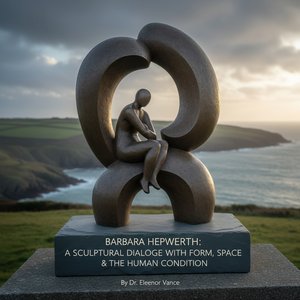 Barbara Hepworth: A Sculptural Dialogue with Form, Space & the Human ConditionExplore the profound world of Barbara Hepworth's sculpture. Discover her artistic evolution, iconic forms, and lasting influence on modern …
 Geometry with Purpose: Distinguishing Suprematism from ConstructivismMaster the differences between Suprematism and Constructivism with our expert guide. Discover the soul of the Russian avant-garde now.
 Sculpture Unveiled: A Definitive Guide to the Mastery of Three-Dimensional Art and FormExplore the profound history of sculpture, from classical realism to modern abstraction. Discover the mastery of form, texture, and medium …