Modern Sculpture · 1937
Two Forms (Barbara Hepworth, 1937)
Barbara Hepworth (1903–1975) sukūrė Two Forms. Šis kūrinys datuojamas 1937 m. Šis kūrinys priklaulo Modern Sculpture kieruliui. Pagaminta naudojant Sculpture. Eksponatas saugomas The Hepworth Wakefield Wakefield, Jungtinė Karalystė.
- 1937
- Sculpture
- The Hepworth Wakefield

 Rankinio darbo aliejinės imitacijos paveikslas
 Pasidalinti
 Dalintis
 Informacinė l lapelė


 Atsisiųsti
 Panašūs eksponatai
 Automatinė diorama
 问答

 Statistika
Two Forms, trumpai
- Pavadinimas
- Two Forms
- Autorius
- Barbara Hepworth (1903–1975)
- Dizainere/is gimęs
- Wakefield, Jungtinė Karalystė
- Data
- 1937
- Mediumas
- Sculpture
- Kur galima pamatyti
- The Hepworth Wakefield, Wakefield, Jungtinė Karalystė
- Judėjimas
- Modern Sculpture
- Laikotarpis
- Modern
- Tema
- sculpture, concrete, abstraction, form, british art, hepworth
Ką vaizduoja Two Forms?
The Essence of Form and Void
In this 1937 work, we encounter a profound exploration of simplicity. The sculpture presents two interlocking forms that ascend vertically, separated by a shallow concave curve. There is a quietude here, a deliberate move away from the representational imagery that dominated previous eras. Instead of depicting a recognizable subject, the work seeks to distill the very essence of shape. It is a study in geometric abstraction, where the relationship between the solid mass and the empty space becomes the primary subject. The verticality of the composition suggests a subtle upward movement, a quiet tension held within the stillness of the material.
Materiality and the Organic Curve
The choice of concrete allows for a specific kind of tactile presence. This material captures subtle tonal variations, giving the surface a weight and solidity that feels grounded. While the shapes are geometric, they are not cold or purely intellectual; there is an organic principle at work in the way the forms curve. This curvature mirrors the natural contours found in rock formations, suggesting a dialogue between the man-made and the geological. The interplay of light and shadow across the concave center creates a sense of depth, making the void feel as tangible as the solid material itself.
- Material: Concrete
- Year: 1937
- Style: Modern Sculpture
- Movement: Abstraction-Création
A Dialogue of Space
To understand this piece, one must consider the radical simplification of expression it represents. It emerged from a period of intense intellectual activity, where artists sought to bridge the gap between surrealist exploration and pure abstraction. The work avoids the anxieties of its time by focusing on visual harmony and precise geometric relationships. By introducing these specific voids, the sculpture transforms the empty space into a structural element. The air within the form becomes a part of the composition, creating a tension between presence and absence that defines the modernist aesthetic. It is a quiet, restrained achievement that communicates through the language of pure form.
Kuriame muziejuje eksponuojamas karya Two Forms?
The Hepworth Wakefield
Wakefield, Jungtinė Karalystė
The Hepworth Wakefield: Skulptūros ir šviesos šventovė Įsikūręs pietinėje Calder upės pakrantėje, Wakefield, Vakarų Yorkshire, „The Hepworth Wakefield“ yra daugiau nei tiesiog galerija; tai architektūrinė išraiška ir įžanga į Barbaros Hepworth palikimą – britų modernizmo šviesos šventė, kuri iki šiol nepraryja savo įkvėpimo jėgų. 2011 m., po David Chipperfield Architects kūrybos, šis pastatas tapo savo pavadinimo įžymos atspindžiu: paprastumu, elegancija ir giliu ryšiu su aplinkine gamta. Architektūrinis stebinys: David Chipperfield zaprobuoti dešimties trapezo formos blokų galerija yra apgaubta pigmentuotu betonu – tai revoliucinis medžiagos pasirinkimas, kuris vienu metu atspindi pramoninį Wakefield paveldą ir puoselėja stilingą modernų estetiką.


Two Forms dididraudžios kokybės vaizdai

Protected by copyright: these files are for personal reference, not a licence to republish.
Barbara Hepworth, Two Forms (1937), The Hepworth Wakefield.
Atsakimai į klausimus apie Two Forms
Kur galima pamatyti „Two Forms“ – Barbara Hepworth originalą?
Originalus „Two Forms“ – Barbara Hepworth saugomas The Hepworth Wakefield, Wakefield, Jungtinė Karalystė. Kopija leidžia šį kūrinį eksponuoti namuose.
Kada buvo sukurta „Two Forms“?
„Two Forms“ – Barbara Hepworth kūrybos metai – 1937.
Kokia technika buvo panaudota kūriniam darbui „Two Forms“ – Barbara Hepworth?
„Two Forms“ – Barbara Hepworth technika – Sculpture. Kopijos siekia atkartoti šios technikos vaizdą.
Kokios temos atsispindi kūrynioje „Two Forms“ – Barbara Hepworth?
„Two Forms“ – Barbara Hepworth temos apima sculpture, concrete, abstraction, form, british art, hepworth, modernism. Kartu jie apibendrina šio kūrinio tematiką.
Ar „Two Forms“ yra viešosios teisės kūrinys?
„Two Forms“ – Barbara Hepworth yra vis dar saugoma autorineje teisėje. Šis statusas nustato, kaip galima reprodukcijaus šio kūrinio vaizdą.
Kuriam menininkui priskiriamas kūrinys „Two Forms“?
„Two Forms“ kūrybinį darbą sukūrė Barbara Hepworth. Šioje puslapio informacijoje aprašomas Barbara Hepworth originalus kūrinys.
Kokiam meno stiliui priklauso „Two Forms“ – Barbara Hepworth?
„Two Forms“ yra Modern Sculpture stiliaus kūrinys. Šis dailos kryptis nurodo meninę tradiciją, kurios šis darbas yra dalis.
Kokio Barbara Hepworth kūrybos laikotarpio priklauso „Two Forms“?
Barbara Hepworth kūrybos enceklopedijoje kūrinys „Two Forms“ priskiriamas Mature Period laikotarpiui. Šis etapas leidžia palyginti jį su kitais šio autoriaus kūriniais.
Kokia buvo Barbara Hepworth amžius sukuriant „Two Forms"]?
Kai 1937 m. buvo sukurta „Two Forms“, Barbara Hepworth – gimęs 1903 m. – buvo 34 metų amžiaus.
Apie šį menininką, Barbara Hepworth

1903–1975, Jungtinė Karalystė
Barbara Hepworth
Early Life, Family and Training Barbara Hepworth was born on 10 January 1903 in Wakefield, West Riding of Yorkshire, England. She was the eldest child of Gertrude and Herbert Hepworth. Her father worked as a civil engineer for the West Riding County Council, a background that provided a practical, structural foundation to her upbringing. This early environment in Yorkshire shaped the spatial awareness that would later define her approach to three-dimensional form.
Taip pat Barbara Hepworth darbai
 Barbara Hepworth with the plaster of Figure for Landscape and a bronze cast of Figure (Archaean), November 1964.1964
 Spring (Arts Council Collection)1966
 Hollow Form with White Interior1963
 Prototype for Mrs A.R.T. Richards (Quita)1924
Esdai apie Two Forms
 The Living Contour: A Collector’s Guide to Organic Form and Biomorphic DesignMaster the nuances of organic form and biomorphic design through expert analysis. Explore the rhythm of life in art today.
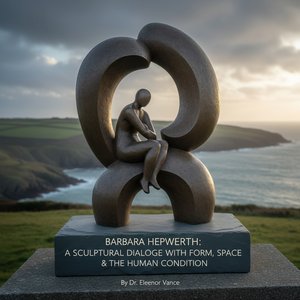 Barbara Hepworth: A Sculptural Dialogue with Form, Space & the Human ConditionExplore the profound world of Barbara Hepworth's sculpture. Discover her artistic evolution, iconic forms, and lasting influence on modern …
 Geometry with Purpose: Distinguishing Suprematism from ConstructivismMaster the differences between Suprematism and Constructivism with our expert guide. Discover the soul of the Russian avant-garde now.