Ecsalių versija
 Viskas apie Two Forms







































 Dėl meno kūrinių ar reprodukcijų, kurių bet kuri pusė yra didesnė nei 105 cm (apie 41 inch), rėmas bus siunčiamas kaip išskaidytas surinkimo rinkinys. Šis metodas užtikrina saugų pristatymą ir apsaugo nuo transportavimo metu galimos žalos.


The Essence of Form and Void
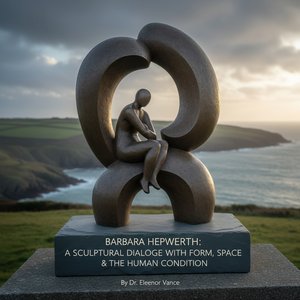
In this 1937 work, we encounter a profound exploration of simplicity. The sculpture presents two interlocking forms that ascend vertically, separated by a shallow concave curve. There is a quietude here, a deliberate move away from the representational imagery that dominated previous eras. Instead of depicting a recognizable subject, the work seeks to distill the very essence of shape. It is a study in geometric abstraction, where the relationship between the solid mass and the empty space becomes the primary subject. The verticality of the composition suggests a subtle upward movement, a quiet tension held within the stillness of the material.
Materiality and the Organic Curve
The choice of concrete allows for a specific kind of tactile presence. This material captures subtle tonal variations, giving the surface a weight and solidity that feels grounded. While the shapes are geometric, they are not cold or purely intellectual; there is an organic principle at work in the way the forms curve. This curvature mirrors the natural contours found in rock formations, suggesting a dialogue between the man-made and the geological. The interplay of light and shadow across the concave center creates a sense of depth, making the void feel as tangible as the solid material itself.
- Material: Concrete
- Year: 1937
- Style: Modern Sculpture
- Movement: Abstraction-Création
A Dialogue of Space
To understand this piece, one must consider the radical simplification of expression it represents. It emerged from a period of intense intellectual activity, where artists sought to bridge the gap between surrealist exploration and pure abstraction. The work avoids the anxieties of its time by focusing on visual harmony and precise geometric relationships. By introducing these specific voids, the sculpture transforms the empty space into a structural element. The air within the form becomes a part of the composition, creating a tension between presence and absence that defines the modernist aesthetic. It is a quiet, restrained achievement that communicates through the language of pure form.
Klausimai ir atsakymai
Ar šis kūrinys Two Forms yra sukeitintas rankiniu būdu ar atspausdintas?
Ranko darbas: profesionalus pavežėjas rankiniu būdu nukopijuoja Two Forms aliejuje ant lino drobės.
Kokią dydį turėčiau pasirinkti darbui Two Forms?
Dydviai svyra nuo 38.7 x 25.8 cm (€179) iki 247.0 x 164.7 cm (€1362); šioje pusėje pateiktoje lentelėje nurodyti pagrindiniai etapai ir jų kainos.
Kiek trunka pristatymas?
Pristatymas užtruks nuo 4 iki 5 savaičių, naudojant nemokamą ekspresinį siuntimą visame pasaulyje; šioje pusėje taip pat galite rinktis skubios gamybos variantą. Jūs galite grąžinti prekę per 100 dienų ir gauti visą sumokėtą sumą atgal, nepriklausomai nuo bet kokių sąlygų.
Kur yra originalas kūrinio Two Forms?
Originalas yra The Hepworth Wakefield kolekcijoje, Wakefield.
Kokia technika buvo naudojama kūriniui Two Forms autoriu Barbara Hepworth?
Sculpture
Daugiau informacijos apie šį paveikslą
 Pasidalinti
 Dalintis
 Išsamiau
 Informacinė l lapelė


 Atsisiųsti
 Panašūs eksponatai
 Automatinė diorama
 问答

 Statistika