Mannerist, one artist at a time
71 Famous Mannerist 화가들 Who Shaped the Movement
엘 그레코 (1541–1614) is the most famous Mannerist 화가, whose singular vision gave us 오르가즈 백작의 장례식 및 톨레도 풍경. Next stand 틴토레토, 주세페 아르침볼도, 브론치노 및 소포니스바 안귀솔라. These 71 화가들, from 아미코 아스페르티니 (born 1475) to 크리스토파노 알로리 (born 1577), came from 14 countries.
Our selection. Artists whose works our catalogue attaches to Mannerist, in the order of our fame ranking. Artists born after 1955 with no Wikidata identifier stay out until verified. The Wikipedia figure counts our 32 languages with an article on the artist.


In brief
Mannerist in brief
- 71아티스트
- 1475–1577출생 연도
- 14출생 국가
- 2여성
- 5,179카탈로그 내 작품들
- 이 리스트의 여성 아티스트들
- 소포니스바 안귀솔라, 라비니아 폰타나
One artist at a time
71 Mannerist 화가들 and their signature works


8of 71
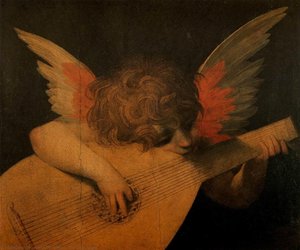
조르조 바사리 1511–1574
이탈리아인 Born in 아레초 마니에리스모 Wikipedia in 31/32 languages

Teacher of Jacopo Zucchi #54, Federico Zuccari #41




18of 71
한스 폰 아헨 1552–1615
독일 Born in 쾰른 매너리즘 회화 Wikipedia in 26/32 languages

AllPaintingsStore.com에서 한스 폰 아헨의 삶과 작품에 대해 더 자세히 알아보세요: [https://AllPaintingsStore.com/@@/a@d3aquv](https://AllPaintingsStore.com/@@/a@d3aquv) | 오스트도이체 갈레리 박물관(독일) 탐방


21of 71
Niccolò Dell' Abbate 1512–1571
이탈리아 Born in 모데나 매너리즘 Wikipedia in 25/32 languages

1512년경 이탈리아 모데나에서 태어난 Niccolò Dell' Abbate는 이탈리아 매너리즘 운동의 중추적인 인물로 등장했습니다.


Signature works · The 100 signature works


32of 71
오토 판 빈 1556–1629
플랑드르 Born in 레이던 매너리즘 Wikipedia in 15/32 languages

Pupil of Federico Zuccari #41


36of 71
Hendrick De Clerck 1570–1630
Flemish Late Mannerism

Early Life & Training: De Clerck’s formative years are shrouded in obscurity, though evidence suggests he received training under Jan Brueghel the Elder, a titan of Flemish landscape painting and a pivotal influence on de Clerck's artistic approach. Among De Clerck’s most celebrated achievements is “The Deposition,” commissioned for St.


38of 71
Perino del Vaga 1501–1547
Italian Born in Florence Mannerist Painting Wikipedia in 15/32 languages

Whether depicting the celestial grace of a Madonna with Child or the dramatic tension found in works like The Fall of the Giants, Perino possessed a unique talent for blending the monumental with the delicate.


39of 71
Stradanus 1523–1605
Flemish Born in Bruges Renaissance, 16th Century Painting Wikipedia in 15/32 languages

In 1550, Stradanus embarked on a transformative journey to Florence, where he entered the service of the Medici family, then one of the most powerful and influential families in Europe. The Metropolitan Museum of Art’s collection features a significant drawing by Stradanus – “ Allegory of America” – offering valuable insight into his artistic vision and providing a tangible connection to this remarkable Florentine master.
Teacher of Antonio Tempesta #56


41of 71
Federico Zuccari 1539–1609
Italian Born in Sant'Angelo in Vado Mannerism Wikipedia in 18/32 languages

Their collaborative spirit yielded masterpieces such as “The Holy Family ” in Palazzo Vecchio, a work that serves as a testament to their unified artistic language. This ambition is perhaps most tangibly felt in Casa Zuccari in Florence, a residence built around 1578.


43of 71
Cornelis Ketel 1548–1616
Dutch Born in Gouda Mannerism Wikipedia in 13/32 languages

Encouragement also came from Dirck Crabeth, a celebrated stained-glass artist and brother to Wouter Crabeth, whose wife may have been related to Ketel – suggesting a network of familial support within the artistic community.


44of 71
Gillis Mostaert 1528–1598
Flemish Born in Hulst Mannerism, Renaissance Wikipedia in 8/32 languages

The influence of Hieronymus Bosch is also readily apparent in Mostaert’s oeuvre, particularly in compositions derived from tapestries based on Bosch's fantastical creations. Perhaps his most famous work, The Haywain (Allegory on Worldly and Clerical Abuses), exemplifies this inspiration. He played a crucial role in the development of both genre and landscape art within Antwerp, pushing boundaries and inspiring subsequent generations of artists.


47of 71
Santi di Tito 1536–1603
Italian Born in Florence Proto-Baroque & Counter-Maniera Wikipedia in 14/32 languages

The legacy of Santi di Tito is etched into the very fabric of Italian art history.


50of 71
Andrea Schiavone 1522–1563
Italian Born in Zadar Baroque Sculpture; Mannerism Wikipedia in 14/32 languages

The career of Andrea Schiavone was one of prolific achievement, leaving behind a body of work that includes everything from intimate etchings to monumental religious narratives.


52of 71
Bartolomeo Passarotti 1529–1592
Italian Born in Bologna Mannerism Wikipedia in 10/32 languages
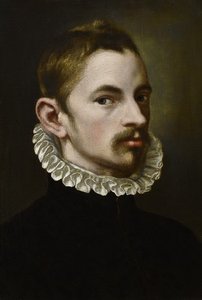
The historical significance of Bartolomeo Passarotti lies in his role as a foundational figure for the Carracci Academy and the broader Bolognese tradition.


53of 71
Andrea Vicentino 1542–1617
Italian Born in Vicenza Late Renaissance/Mannerist Wikipedia in 5/32 languages

Through his work, the halls of the palace—including the Sala del Senato and Sala dello Scrutinio—were transformed into theatrical stages where history and myth converged.


54of 71
Jacopo Zucchi 1542–1596
Italian Born in Florence Mannerist Painting Wikipedia in 11/32 languages

His works often serve as windows into the complex allegories of the 16th century: Religious Devotion: In pieces such as Allegory of the Creation, Zucchi captures profound moments of divine connection, utilizing dramatic lighting and celestial figures to evoke a sense of awe and religious fervor.


56of 71
Antonio Tempesta 1555–1630
Italian Born in Florence Mannerism Wikipedia in 11/32 languages

As a fresco painter, he contributed significantly to some of the most celebrated decorative programs of the age, including works for Villa Lante and Palazzo Farnese. He remains a testament to the interconnectedness of the European art world during the Renaissance and Baroque periods, serving as a bridge between the classical traditions of Italy and the burgeoning artistic spirit of the North.
Pupil of Stradanus #39


58of 71
Wenzel Jamnitzer 1507–1585
German Born in Vienna Northern Mannerism

This rigorous training instilled in him a profound understanding of goldsmithing techniques—a craft that demanded precision, artistry, and meticulous attention to detail. Notably, he studied alongside Euclid's Elements and Plato’s Timaeus, texts considered foundational for geometric reasoning and philosophical contemplation – influences that would profoundly shape his later artistic pursuits. Born in Vienna, Italy, Wenzel was the son of Hans Jamnitzer the Elder, a goldsmith who established a tradition of excellence that would continue through subsequent generations.


59of 71
Vincenzo Scamozzi 1548–1616
Italian Born in Vicenza

His monumental two-volume treatise, L'idea dell'architettura universale, published in Venice in 1615, stands as one of the final great works of the Renaissance.
Signature works · The 100 signature works


60of 71
Domenico Fontana 1543–1607
Italian Born in Melide Late Renaissance
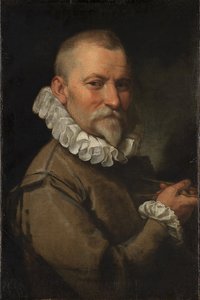
Born in Melide, a small village nestled on the shores of Lake Lugano in Switzerland – a region then caught between Swiss cantons and Italy – in 1543, Fontana’s life was one of relentless innovation and service to the Papal States. The Fontana dell'Acqua Felice (Fountain of Moses), built for Pope Sixtus V, stands as a prime example.


61of 71
Jan De Beer 1475–1528
Born in Antwerp Antwerp Mannerism Wikipedia in 9/32 languages
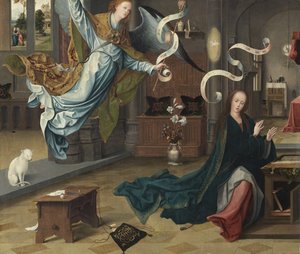
Though his name fell into obscurity following the end of the sixteenth century, Jan De Beer’s influence endured through the lasting impact of the Antwerp Mannerist style.


62of 71
Marcello Venusti 1510–1579
Italian Born in Mazzo di Valtellina Mannerist Wikipedia in 10/32 languages

His most celebrated achievement remains the scaled oil copy of the Last Judgment, commissioned by Cardinal Alessandro Farnese.


63of 71
Toussaint Dubreuil 1561–1602
French Born in Paris Second School Fontainebleau; Mannerism; Italian Art Influence Wikipedia in 8/32 languages

He found endless inspiration in the epic tales of Homer, the poetic explorations of Pierre de Rationale, and the dramatic narratives of Torquato Tasso. His canvases often feature: Heroic Confrontations: Dramatic scenes where figures are caught in moments of intense physical and emotional struggle, utilizing elongated limbs to heighten the sense of tension. Toussaint Dubreuil, a name etched into the delicate fabric of the French Renaissance, stands as a masterful bridge between the structured grandeur of Mannerism and the fluid, emotive grace of Italian influence.


65of 71
Jacopino del Conte 1510–1598
Italian Born in Florence Mannerist Wikipedia in 10/32 languages

Beyond his fresco cycles, Conte also produced a series of individual portraits, most notably his portrait of Michelangelo (c. 1540). The “Virgin and Child with Saint Elizabeth and John the Baptist ” (1535), now housed in the Uffizi Gallery, exemplifies this evolution, showcasing a masterful command of perspective, drapery, and emotional expression. Conte's career took a significant turn in 1547-48 when he joined forces with Siciolante da Sermoneta on the ambitious fresco decoration of the chapel of San Remigio in San Luigi dei Francesi.


66of 71
Paolo Fiammingo 1540–1596
Flemish Born in Antwerp Landscape with mythological and allegorical Wikipedia in 8/32 languages

By the time of his death in 1596, Fiammingo had left an indelible mark on the development of the Italianate Flemish School.


67of 71
Jacques Bellange 1575–1616
French Born in Bassigny Northern Mannerism Wikipedia in 9/32 languages

Though his life was cut short in 1616, Bellange’s influence endured far beyond the borders of Lorraine.


68of 71
Girolamo Mazzola Bedoli 1500–1569
Italian Born in Parma Mannerist Painting Wikipedia in 8/32 languages

The significance of Girolamo Mazzola Bedoli extends beyond the individual canvases he left behind.


69of 71
Lelio Orsi 1508–1587
Italian Born in Novellara Mannerist Wikipedia in 7/32 languages

Born in the small town of Novellara around 1508 or 1511, Orsi navigated an era defined by shifting theological certainties and the complex intellectual currents of humanism.


70of 71
Michele Tosini 1503–1577
Italian Born in Florence Renaissance and Mannerism Wikipedia in 5/32 languages

The historical significance of Michele Tosini lies in his role as a bridge between eras. His work serves as a luminous window into a time when Florence was the epicenter of the art world, reflecting both the spiritual devotion of the early century and the courtly sophistication of the later years. His early training under Lorenzo di Credi and Antonio del Ceraiolo anchored him in the refined traditions of the High Renaissance.
Signature works · The 100 signature works


71of 71
Juan Correa De Vivar 1510–1566
Spanish Born in Mascaraque Renaissance, Mannerism Wikipedia in 6/32 languages

Correa's early commissions, such as the altarpiece for the monastery of Santa María de Guadalupe in Mascaraque (circa 1532-1534), demonstrate a clear adherence to Raphael’s principles – elegant figures, balanced compositions, and harmonious color palettes.


Signature works
Signature Mannerist works
A timeline
Mannerist through its signature works
- 1528
- 1532
- 1535
- 1540
- 1544
- 1545
- 1551
- 1555
- 1572
- 1586
- 1590
- 1592
- 1595
- 1595
Figures
The figures
Every name
List of 71 famous Mannerist 화가들, every name
- 1
 엘 그레코1541–1614
- 2
 틴토레토이탈리아 · 1519–1594
- 3
 주세페 아르침볼도이탈리아인 · 1527–1593
- 4
 브론치노이탈리아인 · 1503–1572
- 5
 소포니스바 안귀솔라이탈리아 · 1532–1625
- 6
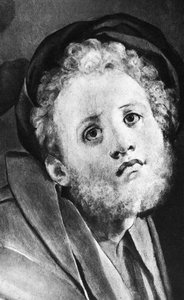 자코포 다 폰토르모1494–1556
- 7
 파르미자니노이탈리아 · 1503–1540
- 8조르조 바사리이탈리아인 · 1511–1574
- 9
 줄리오 로마노이탈리아인 · 1499–1546
- 10
 로소 피오렌티노이탈리아 · 1494–1540
- 11
 세바스티아노 델 피옴보이탈리아인 · 1485–1547
- 12
 헨드리크 골치우스네덜란드 · 1558–1617
- 13
 도메니코 베카푸미이탈리아 · 1484–1551
- 14
 피터르 아르천네덜란드 · 1508–1575
- 15
 바르톨로메우스 스프랑허플랑드르 · 1546–1611
- 16
 라비니아 폰타나이탈리아 · 1552–1614
- 17
 페데리코 바로치이탈리아인 · 1535–1612
- 18한스 폰 아헨독일 · 1552–1615
- 19
 크리스토파노 알로리이탈리아 · 1577–1621
- 20
 알레산드로 알로리이탈리아인 · 1535–1607
- 21Niccolò Dell' Abbate이탈리아 · 1512–1571
- 22
 조반니 바티스타 모로니1525–1578
- 23
 베누토 체리니이탈리아인 · 1500–1571
- 24
 프란체스코 살비아티이탈리아 · 1510–1563
- 25
 잠보로냐플랑드르 · 1529–1608
- 26
 카렐 판 만데르(노년)플랑드르 · 1548–1606
- 27
 다니엘레 다 볼테라이탈리아 · 1509–1566
- 28
 장 주종프랑스 · 1510–1567
- 29
 프로스페로 폰타나이탈리아 · 1512–1597
- 30
 요아힘 브테바일네덜란드 · 1566–1638
- 31
 프란체스코 프리마티초이탈리아 · 1504–1570
- 32오토 판 빈플랑드르 · 1556–1629
- 33
 루카 캄비아소이탈리아 · 1527–1585
- 34
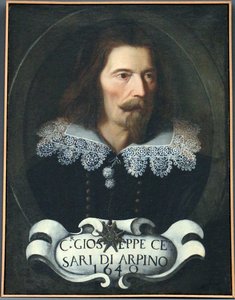 주세페 체사리이탈리아 · 1568–1640
- 35
 프란체스코 바사노 (소)이탈리아 · 1549–1592
- 36Hendrick De ClerckFlemish · 1570–1630
- 37
 레안드로 바사노이탈리아인 · 1557–1622
- 38Perino del VagaItalian · 1501–1547
- 39StradanusFlemish · 1523–1605
- 40
 지오반니 안토니오 데 사키스 오릴 포르데노네이탈리아인 · 1484–1539
- 41Federico ZuccariItalian · 1539–1609
- 42
 체키노 델 살비아티이탈리아 · 1510–1563
- 43Cornelis KetelDutch · 1548–1616
- 44Gillis MostaertFlemish · 1528–1598
- 45
 프란체스코 바키아카이탈리아 · 1494–1557
- 46
 스키피오네 풀초네1550–1598
- 47Santi di TitoItalian · 1536–1603
- 48
 폴리도로 다 카라바조이탈리아 · 1499–1543
- 49
 빈첸초 캠피이탈리아 · 1536–1591
- 50Andrea SchiavoneItalian · 1522–1563
- 51
 자코포 리고치이탈리아 · 1547–1627
- 52Bartolomeo PassarottiItalian · 1529–1592
- 53Andrea VicentinoItalian · 1542–1617
- 54Jacopo ZucchiItalian · 1542–1596
- 55
 도메니코 틴토레토이탈리아 · 1560–1635
- 56Antonio TempestaItalian · 1555–1630
- 57
 아미코 아스페르티니이탈리아 · 1475–1552
- 58Wenzel JamnitzerGerman · 1507–1585
- 59Vincenzo ScamozziItalian · 1548–1616
- 60Domenico FontanaItalian · 1543–1607
- 61Jan De Beer1475–1528
- 62Marcello VenustiItalian · 1510–1579
- 63Toussaint DubreuilFrench · 1561–1602
- 64
 토비아스 슈티머스위스 · 1539–1584
- 65Jacopino del ConteItalian · 1510–1598
- 66Paolo FiammingoFlemish · 1540–1596
- 67Jacques BellangeFrench · 1575–1616
- 68Girolamo Mazzola BedoliItalian · 1500–1569
- 69Lelio OrsiItalian · 1508–1587
- 70Michele TosiniItalian · 1503–1577
- 71Juan Correa De VivarSpanish · 1510–1566
Questions
Your questions
Which Mannerist 화가 is the most famous?
Who are the 5 most famous Mannerist 화가들?
엘 그레코 (#1), 틴토레토 (#2), 주세페 아르침볼도 (#3), 브론치노 (#4) 및 소포니스바 안귀솔라 (#5).
Where were most Mannerist 화가들 born?
이탈리아: 35 of the 71 화가들 in this list were born there, then Italy (14) 및 네덜란드 (3).
Who are the most famous Mannerist 화가들 from 이탈리아?
The highest-ranked 화가들 born in 이탈리아 are 틴토레토 (#2), 주세페 아르침볼도 (#3), 브론치노 (#4), 소포니스바 안귀솔라 (#5) 및 자코포 다 폰토르모 (#6).
Who taught the famous Mannerist 화가들?
조르조 바사리 (#8) taught Jacopo Zucchi (#54) 및 Federico Zuccari (#41); Stradanus (#39) taught Antonio Tempesta (#56).
Who was the first Mannerist 화가?
The earliest-born 화가 in this list is 아미코 아스페르티니 (#57), born in 1475.
In which period did Mannerist art flourish?
Most 화가들 in this list were born in the 1540s (11 of 71), between 1475 and 1577 overall.
Who are the most famous female Mannerist 화가들?
This list includes 2 women: 소포니스바 안귀솔라 (#5) 및 라비니아 폰타나 (#16).
Who are the most famous Mannerist 화가들 from Italy?
The highest-ranked 화가들 born in Italy are Perino del Vaga (#38), Federico Zuccari (#41), Santi di Tito (#47), Bartolomeo Passarotti (#52) 및 Andrea Vicentino (#53).
Which city was home to the most Mannerist 화가들?
피렌체: 8 of the 화가들 in this list were born there.
Where are the great works of Mannerist art today?
Where can I see more works by these 화가들?
Our catalogue holds 5,179 works by these 화가들.
Read
Stories on OriginalUniqueArt.com
Other movements
Famous artists of other movements
 유명한 Baroque 예술가밤의 망루 (De Nachtwacht) · 렘브란트
 유명한 Contemporary Realist 예술가이삭 줍는 사람들 · 장프랑수아 밀레
 유명한 Impressionist 예술가별이 빛나는 밤 (뉴욕, MoMA) · 빈센트 반 고흐
 유명한 Romanticist 예술가토성, 그의 아들을 잡아먹는 중 · 프란시스코 데 고야
 유명한 Neoclassicist 예술가The Death of Marat · 자크루이 다비드
 유명한 Realist 예술가세계의 기원 · 귀스타브 쿠르베
 유명한 Renaissance 예술가모나리자 (라 죠콘다) · 레오나르도 다 빈치
 유명한 Dutch Golden Age 예술가진주 귀걸이를 한 소녀 · 요하네스 페르메이르
 유명한 Expressionist 예술가구성 VII · 바실리 칸딘스키
 유명한 Rococo 예술가사랑의 교훈 · 앙투안 바토
Other periods
Famous artists across the periods
 유명한 Early Medieval 예술가Snowy River · 왕유
 유명한 High Medieval 예술가마에스타의 마돈나 (오니산티 마돈나) · 조토 디 본도네
 유명한 Late Medieval 예술가수태고지와 두 성인 · 시모네 마르티니
 유명한 Renaissance 예술가아담의 창조 · 미켈란젤로 부오나로티
 유명한 Early Modern 예술가마태오의 부르심 · 카라바조
 유명한 19th Century 예술가수련 (또는 연꽃) · 클로드 모네
 유명한 Modern 예술가게르니카 · 파블로 피카소
 유명한 Contemporary 예술가Wind Sculpture III (one in a series of nine) · Yinka Shonibare
Discover more