

A Sanctuary of Stone and Serenity: The Living Canvas of Worcester College
To step within the bounds of Worcester College, Oxford , is to wander through a living chronicle of English history, where every weathered stone and manicured lawn tells a story of enduring scholarship and aesthetic evolution. The college possesses a soul that predates its formal establishment, tracing its lineage back to the medieval Gloucester College. This profound connection to the thirteenth century imbues the atmosphere with a monastic gravity, a quietude that invites deep contemplation. As one traverses the campus, the architecture reveals itself not as a static monument, but as a rhythmic dialogue between eras. The rugged, sturdy forms of medieval dwellings stand in poetic contrast to the grand neoclassical visions and the masterful Palladian influence of Nicholas Hawksmoor . This architectural layering creates a sensory experience akin to viewing a palimpsest, where the traces of the past are never truly erased but rather enriched by the bold strokes of subsequent generations.
The college’s chapel serves as its most breathtaking artistic centerpiece, a monumental testament to the Enlightenment's fascination with classical ideals and the Victorian era's thirst for ornamental splendor. Within these walls, the mastery of Hawksmoor meets the vibrant, emotive energy of later additions by James Wyatt and William Burges . The interplay of light through intricate stained glass windows casts a kaleidoscopic glow upon magnificent frescoes, transforming the ecclesiastical space into a sanctuary of color and light. For the art lover, this interior represents a pinnacle of decorative achievement, where the structural integrity of stone meets the delicate fluidity of painted narrative, offering a profound meditation on the intersection of faith, intellect, and artistry.
A Landscape of Meticulous Composition
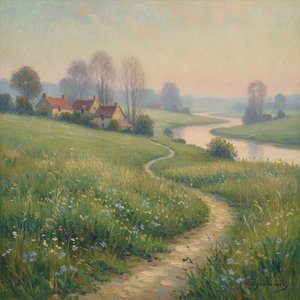
Beyond the structured grandeur of the built environment lies a landscape that functions as an extension of the college’s artistic soul. The twenty-six acres of Worcester’s gardens are far more than mere ornamental grounds; they are a meticulously composed landscape painting brought to life. Ancient oaks cast long, dappled shadows across rolling lawns and meandering paths, creating a sense of timelessness that mirrors the monastic ethos of quiet reflection. This horticultural masterpiece balances formal landscaping with the spontaneous charm of informal planting, providing a verdant backdrop that has long captivated the eyes of artists.
The true distinction of Worcester College lies in its ability to curate an environment where history and modernity coexist in a state of perpetual grace. It is a place that celebrates the tactile beauty of medieval illuminated manuscripts—with their intricate Celtic knotwork and luminous pigments—just as fervently as it embraces the progressive spirit of its contemporary academic community. For collectors and designers, Worcester offers an unparalleled inspiration: a masterclass in how heritage can be preserved through a lens of continuous renewal. It remains a unique destination where the weight of tradition does not burden the present but rather provides the foundation for a future defined by beauty, learning, and an unwavering appreciation for the sublime.