A Monument to American Ideals: Exploring the United States Capitol
The United States Capitol Building in Washington, D.C., is far more than a seat of legislative power; it’s a breathtaking embodiment of American history, artistry, and democratic aspiration. Rising majestically on Capitol Hill, this iconic structure isn't simply *built* into the landscape—it seems to grow from the very ideals upon which the nation was founded. A visit here is an immersion into the heart of a continuing national narrative, where echoes of pivotal moments resonate within its walls and artistic grandeur unfolds at every turn. The Capitol’s significance lies not just in the laws debated and enacted within, but also in its role as a living museum, a testament to the evolving story of the United States.
The building's genesis began with President George Washington laying the cornerstone in 1793, marking the birth of a new nation’s political heart. Over decades, architects – William Thornton, Charles Bulfinch, and Thomas U. Walter among them – shaped its neoclassical design, deliberately evoking the grandeur of ancient Greece and Rome. This wasn't merely a stylistic choice; it was a conscious effort to ground American governance in principles of democracy and civic virtue. The resulting structure is a harmonious blend of symmetry, imposing columns, and intricate ornamentation—a visual declaration of the nation’s commitment to order, reason, and justice. The sheer scale of the Capitol speaks volumes about the ambition and ideals of its founders, projecting an image of stability and enduring strength.
Artistic Grandeur: Frescoes, Statues, and Symbolic Spaces
Within the Capitol's walls resides a remarkable collection of artistic treasures, inextricably interwoven with its political function. Perhaps the most immediately arresting is Constantino Brumidi’s *Apotheosis of Washington*, a colossal fresco adorning the Rotunda’s ceiling. This isn’t simply decorative; it’s a meticulously crafted allegory, depicting George Washington ascending to divine status surrounded by figures representing liberty, victory, and other virtues essential to the young republic. The sheer scale – spanning over 4,600 square feet – and intricate detail are captivating, inviting contemplation on themes of leadership, sacrifice, and national destiny. Brumidi’s masterful use of color and perspective creates a truly awe-inspiring experience, pulling viewers upwards into a symbolic representation of American ideals.
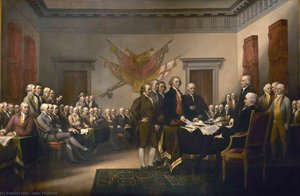
Beyond *Apotheosis*, the Capitol houses an impressive array of historical paintings. Robert Walter Weir's *Embarkation of the Pilgrims* captures a pivotal moment in early colonial history, while John Trumbull’s *Declaration of Independence* vividly portrays the signing of this foundational document. These works aren’t static representations; they are dynamic narratives that bring American history to life. Furthermore, the Capitol's collection includes portraits of prominent figures – presidents, statesmen, and military heroes – each contributing to a rich tapestry of visual storytelling. The careful placement of these artworks throughout the building reinforces its role as a living museum, constantly reminding visitors of the nation’s past.
The Crypt: A Silent Witness to American Heritage
Beneath the Rotunda lies the Crypt, now home to the National Statuary Hall Collection. This subterranean chamber is a powerful and often overlooked aspect of the Capitol's architecture. Originally intended as a mausoleum for deceased presidents, it was transformed into a repository for statues representing each state in the Union. These sculptures – ranging from classical figures to depictions of local heroes – stand as silent witnesses to the nation’s diverse heritage. The Crypt is a poignant reminder that America is built upon the contributions of countless individuals, reflecting the vastness and complexity of its population.
The statues themselves are remarkable examples of American artistry, showcasing a range of styles and techniques. Henry Kirke Brown, a pioneering bronze sculptor, created many of the figures in the collection, blending Italian artistic traditions with distinctly American subjects. The Crypt’s atmosphere is one of solemn reflection—a space where visitors can contemplate the sacrifices made by those who came before them and consider their own role in shaping the nation's future.
An Evolving Architectural Masterpiece & Ongoing Significance
The Capitol’s architecture itself tells a story of growth and adaptation. The building wasn’t conceived in a single, definitive design but evolved over decades through the vision of its architects. Its neoclassical style—characterized by symmetry, grand columns, and ornate detailing—was deliberately chosen to evoke the democratic ideals of ancient Greece and Rome. The magnificent dome, completed in 1863 during the Civil War, is arguably its most recognizable feature. Constructed of cast iron, it symbolizes the resilience and ultimate triumph of the Union. The Rotunda, a vast circular space beneath the dome, serves as the building’s central focal point—a gathering place for ceremonies, addresses, and moments of national reflection.
The Capitol has endured trials throughout its history, including being partially burned by British troops during the War of 1812 and undergoing extensive renovations to accommodate a growing nation. The completion of the dome after the Civil War was not merely an architectural achievement but a powerful symbol of reunification. More recently, the events of January 6, 2021, served as a stark reminder of the fragility of democratic institutions and the ongoing need for vigilance in safeguarding them. This event, while deeply unsettling, underscores the Capitol’s unique position—a place where history isn't just remembered but actively *made*, sometimes amidst conflict and challenge. Today, the United States Capitol remains a vibrant symbol of American democracy, continuing to serve as the heart of the nation’s government.