A Symphony of Stone and Scholarship
To step through the gates of The Queen's College is to enter a realm where the very air vibrates with centuries of intellectual curiosity, a legacy etched into magnificent stone and nurtured by generations of brilliant minds. Founded in 1341 by Robert de Eglesfield in honor of Queen Philippa, this institution distinguishes itself from many Oxford colleges through an experience that transcends mere observation; it is a journey into the heart of Oxford’s artistic soul. Unlike curated galleries that exist in isolation, the college offers a palpable sense of continuity, where history breathes alongside beauty, and every corridor whispers tales of bygone eras. The architecture serves as a profound dialogue between epochs, beginning with the austere grandeur of medieval design—pointed arches and ribbed vaults that proclaim faith and stability—and culminating in the breathtaking neoclassical mastery of the 18th century.
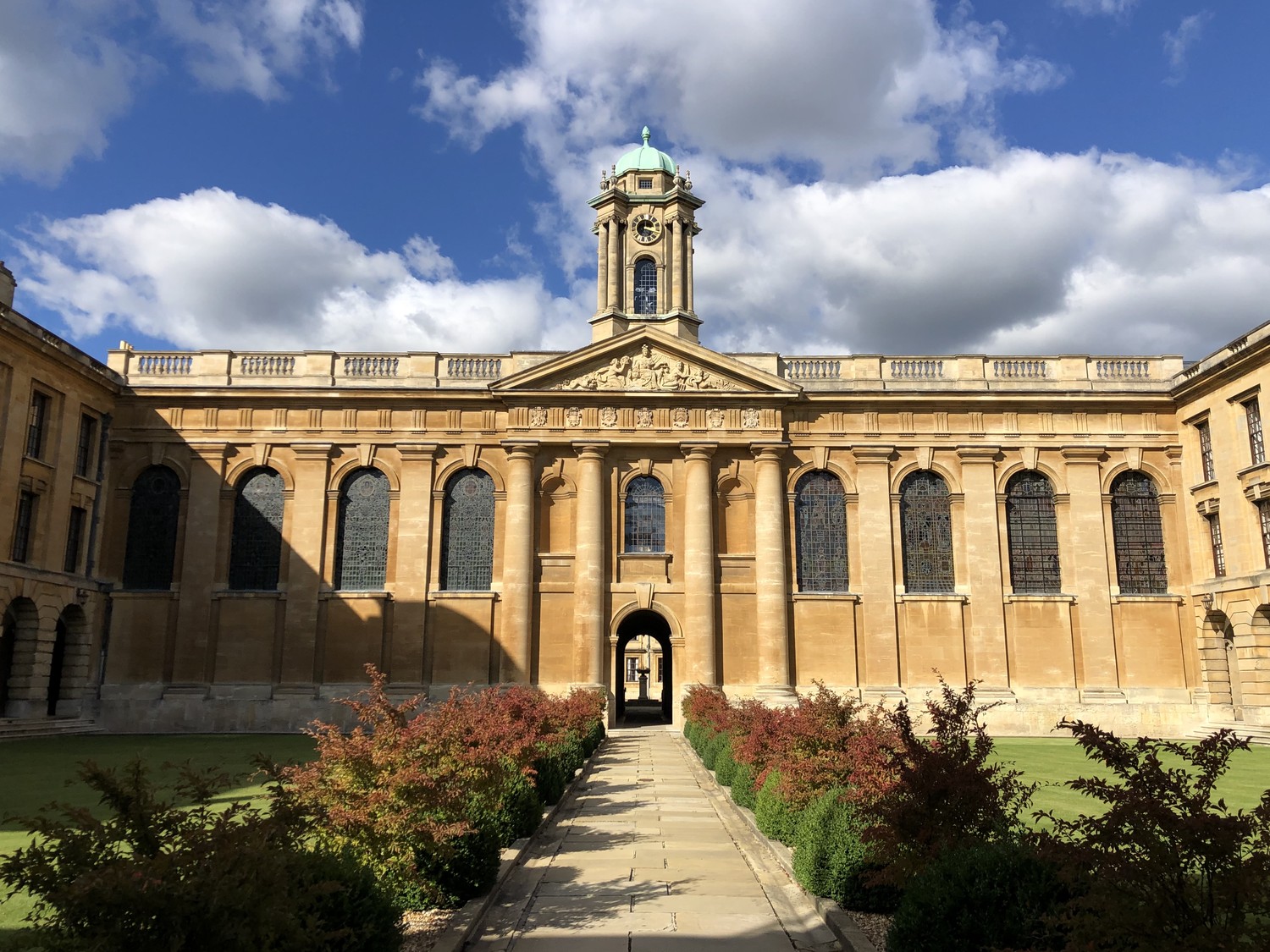
The architectural narrative reaches its zenith in the Front Quad, a space so masterfully executed that Nikolaus Pevsner famously lauded it as the grandest piece of classical architecture in Oxford. Spearheaded by the legendary Nicholas Hawksmoor, this design demonstrates a sophisticated understanding of proportion and symmetry, creating a visual rhythm that captivates the eye. For the art lover and the admirer of fine craftsmanship, the interplay of light and shadow across these facades offers a subtle visual cue for contemplation, inviting one to appreciate the meticulous precision of neoclassical influence. This structural elegance is not merely for show; it is a deliberate integration of form and function, designed to inspire the same rigor and grace found within the college's scholarly pursuits.
Gardens of Contemplation and Intellectual Legacy
Beyond the imposing stone walls lies an oasis of serenity, where meticulously crafted gardens provide a deliberate counterpoint to the rigorous demands of academic life. These are not merely ornamental spaces but integral components of the college’s aesthetic identity, offering a respite from the bustling cityscape of Oxford. The Upper Quad Garden, in particular, stands as a masterpiece of landscape design, featuring mature trees and herbaceous borders that exemplify the principles of Victorian landscape artistry. Here, the balance between cultivated landscapes and wilder, natural elements creates a sanctuary where one can imagine generations of scholars finding both solace and creative inspiration amidst the verdant greenery.
The true essence of The Queen's College, however, lies in its extraordinary lineage of luminaries who have shaped the global intellectual landscape. From the martial legacy of Henry V to the modern digital revolution brought about by Tim Berners-Lee, the college has been a crucible for innovation and leadership. This profound history is encapsulated in the college motto, “Nutrices tuae” —meaning “Our Nourishers”—a sentiment that reflects a tradition of fostering growth and cultivating excellence. For collectors and designers alike, the college represents more than a historical site; it is a symbol of enduring prestige, where the confluence of architectural grandeur and a storied past creates an atmosphere of timeless elegance that continues to resonate in the modern world.