

The Architecture of Museum Island
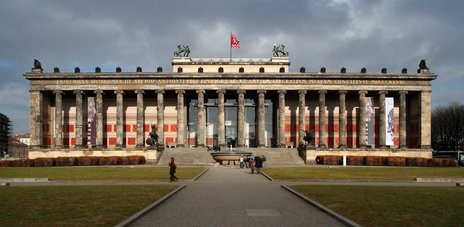
The Staatliche Museen zu Berlin occupies a central position within the heart of Berlin, Germany. The complex is organized into five distinct clusters, with the most significant concentration located on the UNESCO World Heritage site known as Museum Island. Much of the architectural landscape was shaped by Karl Friedrich Schinkel, whose designs for the Altes Museum and Neues Museum utilize light and space to frame the collections within. These structures provide a physical framework for the transition from classical antiquity to modern era developments.
The Pergamon Museum, though undergoing necessary renovation, contains monumental reconstructions such as the Ishtar Gate of Babylon. Its glazed bricks reflect the scale of ancient Near Eastern civilizations. Nearby, the Altes Museum houses Greek and Roman sculptures, while the Neues Museum holds the bust of Nefertiti. The architecture of these buildings does not merely house objects; it dictates how a visitor moves through different historical epochs.
The Collections of the Staatliche Museen
The holdings within these institutions span several millennia of human production. In the Gemäldegalerie at the Kulturforum, the focus shifts to Old Master paintings. Notable works include the 1502 oil on panel painting, the Solly Madonna by Raphael, which demonstrates his early mastery of composition and color. The collection also includes Jan van Eyck’s Madonna in the Church, a work noted for its use of oil glazes to create depth within a Gothic setting.
The Impressionist and Realist movements are represented through specific canvases such as Claude Monet’s 1868 Portrait of Madame Gaudibert. This early work shows a meticulous attention to detail before the artist moved toward his later style. Édouard Manet’s The Masked Ball at the Opera, completed in 1873, provides a view of Parisian social life through its use of deep blacks and visible brushstrokes. Other significant holdings include:
- The Egyptian Museum of Berlin within the Neues Museum.
- The Numismatic Collection and Sculpture Collection at the Bode Museum.
- The collection of decorative arts in the Kunstgewerbemuseum.
- The Ethnological Museum’s vast array of objects from Africa, Asia, and the Americas.
Expansion and Research
Beyond the primary galleries on Museum Island, the institution extends to the Kulturforum and the Humboldt Forum. The Ethnological Museum, located in the Humboldt Forum, manages over 500,000 objects, including historical photographs and sound recordings from the Berliner Phonogramm-Archiv. This branch of the collection brings perspectives from the Pacific Coast of North America, Mesoamerica, and various African nations into the Berlin landscape.
The institution also maintains a presence in Dahlem and Charlottenburg, housing specialized collections such as the Museum Berggruen for classic modern art and the Museum of Photography. These sites are supported by several research institutes and libraries, including the Zentralarchiv, which preserves the administrative and historical records of the Prussian cultural heritage. The work of these institutes ensures the continued study of the diverse materials held within the various clusters.


