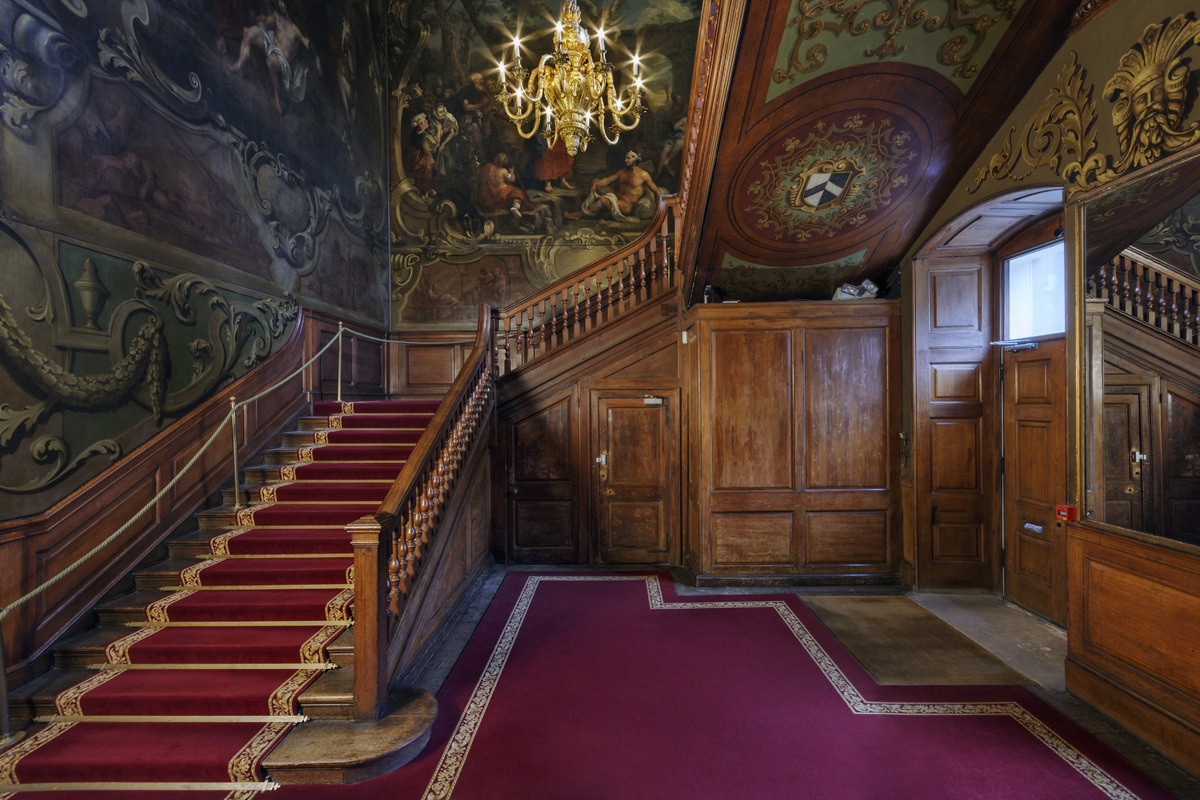


A Journey Through Centuries of Healing: St Bartholomew’s Hospital Museum & Archive
Nestled within the historic heart of London, the St Bartholomew’s Hospital Museum & Archive offers a profoundly moving and unexpectedly captivating journey through nearly a millennium of medical history. More than simply a collection of artifacts, it's an immersive experience—a tangible link to the evolution of healthcare, punctuated by poignant stories of human resilience, groundbreaking innovation, and the very fabric of London itself. The museum’s unique position as housed within a working hospital adds layers of immediacy and context, allowing visitors to trace the arc of medical progress against the backdrop of daily life for centuries.
Founded in 1123 as part of the Augustinian priory that would eventually become St Bartholomew-the-Great church, the hospital’s origins are deeply intertwined with London's religious and social landscape. Initially a refuge for the sick and vulnerable—a testament to the charitable spirit of its founders—it steadily evolved through turbulent periods of plague, war, and societal change. The museum meticulously chronicles this transformation, showcasing not just instruments and records but also the architectural adaptations that mirrored the hospital’s expanding role within the city. The current building, a complex of historic structures undergoing careful renovation, whispers tales of medieval foundations layered upon Victorian additions, each reflecting a distinct era in its own right.
A Treasure Trove of Medical History & Artistic Detail
The museum's collection is remarkably diverse, encompassing everything from rudimentary surgical tools to intricate anatomical models. Among the highlights are early examples of medical instruments—some surprisingly delicate and beautifully crafted—that speak volumes about the skill and ingenuity of practitioners throughout the ages. Notably, the museum houses a remarkable array of works by William Hogarth, whose satirical prints offer a fascinating commentary on 18th-century London society and its relationship to healthcare. However, it’s not just medical instruments that command attention; a selection of early anatomical models, rendered with astonishing detail, reveal the evolving understanding of the human body during the Renaissance and beyond.
Beyond these tangible objects, the museum's archives hold a wealth of personal accounts—letters, diaries, and photographs—that bring the stories of doctors, nurses, patients, and staff to life. These documents paint a vivid picture of the challenges faced by those dedicated to healing, the ethical dilemmas they confronted, and the profound impact they had on the lives of countless individuals. The collection also includes fascinating examples of early medical illustration, demonstrating the painstaking efforts required to document and disseminate knowledge in an era before photography.
Pioneering Innovations & The Legacy of St Bartholomew’s
St Bartholomew's Hospital played a pivotal role in several groundbreaking advancements in medicine. The hospital was home to figures like William Harvey, whose revolutionary research on the circulation of blood fundamentally altered our understanding of human physiology. Similarly, Percivall Pott, a pioneering surgeon at the hospital, developed crucial principles of antiseptic surgery—a concept that would later transform medical practice. The museum celebrates these individuals and their contributions through carefully curated displays and informative panels.
The story doesn’t end with the 18th century. In the late 19th and early 20th centuries, St Bartholomew's Hospital became a center for nursing innovation, thanks in part to the work of Mrs. Bedford Fenwick, who championed improved training methods and patient care practices. The museum highlights these developments, illustrating how St Bartholomew’s consistently pushed the boundaries of medical knowledge and practice.
A Unique Experience & Future Exploration
What truly sets St Bartholomew’s Hospital Museum & Archive apart is its intimate connection to a working hospital. This proximity provides an unparalleled opportunity to witness the continuity between historical practices and modern medicine. The museum isn't merely a repository of artifacts; it’s a living testament to the enduring pursuit of healing—a space where visitors can reflect on the past, appreciate the present, and contemplate the future of healthcare.
Currently undergoing renovation with a scheduled reopening in October 2025, the museum remains accessible for research appointments. For those seeking a deeper understanding of this remarkable institution, exploring its archives and engaging with its dedicated staff offers an enriching and thought-provoking experience—a chance to connect with the rich history of medicine within one of London’s most iconic landmarks.