A Hidden Baroque Jewel: Unveiling Santa Caterina a Magnapoli
Nestled within Rome’s vibrant Monti district, far from the throngs of more celebrated landmarks, lies Santa Caterina da Siena a Magnapoli – a church that whispers tales of faith, artistry, and a surprisingly rich history. More than just a place of worship, it's an intimate portal into 17th-century Rome, offering a profoundly personal experience for those willing to step off the beaten path. This isn’t a grand basilica demanding hurried visits; instead, it invites quiet contemplation amidst its stunning Baroque interiors and poignant votive crypt, making it a truly memorable destination for art lovers and history enthusiasts alike.
The church's origins are rooted in the devotion of Dominican tertiary nuns who sought refuge within the Conti family’s estate at Magnapoli. Beginning in 1574, they gradually acquired properties, transforming a humble dwelling into a thriving convent – a testament to their faith and resilience. The construction of the current church began in 1608 under the direction of Carlo Maderno, though it was tragically interrupted just a few years later. The project resumed in 1628 with Giovanni Battista Soria, ultimately culminating in its consecration in 1640. This evolution reflects not only architectural shifts but also the evolving spiritual landscape of Rome during that period.
Baroque Splendor and Devotional Spaces
Stepping inside Santa Caterina a Magnapoli is like entering a world saturated with Baroque drama. The church’s design, primarily executed in the 17th century, showcases the movement's hallmark features: opulent ornamentation, dramatic lighting, and an overwhelming sense of grandeur intended to inspire awe and reverence. The interior is defined by a single nave punctuated by three richly decorated chapels, each housing works that speak volumes about the church’s history and artistic patronage. A particularly striking fresco in the vault of the nave depicts “The Apotheosis of St Catherine of Siena” (1713), skillfully rendered by Luigi Garzi – a poignant reminder of the saint's central role within the church’s identity.
However, it is the votive crypt that truly sets this church apart. This dedicated space serves as a repository for expressions of gratitude and remembrance—a tangible connection to the devotional practices of past centuries. Here, visitors can witness firsthand the heartfelt prayers and offerings left by generations seeking solace, healing, or simply expressing their faith. The crypt’s atmosphere is profoundly moving, offering a rare glimpse into the intimate relationship between the faithful and the divine.
Notable Artistic Treasures
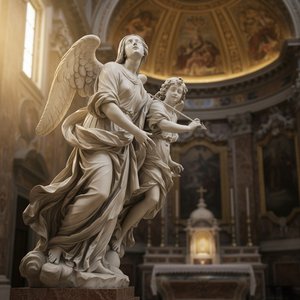
The church's collection, while not expansive, is carefully curated and remarkably concentrated in its Baroque style. Melchiorre Cafa’s “The Ecstasy of St Catherine of Siena,” housed within the sanctuary, is a masterpiece of emotional intensity – capturing the saint’s visionary experience with breathtaking detail and dramatic flair. Equally noteworthy is Luigi Garzi's fresco depicting her apotheosis, showcasing his mastery of light and color to convey a sense of divine elevation. These works, alongside other sculptures and paintings adorning the church, represent a significant concentration of Baroque artistry within a relatively small space.
A Unique Historical Context
Santa Caterina a Magnapoli’s location is as important as its art. Situated near Trajan’s Market – one of Rome's most impressive ancient ruins – the church offers visitors an unparalleled opportunity to juxtapose historical periods. The church itself has served as a chapel for the Military Ordinariate of Italy since 1946, adding another layer to its unique identity and reflecting its ongoing role within the nation’s spiritual landscape. The building's history is intertwined with the fortunes of the Conti family, whose legacy continues to resonate within the church’s walls.
Discovering a Roman Gem
Santa Caterina da Siena a Magnapoli isn’t merely another museum; it’s an experience—a chance to connect with Rome's past on a deeply personal level. Its intimate scale, combined with its artistic treasures and poignant votive crypt, creates an atmosphere of quiet contemplation and spiritual resonance. For those seeking an authentic Roman encounter beyond the typical tourist trail, this hidden gem offers a truly rewarding journey into the heart of Italian history and faith.