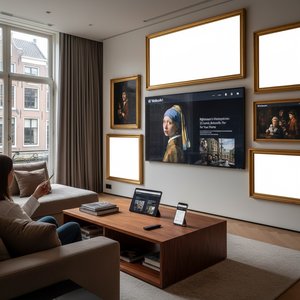
A Sanctuary of Light and Shadow: Stepping into Rembrandt’s Amsterdam
The air in Amsterdam holds a certain quality of light, a diffused glow that seems to emanate from the very canals themselves. It is within this city, steeped in the history of the Dutch Golden Age, that one finds the Rembrandt House Museum – not merely a repository of art, but an intimate portal into the life and creative world of one of history’s most profound masters. To walk through its rooms is to traverse time, to feel the presence of Rembrandt van Rijn as if he had just stepped out of his studio. The house, originally constructed around 1606 and substantially renovated in 1627 by Jacob van Campen, stands as a testament to the architectural sensibilities of the era – a dignified structure reflecting the prosperity and artistic flourishing that defined Amsterdam’s 17th century. Rembrandt himself purchased this very building in 1639, investing thirteen thousand guilders into a space that would become both his home and the epicenter of his artistic endeavors for nearly two decades. It was here, amidst the bustling life of the city, that he painted, etched, taught, and lived, until financial hardship forced him to move on in 1658. The subsequent years saw the house fall into disrepair, a poignant echo of Rembrandt’s own later struggles, before being rescued by the municipality of Amsterdam in 1907 and lovingly restored under the guidance of Karel de Bazel, opening its doors to the public as a museum in 1911.
-
Architectural Significance:
Built around 1606, the Rembrandt House exemplifies Dutch Renaissance architecture, characterized by symmetrical facades and classical ornamentation—a deliberate choice reflecting Amsterdam’s status as a center of learning and civic pride during Rembrandt's lifetime.
-
Restoration Legacy:
The meticulous restoration undertaken by Karel de Bazel in 1911 ensured that the house retained its original character, preserving invaluable details about Rembrandt’s domestic life and studio environment.
-
Location & Context:
Situated on Jodenbreestraat, amidst Amsterdam's historic Jewish Quarter, the museum offers a unique glimpse into the cultural landscape of Rembrandt’s era—a vibrant tapestry woven with threads of commerce, scholarship, and artistic innovation.
The Heart of Creation: Studio and Living Quarters
What distinguishes the Rembrandt House Museum from so many others is its authenticity. It isn’t simply *about* Rembrandt; it *is* Rembrandt's world made tangible. The carefully reconstructed living quarters offer an evocative glimpse into his domestic life, revealing a space that was both comfortable and functional. One can almost picture him surrounded by family, engaging in lively conversation or quiet contemplation. The rooms are furnished with period pieces—furniture, textiles, and decorative objects—that faithfully recreate Rembrandt’s daily routines and artistic pursuits. Visitors gain invaluable insight into Rembrandt’s techniques, his working methods, and the materials he employed. Recent archaeological discoveries have only deepened our understanding; notably, the finding of quartz soil in the cesspool revealed a unique method he used to prepare his canvases – a testament to his innovative spirit and meticulous approach. The studio isn’t merely a static display but a space that breathes with the energy of creation, inviting visitors to connect with the artist on a profoundly personal level.
-
Studio Reconstruction:
Researchers painstakingly recreated Rembrandt’s studio based on detailed drawings and inventories from his time—a remarkable feat of historical reconstruction allowing visitors to experience the atmosphere of Rembrandt's workshop.
-
Quartz Soil Technique:
The discovery of quartz soil—a mixture of quartz and clay—provided crucial evidence about Rembrandt’s groundbreaking method for preparing canvases, demonstrating his dedication to experimentation and precision.
-
Domestic Life Representation:
The reconstructed living quarters depict Rembrandt’s home as a space of family life, reflecting the importance of domestic harmony in shaping an artist's worldview during the Golden Age.
A Legacy Etched in Copper: Exploring Rembrandt’s Graphic Art
Beyond the reconstructed rooms, the museum boasts an extraordinary collection centered around Rembrandt’s mastery of etching. It holds nearly his complete oeuvre of etchings, alongside the original copper plates from which they were created – a rare and invaluable treasure trove for scholars and art enthusiasts alike. These intricate works reveal a different facet of Rembrandt’s genius, showcasing his remarkable ability to capture light, shadow, and emotion with astonishing precision. The etching collection isn’t presented as isolated pieces but contextualized within the broader narrative of his artistic development, demonstrating how this graphic medium informed and enriched his painting practice. To examine these plates is to witness the very genesis of an image, to trace the lines that would ultimately define some of art history’s most iconic works.
-
Comprehensive Oeuvre:
The museum houses nearly Rembrandt's entire etching repertoire—a testament to his prolific output as a printmaker and a cornerstone of Dutch Baroque artistry.
-
Plate Examination:
Visitors can observe the original copper plates—the precursors to Rembrandt’s etchings—providing insight into the artist’s meticulous process and highlighting the transformative power of printmaking techniques.
-
Influence on Painting Style:
The etching collection illuminates how Rembrandt's graphic art profoundly impacted his painting style, demonstrating a symbiotic relationship between two distinct artistic mediums.
Echoes of Influence: Pupils and Contemporaries
The Rembrandt House Museum doesn’t exist in isolation; it acknowledges the vibrant artistic ecosystem surrounding the master. The museum thoughtfully displays works by Rembrandt’s pupils – artists like Ferdinand Bol and Govert Flinck – demonstrating the profound influence of his teaching and the enduring legacy of his style. These pieces offer a fascinating counterpoint to Rembrandt’s own work, revealing how his students interpreted and adapted his techniques while forging their own artistic paths. This inclusion broadens our understanding of 17th-century Dutch art, showcasing the collaborative spirit and intellectual ferment that characterized the era. Furthermore, period furnishings and artifacts throughout the museum provide a rich context for daily life in Amsterdam during this golden age, immersing visitors in the sights, sounds, and textures of Rembrandt’s world. The museum regularly hosts temporary exhibitions, often featuring works by contemporary artists inspired by Rembrandt’s legacy, ensuring that his influence continues to resonate with new generations.
-
Pupil Showcase:
Examining Bol's and Flinck's paintings allows visitors to appreciate how Rembrandt's artistic vision permeated the work of his students—a reflection of the transmission of artistic knowledge during the Golden Age.
-
Contemporary Exhibitions:
Ongoing exhibitions featuring artists inspired by Rembrandt’s oeuvre demonstrate the enduring relevance of Rembrandt’s stylistic innovations and underscore his influence on subsequent generations of artists.
-
Historical Contextualization:
The museum's furnishings and artifacts—including textiles, ceramics, and decorative objects—transport visitors back to Amsterdam during Rembrandt’s time, fostering a deeper understanding of the cultural milieu that shaped his artistic output.
A visit to the Rembrandt House Museum offers an unparalleled opportunity to immerse oneself in the world of one of history's greatest artists—a journey into the heart of Dutch Baroque and a celebration of Rembrandt’s enduring legacy.