
Table of Contents
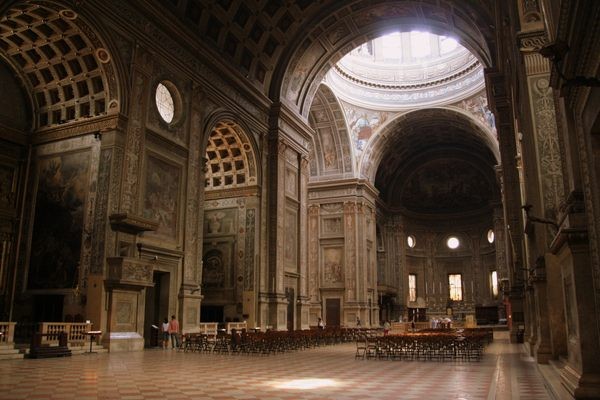
Quick Facts
- Featured artists: Domenico Ghirlandaio
- Alternate names:
- Parish Church of SantAndrea
- SantAndrea Church
- Parish Church of SantAndrea
- SantAndrea della Valle
- Works on APS: 4
- Location: Cernusco Lombardone, Italy
Art Quiz
There is only one correct answer for each question.
Question 1:
What is the primary artistic style represented in the Parish Church of Sant'Andrea?
Question 2:
Which prominent artists’ works are showcased within the church’s collection?
Question 3:
What distinctive type of terracotta sculpture is found in the museum’s collection?
Question 4:
The church's architecture exemplifies what historical period?
Question 5:
What makes Sant’Andrea unique compared to larger museums?
Exhibited Artists

Domenico Ghirlandaio
Domenico Ghirlandaio (1449-1494) was a Florentine Renaissance painter known for realistic portraits & contemporary life woven into religious frescoes. Explore his works like 'St. Jerome' and the Sistine Chapel commissions at OriginalUniqueArt.

Related Articles

Luca della Robbia: Renaissance Sculpture & the Innovation of Terracotta Glazing
Discover the innovative terracotta glazing techniques of Luca della Robbia, a Renaissance master sculptor. Explore his iconic works, legacy, and collecting tips with OriginalUniqueArt.
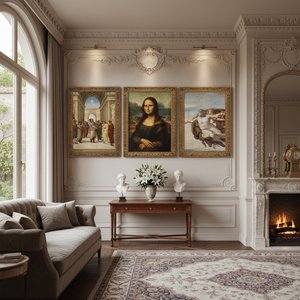
High Renaissance Masterpieces: Iconic Art for Your Home |
Journey through the High Renaissance! Explore 10 iconic masterpieces by Leonardo da Vinci, Michelangelo & Raphael. Discover art history, techniques & find museum-quality reproductions to elevate your home decor on .
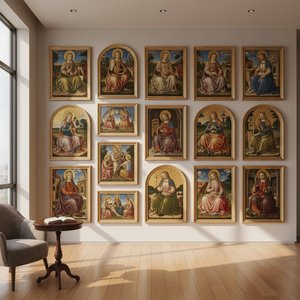
Fra Angelico's Masterpieces: 25 Renaissance Paintings for Your Home | OriginalUniqueArt
Explore 25 breathtaking masterpieces by Fra Angelico, a Renaissance master. Discover the stories behind his iconic frescoes, Annunciations & religious art. Find museum-quality reproductions and elevate your home decor with OriginalUniqueArt.com.
List of Artworks




Subscribe to Our Newsletter
Stay updated with the latest art news, exclusive offers, and decoration ideas.
Get 3 Free Art Suggestions
Tell us about your project and our art experts will provide you with 3 personalized art suggestions.
Not Sure Where to Start?
Let Us Curate 3 Options Just for You - Free!