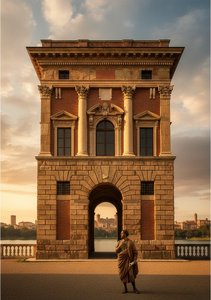
A Renaissance Echo in Tuscan Stone
Nestled beside the majestic Duomo of Pienza, Italy—a cornerstone of the UNESCO World Heritage landscape—stands the Palazzo Piccolomini, a structure that serves as an enduring testament to papal ambition and the blossoming ideals of the Italian Renaissance. More than just a residence, this palace is a meticulously crafted narrative etched in travertine stone, offering visitors an unparalleled glimpse into the transformative vision of Pope Pius II. As one approaches the sun-drenched facade, the building reveals itself not merely as a monument of power, but as a profound architectural manifesto of harmony and humanism. Commissioned by Enea Silvio Piccolomini, who would later ascend to the papacy, construction began in 1459 as part of an audacious project to reshape the humble village of Corsignano into the "City of Pio."
The architectural soul of the palace is found in the masterful hand of Bernardo Rossellino. Drawing deep inspiration from the Palazzo Rucellai in Florence—a masterpiece conceived by Leon Battista Alberty—Rossellino infused the design with classical principles of proportion and symmetry. The palace’s square plan, developed over three magnificent floors, utilizes light-colored rustic stone to create a sense of timelessness. Its facade is a rhythmic dance of regularly spaced windows adorned with pilasters, creating a balanced visual cadence that delights the eye. Within its heart, an elegant loggia supported by monumental stone columns provides a tranquil space for contemplation, mirroring the grandeur of Florentine nobility and inviting the soft Tuscan light to play across its surfaces.
Treasures of the Papal Legacy
To step inside Palazzo Piccolomini is to enter a sanctuary of intellectual and artistic pursuit. The collection within is a curated journey through the personal passions of Pope Pius II, offering a rare intimacy with the Renaissance spirit. In the Pope’s Study, visitors encounter a breathtaking display of frescoes depicting biblical scenes and humanist emblems, artworks that illuminate his profound intellectual depth and the palace's role as a center of European erudition. These painted walls serve as windows into a world where theology and classical wisdom were inextricably linked.
The journey through the palace continues into the Ancient Hall of Arms, a captivating assemblage of weaponry and armor that reflects the papal dominion and the exquisite craftsmanship of the period. This collection provides a visceral connection to the era's martial history and the strength required to maintain the Piccolomini legacy. Beyond these grand halls, the palace offers a glimpse into the more private dimensions of Renaissance life through its recreated bedchambers. Furnished with authentic pieces that evoke the daily rituals and comforts of the Piccolomini family, these rooms allow the modern traveler to feel the pulse of a bygone era, where domestic elegance met political significance.
A Cinematic and Panoramic Masterpiece
What truly distinguishes Palazzo Piccolomini is its seamless integration with the breathtaking landscape of the Val d’Orcia. The palace does not merely sit upon the land; it commands it. From its vantage points, one can witness the rolling hills and picturesque panoramas that have inspired artists for centuries. This connection to the sublime environment has made the palace a frequent protagonist in the world of cinema, serving as a breathtaking filming location for classics such as The Devil in Love and Romeo & Juliet , and most recently transporting audiences back to Renaissance Tuscany in the third season of Medici .
For the art lover, the collector, or the interior designer, Palazzo Piccolomini offers more than just historical facts; it offers an aesthetic experience. It is a place where the interplay of light and shadow against travertine stone, the precision of Renaissance geometry, and the sweeping beauty of the Italian countryside converge. A visit here is an encounter with architectural genius and a pivotal moment in European history, leaving one captivated by the enduring beauty of a dream realized in stone.