

A Tapestry of Time: Palazzo Madama’s Enduring Narrative
Palazzo Madama in Turin isn't merely a building; it’s a palimpsest, etched with centuries of Italian history and artistic evolution. Standing proudly in Piazza Castello, its very stones whisper tales of Roman fortifications, medieval power struggles, Savoyard elegance, and the birth of a nation – a layered narrative woven into the fabric of this extraordinary structure. To wander through its halls is to embark on a journey that transcends time, encountering remnants of Augusta Taurinorum alongside Baroque splendor and echoes of Italy’s first Senate. The palace's enduring appeal lies in this remarkable synthesis: an architectural narrative seamlessly blending disparate eras into a cohesive and captivating whole. It’s a place where the past isn’t preserved behind glass, but actively breathes within the present, inviting contemplation and revealing the soul of Turin itself.
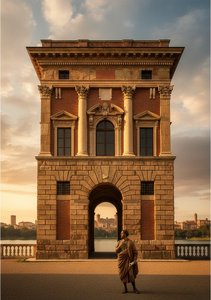
The story begins not with grand designs, but pragmatic necessity. In 1st century BC, this site served as one of the four principal gates in the Roman city walls – a vital point of access and defense. Vestiges of these ancient foundations remain visible today, grounding the entire structure in its earliest origins. As empires rose and fell, the gate transformed into a medieval castle under the Savoia-Acaja family, acquiring the recognizable square shape and imposing cylindrical towers that still define much of its exterior. This period saw it become a fortified stronghold, a testament to turbulent times and shifting allegiances. However, during the 17th and 18th centuries, Palazzo Madama truly blossomed into a symbol of regal power and refined taste under the patronage of influential women like Christine of France and Marie Jeanne of Savoy – *Madama Reale*, from whom the palace derives its name. Architect Filippo Juvarra’s ambitious Baroque facade, though only partially completed, remains a striking counterpoint to the older structures, embodying a bold vision that forever altered the palace's silhouette.
The heart of Palazzo Madama lies in its remarkable collection, housed within the Museo Civico d’Arte Antica. This museum isn’t simply a display of beautiful objects; it’s a carefully curated journey through time and culture. Highlights include Antonello da Messina’s captivating *Portrait of a Man*, a poignant study of human expression, alongside fragments of illuminated manuscripts like the *Trés belles Heures de Notre Dame*, offering glimpses into the artistic sensibilities of their time. The museum extends far beyond traditional boundaries, boasting a significant collection of Asian art integrated through the Museum of Oriental Art (MAO). Within these walls, one can encounter Roman artifacts unearthed from Augusta Taurinorum, providing tangible links to Turin’s ancient past. Fine arts collections span various periods and styles, showcasing the evolution of artistic expression across Europe. The MAO adds another layer of richness, transporting visitors to distant lands with its exquisite displays of Japanese rock gardens, Himalayan Buddhist art, and a wealth of other treasures from across the Asian continent. This juxtaposition of cultures and eras is what truly sets Palazzo Madama apart – it’s not simply a repository of beautiful objects, but a dynamic space where different worlds converge.
A Royal Residence Forged in Baroque Splendor
The transformation of Palazzo Madama into a lavish royal residence represents a pivotal moment in the palace's history. Regents Christine of France and Marie Jeanne of Savoy commissioned extensive renovations during the 17th and 18th centuries, transforming the medieval fortress into a magnificent residence fit for royalty. Juvarra’s Baroque facade, though incomplete, dramatically reshaped the building’s appearance, introducing sweeping curves, elaborate ornamentation, and a sense of grandeur that reflected the power and prestige of the Savoy dynasty. The interior spaces were similarly transformed, with lavishly decorated rooms showcasing the latest trends in European design – from opulent stuccowork to richly colored tapestries and ornate furniture. The palace became a hub for artistic and intellectual activity, attracting leading artists, musicians, and writers of the era.
A Witness to Italian History
Beyond its artistic and architectural merits, Palazzo Madama holds profound political significance. In the 19th century, it served as the headquarters of the provisional French government during the Napoleonic Wars, becoming a focal point for shifting power dynamics in Europe. More importantly, it housed the Subalpine Senate and High Court, and crucially, functioned as the first Senate of the Kingdom of Italy. This role cemented its place in Italian history, transforming it from a royal residence into a symbol of national unity and democratic ideals. Walking through these halls, one can almost feel the weight of momentous decisions made within those very walls – decisions that shaped the course of modern Italy. The palace stands as a powerful reminder of the nation’s complex past and its enduring commitment to progress.
Notable Exhibitions & Ongoing Transformations
Palazzo Madama consistently hosts a diverse range of exhibitions, reflecting both its permanent collection and temporary thematic displays. Recent highlights have included retrospectives dedicated to prominent Piedmontese artists, exploring the region's rich artistic heritage. The museum also regularly presents special events, such as concerts, theatrical performances, and lectures, engaging visitors with art and culture in innovative ways. Furthermore, ongoing restoration projects ensure that this historic landmark remains accessible and preserved for future generations, carefully balancing preservation efforts with the need to showcase its remarkable architecture and collections.
A Unique Architectural Synthesis
What truly distinguishes Palazzo Madama is its unique architectural synthesis – a harmonious blend of Romanesque solidity meeting Baroque exuberance. The palace’s layered history is visually represented in its diverse styles, creating a captivating dialogue between ancient foundations, medieval fortifications, and 18th-century grandeur. This juxtaposition of eras makes Palazzo Madama not just a museum, but a living testament to Turin's enduring legacy as a crossroads of cultures and a center of artistic innovation. It’s an experience that lingers long after you’ve stepped through its doors – a reminder of the power of architecture to tell stories and connect us to the past.