Menu
FREE ART CONSULTATION

Palazzo Ducale

Quick Facts

  • Location: Mantua, Italy
  • Movements:
    • baroque
    • early renaissance
    • gothic
    • mannerism
    • renaissance humanism
  • Works on APS: 13
  • More…
  • Mediums:
    • acrylic on canvas
    • sculpture bronze
  • Art types:
    • other
    • wallart
  • Featured artists:
    • Lorenzo Leonbruno
    • Giulio Romano
    • justus sustermans, joost sustermans or suttermans, his given name italianised to giusto
    • antonio and paolo mola
    • giovanni cristoforo romano

Art Quiz

There is only one correct answer for each question.

Question 1:
For how many years did the Palazzo Ducale serve as the seat of power for the Gonzaga family?
Question 2:
What is the approximate size of the Palazzo Ducale, making it one of Europe's largest palaces?
Question 3:
Which artist is particularly celebrated for their work within the Palazzo Ducale, specifically the *Camera Picta*?
Question 4:
What has recent archaeological work at the Palazzo Ducale uncovered, hinting at its vibrant cultural past?
Question 5:
The Palazzo Ducale is often described as a 'city-palace'. What does this refer to?
Question 6:
What UNESCO designation does the Palazzo Ducale share with Sabbioneta?
Question 7:
Besides paintings, what other type of artifact can be found within the Palazzo Ducale's complex?
Question 8:
What architectural styles are interwoven within the Palazzo Ducale's structure?
Question 9:
Who were the first rulers to reside in what would become the Palazzo Ducale?
Question 10:
What is one of the key features that makes Palazzo Ducale a significant example of Renaissance urban planning?

A Renaissance Reverie: Within the Walls of Mantua’s Palazzo Ducale

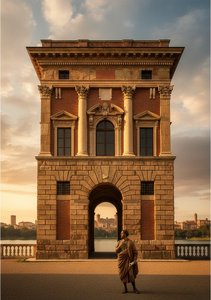
The Palazzo Ducale in Mantua isn't simply a palace; it is an unfolding narrative etched in stone, fresco, and sculpted detail—a sprawling testament to dynastic ambition and artistic flourishing that defines the spirit of the Italian Renaissance. Stepping across its threshold feels akin to entering a meticulously preserved dreamscape, a “city-palace” as it’s often called, where centuries resonate with each footstep. For over four hundred years, this magnificent complex served as the seat of power for the Gonzaga family, who transformed Mantua into a beacon of culture and innovation. Their legacy isn't merely inscribed in stone but vividly painted across ceilings, sculpted within ornate chambers, and woven into the very fabric of this UNESCO World Heritage site. The sheer scale—spanning over 35,000 square meters with more than one thousand rooms—is breathtaking, a deliberate expression of Gonzaga power that rivals even Versailles in its immensity. It’s a place where history isn't confined to display cases but permeates the atmosphere, inviting visitors on an immersive journey through time. The palace began as a modest fortress in the 14th century, blossoming under successive rulers who each added their unique architectural vision, resulting in a captivating blend of Gothic, Renaissance, and Baroque styles seamlessly interwoven into a harmonious whole.

The Gonzaga Vision: Art as Power

The evolution of the Palazzo Ducale mirrors the ascent of the Gonzaga family themselves. They weren’t merely patrons of the arts; they *were* art patrons, actively shaping Mantua into a cultural epicenter. This ambition is most powerfully realized in the palace's artistic treasures. Within these walls, the Gonzaga assembled an extraordinary court, attracting masters like Andrea Mantegna, Pisanello, and Peter Paul Rubens. Mantegna’s *Camera Picta*, arguably the palace’s most celebrated treasure, is a revelation. This frescoed room, with its illusionistic perspectives and masterful depiction of courtly life, stands as a pinnacle of Renaissance artistry—a testament to Mantegna's genius and the Gonzaga family’s discerning taste. The interplay of light and shadow, the meticulous detail in every figure, and the seamless integration of architecture and painting create an immersive experience that transcends mere observation; it feels like stepping directly into the world of the Gonzaga court. Equally captivating are the frescoes by Pisanello, showcasing his remarkable detail and narrative skill, transporting viewers back to a world of chivalry and elegance. Later additions, such as Rubens' dynamic Baroque paintings, demonstrate the palace’s continued relevance as a center for artistic innovation through the centuries. The Palazzo Ducale wasn’t simply decorated with art; it *was* designed around it, each room conceived as a total work of art where architecture, painting, and sculpture converged to create an atmosphere of refined power and intellectual stimulation.

Beyond the Brushstrokes: Echoes of History

The Palazzo Ducale offers more than just visual splendor; it holds within its walls layers of untold stories and fascinating discoveries. The Archaeological Museum, housed within the complex, reveals Mantua's rich history stretching back to Neolithic times, culminating in the poignant display of the *Valdaro Lovers*, a prehistoric depiction of an embracing couple that speaks volumes about enduring human connection. But even beyond these established treasures, the palace continues to yield secrets. Recent excavations have uncovered hidden rooms, including one believed to have been used for performances of Monteverdi’s music—a thrilling revelation that underscores the palace's vibrant cultural past. This ongoing research and restoration work ensures that the Palazzo Ducale remains a living, breathing monument, constantly revealing new insights into its history and artistic significance. The very stones seem to whisper tales of intrigue, diplomacy, and artistic creation, inviting visitors to become active participants in uncovering the palace’s hidden narratives.

A Legacy Preserved: Experiencing the Renaissance Today

Today, the Palazzo Ducale is more than just a museum; it's an immersive experience designed to transport visitors back to the golden age of the Renaissance. The sheer scale of the complex allows for exploration and discovery at every turn, appealing to art lovers, history buffs, and architecture enthusiasts alike. The palace’s designation as a UNESCO World Heritage site underscores its exceptional universal value, recognizing it as a prime example of Renaissance urban planning and architectural prowess. Ongoing restoration efforts are not merely about preservation but also about revealing the palace's hidden layers, ensuring that future generations can appreciate its beauty and historical significance. The Palazzo Ducale stands as a powerful reminder of the enduring legacy of the Gonzaga family and their profound impact on Italian art and culture—a place where history comes alive and imagination takes flight. It is a destination not just to be seen, but to be *felt*, a space that resonates with the spirit of an era defined by creativity, ambition, and a relentless pursuit of beauty.

List of Artworks

Lorenzo Leonbruno

Ceiling decoration (detail)

Giulio Romano

Tarquin and Lucretia

justus sustermans, joost sustermans or suttermans, his given name italianised to giusto

Portrait of Vincenzo II Gonzaga

antonio and paolo mola

Perspective vista

giovanni cristoforo romano

Door of the studiolo (detail)

giovanni cristoforo romano

Door of the studiolo (detail)