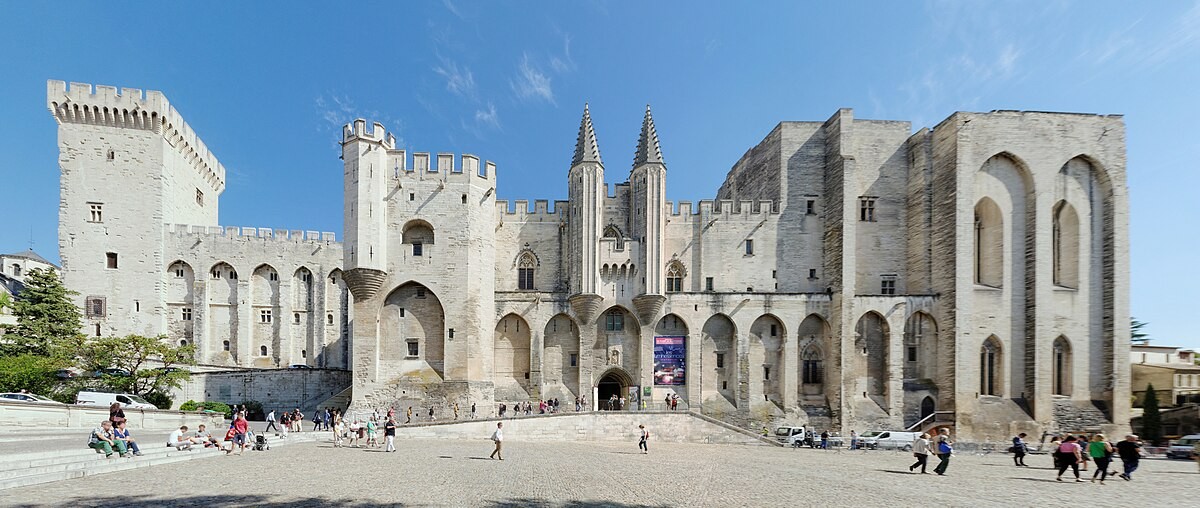
A Fortress of Faith: Exploring the Palace of Popes in Avignon
Rising dramatically from the banks of the Rhône River, the Palais des Papes – the Palace of Popes – isn’t merely a building; it's an embodiment of power, faith, and architectural ambition. This colossal fortress-palace, now a UNESCO World Heritage site and one of Europe’s largest Gothic structures, offers a breathtaking journey through a turbulent era in Western history: the Avignon Papacy. Stepping within its weathered walls is akin to stepping back into the 14th century, where seven successive popes sought refuge from political turmoil in this strategically vital Provençal stronghold. More than just a collection of rooms and halls, it’s a palpable echo of papal decisions that shaped Europe, a testament to the lavishness of medieval court life, and a stunning example of Gothic artistry.
The palace's story is inextricably linked to the political machinations of its time. The relocation of the papacy from Rome to Avignon in 1309 wasn’t a simple move; it was a calculated response to the growing power of the French monarchy. Seeking protection, Pope Clement VI established a new center for the Church here, and with him came an unprecedented level of opulence and grandeur. The construction began under Benedict XII, envisioning a formidable fortress capable of defending the papacy’s interests, but it was his successor, Clement VI, who truly transformed the structure into the magnificent palace we see today. His ambition led to the addition of the New Palace, a breathtaking expansion that doubled the building's size and showcased the peak of Gothic design.
Architectural Grandeur and Papal Life
The sheer scale of the Palais des Papes is immediately arresting. Its imposing towers, crenellated ramparts, and vast courtyards speak to its defensive origins, yet within those walls lies a world of refined elegance. The architecture itself is a masterful blend of practical fortification and exquisite aesthetics – soaring walls punctuated by graceful pointed arches, expansive courtyards offering glimpses of the surrounding landscape, and intricate stonework revealing the skill of medieval craftsmen. The New Palace, in particular, exemplifies this fusion, boasting vast halls like the *Grand Tinel*, once used for receiving dignitaries and dispensing justice, alongside private apartments that offer a glimpse into the daily routines of the popes themselves. The meticulous detail is remarkable; every surface seems to be adorned with carvings, frescoes, and stained glass, creating an immersive experience for the visitor.
The palace’s interior reveals a fascinating blend of styles and influences. Early sections retain a more austere, fortress-like character, while the later additions showcase the influence of Italian Gothic architecture, particularly from Siena. The chapel walls are adorned with vibrant frescoes by Matteo Giovanetti, depicting biblical scenes and theological narratives – these aren't merely decorative; they’re visual expressions of faith, rendered in rich colors and intricate detail. The *Sala del Dottorato*, or Hall of the Doctors, is a testament to the palace’s role as a center for learning, housing a magnificent library that attracted scholars from across Europe, including the renowned humanist Petrarch.
A History Forged in Conflict
The Palace of Popes' history is inextricably linked to the Avignon Papacy, a period marked by political intrigue and controversy. The relocation wasn’t simply a change of scenery; it was a consequence of power struggles between the popes and the French monarchy. This era saw the Church deeply entangled in secular affairs, and Avignon became a center of both religious devotion and worldly ambition. Walking through the palace, one can almost sense the echoes of papal conclaves – the secretive gatherings where cardinals elected new pontiffs – and the weight of decisions that impacted Christendom. Beyond its role as a papal residence, the palace served various purposes throughout subsequent centuries: a papal residence for legates, a military garrison during the French Revolution, and even a prison. These transformations have left their mark on the structure, but careful restoration efforts have preserved its essential character.
Notable Exhibitions and Cultural Events
Today, the Palais des Papes is recognized as a UNESCO World Heritage site, attracting millions of visitors each year. It’s not merely a static historical monument; it's a dynamic cultural center that continues to evolve. The palace hosts exhibitions exploring medieval art, papal history, and the daily life of the era, offering fresh perspectives on this pivotal period in European history. Throughout the year, concerts, theatrical performances – particularly during the renowned Avignon Theatre Festival – and spectacular light shows transform the ancient walls into a vibrant stage. The annual “Luminescences” event is a truly unique spectacle, utilizing cutting-edge video technology to project stunning images onto the palace’s façade, creating an immersive and unforgettable experience.
A Timeless Legacy
What truly sets the Palace of Popes apart is its ability to transport visitors across time. It's a place where history comes alive, where architectural grandeur inspires awe, and where the echoes of faith and power resonate through the centuries. For art lovers, collectors seeking inspiration, and interior designers searching for timeless elegance, the Palais des Papes offers an unparalleled experience – a journey into the heart of medieval Europe and a celebration of human creativity. A visit here is more than just sightseeing; it’s an immersion in a world of power, beauty, and enduring legacy.