

A Voyage Through Time: The Soul of the National Maritime Museum
To step into the National Maritime Museum in Greenwich is to embark on a profound journey across the undulating waves of history, where the salt spray of exploration meets the refined elegance of artistic mastery. Situated within the prestigious UNESCO World Heritage Site of Greenwich, this sanctuary of maritime heritage does far more than merely display relics of the past; it breathes life into the very spirit of seafaring ambition that once defined a nation. The museum, housed in the stately and repurposed buildings of the former Royal Hospital School, offers an architectural dialogue between traditional grandeur and contemporary innovation. As visitors wander through its halls, they encounter a space where the weight of history is balanced by the light of modern discovery, creating an atmosphere that is both reverent and vibrantly alive.
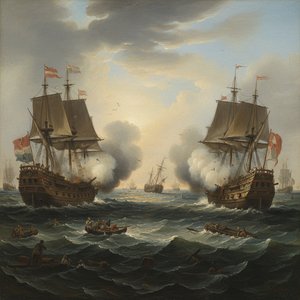
The collection itself is a breathtaking tapestry of human endeavor, boasting over two million items that chart the course of Britain’s relationship with the sea. For the art lover, the museum serves as a premier gallery of maritime excellence, where the canvas becomes a window into both the serene and the tempestuous. One might find themselves captivated by the meticulous detail of Bonaventura Peeters (I) , whose “Imaginary Inlet in Southern Arctic Waters” showcases the exquisite precision of Dutch maritime painting, or moved by the dramatic naval scenes that immortalize legendary figures like Vice- Admiral Nelson . These works are not merely decorations; they are profound visual narratives that utilize light, shadow, and texture to convey the immense scale of the ocean and the courage of those who dared to traverse it. For the interior designer, these pieces offer unparalleled inspiration, bringing a sense of classical depth and narrative richness to any curated space.
Beyond the splendor of its oil paintings, the museum offers an intimate look at the instruments that conquered the unknown. The halls are graced with the legendary Harrison clocks and a magnificent array of navigational tools that represent the pinnacle of scientific achievement. These objects, alongside exquisitely crafted ship models, tell a story of precision, intellect, and the relentless pursuit of knowledge. This intersection of art and science is perhaps nowhere more evident than in the recently redeveloped Neptune Court, a stunning exhibition space designed to illuminate the evolution of maritime technology and its profound impact on global trade and culture. It is a place where the mechanical meets the aesthetic, inviting collectors and scholars alike to marvel at the ingenuity that shaped our modern world.
What truly distinguishes the National Maritime Museum is its ability to transcend the boundaries of a traditional archive, functioning instead as a vibrant cultural hub where history is felt rather than just read. Whether exploring the intricate details of John Burnet’s emotive portraiture or contemplating the sweeping vistas of coastal landscapes by artists such as Montague Dawson , every visitor is invited to participate in a shared legacy of exploration. It remains an essential destination for anyone seeking to understand the profound influence of the ocean on human civilization—a place where every artifact, from the smallest compass to the largest naval canvas, serves as a testament to the enduring human spirit of discovery.