A Renaissance Sanctuary in the Heart of Toledo
In the winding, sun-drenched streets of Toledo, where history breathes through every stone, stands the Museo de Santa Cruz—a profound sanctuary for the soul and a masterclass in Spanish heritage. This is not merely a museum; it is a living chronicle of a city that has served as a crossroads of civilizations for millennia. Housed within the magnificent 16th-century Hospital de Santa Cruz, the building itself acts as a monumental prelude to the treasures held within its walls. As one approaches the entrance, the eye is immediately arrested by the breathtaking Plateresque portal, a masterpiece of architectural ornamentation designed by Alonso de Covarrubias. The intricate sculpted foliage and geometric precision of this facade reflect the opulent, sophisticated tastes of the Renaissance, inviting visitors into a realm where stone seems to bloom with life.
Stepping inside, the atmosphere shifts into one of solemn grandeur. The museum’s architecture, characterized by a Greek cross plan and soaring ribbed vaulted ceilings, evokes the spiritual weight of its origins as a hospital founded by Cardinal Pedro González de Mendoza. Even the unfinished courtyards tell a poignant story of ambitious architectural visions tempered by the realities of history. For the art lover or the interior designer seeking inspiration, these spaces offer a masterclass in light and volume, where the interplay of shadow and structural elegance creates an environment that is both contemplative and awe-inspiring.
The Ethereal Vision of El Greco
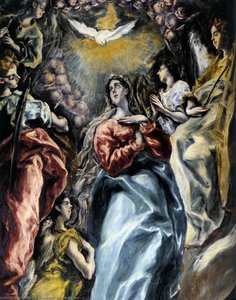
While the architecture provides a majestic stage, the true heartbeat of the Museo de Santa Cruz lies in its extraordinary collection of paintings, most notably the profound works of El Greco. The master of Toledo, whose brush captured the very essence of spiritual transcendence, left an indelible mark on this institution. Approximately fifty canvases by Doménikos Theotokos Cretensis grace these halls, offering a window into a style defined by elongated figures, an otherworldly luminosity, and a palette that vibrates with emotional intensity. To stand before The Virgin of the Immaculate Conception is to witness a breathtaking Baroque triumph, where vibrant hues and soft, ethereal light coalesce to create a sense of divine presence.
The collection invites a deep, meditative engagement with the artist's technique. In works such as The Holy Family , one can trace the meticulous manipulation of color and form that allows El Greco to convey complex theological themes through visual storytelling. For collectors and scholars alike, these paintings represent more than just historical artifacts; they are studies in the power of light to transform the material into the spiritual. The museum’s ability to present these masterpieces within their original architectural context allows for a unique immersion, where the spirit of the artist feels inextricably linked to the very stones of Toledo.
A Tapestry of Archaeology and Decorative Splendor
The narrative of the Museo de Santa Cruz extends far beyond the canvas, weaving together a rich tapestry of human endeavor through its vast archaeological and ethnographic holdings. The museum serves as a guardian of Toledo’s multifaceted past, presenting a collection that spans from the remnants of Roman ruins to the intricate vestiges of medieval settlements. These unearthed treasures provide an invaluable glimpse into the daily lives, struggles, and triumphs of the inhabitants of the Toledo province, offering a grounded, human counterpoint to the celestial themes of the fine arts section.
Complementing this archaeological depth is a stunning array of Toledan decorative arts that celebrate the region's legendary craftsmanship. Visitors can marvel at exquisite metalwork, where elaborate floral motifs and masterful embossing demonstrate a level of skill that has been passed down through generations. Alongside these are ceramics adorned with vibrant geometric patterns, reflecting the cultural synthesis of Islamic and Christian influences that define the Spanish identity. For those with an eye for detail and a passion for historical aesthetics, this collection offers endless inspiration, showcasing how art and utility have historically merged to create objects of enduring beauty and cultural significance.